Background
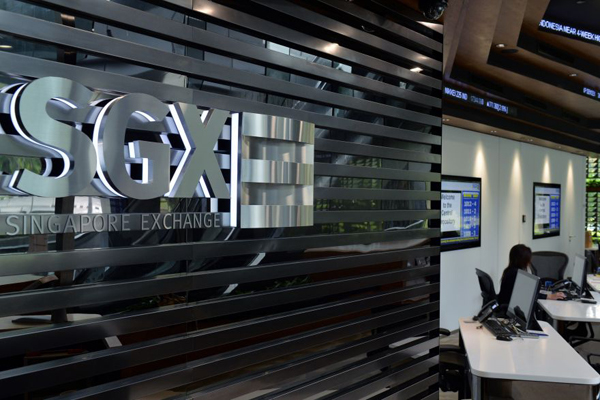
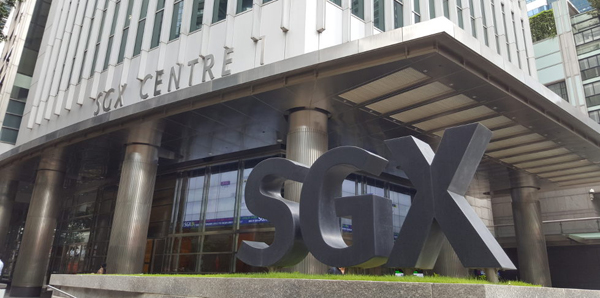
On 31 March 2021, the Singapore Exchange Regulation (the “SGX”) published a consultation paper on the proposed listing framework (the “Proposed Framework”) for special purpose acquisition companies (the “SPACs”) and invited comments by 28 April 2021. The Proposed Framework proposed to introduce a regime for SPACs in Singapore to list on the Mainboard of Singapore Exchange Securities Trading Limited (“SGX-ST”). According to the SGX, the Proposed Framework was in light of various developments including the market development in United States SPACs listings in recent years and potential merger and acquisition opportunities in the Asia Pacific region.
SPACs
The SGX defined SPACs as typically listed on stock exchanges as companies with no prior operating history, operating and revenue-generating business or asset at the time of listing. They are formed to raise capital through IPOs for the sole purpose of acquiring operating business(es) or asset(s). A SPAC is generally established and initially financed by experienced founding shareholders (typically referred to as sponsors). The majority of IPO funds raised are typically required to be placed in an escrow account, where the utilisation will be primarily for the consummation of the business combination. After listing, the SPAC begins its search for a target company for a business combination which must be completed within a permitted time frame.
The SGX has identified key benefits of SPACs to include: (i) sponsors are able to tap on public capital at the time of the listing, and through business combinations, invest in later-stage private companies and in turn stand to receive potential significant upside through the sponsor’s promote; (ii) A SPAC IPO process is relatively simpler and quicker as compared to a traditional IPO given that a SPAC is a newly-formed company with no operational history nor commercial operations at the time of listing; (iii) there is better market certainty and price certainty; and (iv) Investors have the opportunity to co-invest with experienced sponsors, who often have a demonstrated track record and experience in achieving meaningful investment returns. However, the SGX also mentioned certain concerns and risks, including: (a) SPACs are susceptible to execution risks; (b) there is inherent uncertainty to the target company as the business combination is subjected to shareholders’ approval; (c) shareholders remaining with the resulting issuer may be subject to significant dilution; and the equitability of the regulatory treatment for the business combination as the target company is not subject to the level of initial listing review and scrutiny by the relevant securities regulators as compared to a traditional IPO, and limited market professionals’ due diligence may be conducted.
Proposed admission and related criteria, suitability assessment factors, permitted time frame for completion of business combination and other requirements
In the Consultation Paper, the SGX proposed to set admission and related criteria on minimum market capitalisation (S$300 million), public float (at least 25% of a SPAC’s total number of issued shares to be held by at least 500 public shareholders at the time of the SPAC listing on SGX-ST), minimum issue price (S$10 per share or unit), jurisdiction of incorporation (must be incorporated in Singapore) and dual class share structure (dual class share structure not permitted).
Under the Proposed Framework, in assessing the suitability of a SPAC for listing, SGX will consider factors such as (i) the profile including the track record and repute of the founding shareholders and experience and expertise of the management team of the SPAC; (ii) the nature and extent of the management team’s compensation; (iii) the extent of the founding shareholders and the management team’s equity ownership in the SPAC; (iv) the alignment of interests of the founding shareholders and the management team with the interest of other shareholders; (v) the amount of time permitted for completion of the business combination prior to the liquidation distribution; (vi) the dilutive features and events of the SPAC, including those which may impact shareholders and whether there are any mitigants for such dilution; (vii) the percentage of amount to be held in the escrow account that must be represented by the fair market value of the business combination; and (viii) such other factors as the Exchange believes are consistent with the aims of protecting investors and promoting public interest.
The SGX also proposed that the SPAC must complete a business combination within a maximum time frame of 36 months from the date of listing. SPAC sponsors may voluntarily specify a shorter time frame to complete the business combination in the SPAC’s constitution. The SPAC will be liquidated and the remaining funds (comprising a majority of the proceeds raised at IPO) held in the escrow account are returned to shareholders if the SPAC is unable to complete the business combination within the permitted time frame.
In relation to the minimum percentage of IPO proceeds to be held in escrow, it is proposed that the SPAC is required to place at least 90% of the gross proceeds raised from its IPO in an escrow account. Until the completion of a qualifying business combination, the SPAC may invest the escrowed funds in permitted investments such as cash or cash equivalent short-dated securities of at least A-2 rating (or an equivalent).
It is also proposed that the business combination must comprise an initial acquisition of a business or asset with a fair market value forming at least 80% of the amount held in the escrow account.
Under the Proposed Framework, the founding shareholders and the management team will also be subject to a minimum aggregate subscription value for alignment of their economic interest in the SPAC with that of other shareholders. The minimum aggregate value will be dependent on the market capitalisation size of the SPAC at IPO.

Analysis and Takeaways
The Consultation Paper represented an attempt of the SGX to explore SPACs listings as a viable alternative to traditional IPOs for fund raising in Singapore and the region.
Following the examples of the United States, Canada and Malaysia, various regions have explored the feasibilities of introducing regimes to allow for SPACs listings. Apart from Singapore, Hong Kong is also on this route. In early March 2021, the Financial Leaders Forum chaired by Hong Kong’s Financial Secretary had asked the Securities and Futures Commission and Hong Kong Exchanges and Clearing Limited “to explore suitable listing regimes to enhance the competitiveness of Hong Kong as an international financial centre, while safeguarding the interests of the investing public.” The Financial Secretary had also said in an interview with Bloomberg TV that the government was seriously looking into allowing SPACs.
The proposal for the regime in Hong Kong is yet to be released. Nevertheless, under the encouragement at official level and guided by overseas examples, it is expected that the market will embrace more discussions on a potential SPAC-listing regime in the future. Such a regime, if introduced in Hong Kong, is expected to provide further avenues for listing of businesses, and more options for general investors to participate in the markets.
Please contact our Partner Mr. Rodney Teoh for any enquiries or further information.
This newsletter is for information purposes only. Its content does not constitute legal advice and should not be treated as such. Stevenson, Wong & Co. will not be liable to you in respect of any special, indirect or consequential loss or damage arising from or in connection with any decision made, action or inaction taken in reliance on the information set out herein.