News
Find out all about our firm’s latest news and activities below. To learn more about any individual item, please contact us here.
 Stevenson, Wong & Co.
News
Find out all about our firm’s latest news and activities below. To learn more about any individual item, please contact us here.
Langfang Arbitration Commission (LAC) was established in May 2012. LAC is a social service organization established in Langfang, China in accordance with the Arbitration law of the People’s Republic of China and the principle of governciple support, autonomous management and independent arbitration, to provide independent, efficient and economic dispute resolution services to parties. LAC has more than 230 arbitrators and they are well-known professors, senior economists, senior accountants, senior lawyers and other experienced scholars.
On 4 August 2017, Secretary-general of Langfang Arbitration Commission Ms. Cheng Wen, Business Development Director of Langfang Arbritration Commission Mr. Lee Wai, Secretary of Langfang Arbritration Commission Ms. Xing Xin Yu and Ms. Wong Gong Jing, and arbitrators visited our Hong Kong office.

From left to right: Mr. John Liu, Mr. Eric Lui, Ms Heidi Chui, Ms Cheng Wen, Mr Zhao Ping, Mr. Peng Li-song, Mr. Zhang Kai
SW partners Mr. Eric Lui and Ms. Heidi Chui and other colleagues received the guests and introduced the business of SW to them. At the meeting, there was discussion about the latest development of arbitration in Hong Kong. The members from LAC also shared their experiences and invited our partners Mr. Eric Lui and Ms. Heidi Chui to further develop a business relationship with them. The views exchanged were insightful and constructive.
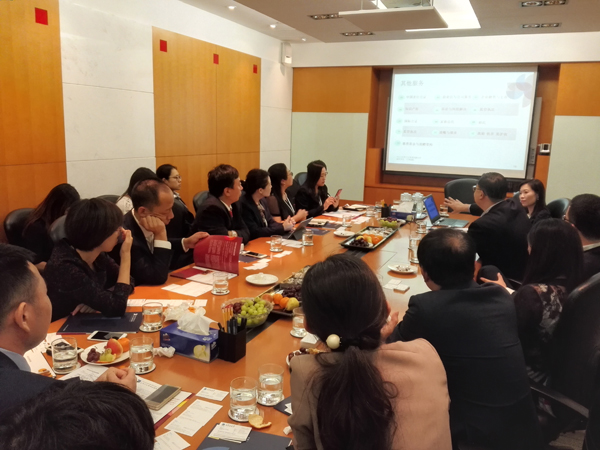
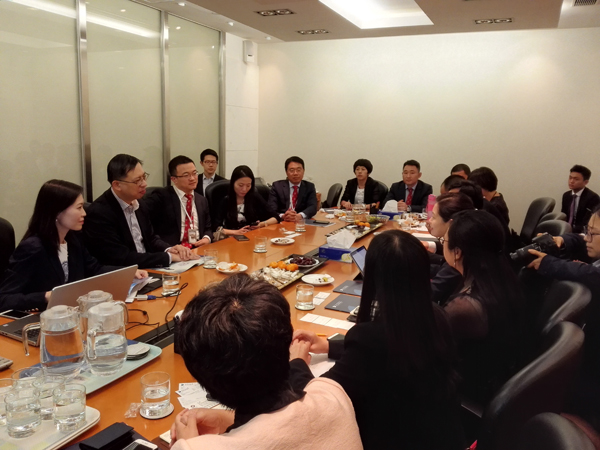
Please contact Mr. Eric Lui or Ms. Heidi Chui for any enquiries or further information.
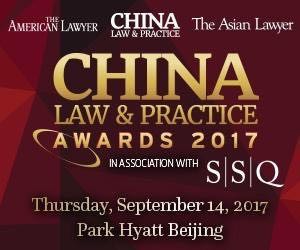
We are delighted to announce that Stevenson, Wong & Co. has recently been shortlisted by China Law & Practice for “Hong Kong Firm of the Year” at their annual awards.
The award ceremony will be held on 14 September in Beijing and hosted by China Law & Practice, The American Lawyer, The Asian Lawyer and Legal Week. The award ceremony will celebrate the achievement of top lawyers, law firms, and in-house teams in the PRC over the past year.
About China Law & Practice
China Law & Practice is the most respected legal and risk management resource for investors in the PRC provides in-depth analyses and comprehensive translations of the latest laws.
Please contact Mr. Eric Lui for any enquiries or further information.
Brexit: UK Government is considering giving Young EU migrants two-year work visas after Brexit
The committee of the Migration Advisory Commission of the UK has suggested that EU migrants under aged 30 would likely have positive impacts on the UK economy because of their longer working life and lower risk of health problem and a proposal has been put forward to give these young EU migrants two-year visas to live and work in the UK after Brexit.
The proposal has, in particular, suggested a points-based system similar to the Australian one in which younger migrants would receive more points or be given a lower salary threshold. It is expected that those young people will be able to integrate much better into the society than older migrants. It is also suggested that migrants will further benefit the society economically due to their diverse skill sets.
On the other hand, the proposal has suggested curbing low-skilled migration but allowing migrants with specific, in-demand skills to come to the UK.
Although Brexit will be executed in 2019, the UK Government has indicated that EU citizens will still be able to enter UK under a “registration and documentation” route during a transitional period after Brexit.
Stevenson, Wong & Co (SW) is delighted to be shortlisted for 10 awards in the prestigious Asian Legal Business (ALB) Hong Kong Law Awards 2017.
SW is nominated for the following awards:
For the recognition of individuals, our partner Ms. Heidi Chui is nominated as the “Dispute Resolution Lawyer of the Year” and “Woman Lawyer of the Year (Law Firm)”, while our partner Mr. Rodney Teoh receives the nomination of “Young Lawyer of the Year”.
The awards recognise the excellence and outstanding achievements of Hong Kong’s leading firms, legal practitioners and in-house teams over the past twelve months.
About ALB
Asian Legal Business (ALB) is owned by Thomson Reuters, the world’s leading source of intelligent information for businesses and professionals.
Please contact Mr. Eric Lui for any enquiries or further information.
Head of Litigation and Dispute Resolution Department Ms. Heidi Chui has been admitted to the newly formed Panel of Arbitrators of the Law Society of Hong Kong.

Head of Litigation and Dispute Resolution Department Ms. Heidi Chui has been admitted to the newly formed Panel of Arbitrators of the Law Society of Hong Kong.
The panel serves as the sole database for promotion of solicitor-arbitrators’ services in Hong Kong and overseas jurisdictions and is comprised of exclusively of experienced solicitors who have demonstrated knowledge and skills in arbitration and who meet the stringent requirements of an admissions sub-committee.
Solicitors must fulfil stringent requirements to join the Law Society’s new Panel of Arbitrators.
“This is an exciting time for arbitration in Hong Kong and Asia, with all the activities in the traditional seats, but with increased number of other seats starting to enter the profile internationally and engage in the international arbitration forum,” said Ms Chui.
“The availability of third party funding for arbitration cases in Hong Kong would increase the parties’ options for bringing the case to arbitration. We will see an increased number of meritorious claims being brought. It will enhance the legal activity in Hong Kong and strengthen Hong Kong’s position as an international arbitration centre.”
Ms Heidi Chui is a Fellow of the Chartered Institute of Arbitrators (U.K.) and an Accredited General Mediator with both the Hong Kong International Arbitration Centre and the Law Society of Hong Kong. She is also a member of the Arbitration Committee of The Law Society of Hong Kong.
She is a frequent speaker at arbitration events, including but not limited to Cross Strait Four Regions Young Lawyers Forum and the Belt and Road Summit organised by the Law Society of Hong Kong, seminars at Shanghai Arbitration Commission and Ningbo Arbitration Commission.
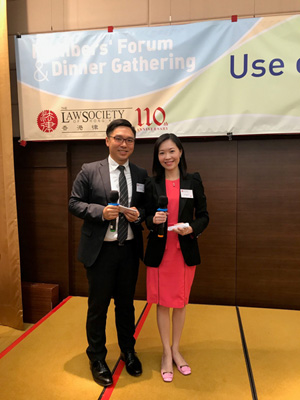
SW partner, Ms. Heidi Chui, acted as the master of ceremonies in the Members’ Forum and Dinner Gathering of the Law Society of Hong Kong (“the Law Society”) held at the Chinese General Chamber of Commerce Members’ Club on 28 July 2017.
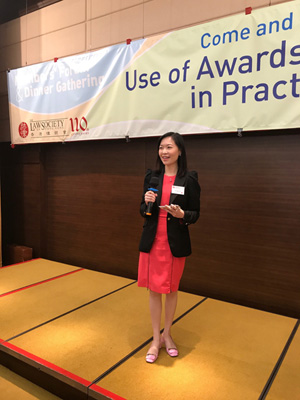
Members’ Forum is an annual event serving as a platform for members of the Law Society to mingle and discuss the latest hot topics in the legal profession.
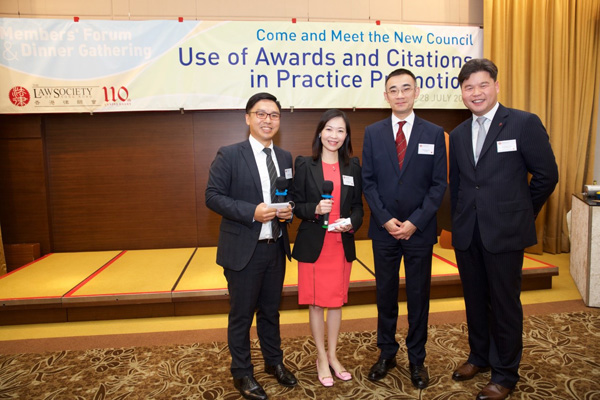
The theme of this year’s Members’ Forum is “Use of Awards and Citations in Practice Promotion”. In furtherance of the theme of the Members’ Forum facilitating members to better the practice promotion by way of awards and citations, members of the Law Society were invited to submit suggestions on this topic. The members also had a chance to have a direct dialogue with the President and Council members to exchange ideas and opinions. The member who made the best suggestion was awarded a grand prize, namely, the Apple iPad Pro 10.5-inch model (64GB, WIFI) as well as vouchers for Citysuper.
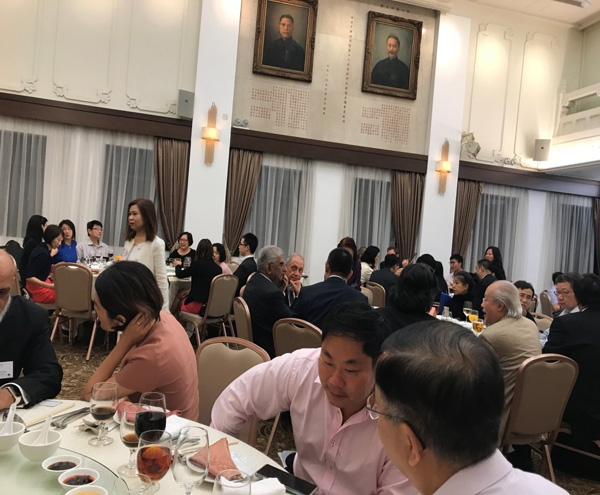
The Members’ Forum was well attended by members of the Law Society.
Please contact our Ms. Heidi Chui for any enquiries or further information about this event.