News Updates
Find out all about our firm’s latest news updates below. To learn more about any individual item, please contact us here.
News Updates
Find out all about our firm’s latest news updates below. To learn more about any individual item, please contact us here.
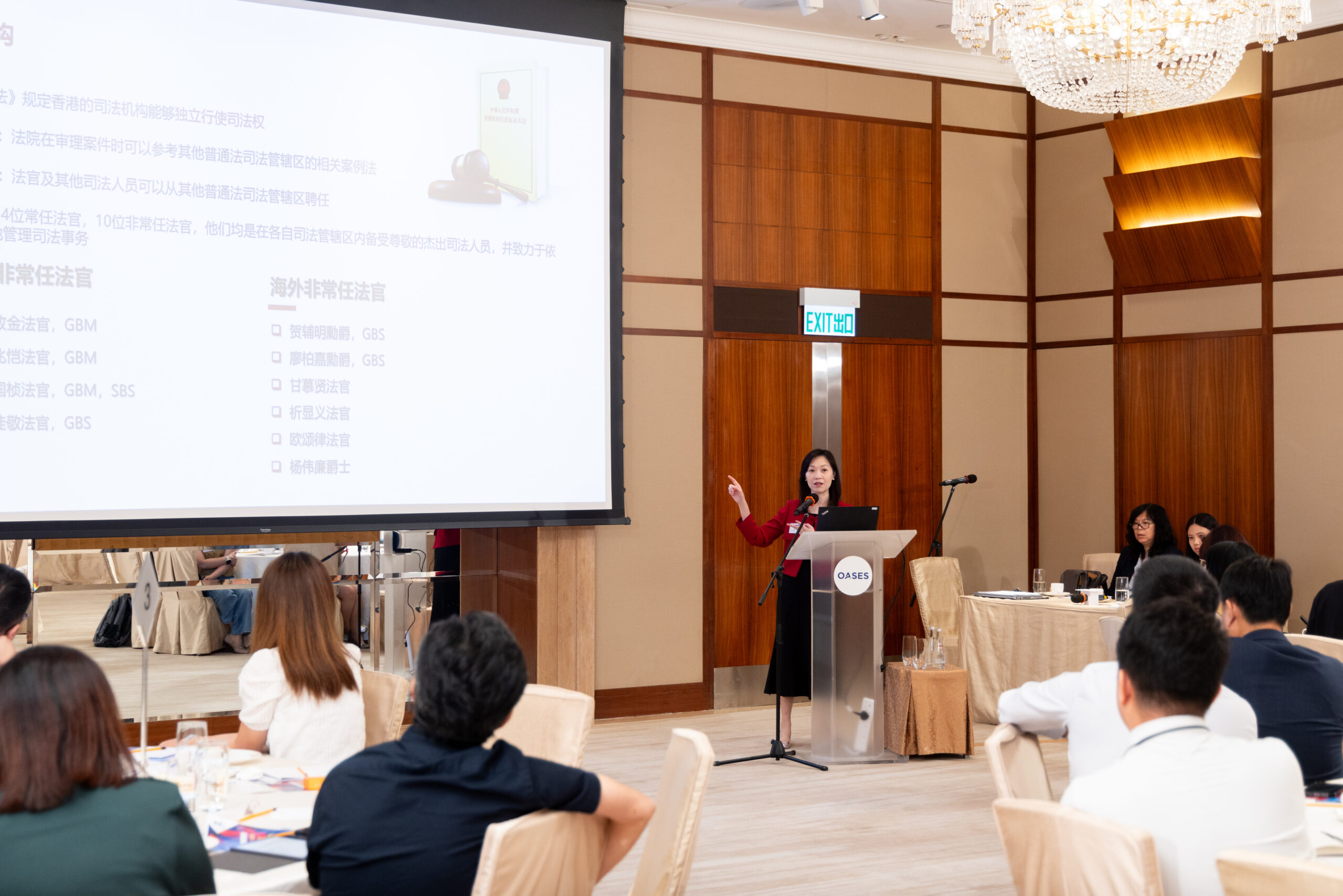
On 10 June 2025, our Partner and Head of the Litigation and Dispute Resolution Department, Heidi Chui, was invited to speak at the panel event titled “Jurisdiction Junction: Hong Kong as an International and Cross-Boundary Legal Hub.” The event was co-organised by the French Chamber in Hong Kong and the The Italian Chamber of Commerce in Hong Kong and Macao, and welcomed over 50 corporate representatives.
…
Ms Chui was joined by distinguished panellists including Dr Cheung Kwok-kwan, SBS, JP, Deputy Secretary for Justice; Peggy Au-Yeung, Principal Government Counsel at the Department of Justice; and Professor Giuliano G. Castellano, Associate Professor of Law at the University of Hong Kong. Together, they engaged in a dynamic discussion on Hong Kong’s strategic position under the “one country, two systems” framework, with a particular focus on its expanding role in cross-border legal cooperation and international arbitration.

From the left: Professor Giuliano G. Castellano, Associate Professor of Law at the University of Hong Kong; our Partner Heidi Chui; Dr Cheung Kwok-kwan, SBS, JP, Deputy Secretary for Justice; and Peggy Au-Yeung, Principal Government Counsel at the Department of Justice
The event served as a valuable platform for exploring the evolving legal landscape of Hong Kong and its growing importance as a trusted hub for international legal services. Ms Chui shared practical insights on conducting corporate operations in Hong Kong, highlighting how businesses can leverage the city’s unique legal and institutional strengths to navigate the global marketplace.


Please contact our Partner Heidi Chui for any inquiries or further information.
(中文)
…
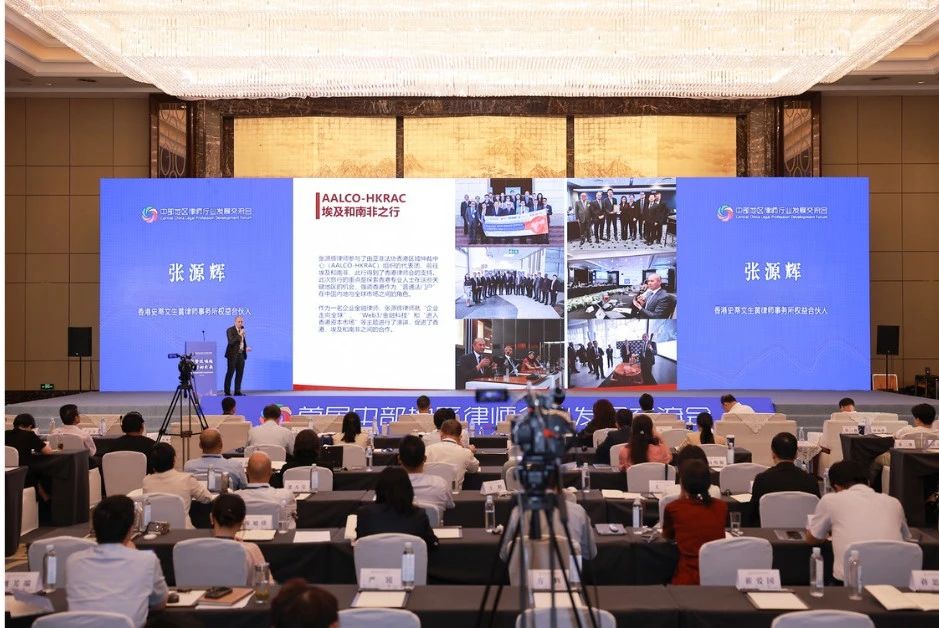
第七届香港法律服务论坛于2025年5月27日在西安国际会议中心圆满举办。本届论坛以“服务共建‘一带一路’ 谱写陕港合作新篇”为主题,由香港律政司、陕西省司法厅、陕西省人民政府港澳事务办公室主办,香港贸易发展局、西安市人民政府共同承办。

左起: 甘子豪律师注册外地律师﹑合伙人叶小铃律师﹑律政司司長林定國資深大律師,和合伙人徐凯怡律师
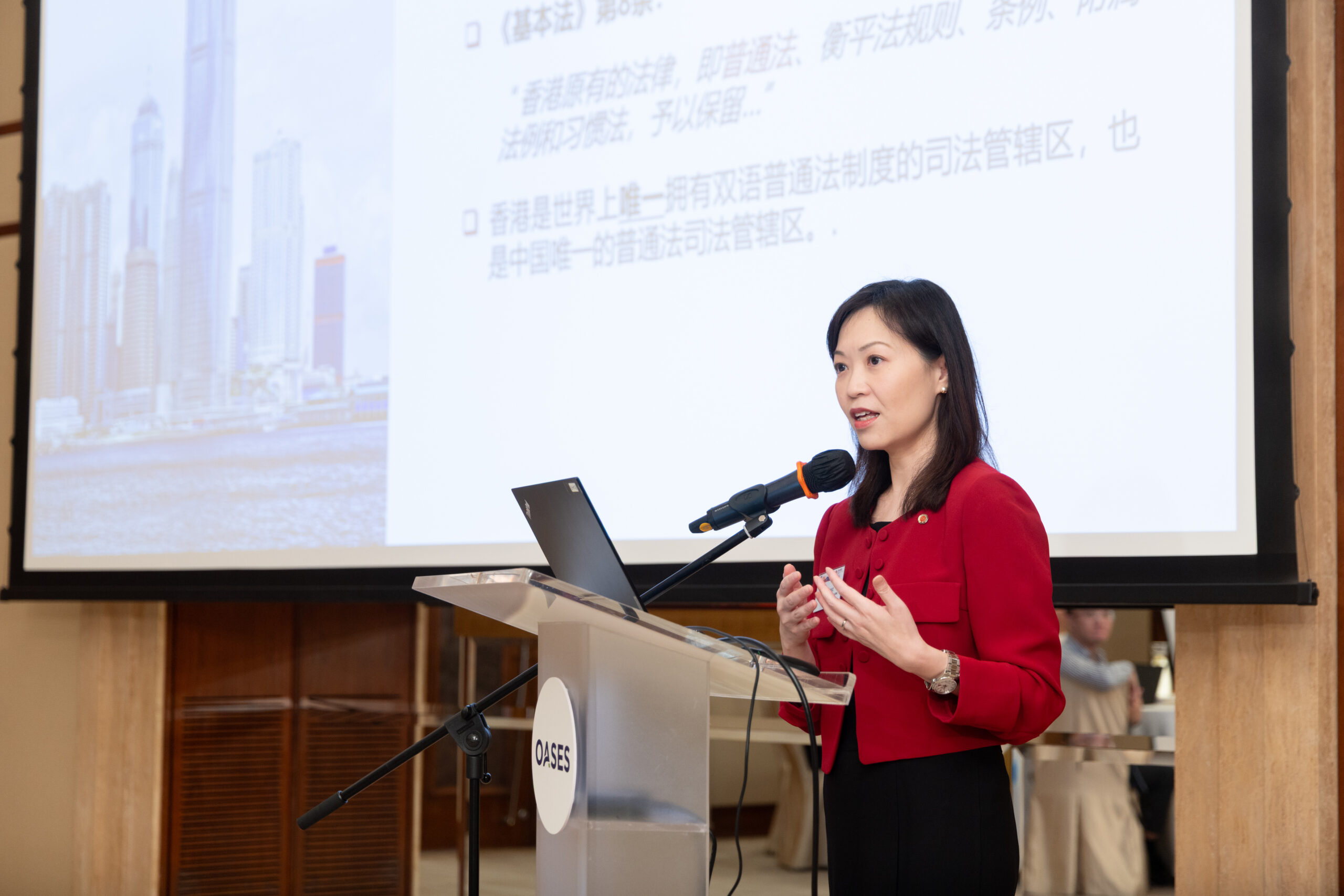
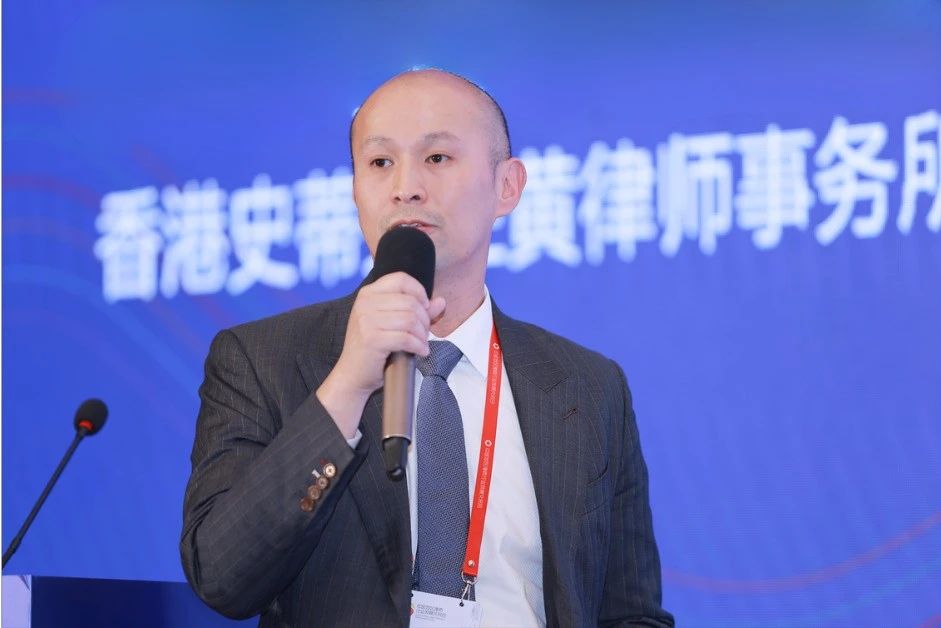
本所合伙人、诉讼及争议解决部主管,香港律师会理事徐凯怡律师,合伙人叶小铃律师和甘子豪律师注册外地律师参加了由香港大律助公会与香港律师会组成的代表团,向陕西及邻近地区的法律界和企业推介香港的国际法律及争议解决服务。

本届论坛分为上午两场主论坛和下午模拟调解两大核心环节,由具丰富处理国际及跨境法律事务经验的香港法律及争议解决专家分享他们的真知灼见,从多角度探讨企业所面对的法律问题。徐律师作为香港律师会理事﹑大中华法律事务委员会副主席及仲裁委员会委员,在模拟仲裁庭环节担任旁述,解构国际仲裁中仲裁庭如何透过律师的盘问,对事实和法律问题作出裁判。


此外,徐律师﹑叶律师和甘律师与当地企业进行“一对一”咨询,对接港澳两地法律服务需求。
论坛吸引了超过800名当地律师及业界代表出席﹐深化了陕港两地法律服务和人才培养交流合作,推动两地法律服务机构为「一带一路」高质量发展、国家企业和公民「走出去」提供优质高效的法律服务。


…
On 14 May 2025, the Legislative Council of Hong Kong passed the Companies (Amendment) (No. 2) Bill 2024, introducing the re-domiciliation regime (“Re-domiciliation Regime”), effective from 23 May 2025. Governed by the Companies (Amendment) (No. 2) Ordinance 2025, the Re-domiciliation Regime enables non-Hong Kong incorporated companies to transfer their place of incorporation to Hong Kong while preserving their legal identity and ensuring uninterrupted business operations.
The Re-domiciliation Regime enables eligible non-Hong Kong companies to register as “re-domiciled companies” in Hong Kong under section 820C(1) of the Companies Ordinance (Cap. 622) (“CO”). Re-domiciliation ensures that companies retain their existing property, rights, obligations, and ongoing contractual and legal processes without disruption. Notably, the Re-domiciliation Regime does not impose an economic substance test, making it accessible to businesses of varying sizes and sectors.
Key Eligibility Criteria
The following table summarizes the key eligibility criteria for the applicants of the Re-domiciliation Regime (“Applicants”): –
| Criteria | Details |
| Type of Company
(section 820C(1) of the CO) |
Eligible company types include:
· Private companies limited by shares; · Public companies limited by shares; · Private unlimited companies with share capital; or · Public unlimited companies with share capital. The company type in the original jurisdiction will be the same or substantially similar to the proposed type in Hong Kong. |
| Compliance with Original Jurisdiction Laws
(Section 4(1) (c) of Schedule 6A to the CO) |
The law of the Applicant’s place of incorporation must permit re-domiciliation to another jurisdiction. |
| Solvency
(Sections 2(1)(f)(ix) to (xii) and 2(2)(c) to (g) & (o) of Schedule 6C to the CO) |
The Applicant must provide a certificate signed by a director confirming that the Applicant:
· is not in liquidation; · has no ongoing or pending proceedings for liquidation against the Applicant; · is able to pay its debts due within 12 months beginning on the application date; and · has not resolved to wind itself up or liquidate. |
| Good Faith
(Section 2(2)(n) of Schedule 6C to the CO) |
The Applicant must not intend to defraud its existing creditors or engage in unlawful activities or purposes contrary to public interest. |
| Shareholder Approval
(Sections 4(1)(d) to 4(1)(f) and 4(3) to 4(4) of Schedule 6A and sections 1(3), 1(4) and 2(1)(f)(viii) of Schedule 6C to the CO) |
Consent of the Applicant’s members is required for the re-domiciliation to Hong Kong. |
Application Documents and Fees
Applicants must submit, including but not limited to, the following documents to the Registrar of Companies: –
The application fee will be HK$1,030 for electronic submissions and HK$1,145 for paper submissions, while the fees for registering as a re-domiciled company are HK$5,020 for electronic forms and HK$5,580 for paper forms.
Post-Re-domiciliation Obligations
Once re-domiciled, companies must fulfil, including but not limited to, the following obligations to maintain compliance: –
Tax and Legal Implications
Section 820D(4) of the CO clarifies that re-domiciliation does not constitute a transfer of assets or alter the beneficial ownership of assets, ensuring no impact on tax obligations in the original jurisdiction or Hong Kong. Re-domiciled companies will be subjected to profits tax on Hong Kong-sourced profits from local business activities.
Additionally, the Re-domiciliation Regime addresses the following tax and legal considerations to facilitate a smooth transition: –
Conclusion
The Re-domiciliation Regime, effective 23 May 2025, strengthens Hong Kong’s position as a global business and financial hub. By offering tax credits, seamless business continuity, and robust regulatory support, the regime provides an attractive framework for companies seeking to establish or expand their presence in Asia.
Companies considering re-domiciliation should, however, carefully assess the implications on their tax residency, regulatory licensing, and contractual arrangements. While the new framework ensures legal continuity, practical considerations such as stakeholder communications, regulatory approvals, and exit requirements from the original jurisdiction may require careful planning and execution.
Please contact our Partner Mr. Rodney Teoh for any enquiries or further information.
This news update is for information purposes only. Its content does not constitute legal advice and should not be treated as such. Stevenson, Wong & Co. will not be liable to you in respect of any special, indirect or consequential loss or damage arising from or in connection with any decision made, action or inaction taken in reliance on the information set out herein.
…
On 6 May 2025, the Securities and Futures Commission (“SFC”) and The Stock Exchange of Hong Kong Limited (“the Exchange”), a wholly-owned subsidiary of Hong Kong Exchanges and Clearing Limited (“HKEX”), jointly announced the launch of the Technology Enterprises Channel (“TECH”).[1] TECH facilitates new listing applications from Specialist Technology Companies (as defined under Chapter 18C of the Rules Governing the Listing of Securities on The Stock Exchange of Hong Kong Limited (the “Listing Rules”)) and Biotech Companies (as defined under Chapter 18A of the Listing Rules). The initiative provides enhanced support, a confidential filing option, and streamlined pathways for companies with weighted voting rights (“WVR”) structures.
The Technology Enterprises Channel
TECH is tailored to support Specialist Technology Companies and Biotech Companies, which are often early-stage or pre-revenue entities with unique operational and regulatory challenges. To streamline the listing process, the Exchange has introduced the following support measures: –
These measures enhance efficiency and transparency, particularly for innovative-sector companies navigating complex regulatory hurdles.
Confidential Filing Option
Recognising the heightened risks associated with premature disclosure of sensitive information, such as operational strategies or proprietary technologies, the Exchange has introduced a confidential filing option for Specialist Technology Companies and Biotech Companies.
Under this option, companies listing under Chapters 18C and 18A of the Listing Rules may submit their application proofs confidentially, as outlined in Chapter 6.4 of the Guide. This measure is particularly significant for early-stage companies that have not yet commercially launched their products, as it helps mitigate risks of competitive harm and reduces market speculation during the listing process. The confidential filing option has been available for applications filed since 6 May 2025.
Support for Weighted Voting Rights Structures
The announcement includes updates to the Guide that benefit companies seeking to list with a WVR structure, which allows certain shareholders to hold shares with enhanced voting power.[2]
Specialist Technology Companies and Biotech Companies that fully meet the requirements under Chapters 18C and 18A of the Listing Rules, respectively, are presumed to have satisfied the innovative company requirements and the external validation requirement for listing with a WVR structure under Chapter 8A of the Listing Rules.[3] This presumption, detailed in Chapters 2.2, 2.3, and 2.5 of the Guide, simplifies the listing process for these companies, enabling these companies to maintain control while accessing public capital markets. However, these companies remain subject to all other applicable requirements under Chapter 8A of the Listing Rules.
Conclusion
The launch of TECH on 6 May 2025 marks a pivotal step in Hong Kong’s strategy to solidify its position as a premier hub for technology and biotech listings. By offering tailored guidance, confidential filing options, and simplified requirements for WVR structures, HKEX and the SFC have created a more accessible and supportive environment for innovative companies. This initiative not only facilitates the growth of the technology and biotech sectors but also enhances the diversity, competitiveness, and resilience of Hong Kong’s capital market, benefiting both issuers and investors. As global demand for public listings in these sectors grows, TECH positions Hong Kong as a forward-thinking hub for emerging enterprises.
Please contact our Partner Mr. Rodney Teoh for any enquiries or further information.
This news update is for information purposes only. Its content does not constitute legal advice and should not be treated as such. Stevenson, Wong & Co. will not be liable to you in respect of any special, indirect or consequential loss or damage arising from or in connection with any decision made, action or inaction taken in reliance on the information set out herein.
[1] “Joint Announcement on Launch of Technology Enterprises Channel” by HKEX dated 6 May 2025.
[2] Please refer to Chapter 8A of the Listing Rules for more details on WVR structures.
[3] Please refer to HKEX Guidance Letter HKEX-GL93-18 for more details on the requirements for listing with a WVR structure.
(中文) 2025年4月23日, 本所合伙人、银行及金融部和诉讼及争议解决部主管徐凯怡律师受中国银行(香港)有限公司(“中银香港”) 邀请,担任「银行销售和营销实践监管指南——原则与案例研究」合规培训讲师。本次培训通过线上线下融合模式举办,吸引了中银香港众多高管和前线业务主管参与。
…
在培训中,徐凯怡律师聚焦银行业监管的重点领域,深入剖析了员工激励机制、“纯执行Execution-only)”商业模式、营销推广等关键环节所涉及的合规要点。她以香港金融管理局(“金管局”)和证券及期货事务监察委员会(“证监会”)的相关监管文件为依据,结合生动的案例分析,深入浅出地讲解了银行在薪酬福利、投资产品销售等方面可能存在的合规风险与漏洞,并提出了切实可行的应对策略。
与会者积极参与互动练习和现场提问环节,气氛热烈。培训结束后,学员们表示受益匪浅,对徐律师的专业讲解和实用建议给予了高度评价。


如阁下有任何查询或想了解更多详情,请联络本所合伙人徐凯怡律师。
We are delighted to share that our Partner and Head of the Litigation and Dispute Resolution Department, Heidi Chui, was invited by the Asia Business Law Journal (ABLJ) to author the exclusive Hong Kong chapter of its regional guide on responsible artificial intelligence (AI) deployment. The article was co-authored with Consultant Elizabeth Chan and Associate Justin Kim.
…
Against the backdrop of rapid AI adoption across industries, the article explores Hong Kong’s evolving approach to AI regulation, which remains fragmented and sector-specific. Different authorities – including the Securities and Futures Commission (SFC), the Hong Kong Monetary Authority (HKMA), and the Office of the Privacy Commissioner for Personal Data (PCPD) – each impose distinct regulatory obligations, creating a complex compliance environment for businesses operating across multiple sectors.
The chapter highlights high-risk AI applications in finance, healthcare, and legal services, where the potential for bias, data misuse, and consumer harm is particularly acute. Drawing from local regulatory guidance such as the SFC’s Circular on Generative AI and the HKMA’s High-Level Principles on AI, the authors provide a clear and practical framework for risk assessment, oversight, and compliance.
The article also introduces governance tools such as the “three lines of defence” model to help businesses align innovation with accountability, and examines data privacy issues, including the use of AI in processing sensitive personal data and the growing regulatory concern around unauthorised data scraping.
In the absence of a unified AI framework, the authors encourage businesses to take a proactive and tailored approach: identifying high-risk applications, engaging with sectoral regulators, and building strong internal controls for responsible AI use.

Read the full article here: Asia Business Law Journal
Please contact our Partner Heidi Chui for any inquiries or further information.