News
Find out all about our firm’s latest news and activities below. To learn more about any individual item, please contact us here.
 Stevenson, Wong & Co.
News
Find out all about our firm’s latest news and activities below. To learn more about any individual item, please contact us here.
Company A, incorporated in Canada, held 75% of three operating companies in the business of mineral mining while Company B held the remaining 25%. Company A as guarantor entered into a borrowing facility with certain companies as borrowers. Company A also charged some shares in two companies in favour of the lender bank.
Company A went into financial difficulties. Subsequently, the lenders rights were transferred to Company C (within the same group of companies as Company B). A notice of acceleration was served on the borrowers. The initial security agent also resigned and was replaced by Madison, a Hong Kong company. As the matter went on, the discussions to resolve the financial difficulties failed and joint administrators were appointed by the High Court in London.
The administrators were concerned that Madison would sell the charged shares at an undervalue which will prejudice the equity of redemption. An application was made in London (the centre of main interests of Company A) and in Hong Kong in an attempt to stall the sale of the charged shares.
Court’s decision
The Court first considered the issue whether liquidators appointed in a jurisdiction (England in this case) other than the place of incorporation (Canada in this case) are recognised under Hong Kong law. The court supports (without deciding) the idea of recognising such liquidators and thus having the jurisdiction to render active assistance to overseas insolvency proceedings due to the commercial necessity of cross border insolvency.
The second issue is, in the lack of the statutory provisions, what types of orders are available to such liquidators under common law and equitable principles. The Court found that there were no statutory provisions which provided for a moratorium of the enforcement of the security. In the instant case, the application was not made on the ground that the proposed enforcement would prejudice the equity of redemption or the liquidated company subsequently had been able to fulfill the payment obligations. Hence, the application had no common law or equitable basis to rest on. On this basis, the court rejected the application.
Implications
The present case reflects the natural spread of modified universalism in cross-border insolvency cases, under which the court will endeavour to provide assistance to each other without awaiting sanctions as agreed by international conventions. Although liquidators not appointed in the place of the incorporation are recognised, the court still treads cautiously when it comes to granting restrictive sanctions to aid foreign insolvency proceedings.
Stevenson, Wong & Co. was awarded the “Best Legal Advisory in Non-Financial Services Categories” in Wealth APAC – International Private Wealth Management (IPWM) Forum & China Awards 2016. SW Partner, Mr. Hank Lo, and Head of Business Development (China), Ms. Connie Yeung, attended the Forum cum Award Presentation Ceremony on 21st September 2016 in Shanghai, China. There were over 200 awardees and representatives attending the event. SW was again recognized in China for its professional services following the establishment a by SW as a professional trustee which also received the “Most Distinctive Family Overseas Trust Planning Services Award” in May 2016
The IPWM China Awards is a large-scale industry event hosted by WEALTH Magazine, endorsed by China Banking Association and co-organized by China Chief Economist Forum. Participants include reputable family offices, private banks, independent wealth management institutions and other high-net-worth organizations in areas of trust, insurance, law, immigration, overseas education, with a wide geographical coverage over 30 provinces, autonomous regions and municipalities in China. After WEALTH Magazine consolidated all the submissions from candidates, they were forwarded to a judging panel consisting of internationally renowned consulting firms including Boston Consulting Group and Bain & Company, China Banking Association Private Banking Committee and Chinese Academy of Social Sciences for evaluation and assessment to decide on the awardees of approximately 50 awards spanning across multiple categories.
Cases submitted to the judging panel by SW included IPO, financing, merger & acquisition, divorce and financial disputes, family trust, asset protection and inheritance arrangement. In particular, one high-profile case involved the highest amount of maintenance being awarded by courts in all common law jurisdictions at that time. In terms of market influence, our frequent hosting of seminars on asset protection, inheritance and active participation in the design of international accreditation courses were highly commended by the judging panel. SW holds licences for Hong Kong and New Zealand family trust companies, and at the same time, assists clients in establishing private trust companies and provides clients with legal solutions on asset protection. SW also manages the assets inside and outside the trust. With a solid legal platform in China and overseas, SW is capable of providing professional overseas legal services to high-net-worth individuals in a flexible way.
In public voting, SW was the only law firm shortlisted from Hong Kong and received more than 20,000 votes. We would like to take this opportunity to express our gratitude to our clients, private bankers, experts in family offices and financial institutions, and other professionals for their support. The credibility of the award is enhanced by incorporating the element of public voting and including professional theory and market recognition in the assessment criteria.
Please contact our Mr. Hank Lo for any enquiries or further information about this award.


The claimant initiated a litigation claim in Hong Kong in 2012 (Action 1). Subsequently, the action was stayed with consent and referred to arbitration according to the arbitration agreement at issue. In November 2013, the claimant obtained a favourable award from the arbitral tribunal in Shanghai.
The claimant obtained an order for enforcement of the arbitral award in Hong Kong in 2014. However, the Defendant did not take appropriate actions according to the order. Instead, he attempted to re-litigate the matter under Action 1.
The claimant restored Action 1 and a hearing was fixed in March 2016. Just five working days before the hearing, the Defendant applied to consolidate Action 1 with another separate High Court action. No evidence was filed by the Defendant in support of the consolidation and the Defendant also filed evidence in Action 1 after the designated time.
The Court rejected the consolidation and also decided for the claimant in Action 1. Specifically, the Court awarded indemnity costs to the claimant. The Court is of the view that although the Defendant did not directly challenge the arbitral award, the overall behaviours of the Defendant were “clearly an attempt to delay the enforcement” of the arbitral award. The Court considered that if the costs order was not on an indemnity basis, but rather a more lenient party-and-party basis, it would encourage people to employ similar strategies other than a direct challenge of the arbitral award to delay the enforcement.
This case reinforced the Court’s pro-arbitration stance. The Court’s position is that not only would a failed attempt to challenge or set aside an arbitral award result in an unfavourable costs order on an indemnity basis, but also where a party seeks to indirectly impede the enforcement of an arbitral award. Therefore, a party must carefully consider the binding effect of an arbitral award as recognized by the Court in Hong Kong when agreeing to an arbitration agreement.
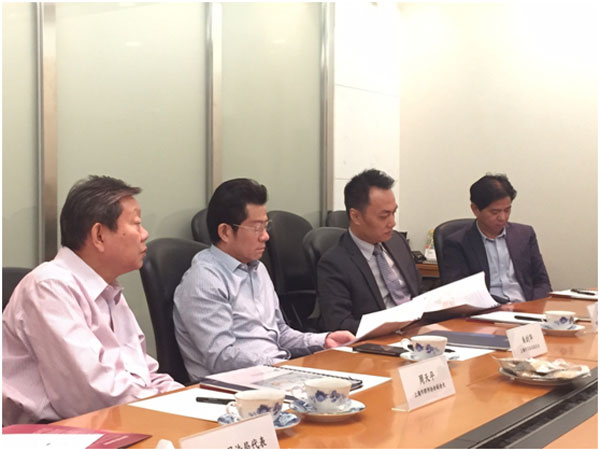
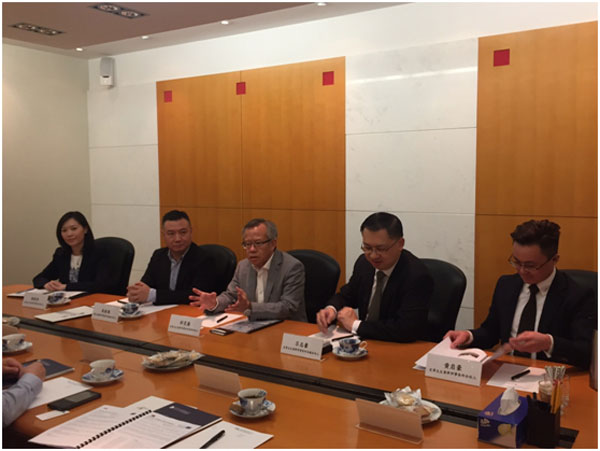
On 20th September 2016, Mr. Zhu Jianhua and another representative from Shanghai Bureau of Justice, Mr. Yu Xuejie of the Liaison Office of the Central People’s Government in HKSAR, Mr. Zhou Tianping and Wang Xufeng of the Shanghai Bar Association visited our Hong Kong office.
SW partners, Mr. Willy Cheng, Mr. Eric Lui, Ms. Heidi Chui and Mr. Stephen Wong together with the senior partner of Allbright Law Offices, Mr. Lawrence Zhu exchanged ideas with the guests on various topics. It was brought up that the increase in the amount of work requiring cross border cooperation led to the further development of the strategic association between our firm and Allbright Law Offices. In light of the importance of interaction between lawyers from different jurisdictions, the guests gained insights on how our association worked, hoping that our successful implementation would be a blueprint of more such associations in the future. Our SW partners also shared the newly launched “ ‘One Belt, One Road’ Southeast Asia Legal Service Centre”, whereby our firm seeks to promote business cooperation between China and countries along Southeast Asia.
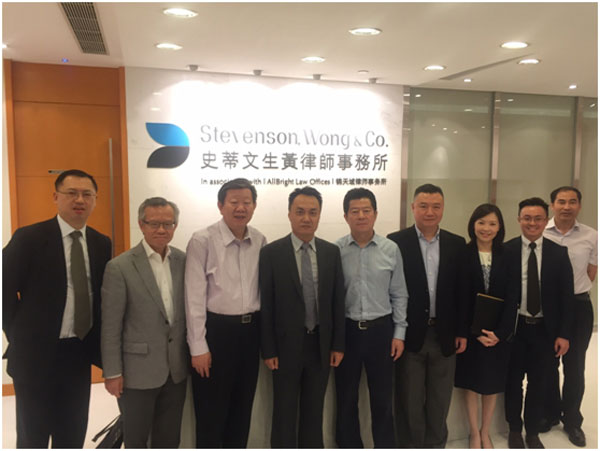
From left to right: Mr. Eric Lui, Mr. Willy Cheng, Mr. Zhou Tianping, Mr. Yu Xuejie, Mr. Zhu Jianhua, Mr. Lawrence Zhu, Ms. Heidi Chui, Mr. Stephen Wong, Representative from Shanghai Bureau of Justice
Please contact Mr. Eric Lui for any enquiries or further information about this event.
The Bankruptcy (Amendment) Ordinance (the “Ordinance”) was passed in April in response to certain provisions in the Bankruptcy Ordinance being struck down as unconstitutional. The Ordinance comes into effect from 1 November 2016 and will affect all bankruptcy orders made after that date.
The present regime
The current bankruptcy regime provides for automatic discharge of bankruptcy and the required period of time varies among first time and repeat bankrupts, subject to, among other things, a regime that allows the deferral of the automatic discharge if bankrupts leave Hong Kong.
If a bankrupt (i) leaves Hong Kong before the commencement of bankruptcy; (ii) leaves Hong Kong after the commencement of bankruptcy, and without notifying the trustee of their itinerary and contact details or (iii) failing to return to Hong Kong after bankruptcy has started, the running of time required for automatic discharge will be suspended until the bankrupt returns to Hong Kong and he notifies the trustee in bankruptcy of the return.
The NEW regime
The new regime, providing for the non-commencement order, will displace the current regime.
The system of “initial interview” is introduced. It is intended to increase the transparency of the bankrupt’s estate and hence allow a more efficient administration of the estate. A trustee can request the bankrupt to attend in person the initial interview with the view of obtaining information of their financial affairs, dealings and property in Hong Kong. If the bankrupt fails to comply and the administration of the estate is hence prejudiced, the trustee can apply to the Court for an order (with conditions as the Court thinks fit) to treat the relevant period for automatic discharge as not commencing to run. The order can be applied within 6 months of the date of the bankruptcy order. The accrual of time will not commence until the order is discharged and all conditions are complied with. The bankrupt can object to the application.
Once the bankrupt has complied with the order, the trustee in the estate must notify the Court within14 days and time for the automatic discharge will start to run from the date of actual compliance.
This is a very welcomed move forward in improving on the current bankruptcy regime. The new regime can provide disincentive to bankrupts from deliberate non-cooperation with the trustee or absconding, and also allow the trustee to obtain more relevant information on the outset in the administration of the estate.
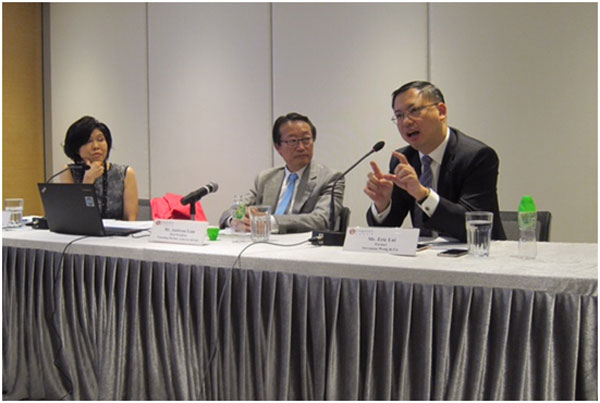
On 19 September 2016, our partner Mr Eric Lui spoke in a panel workshop on Partnership Associations in Guangdong organised by the Practice Management Committee of the Law Society of Hong Kong. The panel workshop was held at the Hong Kong International Arbitration Centre.
In view of developing closer cooperation between the legal professions of Hong Kong and mainland China, the Pilot Implementation Measures for Partnership Associations between Hong Kong Law Firms and Mainland Law Firms in Guangdong Province was introduced in 2014, allowing law firms in these two jurisdictions to establish partnerships in Guangdong.
Our firm set up a Partnership JV with AllBright Law Offices in the Qianhai Modern Service Industry Cooperation Zone in Shenzhen. It becomes one of the first batch of Hong Kong law firms to receive the approval of the Guangdong Bureau of Justice to form a Partnership JV in Qianhai.
Mr Lui shared with participants in the workshop, among other topics, the benefits of forming the Partnership JV in Qianhai, the strategic importance of forming and operating such a Partnership JV, the associated challenges, and how potential conflict of interest is handled.
Please contact our Mr Eric Lui for any enquiries or further information about this event.