News
Find out all about our firm’s latest news and activities below. To learn more about any individual item, please contact us here.
 Stevenson, Wong & Co.
News
Find out all about our firm’s latest news and activities below. To learn more about any individual item, please contact us here.
The Companies (Winding Up and Miscellaneous Provisions) (Amendment) Ordinance 2016 (hereinafter, “the Ordinance”) was published on 2nd June 2016. The purpose of the Ordinance, as per its preamble, is “to amend the Companies (Winding Up and Miscellaneous Provisions) Ordinance and its subsidiary legislation to increase protection of creditors; to streamline the winding up process; to strengthen regulation under the winding up regime; and to make related, consequential and minor technical amendments.” This article will set out some of the main changes found in the Ordinance concerning the protection of creditors and the winding up process.
Creditor protection
The Ordinance aims to enhance the protection of creditors by introducing, inter alia, the following changes:
1) Unfair preferences: The Ordinance enables the court to set aside transactions entered into by a company prior to its winding up where it unfairly puts one creditor in a better position than others.
2) Transactions at an undervalue: The court has the power to set aside transactions at an undervalue entered into by a company within 5 years before the commencement of its winding up, but only where one of two conditions are met: either the company is unable to pay its debt at the time or it becomes unable to pay its debt as a result of the transaction or unfair preference.
3) Floating charges: The relevant time has now been extended such that floating charges made in favour of connected persons two years before the commencement of the company’s winding up will be caught.
4) Members’ and directors’ liabilities: Where a company is being wound up and it has made a payment out of capital relating to the redemption or buy back of any of its shares from a person and winding up commences within one year, both the past shareholder and the director who signed the solvency statement are jointly and severally liable to contribute an amount not exceeding the amount of the payment out of capital made by the company in respect of the shares redeemed or bought back from the past shareholder.
Winding up
The Ordinance also aims to streamline the winding up process by introducing, inter alia, the following changes:
1) Appointment of solicitor: The procedure whereby a liquidator appoints a solicitor to assist in court winding-up has been simplified.
2) Safeguards in voluntary winding up: The directors must deliver to the Registrar a winding up statement. Thereafter, the directors need to “cause a meeting of the company to be summoned for a date not later than 28 days after the delivery of” the said winding up statement. The directors are to appoint a provisional liquidator from the commencement of the winding up of the company.
3) Powers of provisional liquidators: For court winding up, the powers and duties of provisional liquidators are set out more clearly. The remuneration and tenure of the provisional liquidators are also set out more clearly.
4) People disqualified for appointment as provisional liquidator or liquidator: The list of disqualified people has been expanded to avoid conflicts of interest.
Summary
Whilst the operation date of the Ordinance is currently unknown, however, once the Ordinance comes into effect, they are likely to have an impact on the landscape of insolvency and winding up law in Hong Kong.
(中文) 不离婚就没事了吗?
中国有很多太太仍保留着中华民族传统女性美德-真善忍;却很少意识到面临的法律风险。无可确保的事情随时发生,最好的应对是提前做好预防。
同患难能共富贵吗?
方太太说:“早年和他一起奮鬥,从工厂到后来投资房地产公司和金融,这些年赚了很多钱。 孩子现在美国留学,本来我们俩考虑退休,最近外面有风声说,他在外面“包二奶”!”
方太太续说:“这些年房地产公司让我们身家增值不少。传言归传言,无论怎么折腾,先生名下的房地产公司是一人有限责任公司,如果未来丈夫提出离婚,公司股权,个人财产等都能分得到,现在更应该选择做一个智慧的女人,好好赡养老人,过好自己的退休生活。”
她的想法对吗?从一个传统的中国女性美德来说无可挑剔,但从资产保护的角度来说,这样的想法值得商榷。

风险防不胜防!
1. 公私不分:
方先生的公司是一人有限责任公司,如果公司账目清晰,公司收支和个人收支没有混同,出资到位,问题不大;但若不加注意,会导致方太太产生连带的经济责任!我们碰到的案例里面,公司把利润以不同的方式转移也比较常见。最后导致公司价值大大降低。家庭利益不易保障。
2. 婚后债务共有:
个人婚后财产共有虽然是中国婚姻法的核心。 但是另外一个意义是婚后债务共有。就是离了婚,只要是在婚姻存续期间发生的债务,哪怕是不知情的也要责任,曾经有案例债权人还是“小三”!爱情没了还要被牵连。
3. 丧偶再婚:
如果方太太去世在先,财产很可能被其他不知名的第一顺位继承人瓜分。丧偶再婚在“二奶转正”的家庭里更为普遍。二婚的争产一般都是鱼死网破的!
4. 继承流程难:
不管有没有遗嘱,继承流程都需要所有指定受益人一定的配合。只要是家庭成员之间可能不和谐,一般都没法顺利走毕公证流程而需要法院介入的!整个过程,很多私密就会曝光,一般披露的资料都会很伤感情的!也会对后代遗留非常不好的阴影。
5. 遗嘱定江山?
方先生如生前立下遗嘱,太太只能通过挑战遗嘱,才能避免遗嘱指定受益人瓜分财产。争产耗费时间与律师费用,效果还非常不确定!很有可能缺钱打官司的一方以接受不利的和解条款告终。

您专属的保险柜
到底是先有珠宝还是先有保险柜?
保险柜就是我们所说的海外家族信托,通过资产由信托公司持有,彻底剥离自然人持有资产的风险,包括债务,诉讼纠纷,婚姻,继承,税务等。对方先生做生意留自留地,确定孩子读书抚养费用等都是刚需。剥离在家族信托内的资产专项专用,如果规划得当,可以避免婚姻法析产的干扰。
海外信托持有的资产,除了现金或其他金融资产,也可以是房产或公司股权,分配方案灵活。有效对抗不同风险。
如需了解最适合你的信托规划,请主动联系你的法律顾问/理财顾问/家族办公室构建合理的资产保护方案。史蒂文生黄律师事务所成立了香港及新西兰信托公司,也为客户搭建私人信托公司,可为客户提供信托咨询或受托人服务。 最近还获得由香港家族办公室协会颁发“最具特色家族海外信托策划服务奖”。
分享资讯助人自助,谢谢关注微信公众号或浏览官方网站www.sw-hk.com。如需节录或转载,请注明资料来源为微信公众号swc_hk。
免责声明: 于此提供的资料只供参考,须以有关国家/地区法律顾问的法律意见和有关政府行政与司法机关对于适用的法例的解释和应用为准;上述资料亦受制于适用法例的任何不时的更新与修改,如因上述资料而引至任何人士或单位蒙受任何损失,该人士或单位须自行承担一切责任
照片来源: http://www.suibi8.com/baozhengshu/101756-baozhengshu-zhongcheng.html
The Court of Appeal in Tadjudin Sunny v Bank of America, National Association (CACV 12/2015) (hereinafter, “Ms. Tadjudin” and “the Bank” respectively) upheld the Court of First Instance’s decision that the Bank, when it terminated Ms. Tadjudin’s employment, was in breach of the implied term of anti-avoidance, in order to avoid her being eligible under the performance incentive programme.
The crux of the case was whether the Court of Appeal would uphold the Court of First Instance’s finding that there existed an implied term of anti-avoidance in Ms. Tadjudin’s employment contract. It was held that the term is necessary to give effect to the common, reasonable expectation of the parties such that the Bank could not exercise its power of termination under the employment contract in order to avoid Ms. Tadjudin being eligible under its performance incentive programme. The Court of Appeal held that without the existence of this term, the performance incentive programme would become illusory and could be easily taken away by the Bank through the termination of Ms. Tadjudin’s employment. Based on the facts and circumstances of this case, it was held that an implied term of anti-avoidance existed in Ms. Tadjudin’s employment contract, but it was not held that an implied term of anti-avoidance existed in all employment contracts.
The Court of Appeal held that Mr John Liptak (an employee of the Bank and Ms. Tadjudin’s supervisor) was an agent of the Bank, and his malice and intention could therefore be attributed to the Bank. It was also noted that the decision to terminate Ms. Tadjudin’s employment was made collectively by the senior management through the manipulation by Mr Liptak, and there was no reason why Mr Liptak’s intention should not be attributed to the directing mind and will of the Bank in this situation.
In summary, this case represents the judiciary taking a more assertive role in addressing the rights between employers and employees. It also serves as a reminder that employers should be careful when dismissing employees especially where discretionary bonuses are involved because termination of employment close to the payment of a bonus may lead to a claim that there is a breach of an implied term of anti-avoidance.
On 23 June 2016, our partners Mr. Willy Cheng, Mr. Eric Lui and Ms. Heidi Chui attended a gala dinner organised by the Association of China-Appointed Attesting Officers Limited to celebrate the 35th anniversary of the establishment of the China-Appointed Attesting Officer (CAAO) system. The gala was held at JW Marriott Hotel Hong Kong.
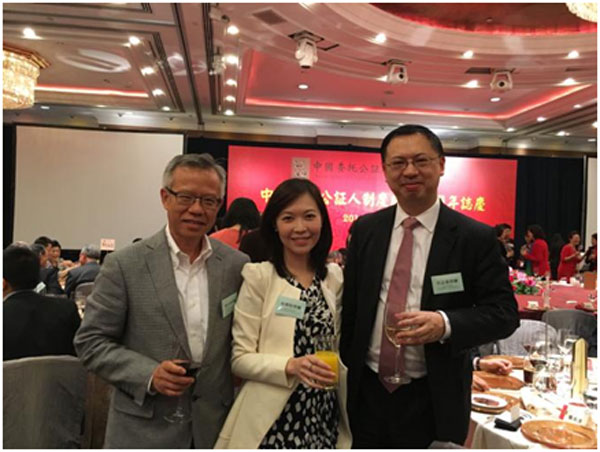
(From left to right): Mr. Willy Cheng, Ms. Heidi Chui and Mr. Eric Lui
Representatives from the Ministry of Justice PRC attended the gala to celebrate the milestone together with CAAOs and members of China Legal Service (Hong Kong) Limited and the Liaison Office of the Central People’s Government in the Hong Kong Special Administrative Region. Mr. Rimsky Yuen, SC, the Honorary Secretary for Justice, also attended the gala.
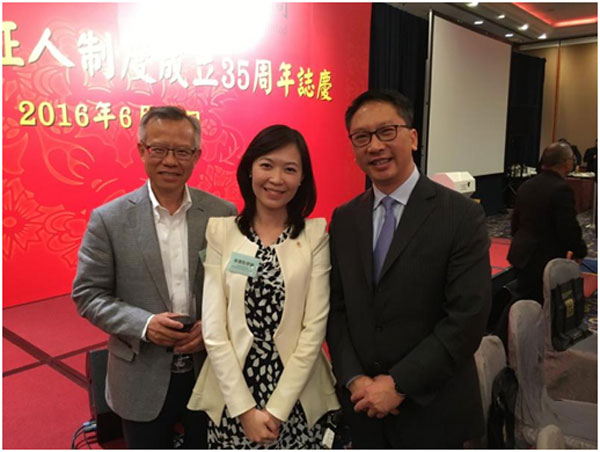
(From left to right): Mr. Willy Cheng, Ms. Heidi Chui and Mr. Rimsky Yuen, SC
Please contact our Mr Willy Cheng, Mr Eric Lui or Ms Heidi Chui for any enquiries or further information about this event.
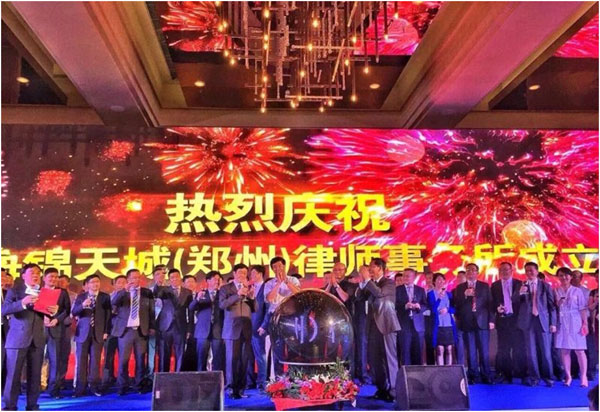
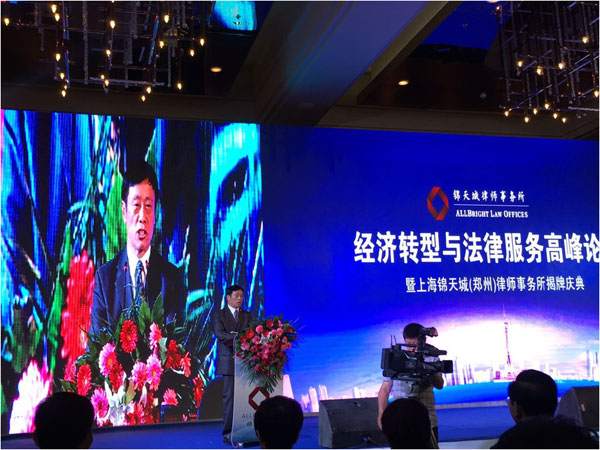
On 18 June 2016, our partners Mr. Willy Cheng and Mr. Eric Lui attended the opening ceremony of AllBright Law Offices (Zhengzhou), as well as a conference jointly hosted by AllBright Law Offices and Economic Law Studies Association of Henan Law Society. The conference, titled “Economic Transformation and Legal Services”, hosted numerous speakers who shared their insights on how to provide innovative legal services in order to effectively accommodate the rapidly-changing Chinese market and economy.
Please contact our Mr. Willy Cheng or Mr. Eric Lui for any enquiries or further information about this event.
SW acted for the issuer, Guotai Junan International Holdings Limited (1788.hk), as to Hong Kong laws for its issue of USD 300 million subordinated perpetual securities. The placing agent was Guotai Junan Securities (Hong Kong) Limited. The joint subscribers were China Industrial Securities International Brokerage Limited, CNPC Finance (HK) Limited, China Guangfa Bank-China Southern Fund-QDII1-17, Guotai Junan Financial Holdings Limited and SPDB International Investment Management Limited.
Please contact our Mr. Eric Lui or Mr. Hank Lo for any enquiries or further information about this transaction.