News
Find out all about our firm’s latest news and activities below. To learn more about any individual item, please contact us here.
News
Find out all about our firm’s latest news and activities below. To learn more about any individual item, please contact us here.
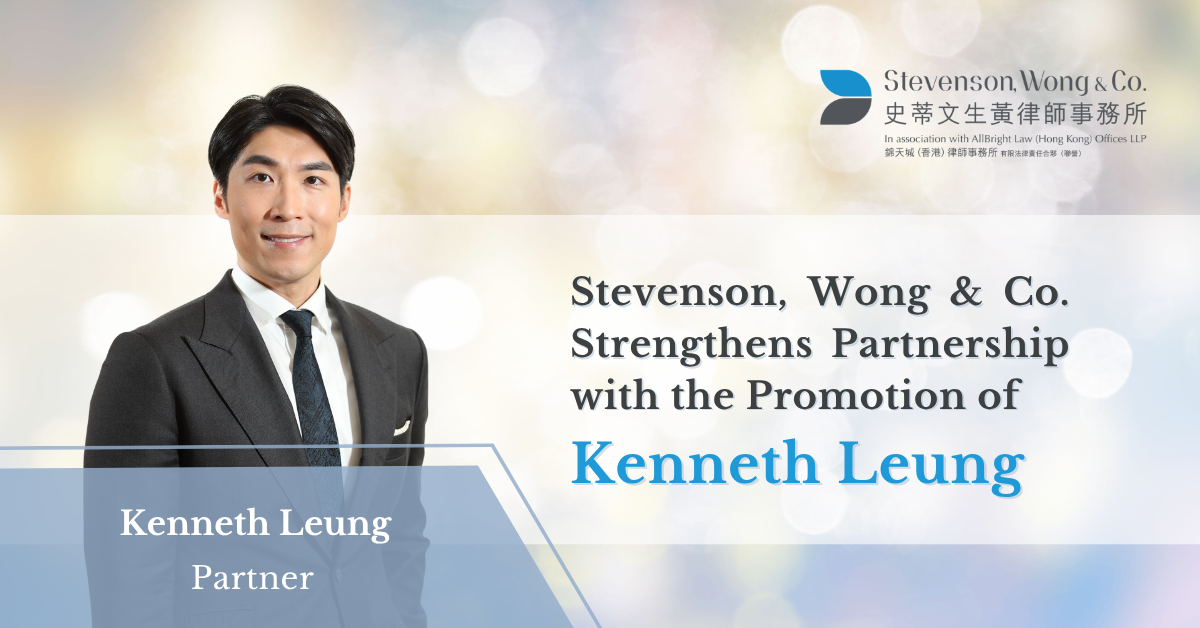 …
We are delighted to announce the promotion of Kenneth Leung to the Partnership, a move that significantly strengthens our firm’s senior capabilities in financial regulation and dispute resolution.
Mr. Leung is a Hong Kong-qualified solicitor with over a decade of experience at the forefront of the region’s most complex legal challenges. His practice is defined by a sophisticated mastery of corporate and securities laws, where he seamlessly bridges the gap between contentious regulatory enforcement and high-stakes commercial litigation.
Renowned for his strategic precision, Mr. Leung regularly advises on matters involving fiduciary duties and civil fraud, providing robust advocacy in proceedings before the SFC, HKEX, and the High Court. He serves as a pivotal advisor to listed companies and licensed corporations, navigating the intricate regulatory landscapes and shareholder disputes that define the Hong Kong market.
The promotion of Mr. Leung will strengthen our firm’s capacity to deliver exceptional legal services to our clients amidst Hong Kong’s evolving regulatory landscape. His elevation underscores our commitment to excellence and ensures we remain at the forefront of the legal sector.
On 10 and 11 March 2026, the Securities and Futures Commission (“SFC”) and Independent Commission Against Corruption (“ICAC”) executed a major joint operation codenamed “Fuse”. The operation targeted suspected insider dealing and corruption involving senior executives of three licensed corporations, specifically two securities firms and a hedge fund management firm.
 …
During the operation, authorities searched 14 locations and arrested eight individuals. Those arrested included senior executives from the implicated firms and a middleman. Investigators suspect that senior executives at the securities firms accepted bribes exceeding HK$4 million from the hedge fund’s owner. In return, they allegedly leaked confidential information about upcoming share placements by various Hong Kong-listed companies before the information was publicly announced.
Leveraging this confidential information, the hedge fund established short positions through short selling and short equity swap contracts. When the share placements were eventually publicised, the relevant stock prices dropped, allowing the hedge fund to allegedly make illicit profits of approximately HK$315 million.
The joint raid is the latest instalment of joint operations between the SFC and the ICAC, driven by the escalating complexity of financial crime and the necessity for a unified regulatory response. Historically, the SFC handled the administrative regulatory sphere, while the ICAC governed the criminal investigative sphere. However, this distinction has become increasingly permeable, formalized by a 2019 Memorandum of Understanding (“MoU”) and hardened through successive joint operations. Legal practitioners advising listed issuers, licensed intermediaries, and directors of listed companies must all understand the mechanics of this unified enforcement regime.
The Statutory Architecture
The efficacy of the joint operation model is predicated not on the merging of powers, but on their parallel and coordinated application. The 2019 MoU establishes a framework where the limitations of one agency are offset by the capabilities of the other. The current enforcement doctrine utilizes a “pincer movement” strategy to dismantle complex networks systematically.
The Evolution of Enforcement
The operationalization of the MoU has evolved from focusing on singular instances of corruption to targeting sprawling, multi-jurisdictional syndicates.
Judicial Hardening and Strategic Preparation
The courts have responded to the surge in sophisticated financial crime with increasingly severe sentences. In May 2024, the Court of First Instance handed down the heaviest prison sentences for market manipulation since the enactment of the SFO, sentencing three defendants to terms ranging from 4 years and 4 months to 6 years and 8 months for their roles in manipulating shares of Ching Lee Holdings Limited.
In light of these developments, adopting a proactive defence strategy is imperative. Listed companies and financial institutions must prioritize the following:
Conclusion
With enforcement actions becoming more frequent, complex, and punitive, financial advisory work must go beyond technical compliance and address the broader risks of financial crime and internal corruption. It is foreseeable that the frequency of joint operations conducted by regulators such as the SFC and the ICAC will only increase in the future. Surely, this is a potent development for maintaining an orderly and clean financial market. While these collaborations boost market integrity and investor confidence, they also create a high-stakes environment where financial participants must be acutely aware of their legal obligations and rights.
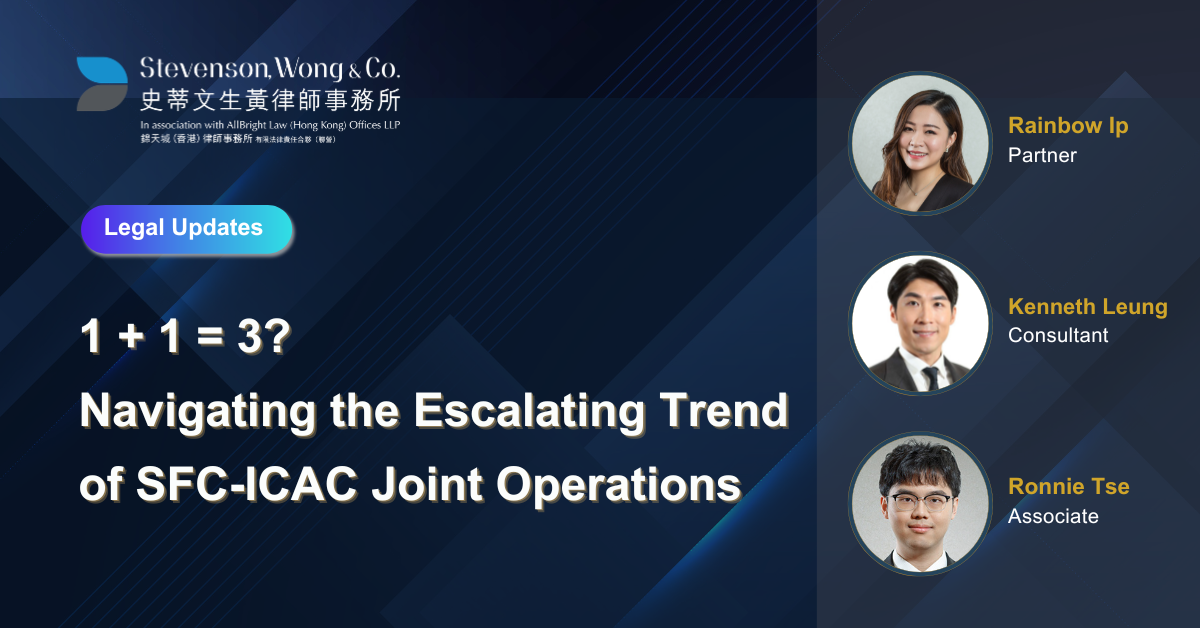
To discuss how we can assist you, please contact our Partner Rainbow Ip, Consultant Kenneth Leung or Associate Ronnie Tse.
This article is for information purposes only. Its content does not constitute legal advice and should not be treated as such. Stevenson, Wong & Co. will not be liable to you in respect of any special, indirect or consequential loss or damage arising from or in connection with any decision made, action or inaction taken in reliance on the information set out herein.
 …
For years, a common misconception has been that transferring funds to overseas jurisdictions might provide a safe harbour against domestic regulatory enforcement. A recent, unprecedented move by the Securities and Futures Commission (SFC) has emphatically shattered this illusion.
In a stark warning to individuals attempting to evade the regulatory perimeter, the SFC has successfully obtained a first-of-its-kind interim injunction from the English courts to freeze assets located in England and Wales, running parallel to a worldwide Mareva injunction obtained in Hong Kong.
This development signals a paradigm shift in the SFC’s enforcement strategy. Geographical borders are now less of a barrier to the SFC’s pursuit of enforcement actions.
Background: The Alleged “Home-Grown” Insider Dealing
On 12 February 2026, the SFC obtained a worldwide interim injunction order (the “HK Order”) from the Court of First Instance of Hong Kong under section 213 of the Securities and Futures Ordinance (SFO). The legal proceedings target Mr. Chan Ching Wa (“Mr. Chan”), a former Assistant Vice President of the Listing Regulation and Enforcement Department at Hong Kong Exchanges and Clearing Limited (HKEx), and two of his extended relatives, Mr. Lam Cho Man (“Mr. Lam”) and Mr. Chau Chi Kwong (“Mr. Chau”).
The SFC alleges that between June 2020 and March 2025, Mr. Chan abused his position to access confidential, price-sensitive information regarding at least 24 Hong Kong-listed companies prior to their public announcements. These companies notably include names such as SOHO China Limited, Ping An Healthcare and Technology Company Limited, and Lifestyle International Holdings Limited.
According to the SFC, Mr. Chan conducted insider dealing by trading the shares through securities accounts held by his relatives. He allegedly procured Mr. Lam to trade on his behalf. Mr. Lam also allegedly disclosed the insider information from Mr. Chan to Mr. Chau, who executed further trades. This is a classic, albeit easily traceable, method of evasion.
A First-of-its-Kind Cross-Border Injunction
While the alleged misconduct represents a serious breach of trust by an insider with “god’s-eye view” access to listing documents, the true watershed moment of this case lies in the SFC’s asset recovery strategy.
Because the three suspects had left Hong Kong and transferred their assets overseas, the SFC did not stop at securing the HK Order in Hong Kong. In a pioneering legal manoeuvre, the regulator commenced proceedings in England and Wales, successfully obtaining an interim injunction order (the “UK Order”) from the High Court of Justice Business and Property Courts, freezing the assets of Mr. Chan and Mr. Chau in England and Wales.
The HK Order and the UK Order prohibit the suspects from disposing of or diminishing the value of their assets both in Hong Kong and overseas (including England and Wales), up to a total value of approximately HK$4.3 million (HK$3,709,566 for Mr. Chan and Mr. Lam; HK$604,545 for Mr. Chau).
The SFC’s announcement can be viewed here.
The Cost-Benefit Analysis: A Resolute Statement of Intent
From a purely commercial perspective, the economics of this enforcement action are striking. Market observers and legal practitioners are keenly aware that the costs associated with instructing foreign counsel and commencing complex cross-border litigation in the English High Court may rival—if not eclipse—the HK$4.3 million currently frozen.ss
Why, then, would the SFC expend such significant resources for a relatively modest recovery?
This action is likely a strategic move designed to establish a powerful deterrent. By demonstrating its willingness to absorb exorbitant legal costs to pursue wrongdoers across common law jurisdictions, the SFC is establishing a firm precedent. The objective is to dismantle the psychological “firewall” relied upon by individuals who believe that relocating themselves or their wealth to popular destination countries like the UK immunizes them from Hong Kong’s regulatory reach.
Furthermore, this high-profile action serves to reinforce the integrity of Hong Kong’s financial markets, demonstrating that the regulator will decisively conduct “spring cleaning” and hold insiders, especially former HKEx officers with their extensive access to price-sensitive information, accountable to the highest standards.
Implications for Market Participants
The SFC’s successful deployment of cross-border judicial assistance carries profound implications:
How Stevenson, Wong & Co. Can Help
The regulatory landscape is becoming increasingly borderless and aggressively policed. In this environment, relying on geographical distance or jurisdictional separation for protection is a flawed strategy.
Whether you are a licensed corporation, an executive, or an individual with multi-jurisdictional assets, proactive compliance and immediate legal counsel during the initial stages of any regulatory inquiry are critical.
Our regulatory and compliance team at Stevenson, Wong & Co. possesses extensive experience in dealing with complex SFC investigations, sections 213 and 214 proceedings. We routinely advise clients on:
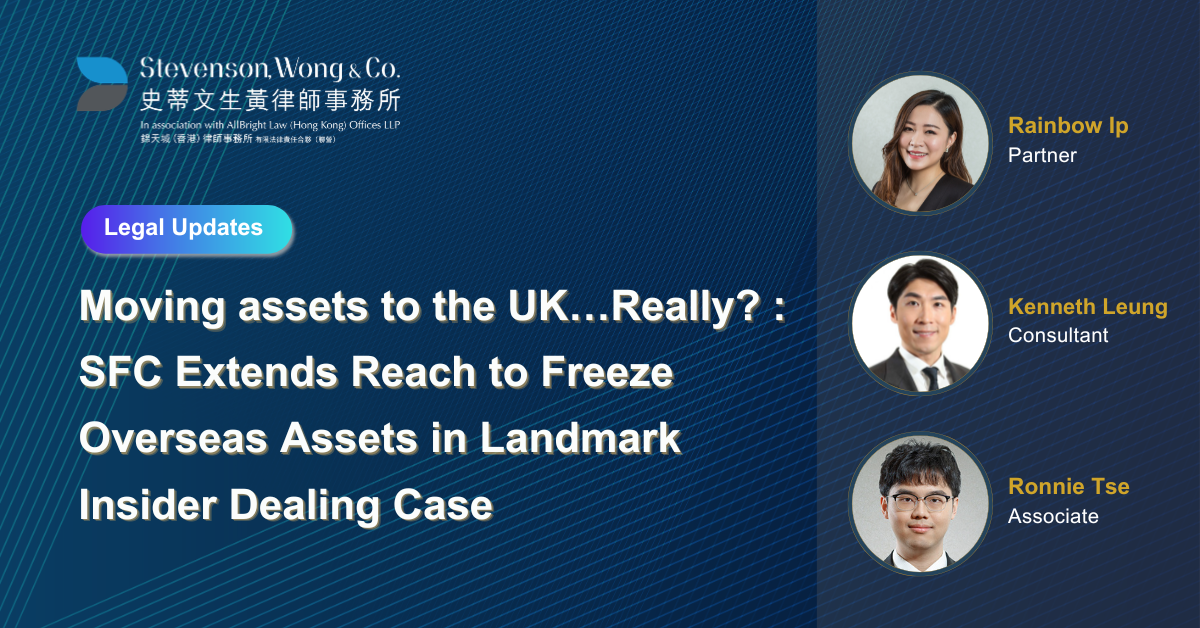
To discuss how we can assist you, please contact our Ms. Rainbow Ip, Mr. Kenneth Leung or Mr. Ronnie Tse.
This article is for information purposes only. Its content does not constitute legal advice and should not be treated as such. Stevenson, Wong & Co. will not be liable to you in respect of any special, indirect or consequential loss or damage arising from or in connection with any decision made, action or inaction taken in reliance on the information set out herein.
 …
Recently, Nasdaq, with the approval of the U.S. Securities and Exchange Commission (SEC), made two landmark adjustments to the rules governing initial listings. These adjustments concern (i) the quantitative liquidity thresholds and (ii) Nasdaq’s authority to review and guard against potential market manipulation risks. For companies seeking a U.S. listing, this development signifies that Nasdaq’s admission criteria have evolved from a mere numerical checklist into a deeper compliance rationale.
With Nasdaq raising its market liquidity requirements and introducing new Interpretive Material IM-5101-3 (hereinafter “IM-5101-3”), which grants Nasdaq broader but limited discretionary authority, companies must now upgrade their listing preparation from a focus on meeting indicators to a systematic compliance project. In this new regulatory environment, applicants must not only satisfy more stringent financial and liquidity benchmarks but also proactively demonstrate that their governance structure, intermediaries, and offering arrangements possess resilience against market manipulation.
Significantly Higher Liquidity Thresholds: Building a “Safety Chassis” for Price Discovery
Nasdaq’s decision to raise the Market Value of Unrestricted Publicly Held Shares (MVUPHS) requirement aims to reduce the risk of price volatility and manipulation associated with thinly traded securities.
Effective 17 January 2026, Nasdaq has substantially raised the minimum liquidity thresholds for companies applying under the “Net Income Standard” or “Income Standard”, as follows:
In its approval notice, the SEC emphasised that a robust public float is the cornerstone of effective price discovery. For listing applicants, this means the IPO offering size and allocation structure must be carefully designed to ensure that a verifiable and compliant free float is achieved on the first day of trading.
Institutionalising “Limited Discretion”: Extending Supervision to External Risk Factors
Beyond quantitative thresholds, the newly introduced IM-5101-3 explicitly grants Nasdaq a legal basis to reject a listing application on the grounds of public interest.
IM-5101-3 stems from Nasdaq proposal SR-NASDAQ-2025-104 and took effect on 19 December 2025. This rule was prompted by regulators’ observations that certain small-cap issuers experienced abnormal trading activity shortly after listing, often involving unidentified third parties disseminating investment tips on social media to manipulate share prices.
Under IM-5101-3, even where a listing applicant fully satisfies the quantitative criteria, Nasdaq may exercise its discretion based on a series of non-exclusive factors, including but not limited to:
In short, meeting the metrics no longer guarantees approval. Applicants must be prepared to clearly articulate and substantiate why their business and capital structure are not vulnerable to manipulation or compliance breakdown.
The Value of Professional Advisors: Core Indicators in Risk Assessment
Under Nasdaq’s revised framework, the roles of auditors, lawyers, underwriters, and other professional advisors as regulatory gatekeepers have become more critical than ever. Their track record, regulatory history, and past involvement in cases exhibiting abnormal trading behaviour are now key elements in Nasdaq’s risk assessment.
According to IM-5101-3, Nasdaq may not only scrutinise advisory institutions themselves but also consider the compliance history of their principals or newly formed affiliates, including whether they have been the subject of referrals or disciplinary actions by the Financial Industry Regulatory Authority (FINRA), the SEC, or other regulatory authorities.
Accordingly, selecting a professional team with proven Nasdaq listing experience, impeccable integrity, and proactive risk-screening capabilities is no longer a matter of cost alone – it constitutes the first line of defence in building regulatory confidence, reducing review uncertainty, and mitigating market-manipulation risks.
Project Management Logic Upgrade: From Compliance to Demonstrable Systems Engineering
Faced with these more granular regulatory standards, companies planning a Nasdaq listing should implement a reverse-scheduled compliance roadmap of 18 to 24 months.
Given Nasdaq’s potential for multiple rounds of inquiries on issues such as the source of MVUPHS, intermediary backgrounds, or cross-border enforcement feasibility, applicants should not expect the review process to conclude within a few weeks.
Preparations should begin early across the following dimensions:
Only by treating the listing process as a verifiable compliance system can a company respond convincingly when regulators exercise discretion and thereby significantly improve its prospects for first-round approval.
Conclusion
In summary, Nasdaq’s two recent rule changes, namely the increase in MVUPHS liquidity thresholds effective 17 January 2026, and the institutionalisation of limited discretion under IM-5101-3 effective 19 December 2025, send a clear signal of tighter and more sophisticated supervision.
This shift requires companies preparing for a U.S. listing to transition from mere metric fulfillment to a more comprehensive model of compliance substantiation and risk defence. Under the new regulatory framework, prospective issuers must not only meet higher entry thresholds but also proactively demonstrate, through experienced Nasdaq advisors, sound corporate governance, and transparent offering structures, their capacity to resist market-manipulation risks and maintain continuous compliance.
For companies with strong fundamentals, solid governance, and forward‑looking compliance awareness, the new rules, while raising the bar, also establish a more credible and selective platform. This, in turn, presents an opportunity to gain higher market trust and long-term capital recognition on the Nasdaq.
If you have any enquiries regarding Nasdaq listings, or wish to learn more, please contact our Partner Gordon Tsang, Senior Associate Gary Kwok or Associate Sam Liu.
This article is provided for general informational purposes only. It does not constitute, and should not be construed as, legal advice or investment guidance, nor does it create a solicitor-client relationship. The information contained herein may be updated or amended from time to time, and the applicability of any content will depend on specific facts and relevant laws or regulations. The feasibility of any company’s listing should be assessed on a case-by-case basis in light of its particular circumstances and the applicable regulatory framework. To the fullest extent permitted by law, our firm and our lawyers accept no responsibility for any loss or damage (whether direct or indirect) arising from any decision, action, or inaction taken in reliance upon the content of this publication.
 …
Stevenson, Wong & Co. have recently acted for the father in an application for the return of child made under the Child Abduction and Custody Ordinance (Cap. 512, Laws of Hong Kong) and the Hague Convention on the Civil Aspects of International Child Abduction 1980 (“the Hague Convention”). This case concerns an unusual issue regarding state and consular immunity.
The Court of First Instance handed down the judgment on 15 December 2025 and ordered the immediate return of the two children of the family to their habitual residence in the Czech Republic. (See Secretary for Justice v SK & Another [2025] HKCFI 6345)
Case Background
The parties have two children born in 2012 and 2016 respectively. Following divorce proceedings in the United States, a U.S. court made a decision in 2022, granting joint legal custody of the children to the parties and primary physical custody of the children to the mother. The mother was also allowed to relocate with the children to the Czech Republic in June 2022. The U.S. decision in 2022 was subsequently recognised by the Czech Republic Court in 2024.
In 2025, the Mother was employed by the Ministry of Foreign Affairs of the Czech Republic (“the Ministry”) and was posted to Hong Kong. She relocated the children to Hong Kong without the Father’s consent. The Father then obtained an order from the U.S. Court granting him temporary legal and physical custody of the children and directing that the children shall attend the school in Czech Republic as last enrolled.
Through the Central Authority for the Czech Republic and the Central Authority for Hong Kong, the father requested the immediate return of the children to the Czech Republic.
The Mother’s Defence
The mother opposed the application on the following grounds:
Court’s Findings
The Court rejected the mother’s grounds of opposition:-
The Court therefore ordered that the children be returned to the Czech Republic. Due to the mother’s unilateral decision to bring the children to Hong Kong and her unreasonable conduct in the proceedings, she was ordered to pay for the children’s return air tickets and the father’s legal costs.
This decision provides important clarification on the limits of state and consular immunity, particularly in the context of family and child-related disputes. it also underscores the Hong Kong courts’ rigorous enforcement of international treaty obligations when navigating child abduction matters.
The father was represented by Stevenson Wong & Co, with the matter handled by Partner Calvin Lo. For further inquiries regarding this case or our services, please contact our Partner and Head of SW Private Client, Wendy Lam or Calvin Lo.
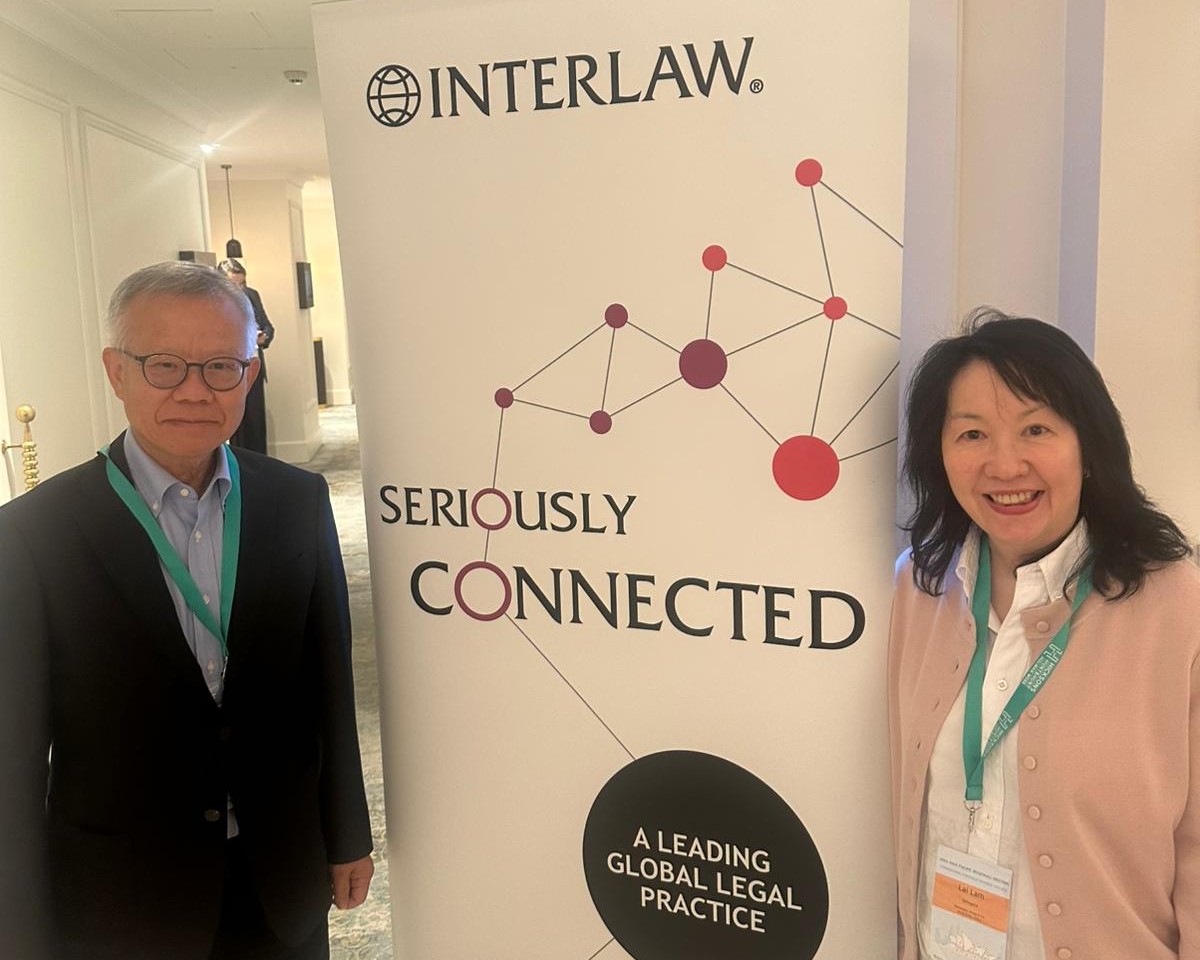
(From the left) Partners Willy Cheng and Lai Lam …
Between 4 and 7 February 2026, Partners Willy Cheng and Lai Lam represented the firm at the Interlaw Asia Pacific Regional Meeting in Sydney. As a founding member of this elite global network which comprises over 90 firms in 150 cities, our participation ensures we remain at the forefront of international legal developments.
Under the theme “Connecting Through Shared Values,” the three-day event was designed to strengthen business ties and foster cooperation between member firms from across the Asia Pacific and beyond. During the summit, Mr. Cheng and Ms. Lam engaged in a series of curated sessions and workshops focusing on the most pressing issues facing the profession. These discussions explored the defining role of AI within the Banking and IP sectors, the impact of shared values on recruitment for Employment and Labour in the digital age, and contemporary strategies for Leadership and Management. The meeting also provided a dedicated forum for participants to discuss specific business development initiatives aimed at deepening cross-border cooperation and streamlining service delivery across the region.

Please contact our Partners Willy Cheng or Lai Lam for further enquiries about this event.