News
Find out all about our firm’s latest news and activities below. To learn more about any individual item, please contact us here.
 Stevenson, Wong & Co.
News
Find out all about our firm’s latest news and activities below. To learn more about any individual item, please contact us here.
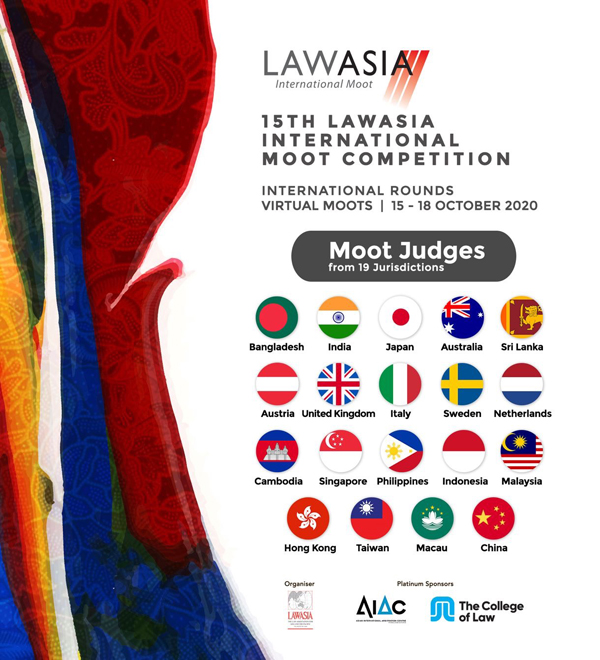
On 22 Oct 2020, our firm’s Partner and head of Litigation and Disputes Resolution department, Ms. Heidi Chui, was invited to be one of the judges of the 15th LAWASIA International Moot Competition.
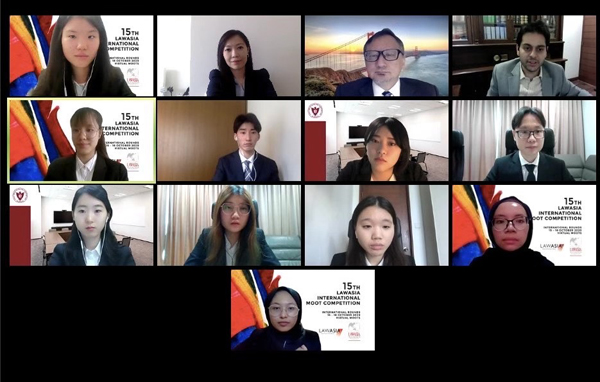
The LAWASIA International Moot Competition aims to bring into the curriculum of law schools throughout the world. The focus of this year’s moot competition is Dispute Resolution, Commercial Law and Contract Law. Over 1,100 students from universities in Hong Kong, Singapore, Malaysia, Taiwan and Japan took part in the competition.
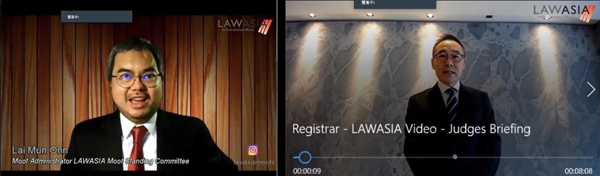
Our Partner Ms. Heidi Chui commented, “I am delighted to participate again as one of the panel judges for LAWASIA International Moot Competition. It is always a pleasure to see young talents and future lawyers sharpening their legal skills. I look forward to seeing these young faces again in the future stage of international arbitration”.
About LAWASIA
LAWASIA is an international organisation of lawyers’ associations, individual lawyers, judges, legal academics, and others that focus on the interests and concerns of the legal profession in the Asia Pacific region.
Please contact our Ms. Heidi Chui for more information or enquiries.
During 19 to 23 October 2020, our partners Willy Cheng and Lai Lam participated at the Interlaw 2020 Virtual Annual Global Meeting. This year’s topic was “Turning Resilience into Opportunity”.
INTERLAW is an elite global law firm network comprised of top tier independent law firms from over 120 cities worldwide. To enhance the relations of strategic partners, seminars and networking meetings are held regularly for members to discuss topical issues and latest legal developments.
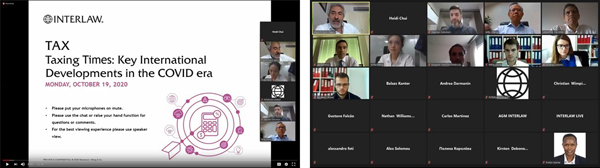
Throughout the 5-day meeting, lawyers and professionals from across the world gathered virtually and discussed various legal topics covering different practice areas. During the meeting of Tax- Key International Developments in the COVID era, our partner Willy Cheng gave an overview on tax planning from the Hong Kong perspective. He explained why Hong Kong is the best venue for investing in China by illustrating the advantages of Hong Kong’s simple tax system such as low and competitive tax rates and in particular, no tax on dividends and capital gains, stable currency, free foreign exchange and a strong rule of law.
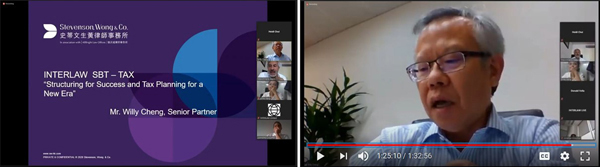
Our firm’s partner, Mr. Willy Cheng spoke on the topic of “Structuring for Success and Tax Planning for a New Era”.
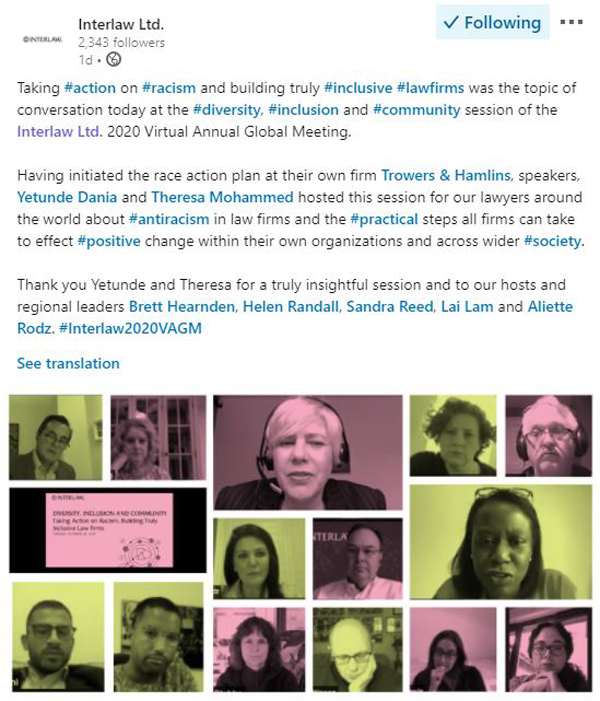
On the 2nd day of the meeting, our partner Lai Lam who is the vice chair (Asia Pacific) of the Interlaw Diversity, Inclusion and Community committee, took part in a discussion on racism and building an inclusive law firm.
Please contact Mr. Willy Cheng or Ms. Lai Lam for further enquiries about this event.
Stevenson, Wong & Co. is proud to have been shortlisted as a finalist in 12 categories at the 19th Annual Asian Legal Business (ALB) Hong Kong Law Awards 2020.
Nominations include:
The Hong Kong Law Awards is the biggest and longest-running awards presented by ALB. The awards aim to pay tribute to the outstanding performance of private practitioners and in-house teams from Hong Kong and the region. Results will be announced at the award ceremony on 27 November 2020.
Please click here to view the full list of finalists.
For further information, please contact our Mr. Willy Cheng, Mr. Hank Lo or Ms. Catherine Por.
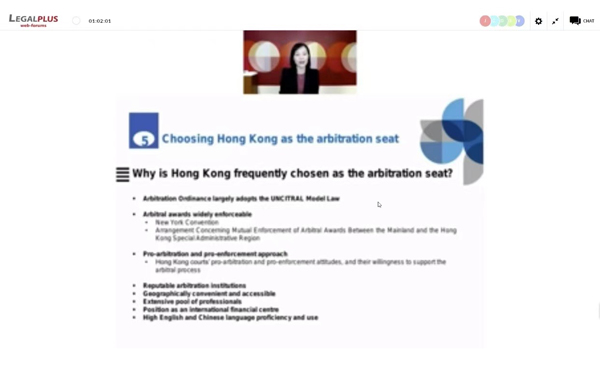
(中文) 2020年9月17日下午,本所合伙人,诉讼及争议解决部主管徐凯怡律师受Legal Plus邀请,担任「Legal Plus 意见领袖线上论坛:国际仲裁意见领袖线上论坛」 (Legal Plus Leaders Web-forums: International Arbitration Leaders Web-forum) 演说嘉宾。
本次线上论坛由Legal Plus主办,徐律师与来自亚洲、欧洲和中东地区的法律从业者、企业法总等参会人士分享如何运用内地与香港仲裁互助保全安排,最大化地收回债权利益 (Maximizing Recovery Through the Use of PRC-Hong Kong Interim Measures Arrangement in International Arbitration)。

如阁下想了解更多详情,请联络本所合伙人徐凯怡律师 (heidi.chui@sw-hk.com)。
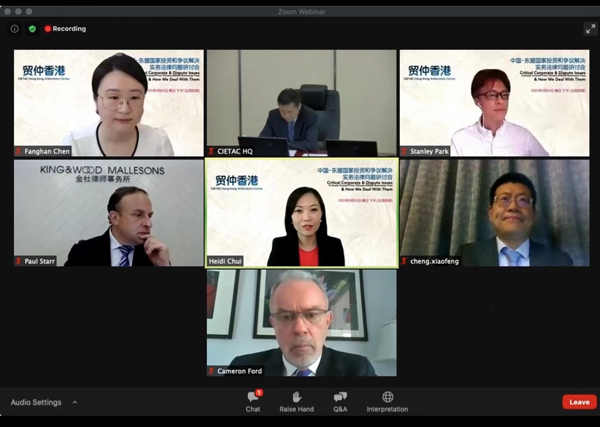
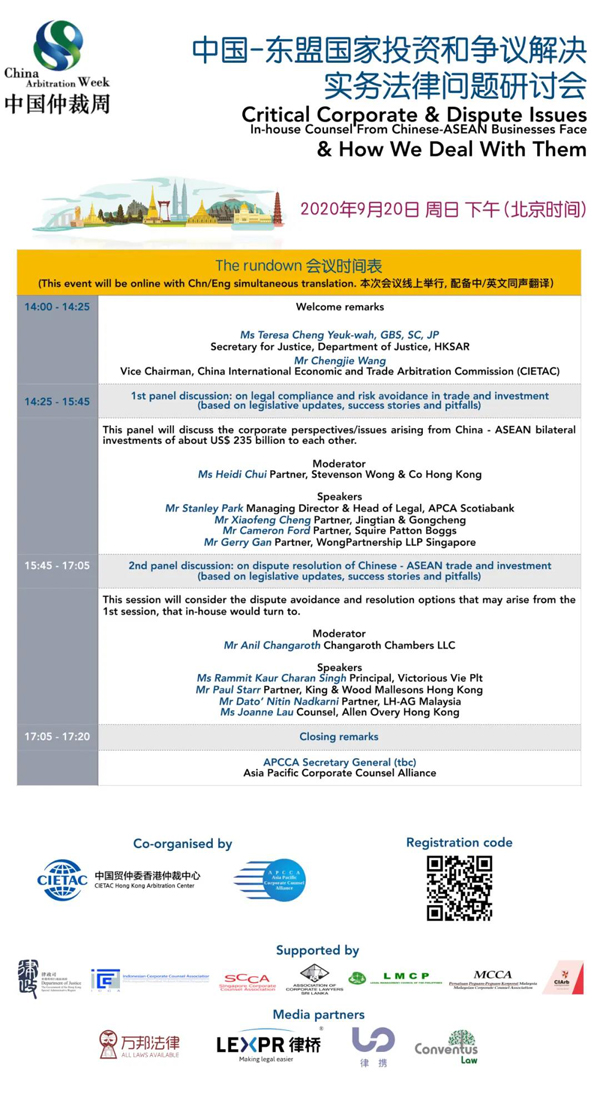
(中文) 2020年9月20日下午,本所合伙人,诉讼及争议解决部主管徐凯怡律师受中国国际经济贸易仲裁委员会香港仲裁中心 (CIETAC Hong Kong Arbitration Center) 邀请,担任2020年中国仲裁周“中国-东盟国家投资和争议解决 实务法律问题研讨会”主持人。
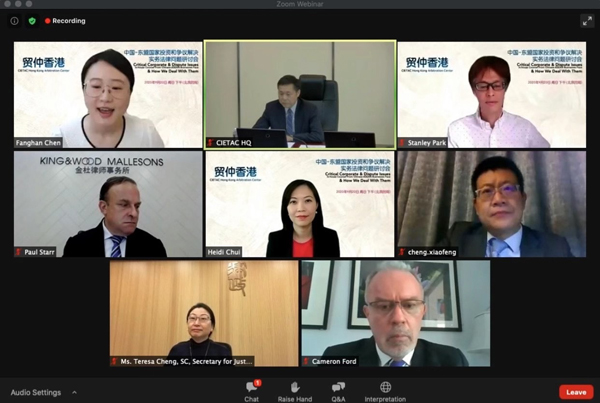
本次研讨会由贸仲香港仲裁中心及APCCA主办,香港律政司司长郑若骅、贸仲副主任兼秘书长王承杰致欢迎辞。随后徐律师和来自内地、新加坡和澳大利亚的演说嘉宾们一同就 “贸易和投资中的法律合规和风险规避” (Legal Compliance and Risk Avoidance in Trade and Investment) 的话题展开探讨。
如阁下想了解更多详情,请联络本所合伙人徐凯怡律师 (heidi.chui@sw-hk.com)。
Recent efforts for the testing and tracing of COVID-19 have raised growing concerns over data protection and personal privacy in the wake of the global pandemic. The aim of these measures is to help us navigate the difficult so that we can return to normal life as soon as possible, but at what cost? With reference to several media statements and responses issued by the Privacy Commissioner for Personal Data, Hong Kong (the “Privacy Commissioner”) since the outbreak of the COVID-19 pandemic, this article attempts to summarise what the Personal Data (Privacy) Ordinance (the “PDPO”) expects when it comes to balancing privacy right and public health and safety.
PDPO at a glance
The PDPO is applicable to both the private and the public sectors. The general position is that all data users shall comply with the six Data Protection Principles (“DPP”) when handling personal data:
1. Collection Purpose & Means
2. Accuracy & Retention
3. Use
4. Security
5. Openness
6. Data Access & Correction
Privacy vs. health and life
While data privacy is an important right, the interests protected under the PDPO have to be balanced against other important rights or public interest. The PDPO provides a number of exemptions from some compliance requirements under particular circumstances. When it comes to compelling public health concern, the following are applicable:

Privacy issues considered
1. Mandatory quarantine measures
Location data of persons under quarantine would be collected by the Government so as to monitor whether they are complying with the quarantine conditions. Prior to the collection of such data and in accordance with DPP1, the purpose and manner of collection will be explained to the persons under quarantine and their consents will be obtained for access to their relevant personal data and certain information to be transmitted from their mobile devices (e.g. data involved in the use of video calls).
The Privacy Commissioner also brought to the public’s attention on section 59(1) of the PDPO, which provides an exemption for DPP3, i.e. use of data, and states that in circumstances where the application of the restrictions on the use of data would be likely to cause serious harm to the physical or mental health of the data subject or any other individual, the data user may disclose personal data relating to the physical or mental health of the data subject to a third party without the consent of the data subject.
2. Universal community testing programme
Personal data (including names, Hong Kong Identity Card numbers / birth registration numbers and local mobile phone numbers) will be collected under the programme. The use of such personal data is subject to the consent of the participants and is consistent with the principles of purpose specification and use limitation. Personal data will be handled on a “need-to-know” basis and erased one month after completion of the programme.
3. The use of information on social media for tracking potential carriers of COVID-19
Though the general rule is that personal data obtained from the social media is also regulated by the PDPO, it is subject to competing rights or interests such as the right to life. In accordance with section 59(2) of the PDPO, where the application of the restrictions on the use of data would be likely to cause serious harm to the physical or mental health of the data subject or any other individual, personal data relating to the identity or location of the data subject may be disclosed to a third party without the consent of the data subject. Therefore, if persons are suspected of having close contacts with infected persons, it would be in the public interest to closely monitor their whereabouts, including the venues and the persons that they have visited and contacted, with the aim to control further spread of COVID-19 in the community.
There are sufficient legal and justifiable bases on which the Government may collect and use information obtainable offline or online with the aid of devices, applications, software or super computers with a view to tracking potential COVID-19 carriers or patients in the interests of both the individuals concerned and the public.

4. Temperature collection at work
Employers have legal and corporate responsibility to protect the health of its employees and visitors that it is generally justifiable for employers to collect temperature measurements or limited medical symptoms of COVID-19 information of employees and visitors solely for the purposes of protecting the health of those individuals. Employers should spell out to their employees how the data collected will be handled. A self-reporting system is preferred to an across-the-board mandatory system where health data is collected indiscriminately.
It is reasonable and justifiable for employers to collect temperature measurements or medical condition of employees and visitors. Employers can require employees to complete declaration on personal health data as long as the notification requirement under the PDPO (by providing a Personal Information Collection Statement (PICS) to inform employees of the data collected and the purposes, and the classes of persons to whom their data may be transferred) is complied with. In accordance with section 59 of the PDPO, employers can disclose the identity, health and location data of individuals to the Government or health authorities solely for the purposes of tracking down and treating the infected and tracing their close contacts when pressing needs arise.
5. Work-from-home arrangements
Personal data protection should not hinder the work-from-home arrangements, but employers and employees should exercise extra caution because of the transfer and use of documents and data away from the professionally managed work environment.
Whilst the employers should put into place information systems to ensure secure transmission of data from work to home, the employees should be vigilant about the security of internet connection to prevent data leakage.
6. Temperature/personal data collection at premises
The Privacy Commissioner has pointed out that collection of personal data and/or temperature data by owners of premises is justifiable. They, however, should endeavour to raise the transparency and interpretability of the use of the personal data obtained. Again, the Privacy Commissioner pointed out that privacy right is not an absolute right and the right to life and public interest precede it. Any personal data collected should be necessary, appropriate and proportionate.
To comply with the DPPs, the owners of premises should ensure visitors are informed of the purpose of data collection and let them to decide whether to allow the collection of their biometric data. If visitors refuse to provide information, the owners of premises may refuse entry to protect the health of its staff and others.

Conclusion
Facing the pandemic, it is important to bear in mind that personal data privacy has not been neglected altogether. However, data protection principles should not hinder measures taken to fight COVID-19. The measures undertaken by the Government in balancing privacy right and public health needs have been endorsed by the Privacy Commissioner. Business owners and individuals should continue to observe the DPPs as far as practicable and display best efforts in complying with the requirements under the PDPO.
For more information or advice on privacy issues, please contact our Terence Lau or Elly Woo.
This newsletter is for information purpose only. Its content does not constitute legal advice and shall not be treated as such. Stevenson, Wong & Co. will not be liable to you in respect of any special, indirect or consequential loss or damage.