News

Find out all about our firm’s latest news and activities below. To learn more about any individual item, please contact us here.
17 Nov 2021

THE HONG KONG EXCHANGE CONSULTS ON PROPOSED LISTING RULES AMENDMENTS RELATING TO LISTED ISSUER SHARE SCHEMES

Introduction

On 29 October 2021, The Stock Exchange of Hong Kong Limited (the “Exchange”) published a consultation paper (the “Consultation Paper”) on Proposed Amendments to Listing Rules relating to Share Schemes of Listed Issuers.  In particular, since Chapter 17 of the Listing Rules currently only governs share option schemes, the Exchange seeks to amend Chapter 17 to also include share award schemes by issue of new shares, taking into consideration of the increasing adoption thereof by issuers and their subsidiaries.  The Exchange is seeking market feedback on its proposals by 31 December 2021.

Background

Traditionally, listed issuers use share option schemes and share award schemes (collectively, the “Share Schemes”) as equity-based awards to attract, retain and motivate employees and service providers.  They are used to align the interests of the participants with those of issuers and shareholders.  Generally speaking, share option schemes are funded by issuance of new shares by the issuers and share award schemes can be funded by new shares or existing shares of the issuers purchased on-market.  A vast majority of issuers on the Exchange have adopted Share Schemes.

Currently, Chapter 17 of the Listing Rules, which was last amended in 2000, governs share option schemes of the listed issuers and their subsidiaries.  On the other hand, there is no existing Listing Rules that specifically govern share award schemes.  Instead, they are subject to Chapter 13 of the Listing Rules, which governs the issuance of securities in general, as well as Chapter 14A of the Listing Rules if the grants of new shares are to connected persons.  In fact, if the share award schemes are funded by existing shares of the listed issuers, shareholders’ approval is not required as it would not have any dilution effects on the existing shareholders of the issuers.

In the Consultation Paper, the Exchange is taking the opportunity to review Chapter 17 of the Listing Rules to include share award schemes.  The proposals place more importance on the role of the remuneration committee in reviewing, supervising, overseeing the operation of Share Schemes.

Key Proposals relating to Share Schemes of Listed Issuers

The below table sets out a comparison between the current requirement under the Listing Rules and the key proposals to establish the framework for the Share Schemes set out in the Consultation Paper:

  Current Rules Proposals
Share Schemes funded by issuance of new shares of listed issuers
Chapter 17 of the Listing Rules
  • Chapter 17 currently governs share option schemes only.
  • Proposes to extend Chapter 17 to also govern share award schemes funded by issue of new shares.
Eligible participants of Share Schemes
  • No restriction on the categories of eligible participants.
  • Defines “eligible participants” of Share Schemes to include the following:

(a)            Employee Participants: directors and employees of the issuer or any of its subsidiaries;

(b)            Related Entity Participants: directors and employees of related entities (i.e. the holding companies, fellow subsidiaries or associated companies of the issuer); and

(c)            Service Providers: other persons who provide services to the issuer group in its ordinary and usual course of business which are material to its long-term growth and on a continuing and recurring basis (e.g. independent contractors, consultants and advisors to biotech companies).

  • The share grants to Related Entity Participants and Service Providers must be approved by the remuneration committee.
Scheme mandate Limit on scheme mandate
  • The grants of share options from all share option schemes are limited to 10% of the total issued shares of the issuers.
  • Issuers may seek shareholders’ approval to refresh the scheme mandate at any time if the options outstanding do not exceed the 30% of its total issued shares.
  • Applies a scheme mandate limit of not exceeding 10% of an issuer’s issued shares to all Share Schemes involving issuance of new shares (the “Scheme Mandate Limit”).  The Scheme Mandate Limit might be refreshed once every three years.
  • Requires independent shareholders’ approval for additional refreshments within a three-year period.
  • Proposes to remove the 30% limit requirement.
  • Sets a sublimit within the Scheme Mandate Limit on share grants to Service Providers.
Minimum vesting period
  • Does not have specific requirements on vesting period.
  • Requires a minimum vesting period of 12 months. The period can only be shortened if it is approved by the remuneration committee in respect of share grants made to Employee Participants who are identified by the issuer.
Performance targets and clawback mechanism
  • Requires issuer to disclose in the scheme documents any performance targets attached to share grants or a negative statement.
  • No specific disclosure requirement relating to a clawback mechanism.
  • Requires performance targets and clawback mechanism for all share grants and the disclosure thereof in the grant announcements.
  • If no performance targets and/or a clawback mechanism, the grant announcement and circular must set out the remuneration committee’s views addressing why performance targets and/or a clawback mechanism is/are not necessary.
Exercise price or share grant price
  • The exercise price of share options must not be less than market price of the shares at the time of grant.
  • Retains the current restriction on the exercise price of share options.
  • For grants of shares under share award schemes: does not propose to impose any restriction on share grant price.
Restrictions on large share grants to individual participants and share grants to connected persons
Share option schemes

  • For individual grantee: shareholders’ approval if grants of options in excess of 1% of issued shares over a 12- month period.
  • For director (other than an independent non-executive director (the “INED”)), or chief executive: approval by INEDs.
  • For (i) eligible participant who is a substantial shareholder and (ii) INED: (a) approval by INEDs (excluding any INED who is the grantee); or (b) independent shareholders’ approval for grants of options in excess of 0.1% of issued shares and HK$5 million over a 12-month period.

Share award schemes

  • For individual grantee: No specific limit.
  • For director, chief executive and eligible participant who is a substantial shareholder: shareholders’ approval for any grant of share awards involving new shares.
For all Share Schemes

  • For individual grantee:  shareholders’ approval if the grants of share awards and share options in aggregate exceed 1% of the total issued shares over any 12- month period.
  • For director (other than an INED), or chief executive: (a) subject to (b), remuneration committee’s approval; or (b) independent shareholders’ approval if the grants of share awards cause the share awards granted to exceed 0.1% of the total issued shares over any 12-month period.
  • For (i) eligible participant who is a substantial shareholder and (ii) INED: (a) Subject to (b), remuneration committee’s approval; or (b) independent shareholders’ approval if the grants of share awards and share options in aggregate exceed 0.1% of the total issued shares over any 12- month period.
Share Schemes funded by existing shares of listed issuers
Disclosure in grant announcements and financial reports
  • Share award schemes which are funded by existing shares purchased on-market do not require shareholders’ approval.
  • Disclosure about these schemes is governed by accounting standards.
  • Requires disclosure of the terms and details of the share schemes funded by existing shares consistent with that applicable to Share Schemes funded by issuance of new shares.
Share Schemes of subsidiaries of listed issuers
Share award schemes of subsidiaries
  • Governs share option schemes of subsidiaries.
  • Extends Chapter 17 to also govern subsidiaries’ share award schemes funded by new or existing shares.

Analysis and Takeaways

In the Consultation Paper, the Exchange proposes to extend Chapter 17 of the Listing Rules to include share award schemes, in view of the issuers’ increasing adoption of share awards and options.  We note that there is an existing inconsistency of Listing Rule treatments as to share option schemes and share award schemes.  It is a therefore welcoming move for the Exchange to align the Listing Rules requirements in respect of the Share Schemes.  Since the regime of share option schemes has remained unchanged for over two decades, the proposals can help to address the market developments and be in conformity with the international standards, which will maintain investor confidence.

Please contact our Partner Mr. Rodney Teoh for any enquiries or further information.

This newsletter is for information purposes only. Its content does not constitute legal advice and should not be treated as such. Stevenson, Wong & Co. will not be liable to you in respect of any special, indirect or consequential loss or damage arising from or in connection with any decision made, action or inaction taken in reliance on the information set out herein.

12 Nov 2021

(中文) 合伙人徐凯怡律师筹备并参加香港律师会「一带一路」论坛2021

(中文) 2021年11月4日,本所合伙人、诉讼及争议解决部主管徐凯怡律师,作为「一带一路」论坛2021筹委会委员,筹备并参加了香港律师会主办之第四届「一带一路」论坛。本次论坛为香港律政司举办之「香港法律周2021」的其中一环,于香港会议展览中心以线上线下同步形式举行。


本所合伙人、诉讼及争议解决部主管徐凯怡律师

本届会议主题为「『一带一路』倡议——引领全球复苏与和谐」,聚焦探讨如何加快各国的合作与复兴,并邀得多位来自不同司法区的重量级演讲嘉宾, 包括香港特别行政区律政司司长郑若骅、中央人民政府驻香港特别行政区联络办公室法律部部长刘春华先生、中华人民共和国外交部驻香港特别行政区特派员公署特派员刘光源先生和香港特别行政区政府律政司普惠避免及解决争议办公室主任丁国荣博士等,分享他们对各项协助企业复兴的倡议及计划之独到见解。

今年的论坛吸引了逾 670 名来自 24 个司法管辖区的人士报名参加,参加者与各司法管辖区的领袖及律师积极交流和互动,就「一带一路」各项倡议项目和计划所带来的机遇和挑战,以及有效的争议解决机制和实现机遇展开探讨。


香港特别行政区律政司司长郑若骅

若阁下想了解更多详情,请联络本所合伙人徐凯怡律师(heidichui.office@sw-hk.com)。

3 Nov 2021

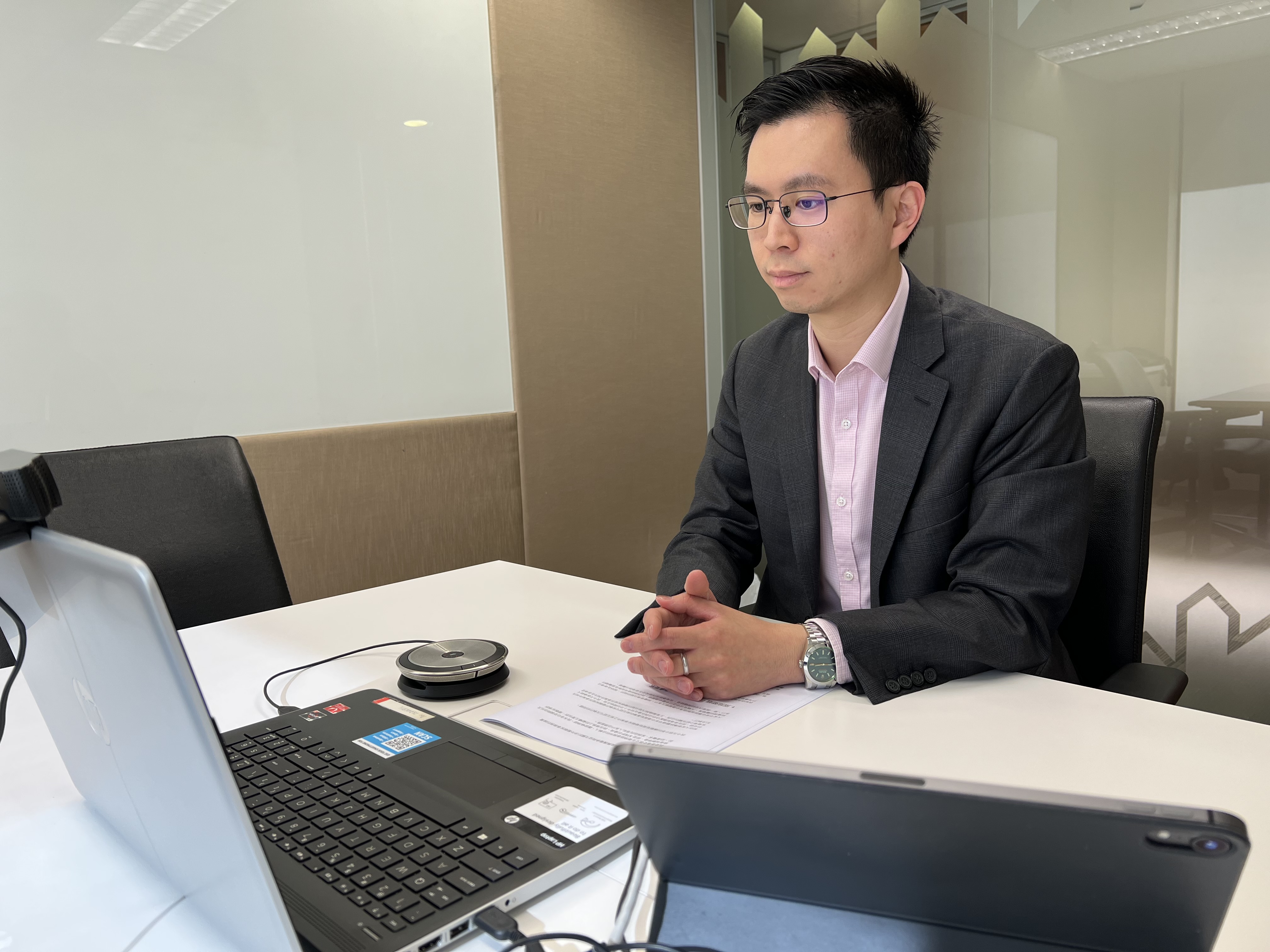
Partner Calvin Lo Interviewed by STEP Journal

Our Partner Mr. Calvin Lo (TEP), winner of the STEP Excellence Award, was interviewed by the STEP Journal- Issue 5 2021. Mr. Lo received the STEP Excellence award with the highest score across all four papers and all jurisdictions under the 2020 STEP Diploma in International Trust Management.

In the interview, Mr. Lo shared his journey in becoming a private client solicitor, advising clients on family litigation, trust and estate planning, and mental capacity issues. He also shared his experience as a STEP student and insights on the challenges facing in Hong Kong.

About our Partner Mr. Calvin Lo

Mr. Lo was admitted as a solicitor in Hong Kong in 2014. He joined the firm in 2015.

Mr. Lo handles a wide range of private client works, including complex family matters, children disputes,
wardship, relocation, ancillary relief claims and often with cross-border elements. He has vast experience in
involving jurisdiction and forum disputes. He also handles trust advisory, MIP Committee guardianship
applications matters, personal injury and fatal accident claims.

Mr. Lo is an accredited TEP practitioner and a Civil Celebrant.

For more information, please contact our Partner Mr. Calvin Lo or visit here for the full interview.

29 Oct 2021

(中文) 合伙人徐凯怡律师出席香港仲裁慈善晚会

(中文) 2021年10月27日,本所合伙人、诉讼及争议解决部主管徐凯怡律师和黎嘉钿高级律师,出席了于香港瑰丽酒店举行之香港仲裁慈善晚会。

香港仲裁慈善晚会致力筹集资金以支持香港本地的慈善机构,并推广仲裁的发展。

今年晚会结合线上线下慈善拍卖的形式,为两所本地慈善机构募集资金。本所合伙人徐凯怡律师鼎力支持这项别具意义的慈善活动,并积极参与了该晚的慈善拍卖会, 共襄善举。

若阁下想了解更多详情,请联络本所合伙人徐凯怡律师(heidichui.office@sw-hk.com)。

27 Oct 2021

(中文) 史蒂文生黄赞助并参加香港国际仲裁中心举办之香港仲裁周

(中文) 本所很荣幸赞助由香港国际仲裁中心(HKIAC)主办的第十届香港仲裁周,并参加了于2021 年 10 月 27 日举行的亚洲替代性纠纷解决机制(ADR)会议。 本届仲裁周获得超过30间境内外的知名机构大力支持、包括亚洲国际仲裁中心(AIAC)、中国国际经济贸易仲裁委员会(CIETAC)、国际商会仲裁院(ICC)和香港律师会等。


左起: 本所陆卓楠实习律师、合伙人许懿律师、合伙人诉讼及争议解决部主管徐凯怡律师、刘嘉雯实习律师和巿场及传讯主管杨诗雅

ADR 亚洲会议是国际仲裁界的重要活动,来自世界各地的仲裁界专家围绕国际仲裁的核心问题和发展等热点问题展开深入探讨。今年会议主题为「未来的争议- 今天之争议 (Tomorrow’s Dispute Today)」。本次会议由HKIAC秘书长Sarah Grimmer和律政司司长郑若骅致开幕词揭开序幕,并邀得终审法院首席法官张举能法官﹐最高人民法院研究室副主任司艳丽博士等嘉宾探讨了以下的议题:

  • 香港-中国两地保全措施安排:2 年后 (HK-PRC Interim Measures Arrangement: 2 Years On)
  • 香港法院和仲裁:过去、现在、未来 (Hong Kong Courts and Arbitration: Past, Present, Future)
  • 加密货币:明天的安全、货币还是资产?(Crypto: Tomorrow’s Security, Currency, or Asset?)
  • ‘’明天的”仲裁员:Charles N. Brower的观点 (“Tomorrow’s” Arbitrator: Views from The Honourable Charles N. Brower)


HKIAC秘书长Sarah Grimmer致开幕词


律政司司长郑若骅致开幕词


终审法院首席法官张举能法官


最高人民法院研究室副主任司艳丽博士


署理高级助理民事法律专员(仲裁) 孔庆雯(左)和本所合伙人徐凯怡律师(右)

若阁下想了解更多详情,请联络本所合伙人徐凯怡律师 (heidichui.office@sw-hk.com) 或合伙人许懿律师 (osberthui.office@sw-hk.com)。

23 Oct 2021

Arbitration Law Update: Hong Kong Court Reaffirmed its Pro-Arbitration Stance

Introduction

On 26 August 2021, the Hong Kong Court of First Instance ordered a stay of litigation proceedings in favour of arbitration in Kinli Civil Engineering Ltd v Geotech Engineering Ltd [2021] HKCFI 2503 (“Kinli Civil Engineering Ltd”), which serves as a reminder of the Hong Kong Court’s pro-arbitration stance. This article will take a closer look at the judgment of Kinli Civil Engineering Ltd and its future implications.

Factual Background of Kinli Civil Engineering Ltd

The case centres around a dispute in a public housing development project between the plaintiff Kinli Civil Engineering Ltd (“Kinli”) and the defendant Geotech Engineering Limited (“Geotech”). Kinli commenced court proceedings against Geotech to claim for alleged unpaid sums under the subcontract (“Contract”).

The dispute resolution clause of the Contract (“DR Clause”) provides that: –

“If in the course of executing the Contract, any disputes or controversies arise between [Geotech] and [Kinli] on any question and the parties are unable to reach agreement, both parties may in accordance with the relevant arbitration laws of Hong Kong submit the dispute or controversy to the relevant arbitral institution for resolution, and the arbitral award resulting from arbitration in the HKSAR shall be final and binding on both parties, and unless otherwise agreed by both parties, the aforesaid arbitration shall not be conducted before either the completion of the main contract or the determination of the subcontract (emphasis added).

Based on the DR Clause, Geotech applied to stay the litigation proceedings pursuant to section 20(1) of the Arbitration Ordinance. Kinli challenged the stay application.

Issues before the Court

In its opposition, Klini raised three main submissions: –

1. The use of “may” instead of “shall” or “must” in the DR Clause meant that parties merely had the option to elect arbitration, and the arbitration was merely permissive instead of mandatory.

2. The subcontract would be rendered “unworkable” if the DR Clause is interpreted as requiring all the disputes to be arbitrated only upon the completion of the main contract or the determination of the subcontract.

3. Parties are not precluded from litigating their disputes because arbitration could only be conducted after the completion of the main contract or the determination of the subcontract.

Decision

1. In interpreting the use of “may” in the DR Clause, the Court adopted a modern approach and referred to the judgement of Fili Shipping Co Ltd and others v Premium Nafta Products Ltd [2007] BUS LR 1719, confirming that the starting point for the construction of an arbitration agreement is the presumption in favour of arbitrability and the “one-stop” adjudication approach. The Court also considered the UK decision in Hermes One Ltd v Everbread Holdings Ltd [2016] 1 WLR 4098, where the Privy Council held that even in case of a purely permissive arbitration clause, it becomes mandatory for both parties when one party chooses to invoke the arbitration clause. The Court then rejected Kinli’s argument, and held that an arbitration clause will not be construed as giving a choice between arbitration and litigation unless there was very clear language providing for such.

2. As to the second issue, the Court observed that it is common for parties to the construction contracts in Hong Kong to require arbitration to be commenced only after completion of construction works so that the works could be continued despite the parties’ disputes. Therefore, the Court disagreed with Kinli’s argument that the subcontract would be rendered “unworkable”.

3. In response to Kinli’s last submission, the Court noted that it would be unusual for the parties to establish separate and distinct procedures for resolving same disputes. Without any mention of litigation, the Court held that the parties were bound to arbitrate the disputes. In this regard, the Court also reaffirmed its decision in C v D [2021] HKCFI 1471 that it has no role in determining whether any preconditions to arbitration have been met. Such a question relates to admissibility of the claim, and is for the arbitral tribunal to decide.

In light of the above analysis, the Court held that Geotech has discharged the onus to establish a prima facie case of the existence of an arbitration agreement, and granted Geotech’s application to stay the litigation in favour of arbitration.

Observations and Comments

The judgement once again emphasizes the Hong Kong Court’s pro-arbitration stance. It is now clear from the judgment that the use of “may” in an arbitration clause does not by itself indicate that the arbitration agreement is permissive rather than mandatory. In absence of any unequivocal and clear language that the contracting parties have the option to resolve their disputes in court, the Hong Kong Court is more likely to uphold a binding obligation imposed on the contracting parties to arbitrate.

This article is co-authored by our Partner and Head of Litigation and Dispute Resolution Department, Ms. Heidi Chui, Associate, Mr. Calvin Huang, and Trainee Solicitor, Mr. Charles Luk. Please contact Ms. Heidi Chui [heidi.chui@sw-hk.com] for any further enquiries or information.

This newsletter is for information purposes only. Its content does not constitute legal advice and should not be treated as such. Stevenson, Wong & Co. will not be liable to you in respect of any special, indirect or consequential loss or damage.

NEWER OLDER 1 2 62 63 64 193 194