News
Find out all about our firm’s latest news and activities below. To learn more about any individual item, please contact us here.
 Stevenson, Wong & Co.
News
Find out all about our firm’s latest news and activities below. To learn more about any individual item, please contact us here.
(中文) 2022年8月2日, 本所合伙人徐凯怡律师获客户羚邦集团有限公司 (02230.HK) (“羚邦集团”)邀请,参加在湾仔会展举行的香港动漫电玩节2022,并参观羚邦集团的人气展摊。
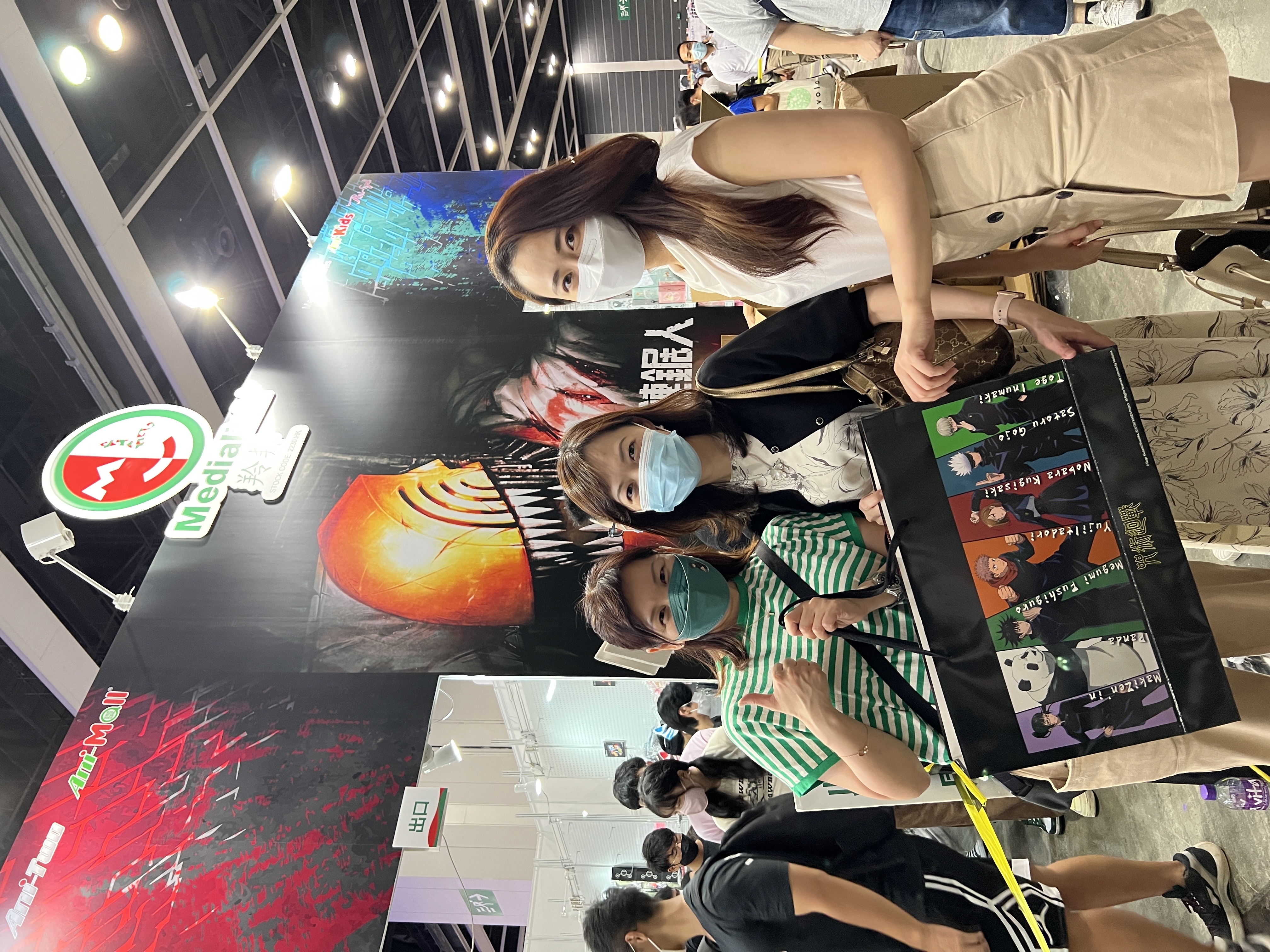
左起: 羚邦集团执行董事赵小凤女士, 本所合伙人徐凯怡律师和市埸及传讯主管杨诗雅女士
羚邦集团是一家领先的媒体内容发行和品牌授权企业,业务遍及中国,日本和东南亚。羚邦集团从事媒体内容发行业务已超过 28 年,并引入多套人气大热动画,包括《咒术回战》、《排球少年》、《BLEACH死神》,以及最新的《链锯人》等。
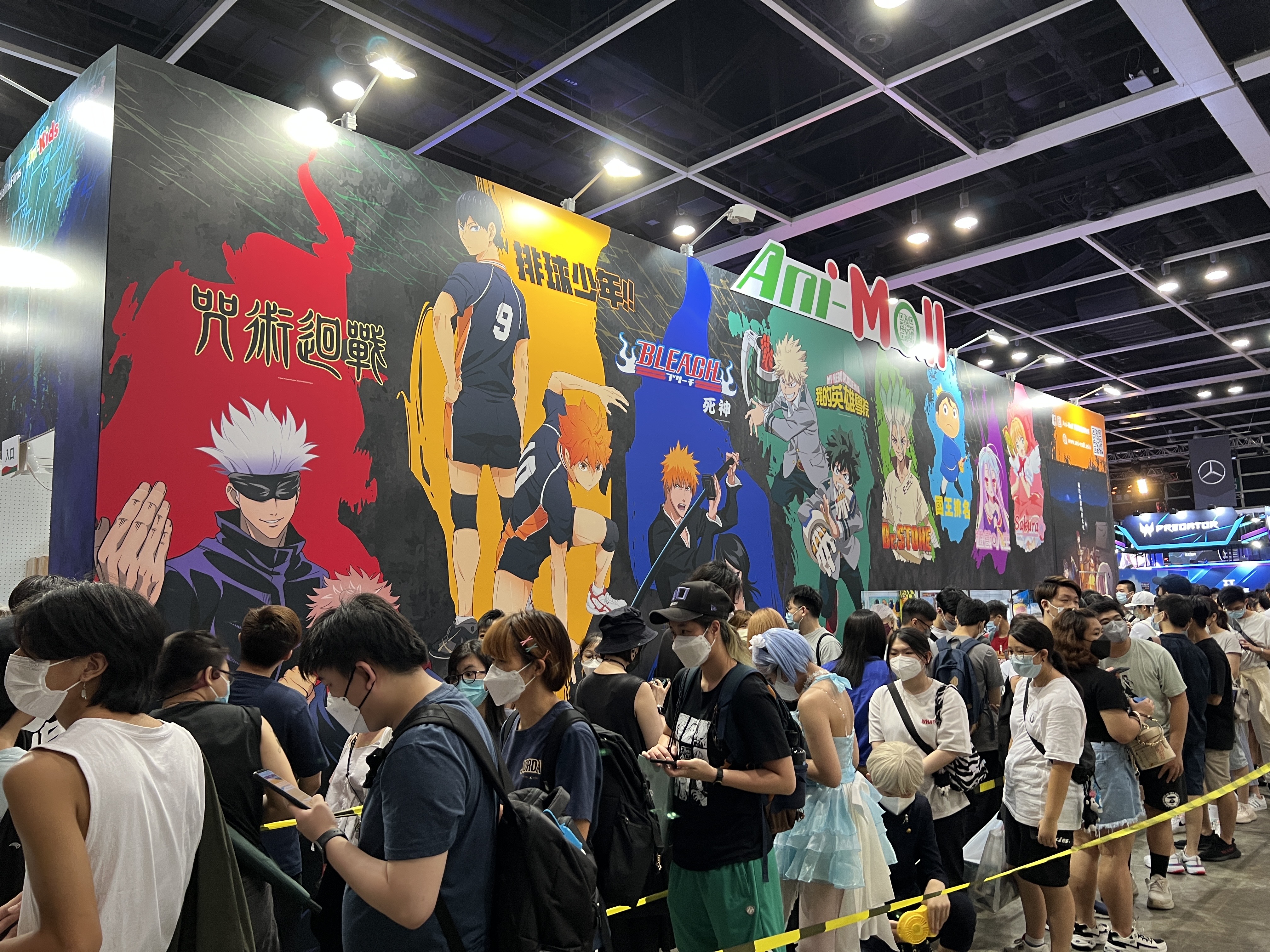
现场人龙排队等候进入羚邦集团的展摊
若阁下想了解更多详情,请联络本所合伙人徐凯怡律师 (heidichui.office@sw-hk.com)。
Background
We note that the Stock Exchange of Hong Kong (the “Exchange”) published an information paper (the “Information Paper”) back in April 2022 outlining the amendments to the Rules Governing the Listing of Securities on the Exchange (the “Rule Amendments”) to complement the Securities and Futures Commission’s (the “SFC”) new Code of Conduct1 provisions on the conduct of issuers and intermediaries involved in book building and placing activities. As such, this article serves as an apt refresher of the rule amendments involved. The capitalised terms used herein shall have the same meaning as defined in the Information Paper.
The Rule Amendments apply to:
(a) a placing of Equity Interests2 to be listed on the Exchange, including:
(b) a placing of listed Equity Interests by an existing holder of Equity Interests if it is accompanied by a top-up subscription by the existing holder of Equity Interests for new Equity Interests in the issuer.
Key Rule Amendments
| Requirements to enter into a written agreement for the appointment of any capital market intermediary (“CMI”)4 , including an overall coordinator | Rule Amendments |
|---|---|
Appointment by written agreement
|
Rules 3A.33, 3A.34, 3A.35 and 3A.36 (GEM Rules 6A.40, 6A.41, 6A.42 and 6A.43) |
| Appointment of overall coordinator(s) in a placing that involves bookbuilding activities | Rule Amendments |
|---|---|
For IPO
For other types of placing involving bookbuilding activities
|
Rule 3A.37 (GEM Rule 6A.44) |
Overall coordinator’s declaration
|
Rules 3A.40, 9.11(36) and Appendix 5E to the Listing Rules (GEM Rule 12.26(8) and Appendix 7I) |
| Appointment of at least one sponsor-overall coordinator in Main Board IPOs | Rule Amendments |
|---|---|
Sponsor-coupling
|
Rules 3A.02 (Note) and 3A.43 (Not applicable to GEM new applicants) |
|
Rule 3A.45 (Not applicable to GEM new applicants). |
| Associated obligations of issuers and their directors | Rule Amendments |
|---|---|
Investor assessment
|
Rule 3A.46 (GEM Rule 6A.48) |
Placing and allocation
|
Paragraph 19 of Appendix 6 (GEM Rule 10.16B) |
Bar on investor rebate
|
Note 2 to Rule 12.08 (Note 3 to GEM Rule 16.13) |
|
Form D in Appendix 5 to the Listing Rules (Form D in Appendix 5 to the GEM Listing Rules) |

Transitional arrangements and effective date
The Rule Amendments will apply to listed issuers and new applicants which submit (or re-file) their listing applications on or after 5 August 2022 in respect of their proposed offerings. Main Board new applicants are reminded to observe the transitional arrangements to avoid any delay in their listing timetable.
New applicants who have submitted a listing application prior to 5 August 2022 will not be required to comply with the new requirements in the Rule Amendments before such application lapses, is withdrawn or is otherwise terminated, even if their bookbuilding, placing or allocation activities conducted in connection with their proposed offerings take place on or after 5 August 2022.
Analysis and Takeaways
As hinted in our previous news update on the relevant SFC’s new Code of Conduct proposal, the implementation of the proposal for bookbuilding code and sponsor coupling may possibly lead to a change in the executory structure of IPO deals and bring the interest of the sponsor and overall coordinator into better alignment.
The complementary and consequential Rule Amendments proposed by the Stock Exchange will allow advisers to comply with this change in structure in a more holistic manner and a clearer fashion by providing the Listing Rules based instructions to all parties involved.
Please contact our Partner Mr. Rodney Teoh and Associate Ms. Angela Lau for any enquiries or further information.
This news update is for information purposes only. Its content does not constitute legal advice and should not be treated as such. Stevenson, Wong & Co. will not be liable to you in respect of any special, indirect or consequential loss or damage arising from or in connection with any decision made, action or inaction taken in reliance on the information set out herein.
1 The Code of Conduct for Persons Licensed by or Registered with the Securities and Futures Commission.
2 equity securities, interests in a REIT, stapled securities and securities of an investment company (as defined in Rule 21.01)
3 has the meaning in Rule 1.01 (GEM Rule 1.01) in the Rule Amendments, that is, a new listing of Equity Interests issued by a new applicant, irrespective of whether there is an offering of Equity Interests. For the avoidance of doubt, “New Listing” includes a reverse takeover of a listed issuer which is a deemed new listing under Rule 14.54 (GEM Rule 19.54) and a transfer of listing of Equity Interests from GEM to Main Board under Chapter 9A of the Listing Rules, but does not include any other new listing of Equity Interests issued by an issuer whose Equity Interests are already listed on a stock market operated by the Exchange.
4 has the meaning in Rule 1.01 (GEM Rule 1.01) in the Rule Amendments, that is, any corporation or authorised financial institution, licensed or registered under the SFO that engages in specified activities under paragraph 21.1.1 of the Code of Conduct, including, without limitation, a capital market intermediary appointed pursuant to Rule 3A.33 (GEM Rule 6A.40) in the Rule Amendments. An overall coordinator is also a capital market intermediary.
5 Appendix 6 to the Listing Rules (GEM Rules 10.12 to 10.16B).
On 12 July 2022, our Partners Hank Lo and Cornelia Chu were invited to attend the 15th Listing Anniversary Gala of Vinda International Holdings Limited (3331.HK) (“Vinda International;”) at The Clearwater Bay Golf & Country Club.

From left to right: Ms. LI Jielin Karen (Chief Executive Officer of Vinda International), our Partner Hank Lo, Mr. LI Chao Wang (Chairman of Vinda International) and our Partner Cornelia Chu
Vinda International, a group of companies engaged in the manufacturing and sale of tissue and personal care products is our firm’s long standing clients. Our firm acted as the legal adviser to Vinda International in its listing on the Main Board of The Stock Exchange of Hong Kong in 2007 and in a number of other transactions. In 2017, Vinda International was a constituent of the Hang Seng Corporate Sustainability Benchmark Index. This year marks the 15th anniversary of the listing of Vinda International in Hong Kong.
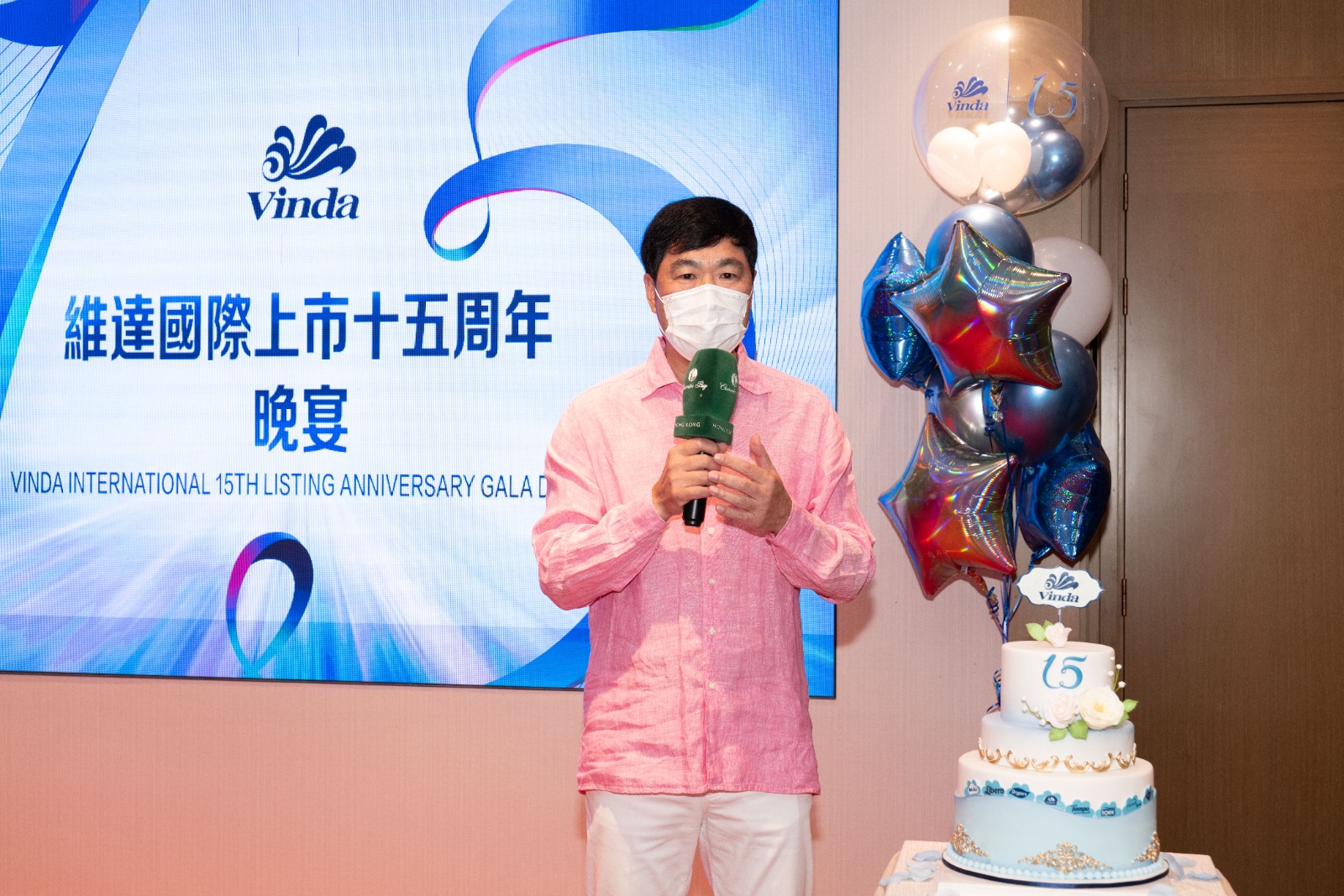
Mr. LI Chao Wang (Chairman of Vinda International)
We would like to take this opportunity to thank Vinda International for their invitation and wish them prosperous business in the years to come.
For more information, please contact our Partners Hank Lo or Cornelia Chu.
Our Partner Gordon Tsang was interviewed by Bloomberg to share his view on the recent China Evergrande Group (3333.HK) (“Evergrande”) winding-up lawsuit in response to the article “Millennial Threatens Evergrande With Wind Down in Latest Setback”.
Lin Ho Man, an investor in Evergrande, filed a winding-up petition against the embattled property company involving HK$862.5 million. This is the first winding-up petition known to have been filed against Evergrande, which is at the centre of China’s real estate crisis with more than $300 billion of debt. Gordon shared with Bloomberg that some of the creditors in Hong Kong might be concerned that the developer may fail to honour their agreements, and therefore join the suit to demand quicker repayment as Evergrande’s restructuring could take months or even years to unravel. He added, “The winding-up petition may add pressure and costs for the company and have a significant impact on Evergrande’s coming restructuring plan.”
For more information, please contact our Partner Mr. Gordon Tsang, or click here to view the complete interview.
Our Partner Gordon Tsang was recently interviewed by Thomson Reuters Beijing to share his insights on corporate repaying debts by listing in Hong Kong in response to the article “Tianqi Lithium Ends Trading Debut Through IPO in Hong Kong, Lithium Prices Continue to Soar, How Long Will The Trend Last? (天齐锂业赴港上市还债翻身,锂价飙涨春风还能吹多久?)”.
Tianqi Lithium (002466.SZ), a Chinese battery-grade lithium carbonate producer, recently applied for a second listing in Hong Kong. It successfully raised over HKD 10 billion to ease debt pressure, making it Hong Kong’s largest IPO so far this year. Gordon shared his views with Reuters Beijing by saying that “It is usually difficult to obtain approval for fund-raising through listing to pay debts because the Hong Kong Stock Exchange may have concerns about a company’s sustainable development if most of the funds raised are not used to expand a company’s business or growth.”
For more information, please contact our Partner Gordon Tsang.
On 8 July 2022, our Partner Rodney Teoh was invited by Shenzhen Public Companies Association (深圳上市公司协会) to be a guest speaker at the “Lesson 3 of Xingyao Pengcheng & Xiangmihu Accelerator (星耀鹏城&香蜜湖加速器) Overseas Listing Seminar: Overseas Listing Legal Issues and Case Analysis”, introducing and analysing the new listing opportunities for Special Purpose Acquisition Companies (“SPACs“) in Hong Kong.
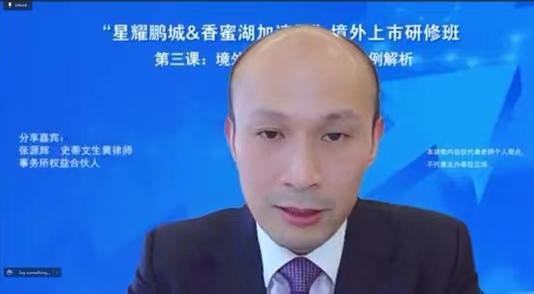
Our Partner Rodney Teoh
This seminar was jointly organised by Service Bureau for Small and Medium-sized Enterprises of Shenzhen Municipality (深圳市中小企业服务局), Futian Financial Service Bureau (福田区金融工作局), Shenzhen Public Companies Association (深圳上市公司协会), Xiangmihu (Shenzhen) Industry and Finance Innovation / Listing Accelerator (香蜜湖(深圳)产融创新/上市加速器), and attracted more than 60 senior management officers of prospective listing applicants.
Our Partner Rodney Teoh spoke on the topic “New Opportunities for Hong Kong SPAC Listing”. He gave an in-depth introduction to Hong Kong’s SPAC listing regime, including the investment highlights, laws and regulations, as well as the typical processes and requirements of SPAC listing and De-SPAC. He then compared the differences among SPAC listings in Hong Kong and around the world. He concluded his talk with the case studies on Hong Kong SPAC listings and shared the execution highlights of such listings.
About Xiangmihu (Shenzhen) Industry and Finance Innovation / Listing Accelerator (香蜜湖(深圳)产融创新/上市加速器)
Xiangmihu (Shenzhen) Industry and Finance Innovation / Listing Accelerator (香蜜湖(深圳)产融创新/上市加速器) is a professional service platform for prospective listing applicants, which is guided by the Strategic Cooperation Framework Agreement (《战略合作框架协议》) entered into by the Shenzhen Municipal People’s Government and the Shenzhen Stock Exchange in 2018. It is jointly established by the Shenzhen Stock Exchange and the People’s Government of Futian District and operated by the Shenzhen Public Companies Association (深圳上市公司协会).
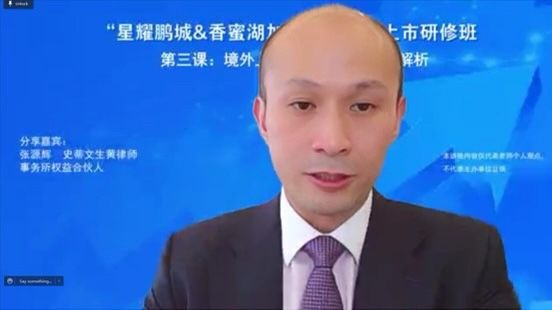
The webinar has received positive feedback from the audience.
For more information, please contact our Partner Rodney Teoh.