News
Find out all about our firm’s latest news and activities below. To learn more about any individual item, please contact us here.
 Stevenson, Wong & Co.
News
Find out all about our firm’s latest news and activities below. To learn more about any individual item, please contact us here.
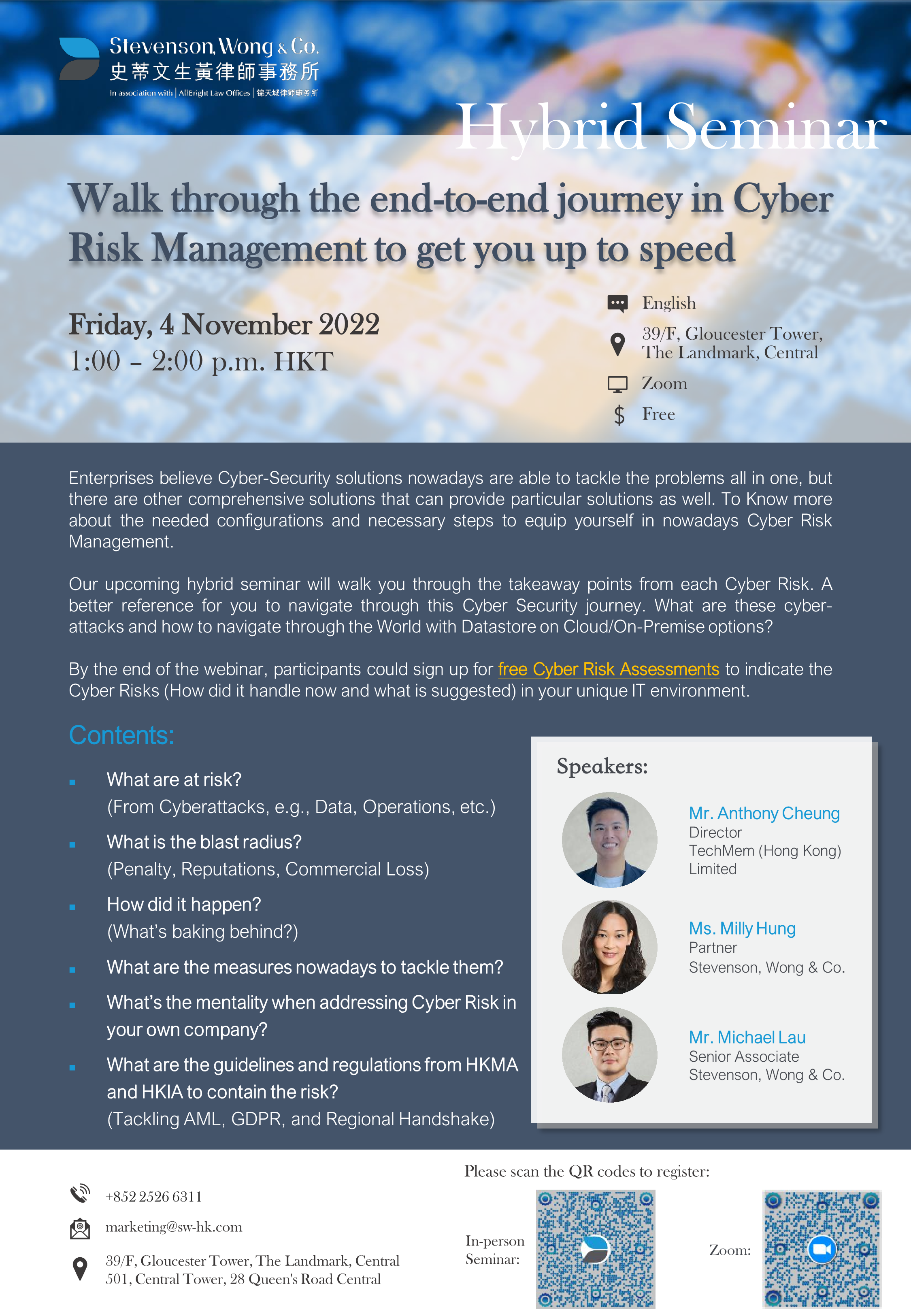
Enterprises believe Cyber-Security solutions nowadays are able to tackle the problems all in one, but there are other comprehensive solutions that can provide particular solutions as well. To Know more about the needed configurations and necessary steps to equip yourself in nowadays Cyber Risk Management.
We are going to have a hybrid seminar coming up to walk through the takeaway points from each Cyber Risk. A better reference for you to navigate through this Cyber Security journey. What are these cyber-attacks and how to navigate through the World with Datastore on Cloud/On-Premise options?

Details:
Date: 4 Nov 2022 (Friday)
Time: 1pm to 2pm
Speakers:
Mr. Anthony Cheung | Director of TechMem (Hong Kong) Limited
Ms. Milly Hung | Partner, Stevenson, Wong & Co.
Mr. Michael Lau | Senior Associate, Stevenson, Wong & Co.
Language: English
Fee: Free
Registration method:
This hybrid seminar will take place at our office and live stream on Zoom.
Venue: 39/F, Gloucester Tower, the Landmark, Central
Online: Zoom
Please scan the QR codes in the poster below to register.
Contents:
We shall go through all of these points in the upcoming webinar and give references and real-life examples of how these impacts are prevented, in particular from an experienced Cyber-Security Lead in FSI (Financial Service Industry) to walk through the measures and expertise in this area.
By the end of the webinar, participants could sign up for free Cyber Risk Assessments to indicate the Cyber Risks (How did it handle now and what is suggested) in your unique IT environment.
For any inquiries, please contact us at: marketing@sw-hk.com.
On 18 October 2022, our Partner Milly Hung and Senior Associate Michael Lau were invited by the Law Society of Hong Kong to be the webinar speakers of “Litigation in Cybercrime”.
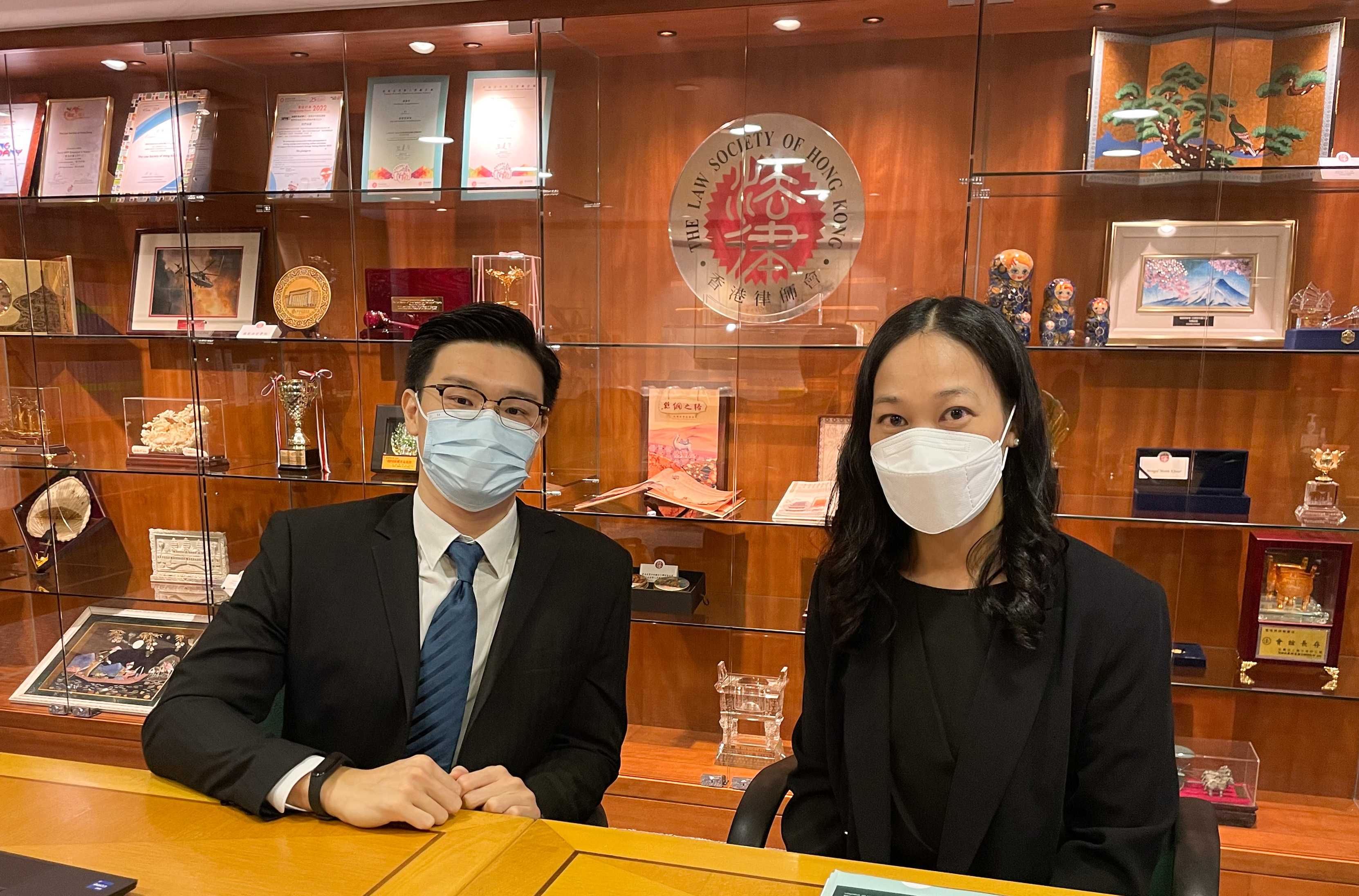
Our Partner Milly Hung (on the right) and Senior Associate Michael Lau (on the left)
By highlighting the common cybercrime in Hong Kong, Milly and Michael has led the participants to go through various common civil and criminal actions against the cybercrime fraudsters. To handle the aftermath, they shared their previous experiences about the “Letter of No Consent” Regime and the ways to trace and claim back the assets that have been misappropriated as a result of the Cybercrime.
For more information, please contact our Partner Milly Hung.
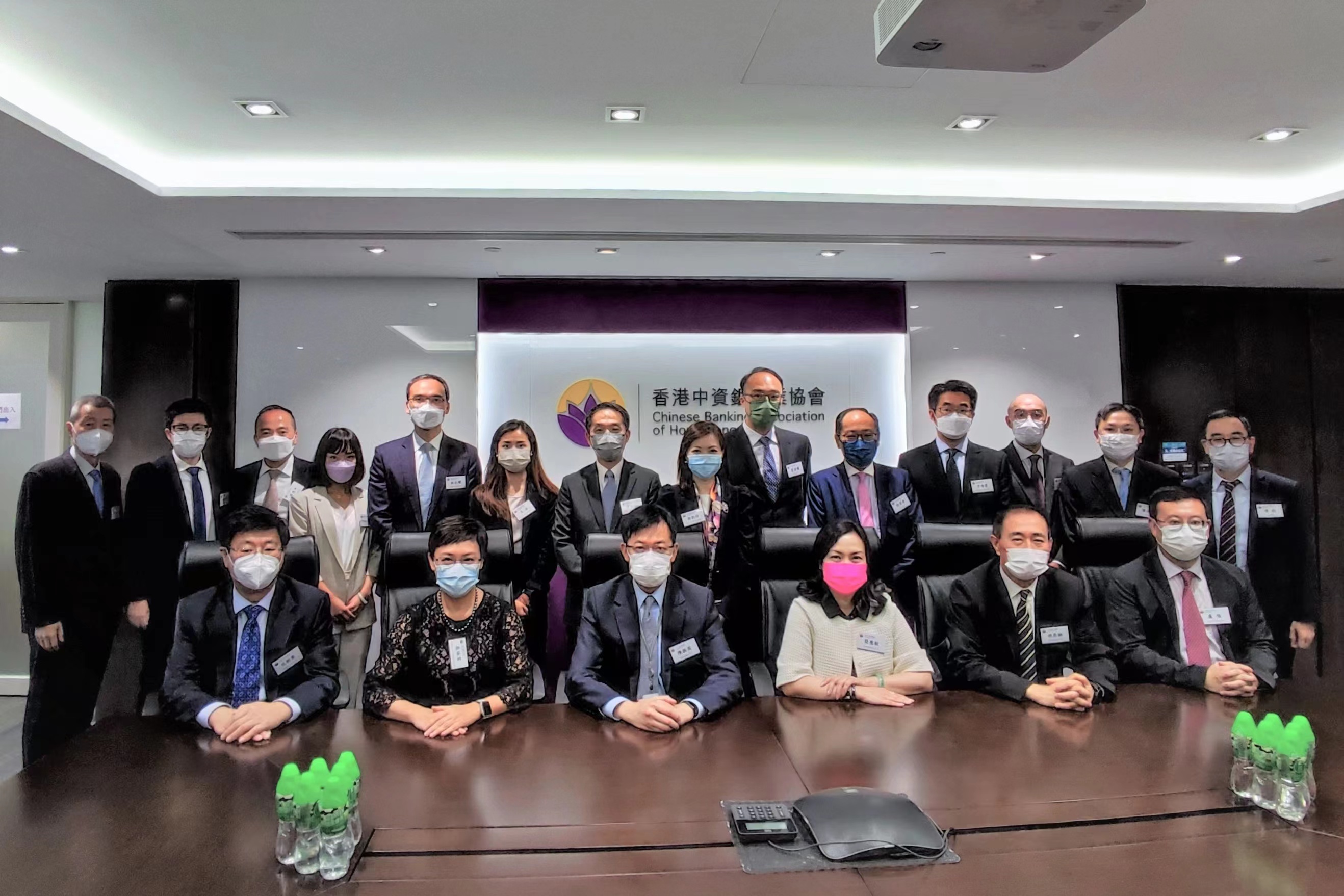
(中文) 本所荣幸获香港中资银行业协会 (以下简称 “协会” ) 委任为法律事务委员会顾问, 并与协会其他专业委员会之委员和法律顾问共同参与委任状之颁赠仪式。该典礼于2022年10月17日在中国银行大厦举行。本所合伙人、银行与金融部和诉讼与争议解决部主管徐凯怡律师受邀出席。此外,协会其他专业委员会之顾问单位,包括德勤 (Deloitte) ﹑普华永道 (PwC) ﹑安永 (EY) 和毕马威 (KPMG) 的代表亦参与了委任仪式。
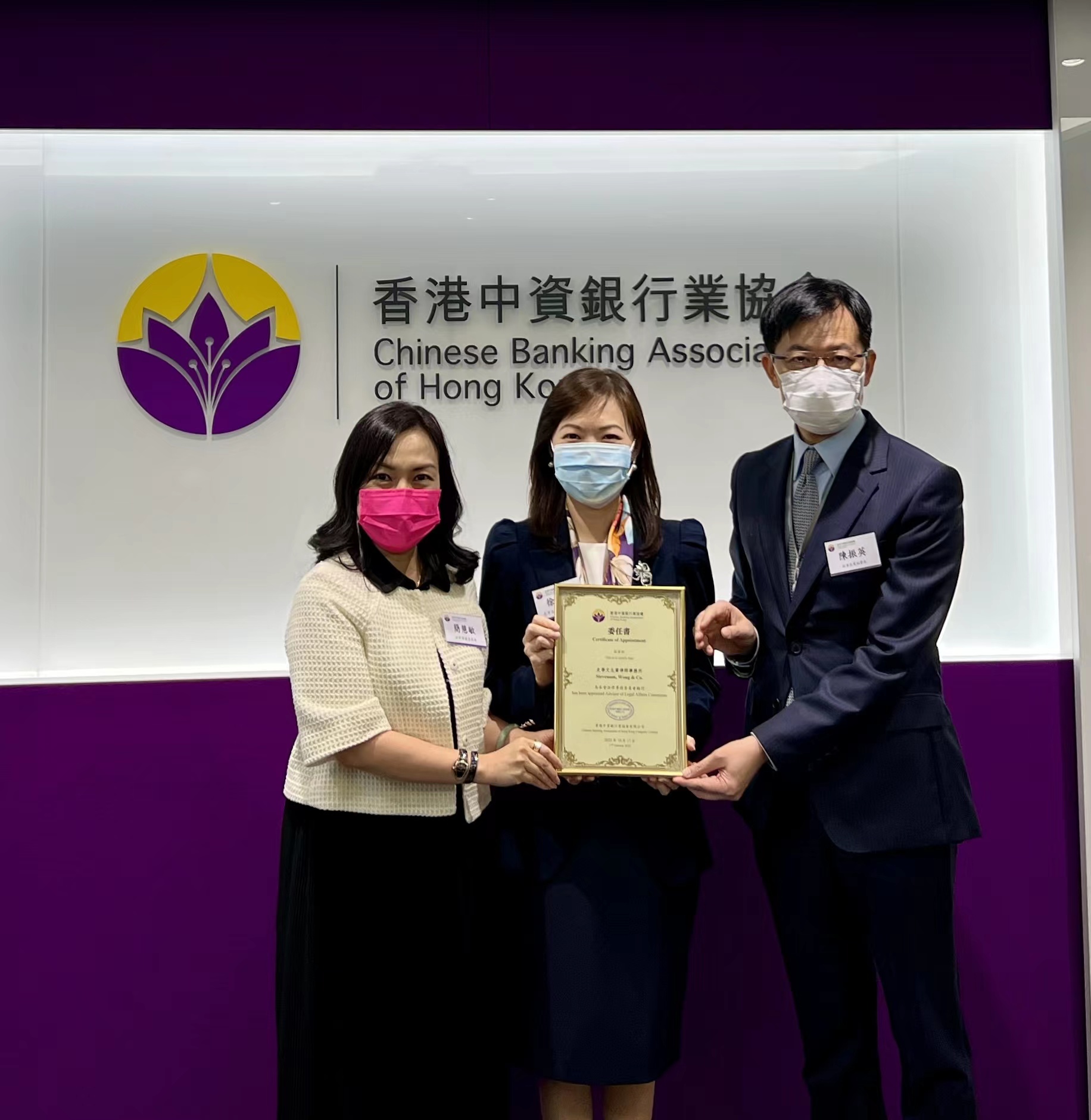
左起: 立法会议员、香港中资银行业协会法律事务委员会执委会主任简慧敏女士、本所合伙人徐凯怡律师、立法会议员(金融界)、香港中资银行业协会副会长兼秘书长陈振英先生
徐律师就本次委任表示: 非常荣幸我所获香港中资银行业协会委任为法律顾问,为协会之法律事务﹑会务和业界未來发展提供支持,贡献微薄的力量。期待日后与各专业委员会之委员和会员,有更多的交流和合作。祝愿协会未來的工作成果丰硕,会务蒸蒸日上!
关于香港中资银行业协会
香港中资银行业协会为2016年于香港注册成立的非牟利社团,由中国银行(香港)有限公司、中国工商银行(亚洲)有限公司、中国农业银行股份有限公司香港分行、中国建设银行(亚洲)股份有限公司、交通银行股份有限公司香港分行及国家开发银行香港分行6家机构共同发起。协会会员主要为中资银行,亦吸纳业界不同背景的会员。
关于法律事务委员会
法律事务委员会为香港中资银行业协会辖下的专业委员会之一,其职责包括: 协助会员了解相关法律要求,防范法律风险和构建会员在法律专业范畴的统一沟通协调平台。此外, 亦包括就与银行业务有关的立法或对业界发展有重大影响的法律咨询事项收集会员意见并提交予相关机构,以及与内地、香港及其他相关国家/地区的法律界建立工作联系等。

如阁下有任何查询或想了解更多详情,请联络本所合伙人徐凯怡律师。
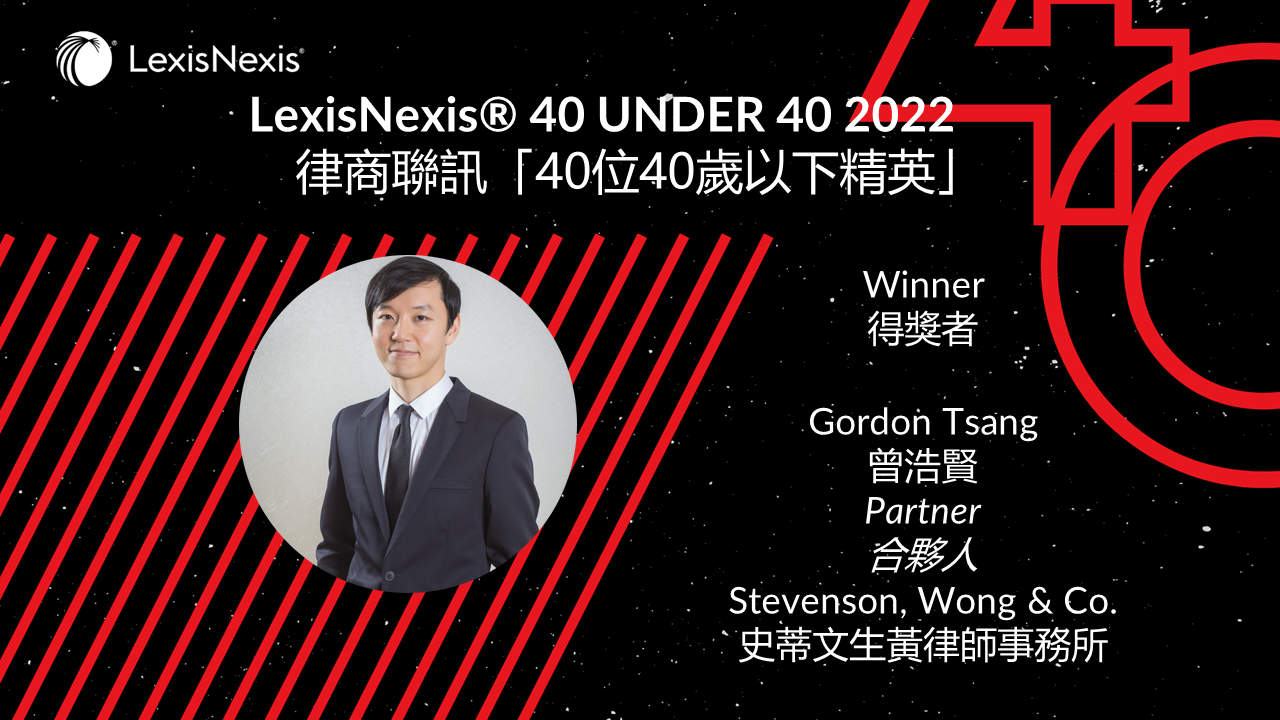
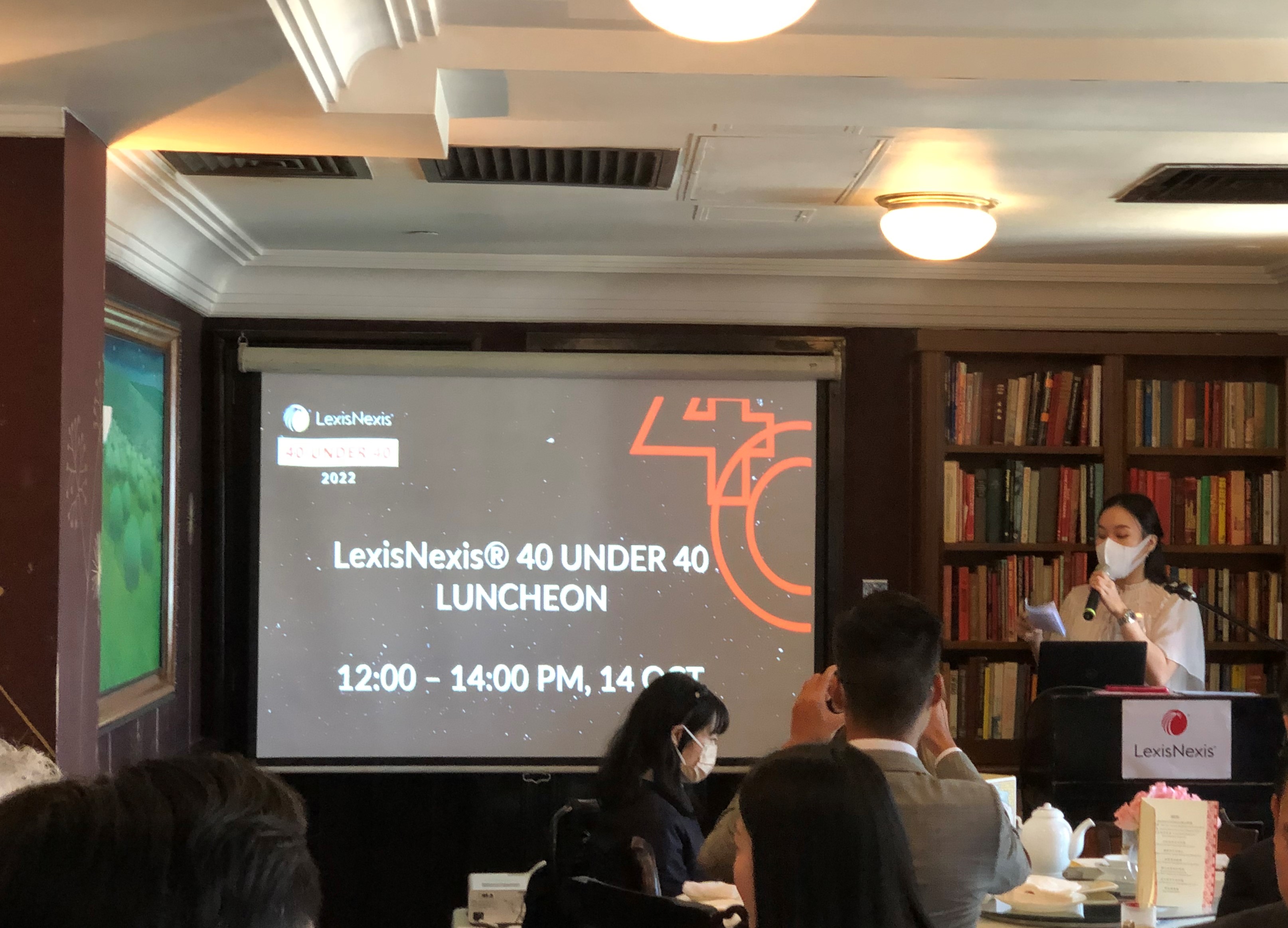
LexisNexis recently announced the winners of 40 under 40. Our Partner Gordon Tsang was recognised as one of the winners of LexisNexis 40 UNDER 40 and invited to attend the award ceremony luncheon held at The China Club on 14 October 2022.
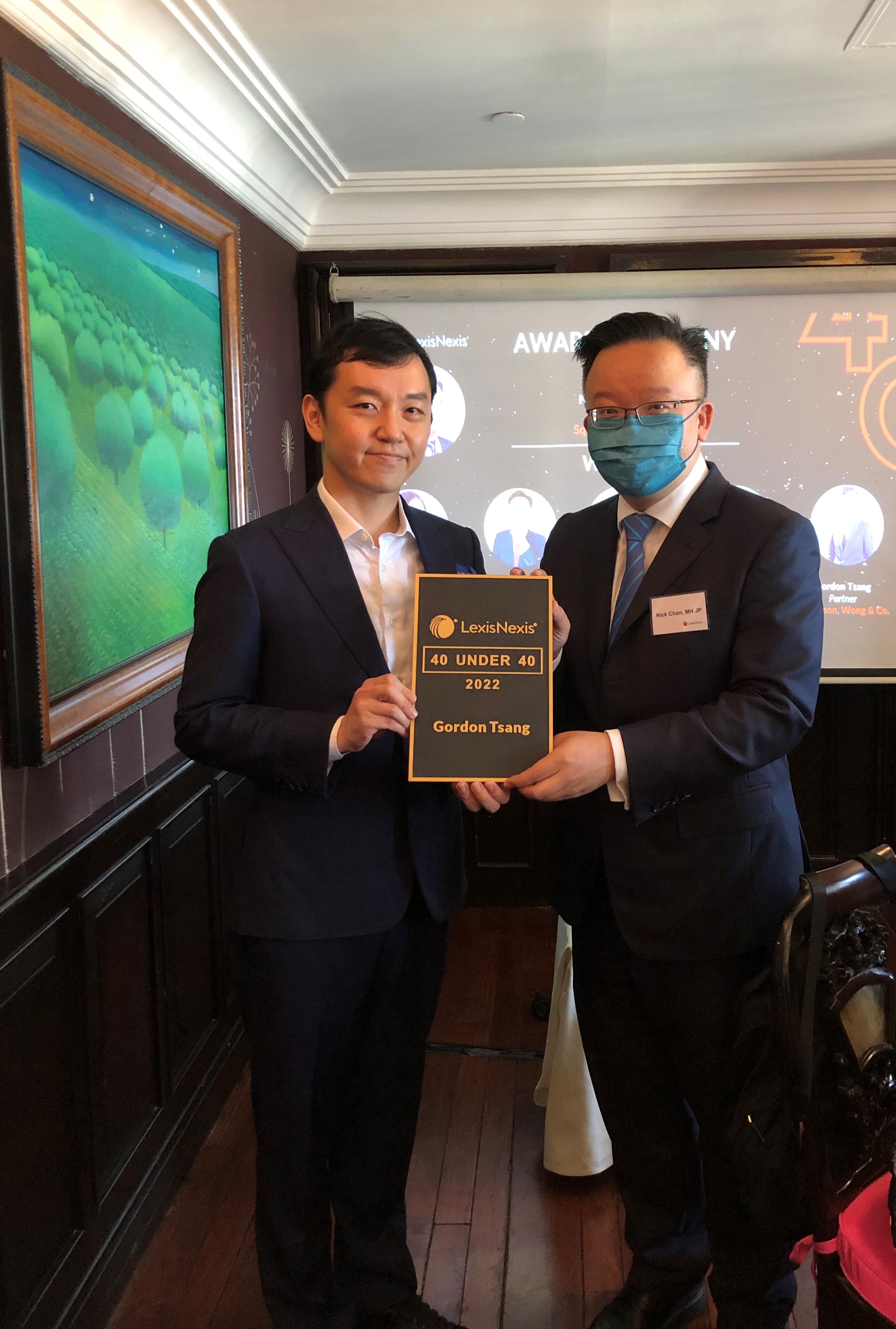
The inaugural award aims to recognize 40 young talent aged 40 years old or under across various legal fields in mainland China, Hong Kong, Macau and Taiwan. Winners are selected for delivering the best and best-in-class work ethics to their clients, partners, and colleagues together with showing exceptional passion to grow and lead the development of the legal sector in Greater China.
Gordon Tsang | Partner
Practice Areas: China Practice, Corporate Commercial Law, Corporate Services, Corporate Finance
Gordon has experience handling a wide range of corporate and commercial matters, including pre-IPO restructuring and financing, Hong Kong and U.S. IPOs, mergers and acquisitions, loan and financing transactions, corporate governance and general compliance for listed companies as well as private enterprises.
Gordon is a Non-Executive Director of China Regenerative Medicine International Ltd (Stock Code: 8158), the Independent Non-Executive Director of Sterling Group Holdings Limited (Stock Code: 1825) and CROSSTEC Group Holdings Limited (Stock Code: 3893). He is also the Company Secretary of 1957 & Co. (Hospitality) Limited (Stock Code: 8495), Sunshine 100 China Holdings Ltd (Stock Code: 2608), Mabpharm Limited-B (Stock Code: 2181) and Sundy Service Group Co. Ltd (Stock Code: 9608).
Gordon has successfully assisted Magic Empire Global Limited (NASDAQ: MEGL), Intelligent Living Application Group Inc. (NASDAQ: ILAG), Zhong Yang Financial Group Limited (NASDAQ: TOP), Hywin Holdings Ltd. (NASDAQ: HYW) and Oriental Culture Holding Ltd (NASDAQ: OCG) on their NASDAQ listing.
For more information, please contact our Partner Gordon Tsang or visit Gordon’s profile on LexisNexis 40 UNDER 40 here.
Stevenson, Wong & Co. advised Jiangmen City Haina New Energy Investment Partnership (Limited Partnership) (江門市海納新能源投資合夥企業 (有限合夥)) (“Jiangmeng New Energy”) on its cornerstone investment in the global offering of CALB Co., Ltd. (中創新航科技股份有限公司) (Stock Code: 3931) (“CALB”).

CALB was officially listed on the Main Board of The Stock Exchange of Hong Kong Limited on 6 October 2022 and has raised HK$9.9 billion from its initial public offering, making it the third-largest initial public offering by fund raised in Hong Kong this year. CALB’s market capitalisation upon listing was HK$10.1 billion. CALB is a leading new energy technology company mainly engaged in the design, research and development, production and sales of EV batteries and ESS products. CALB is one of the top 10 companies in the global EV battery industry and is the third-largest EV battery maker in the PRC.
Jiangmen New Energy is a limited liability partnership established under the laws of the PRC and is principally engaged in the investment in the new energy industry with its own funds. The ultimate beneficial owner of Jiangmen New Energy is the Administration Commission of Jiangmen City (江門市人民政府國有資產監督管理委員會). Jiangmen New Energy invested in RMB700 million as cornerstone investment in CALB, making it the single largest cornerstone investor in value in the listing of CALB.
The SW team was led by corporate Partner Mr. Hank Lo and Senior Associate Mr. Terence Lau, supported by Paralegal Ms. Bethany Zhang.
Please contact Mr. Hank Lo or Mr. Terence Lau for any enquiries or further information about this transaction.
1. Introduction
Green bonds are a financing option for issuers which the proceeds will be used to finance new or existing green projects that deliver environmental benefits (the “Green Bond(s)”), 1and is the dominant subset of the Environmental, Social and Governance (“ESG”) space where investors seek to align socially responsible interests along with investment returns. Keeping in pace with the rapidly growing global Green Bond market, Hong Kong has introduced certain reforms to enhance its attractiveness as a Green Bond market. Following our discussions on the Hong Kong debt capital market (see our news update here) and the SFC Agenda for Green and Sustainable Finance (see our news update here), we would like to take this opportunity to provide an overview of Green Bonds and sustainability-linked bonds.

2. Characteristics of Green Bonds
Four main types of Green Bonds exist currently as defined by the International Capital Market Association (“ICMA”)2 :
Green Bonds enjoy the advantage of allowing investors to satisfy their ESG requirements and green investment mandates, as well as diversifying their investment portfolio.
Generally speaking, it is also more resilient to market downturns and has been welcomed by investors during the COVID-19 pandemic with a more favourable risk-return trade-off. For issuers, launching green bonds may allow them to diversify their investor base, enhance the credibility of their environmental strategy, and boost their reputation by contributing to sustainable development.
3. The Hong Kong market for Green Bonds
In 2021, Hong Kong’s labelled green debt market recorded a year-on-year growth of 6.5 times, the highest growth since 2016, reaching a total issuance of US$19 billion. 3) The market is mainly led by the government and corporate issuers who were responsible for approximately 93% of the green debt instruments in 2021.
3.1. Government Issuance
In 2018, the HKSAR Government set up the Government Green Bond Programme (“GGBP”) with aims to demonstrate the Government’s support for sustainable development and determination to combat climate change, set a benchmark for green bond products in the market, provide a good example for other potential green issuers, and promote awareness of and Hong Kong’s international profile in green finance. It has been issuing green bonds regularly since its inaugural deal in 2019. As at 31 July 2022, the HKSAR Government has issued almost US$10 billion worth of green bonds under the GGBP. In May 2022, the inaugural retail green bond launched by the HKSAR Government under the “Government Green Bond Programme” attracted a subscription capital of HK$20 billion.
Moreover, the HKSAR Government launched a three-year programme named the “Green and Sustainable Finance Grant Scheme” (“GSF Grant Scheme”) in May 2021 which aims to subsidize eligible bond issuers and loan borrowers to reduce the financial burden related to the external review and issuance costs. The GSF Grant Scheme has been well received by the industry in Hong Kong. As of April 2022, more than 60 applications have been approved, and HK$70 million has been granted to issuers to aid with their green bond issuances.
3.2. Corporate Issuance
The GSF Grant Scheme has led to more active corporate green bond issuance, with 12 issuers/borrowers participating in the green debt market in 2021. Out of the said 12 issuers/borrowers, there were 9 new issuers including Hongkong Land and China Development Bank (Hong Kong Branch), which issued their inaugural green bonds.
4. Green Bond Principles (“GBPs”)
The ICMA has set out four core components under GBPs, which are internationally recognized voluntary process guidelines that encourage transparency and promote integrity. The GBPs are part of the Hong Kong Green Finance Association’s guide to Green Bonds and are widely used by issuers including the HKSAR Government. Four core components, as shall be discussed below, are at the centre of the GBP.
4.1. Use of Proceeds
This principle concerns the utilization of bond proceeds towards eligible green projects. The designated green projects should provide clear environmental benefits which are feasible, quantifiable and/or assessable which should be disclosed to potential investors. Some green projects categories are expressly recognised as carrying significant environmental objectives:
| Green Projects Categories | Examples |
|---|---|
| Renewable energy | Production, transmission, appliances and products |
| Energy Efficiency | New and refurbished buildings, energy storage, district heating, smart grids, appliances and products |
| Pollution prevention and control | Reducing air emissions, greenhouse gas control, soil remediation, waste prevention and reduction |
| Environmentally sustainable management of living natural resources and land use | Environmentally sustainable agriculture, forestry (afforestation and preservation of natural landscapes) and animal husbandry |
| Terrestrial and aquatic biodiversity conservation | Protection of coastal, marine and watershed environments |
| Clean transportation | Electric, hybrid, public, rail, non-motorised, multi-modal transportation, infrastructure for clean energy vehicles and reduction of harmful emissions |
| Sustainable water and wastewater management | Sustainable infrastructure for clean and/or drinking water, wastewater treatment, sustainable urban drainage systems and river training and other forms of flooding mitigation |
| Climate change adaptation | Efforts to make infrastructure more resilient to impacts of climate change, as well as information support systems |
| Circular economy adapted products, production technologies and processes and/pr certified eco-efficient products | Design and promote reusable, recyclable and refurbished materials, components and products |
| Green buildings | Buildings that attain regional, national or internationally recognised standards or certifications for environmental performance |
4.2. Process for Project Evaluation and Selection
Issuers have to communicate clearly to investors about the environmental sustainability objective of the green projects, the process of determining the project category and the identification and management of the associated social and environmental risks. The ICMA suggests that an external review is conducted to supplement the issuer’s project evaluation and selection processes.
4.3. Management of Proceeds
The credit arrangement of the green bond’s net proceeds should be conducted through a sub-account and later moved to a sub-portfolio that attests to the issuer’s lending and investment operations of the project. Issuers are recommended to inform investors about the intended types of temporary placement for the balance of unallocated net proceeds.
4.4. Reporting
Issuers should report up-to-date information on the use of proceeds annually until full allocation. Transparency is a core value in communicating to investors about the expected and/or achieved impacts of projects.
5. External Reviews
To qualify as a green bond, issuers are recommended to appoint external reviewers to ensure the green bond framework is aligned with the GBPs. This mitigates the risk of “green defaults” where funds are not actually applied to green projects, or fail to yield the expected environmental benefits. It should also be noted that a prerequisite for applying for the GSF Grant Scheme is the perusal of pre-issuance external review services by reviewers on the HKMA’s Recognised External Reviewer list.
Some standard external review methods include obtaining a secondary party’s opinion, expertise verification and certification on the alignment to the GBPs or other international standards.
| Second Party Opinion |
|
| Energy Efficiency |
|
| Certification |
|
6. Sustainability-linked Bonds
Sustainability-linked bonds (“SLBs”) are bond instruments where the proceeds from issuance are not restricted to specific green projects. Instead, the SLBs are dependent on the achievement of pre-defined sustainability performance targets as measured by the performance of specific key performance indicators (“KPIs”).
Difference between green bonds and sustainability-linked bonds
| Green Bonds | Sustainability-Linked Bonds |
|---|---|
Tighter scope for use of proceeds
|
Wider scope for use of proceeds (not ring-fenced to green or sustainable purposes)
|
Activity-based
|
Performance-based
|
As it can be seen, SLBs provide lowered thresholds for issuers to engage in the sustainable finance market. Rather than investing in specific green business projects through the funds, potential issuers with overall sustainability or ESG strategies who are unable to afford the high capital cost of green projects could consider issuing SLBs, without requiring them to purchase a significant amount of green assets.
7. Analysis and takeaways
In the past decade, green bonds have continued to dominate among green and sustainable finance markets. Different regulatory updates and subsidies have been enacted in order to promote Hong Kong’s status as a leading Green Bond market. Issuers are advised to refer to GBP standards and guidance on subsidies to ensure their fund-raising process occurs as efficiently as possible. With greater flexibility on offer, SLBs are also an attractive choice for issuers to attain a general performance target.
Please contact our Partner Mr. Rodney Teohfor any enquiries or further information.
This news update is for information purposes only. Its content does not constitute legal advice and should not be treated as such. Stevenson, Wong & Co. will not be liable to you in respect of any special, indirect or consequential loss or damage arising from or in connection with any decision made, action or inaction taken in reliance on the information set out herein.
1 Hong Kong Monetary Authority. (2020, November). The Green Bond Market in Hong Kong: Developing a Robust Ecosystem for Sustainable Growth. Retrieved from Hong Kong Academy of Finance: https://www.aof.org.hk/docs/default-source/hkimr/applied-research-report/gbrep.pdf
2 Capital Markets Association. (2022, June). Green Bond Principles: Voluntary Process Guidelines for Issuing Green Bonds. Retrieved from ICMA: https://www.icmagroup.org/assets/documents/Sustainable-finance/2022-updates/Green-Bond-Principles_June-2022-280622.pdf
3 Hong Kong Green and Sustainable Debt Market Briefing. (2022, July). Climate Bonds Initiative. Retrieved from Climate Bonds Initiative: https://www.climatebonds.net/files/reports/cbi_hk_briefing_2021.pdf