News
Find out all about our firm’s latest news and activities below. To learn more about any individual item, please contact us here.
 Stevenson, Wong & Co.
News
Find out all about our firm’s latest news and activities below. To learn more about any individual item, please contact us here.
We are delighted to announce the promotions of Mr. Calvin Lo, Mr. Gordon Tsang, and Mr. Dominic Lau from senior associates to the firm’s partnership, effective from 1 July 2021.
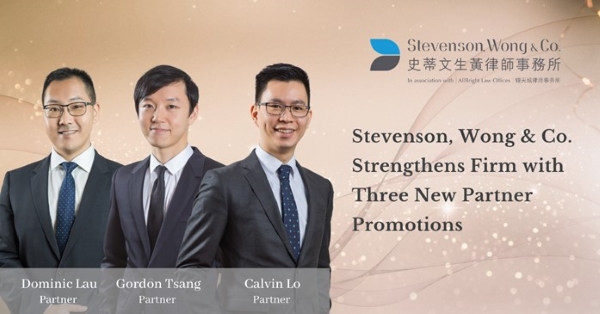
Mr. Calvin Lo | Partner, SW Private Client
Mr. Lo joined the firm in 2015. He has a wide range of experience in private client work, including family and matrimonial matters, trust advisory work, estate and succession planning, often with cross-border elements, jurisdiction and forum disputes. He also specialises in handling MIP Committee and guardianship applications as well as for personal injury and fatal accident claims. He is also a HKMAAL accredited family mediator.
Mr. Lo is a Full Member (TEP) of the Society of Trust and Estate Practitioners (STEP). He recently won a STEP Excellence Award for being the top scorer worldwide at distinction level in the exam of STEP Diploma in International Trust Management.
Mr. Gordon Tsang | Partner, Corporate Finance
Mr. Tsang was admitted to practise as a solicitor in Australia in 2012 and in Hong Kong in 2013. He joined the firm in 2015. Mr. Tsang has extensive experience in handling a wide range of corporate and commercial matters, including pre-IPO restructuring and financing, Hong Kong and U.S. IPOs, mergers and acquisitions, loan and financing transactions, corporate governance and general compliance for listed companies as well as private enterprises.
Mr. Tsang is also the Non-Executive Director of China Regenerative Medicine International Ltd (Stock Code: 8158); the Company Secretary of Sunshine 100 China Holdings Ltd (Stock Code: 2608), Mabpharm Limited-B (Stock Code: 2181) and Sundy Service Group Co. Ltd (Stock Code: 9608).
Mr. Dominic Lau | Partner, Regulatory Enforcement & Compliance
Mr. Lau is dual-qualified in New York (USA) and Hong Kong. He joined the firm in 2019.
He is experienced in a broad range of commercial litigation including shareholders’ disputes, international arbitration, and land and property disputes.
In September 2018, Mr. Lau gained higher rights of audience in the high court.
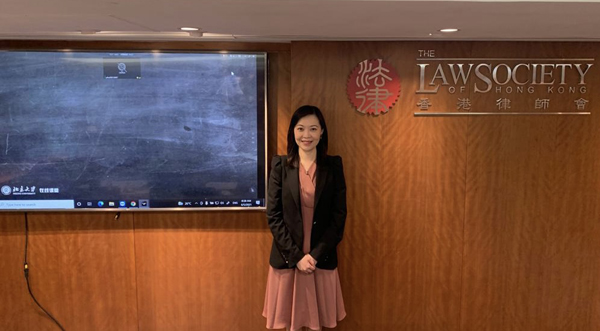
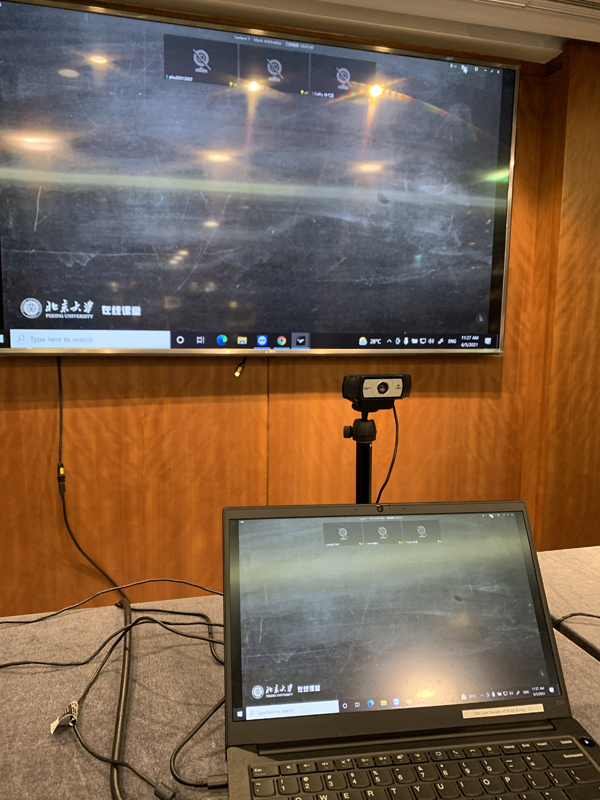
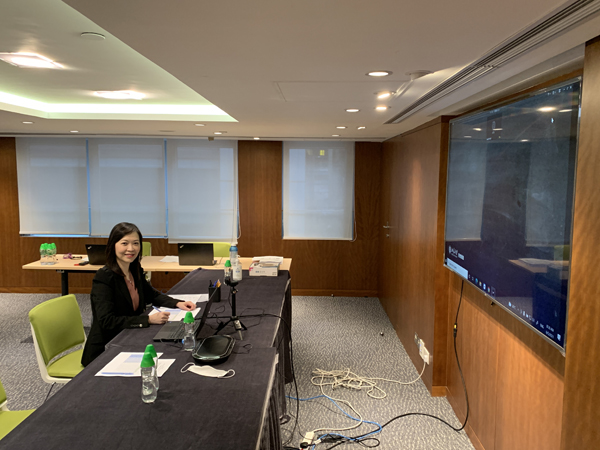
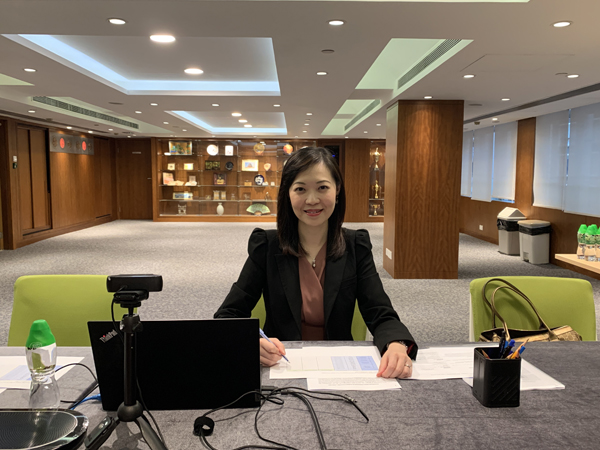
On 5 June 2021, our Partner and Head of Litigation and Dispute Resolution department, Ms. Heidi Chui, was invited by the Peking University Law School (PKU Law School) to be the guest lecturer of “An Introduction to Legal Services and Risk Management for Cross-border Transactions”, a mock arbitration course for the undergraduate and postgraduate of PKU Law School.
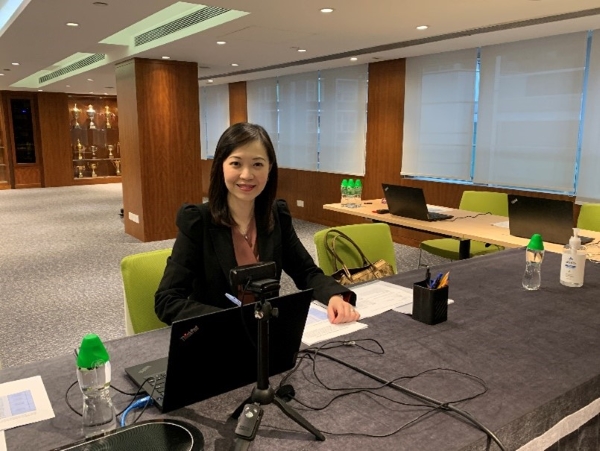
Co-organised by The Law Society of Hong Kong and PKU Law School, the course aims to enrich students’ understanding and practical experience in cross-border arbitration. Ms. Chui shared her experiences in arbitration with the students and offered detailed, constructive feedback on their performances in the moot arbitration. The course was well-received by the students, and they think it will greatly benefit their future studies and careers.
For more information, please contact our partner Ms. Heidi Chui (heidichui.office@sw-hk.com).
Background
Following the consultation paper (the “Consultation Paper”) published by the The Stock Exchange of Hong Kong Limited (the “Exchange”) in November 2020 on the proposed increase in the Main Board profit requirement (the “Profit Requirement”), the Exchange published the highly anticipated Consultation Conclusion on “The Main Board Profit Requirement” (the “Consultation Conclusions”) on 20 May 2021.
Summary
After careful consideration of stakeholder feedback about the quantum and timing of the proposed increase as set out in the Consultation Paper, the Exchange modified its proposal as follows:
(a) Smaller increase in the Profit Requirement (the “Modified Profit Increase”)
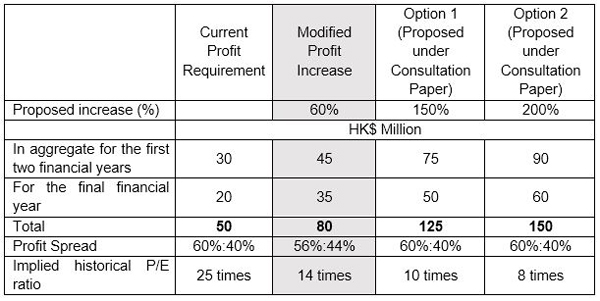
(i) the Profit Requirement shall be increased by 60% (rather than the proposed 150% and 200%), resulting in a three-year aggregate profit threshold of HK$80 million (the “Aggregate Profit Threshold”), up from the current HK$50 million aggregate profit threshold requirement.
(ii) the profit spread is amended to a 56%:44% split (as compared to current 60%:40% split), such that the minimum aggregate profit required for the first two years of the track record period will be HK$45 million (from the current HK$30 million) and the final financial year of HK$35 million (from as the current HK$20 million) (the “Profit Spread”).
The Modified Profit Increase translates into an implied historical P/E ratio of approximately 14 times (as oppose to current 25 times), a change that is in line with the average P/E ratio of the Heng Sang Index between 1994 and 2020; and
(b) Implementation Date – the Modified Profit Increase will become effective on 1 January 2022.
(c) More flexible relief from the Profit Spread – the Exchange will also be prepared to grant a relief from the profit Spread on case-specific circumstances.
The table below sets out a comparison of the Modified Profit Increase with the proposals in the Consultation Paper:
Implementation of the Proposal
The Modified Profit Increase with the relevant consequential amendments to the Main Board Listing Rules, will take effect on 1 January 2022 (the “Effective Date”). Any Main Board listing applications submitted on or after the Effective Date will be assessed under the Modified Profit Increase.
This Effective Date would also be applicable to any renewals of previously submitted applications or GEM transfer applications. A listing applicant will not be permitted to withdraw its listing application before it lapses and resubmit the listing application shortly thereafter before the Effective Date such that the application will be assessed in accordance with the current profit requirement.
Temporary Relief
If the listing applicant meets an increased Aggregate Profit Threshold of HK$80 million, the Exchange will be prepared to grant relief from the Profit Spread on case-specific circumstances rather than through a set of fixed conditions. In this regard, the Exchange will ordinarily, among other things, evaluate the applicant’s business nature and evaluate any underlying reasons for its inability to meet the Profit Spread.
The Exchange will also impose conditions where appropriate. When considering an application for a waiver from the revised Profit Spread, the Exchange will critically assess the need to include a mandatory disclosure of the listing applicant’s profit forecast in the listing document and may also enquire on how the issuer’s IPO price was determined with reference to the book-building process.
Listing of SMEs
The Exchange stated in the Consultation Conclusions that the increase of profit requirement would not deprive suitable SMEs of the opportunities to list in Hong Kong as the Exchange saw GEM as a viable alternative. The Exchange further reassured that pre-revenue and pre-profit companies do not rely on the Profit Requirement to list. Such companies will also continue to be eligible for listing if they can demonstrate compliance with alternative eligibility and suitability requirements under the relevant Listing Rules and related guidance materials.
Pre-revenue biotech company could continue to rely on industry-specific pre-conditions as set out in Guidance Letter HKEX-GL92-18, and attain a market capitalisation of HK$1.5 billion and a public float of HK$375 million under Listing Rules 18A.03 and 18A.07. Similar requirements also continue to be applicable for mining companies under Chapter 18 of the Listing Rules.
Impact on GEM Listings
The Exchange taken note that there has recently been a significant decrease in the number of new GEM listings (from 75 in 2018 to 8 in 2020). The Exchange has attributed this observation to the lack of interest in “shell companies” due to the regulatory actions taken by the Exchange and the SFC as well as the removal of the streamline transfer process from GEM to the Main Board in 2018. The Exchange viewed these new regulations as designed to curb “shell” manufacturing and not to prohibit suitable companies from listing on GEM.
The Exchange further reiterated that GEM remains a viable alternative listing venue for companies and will consider a review of GEM in terms of its positioning and market perception. A consultation paper to seek market feedback on appropriate reforms may be forthcoming when necessary.
Competitiveness of the Exchange
The Exchange considers that the Modified Profit Increase will not compromise the Exchange’s competitiveness against other overseas exchanges. In particular, the HK$80 million profit requirement is still lower than that of SGX (approximately pre-tax profit of HK$170 million) and NYSE (approximately pre-tax profit of HK$194 million). Furthermore, the US markets typically also requires a higher public free float of approximately HK$310 million as compared to HKEX’s minimum of HK$125 million for Main Board applicants.
The market capitalisation requirement of HK$500 million also remains competitive when compared against that of NASDAQ (approximately HK$1,242 million), NYSE (approximately HK$3,881 million), SGX (approximately HK$850 million), ChiNext and STAR Board (approximately HK$1,200 million). Certain listing applicants may be considered ineligible to list in view of industry specifications or other eligibility requirements imposed by such overseas market, such as “high tech, emerging or innovative’ as required by ChiNext and STAR Board.
The below table sets out a comparison of the profit requirements with the profit-related eligibility requirement of the selected overseas main markets, ChiNext and STAR Board:
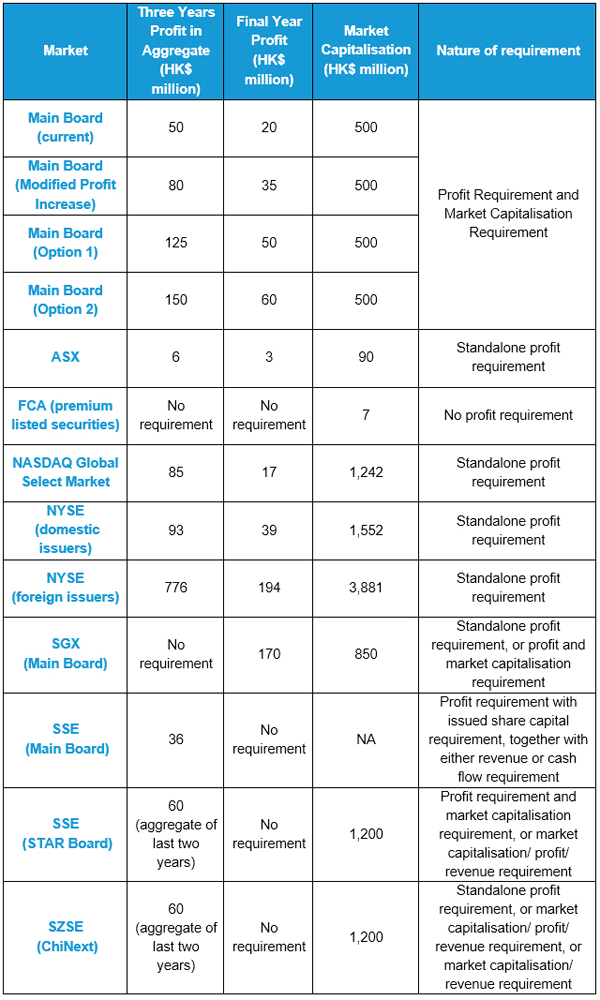
Source: Consultation Conclusions
Implications and Takeaways
A proposal involving an exchange’s listing requirements, especially its profit requirement, has always been a delicate balancing act of interests among various stakeholders. Against the backdrop of COVID-19, concepts of curtailing “shell” activities, protecting the interest of the investing public, while affording a fair chance for SMEs to list despite their size, as well as magnitude and timing of such implementation, are all valid considerations.
The jury is still out – as it how the Hong Kong future IPO scene eventually unfolds. Meanwhile, we suggest prospective listing applicants to seek appropriate advice and discussions on this topic, in order to formulate their listing plans that best suit their circumstances.
Please contact our Partners Mr. Hank Lo, Ms. Cornelia Chu or Mr. Rodney Teoh for any enquiries or further information.
This newsletter is for information purposes only. Its content does not constitute legal advice and should not be treated as such. Stevenson, Wong & Co. will not be liable to you in respect of any special, indirect or consequential loss or damage arising from or in connection with any decision made, action or inaction taken in reliance on the information set out herein.
Between 29-30 May 2021, our firm’s Partner and Head of Litigation and Dispute Resolution department, Ms. Heidi Chui, and her team Senior Associate Mr. Kyle Lo, Associate Mr. Calvin Huang and Paralegal Mr. Harold Gan, participated in the 5th AllBright Law Offices Virtual Moot Court Competition (the “Competition”).
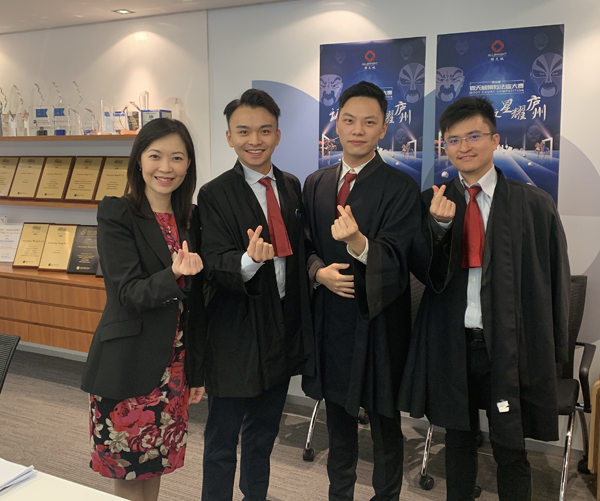
The Competition was organised by Shanghai AllBright Law Offices and co-organised by Shanghai AllBright (Hefei) Law Offices, AllBright Litigation and Arbitration Committee, and Anhui University. Due to the pandemic, the Competition was held online, and a total of 22 teams from all across China participated in the Competition.
The opening ceremony of the Competition was host by Mr. Guo Rui, Senior Partner of AllBright Law Offices, and Mr. Lawrence Zhu, Senior Partner of AllBright Law Offices delivered the opening address.
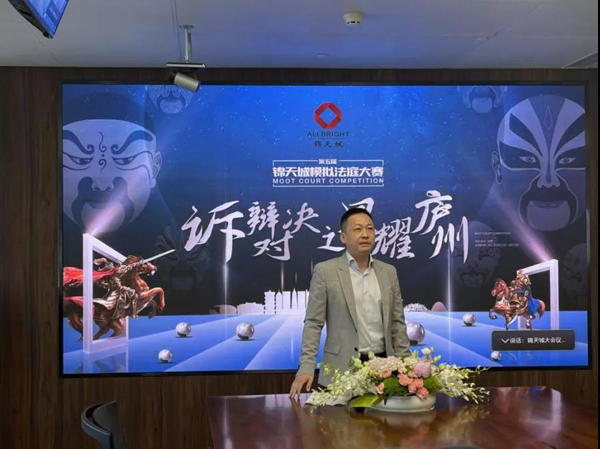
Senior Partner of AllBright Law Offices, Mr. Guo Rui
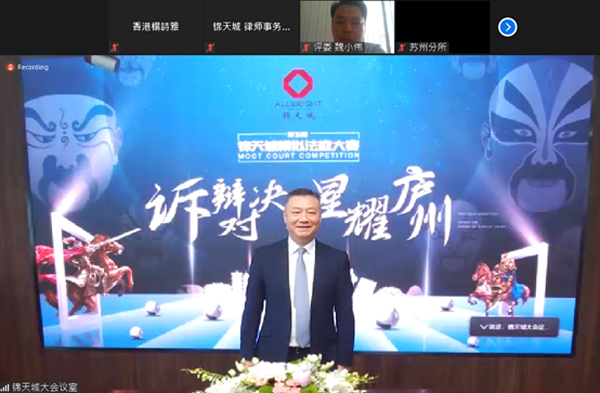
Senior Partner of AllBright Law Offices, Mr. Lawrence Zhu
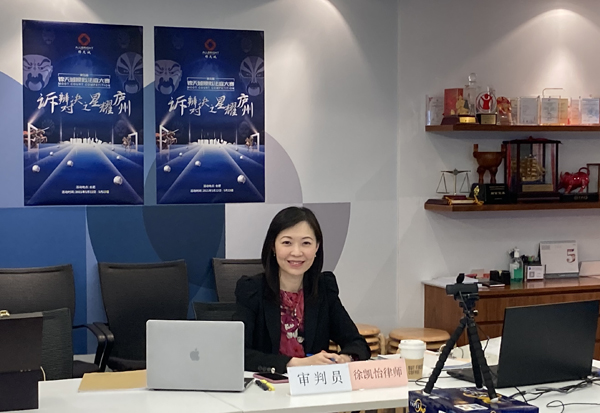
Our Partner Ms. Heidi Chui was invited to judge one of the moot competitions and gave her detailed views and comments on the performance of both plaintiff and defendant teams.
Our firm’s team led by our Senior Associate, Mr. Kyle Lo, consisted of Associate Mr. Calvin Huang, and Paralegal, Mr. Harold Gan. After a stiff challenge against the team from Wuhan, our firm’s team successfully won the first round in the competition.
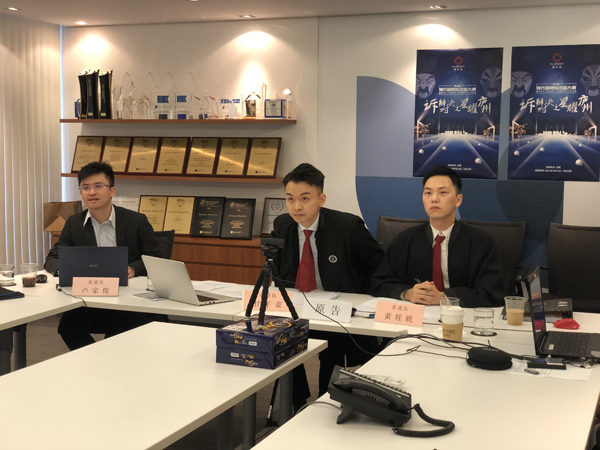
The 5th AllBright Law Offices Virtual Moot Court Competition has been a great success. The Competition has fostered the mutual understanding of legal practice between the Mainland and Hong Kong and deepened the exchanges and cooperation
between the two firms.
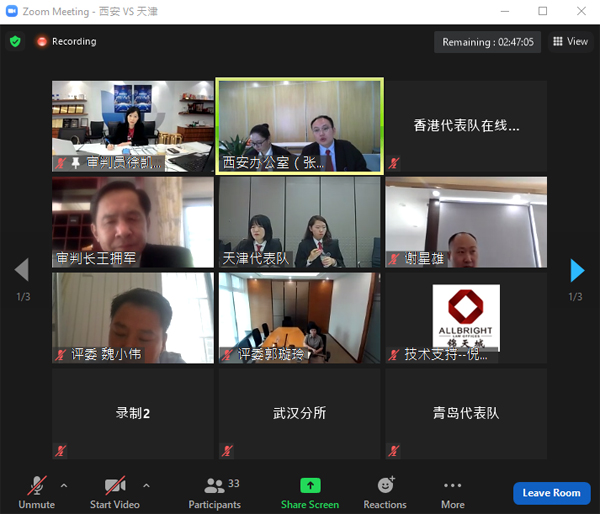
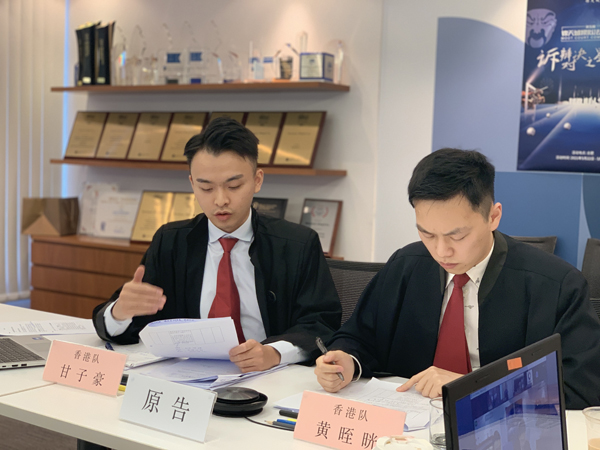
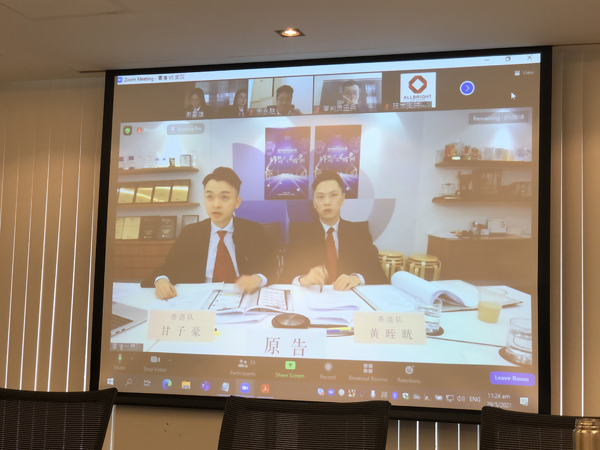
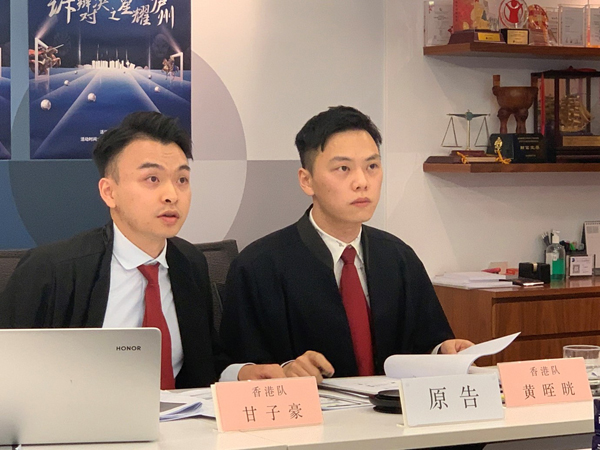
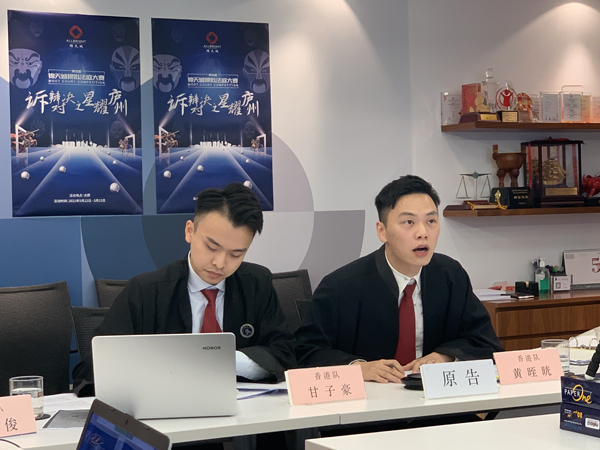
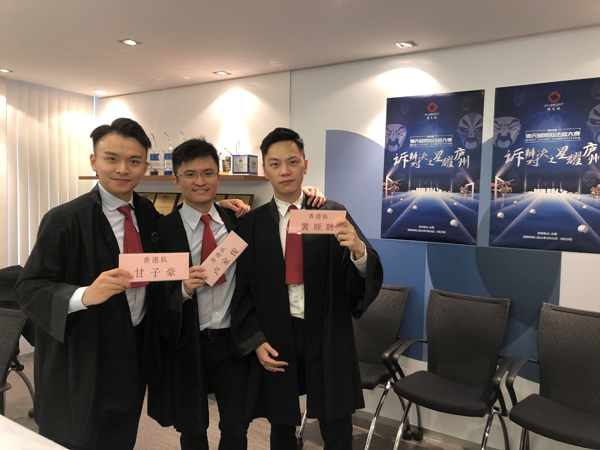
Please contact our Partner Ms. Heidi Chui (heidichui.office@sw-hk.com)for any enquiries or further information about this event.
IFLR1000 has recently released their 31st edition rankings. Stevenson, Wong & Co. is pleased to announce that we have been ranked in Financial Services Regulatory.
IFLR1000 evaluates law firms and lawyers by practice area based on transactional evidence and client feedbacks. Firms are recognized for advising on some of the most complex or innovative transactions in their markets and receiving excellent feedback for their work.
About IFLR1000
The IFLR1000 is an international legal market’s leading guide focusing on financial and corporate law firms. Since 1990, IFLR1000 has published over 750 practice area rankings across 235 jurisdictions globally.
Please contact our Partners Mr. Hank Lo, Ms. Cornelia Chu, Mr. Rodney Teoh, Mr. Osbert Hui, or Ms. Erica Cheng for any inquiries or further information.
Please click here to see the full rankings.
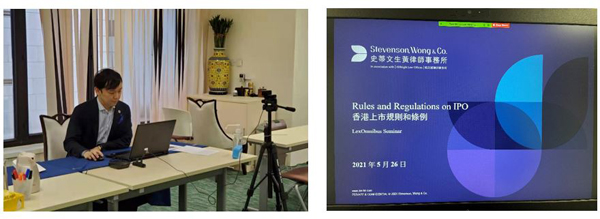
On 26 May 2021, our Senior Associate, Mr. Gordon Tsang, and Senior Manager of Commercial and Corporate Finance Department, Dr. Rain Huang, was invited by Lex Omnibus to present a webinar on “Rules and Regulations on IPO” to the lawyers and in-house counsel.
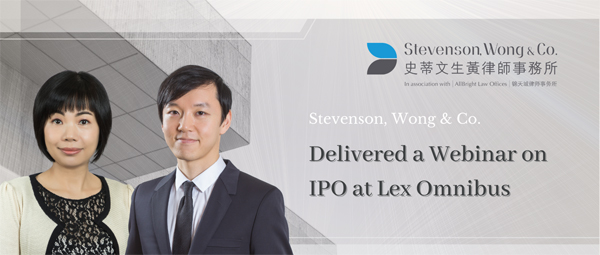
During the course, Gordon and Rain gave a comprehensive introduction to Hong Kong’s IPO market rules and practices. They also discussed the latest updates to the listing requirements and accountability of professionals. The course also include updating the latest developments to dual listing, and the reorganisation of Red-Chips listing, H-shares listing, VIE arrangements, and comparison with US listing.
Please contact Mr. Gordon Tsang for any enquiries or further information.