News Updates
Find out all about our firm’s latest news updates below. To learn more about any individual item, please contact us here.
News Updates
Find out all about our firm’s latest news updates below. To learn more about any individual item, please contact us here.
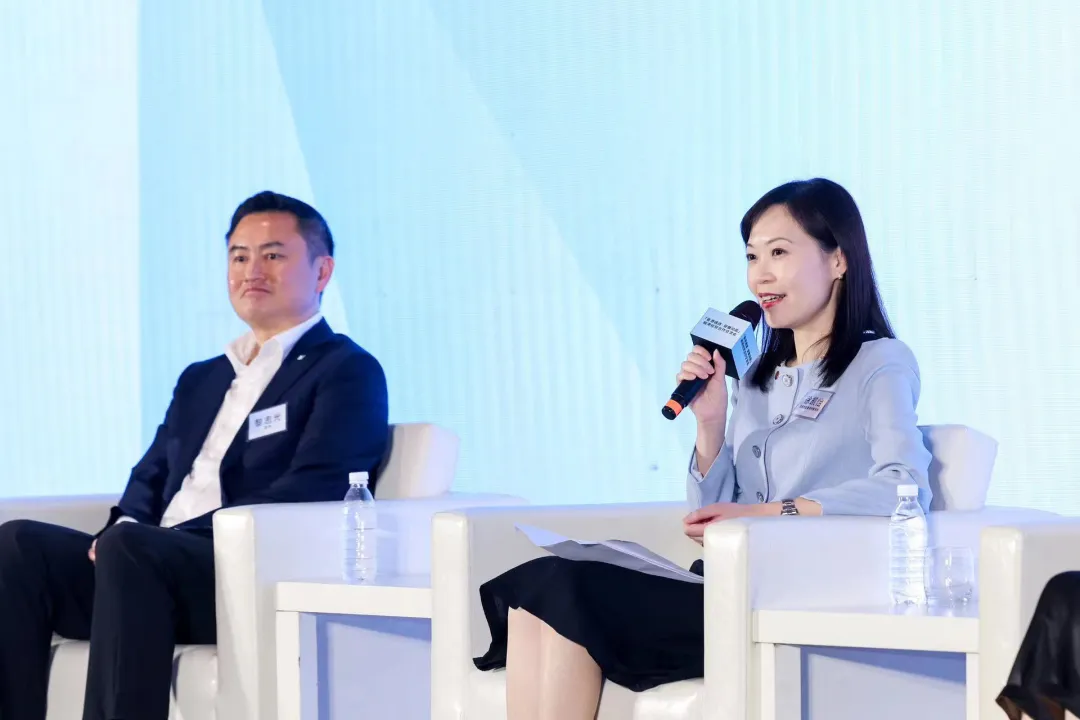
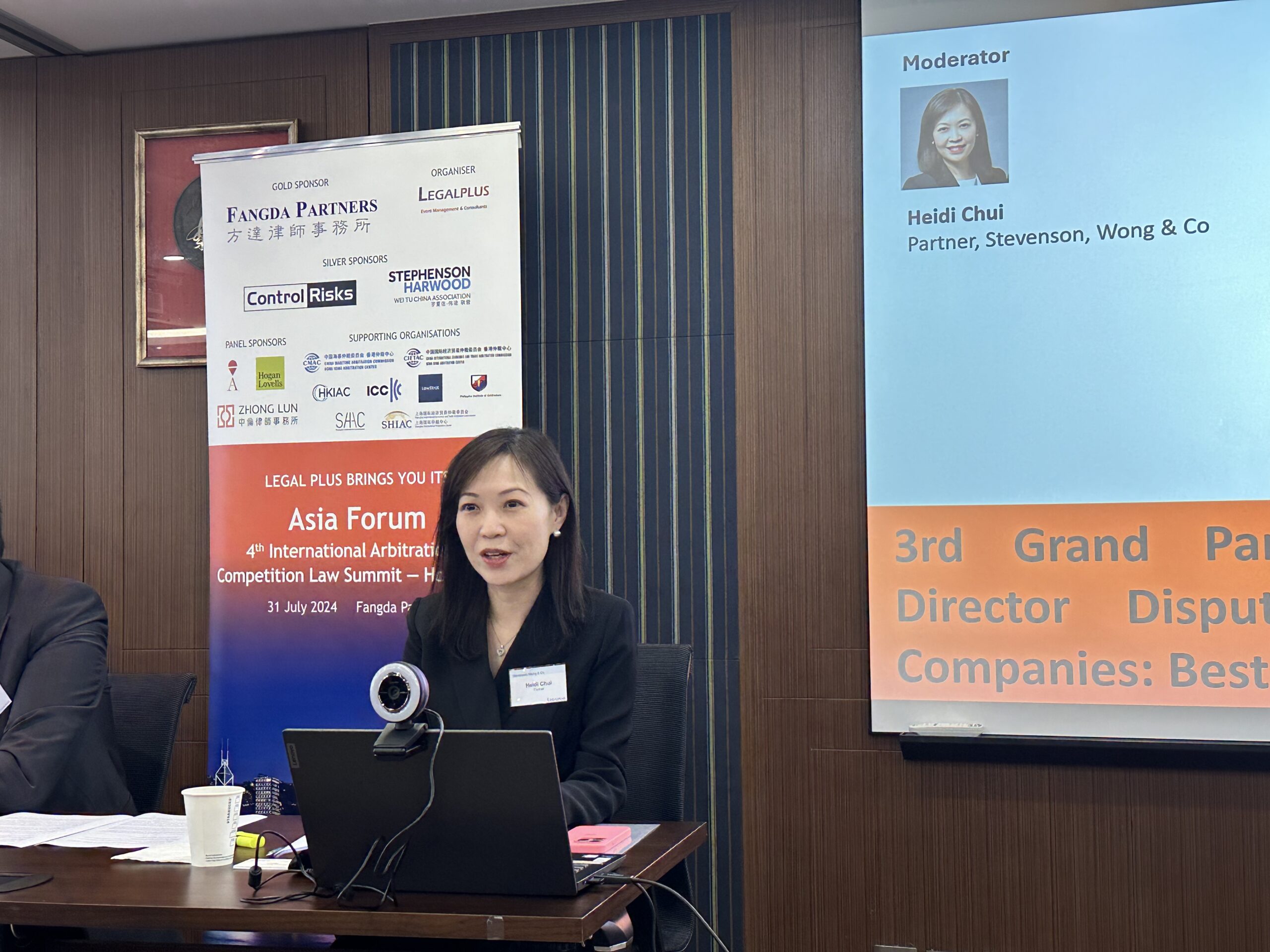
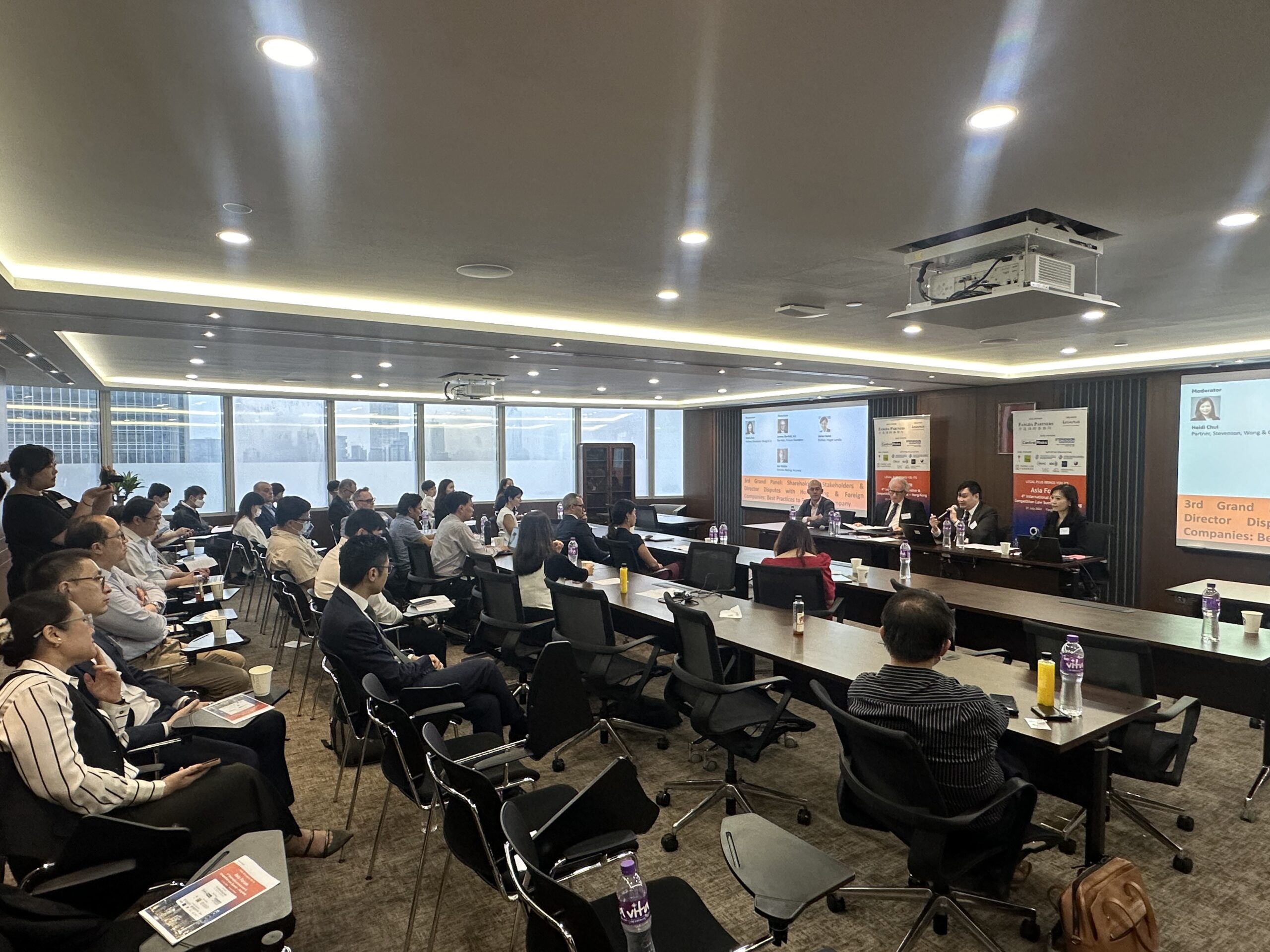
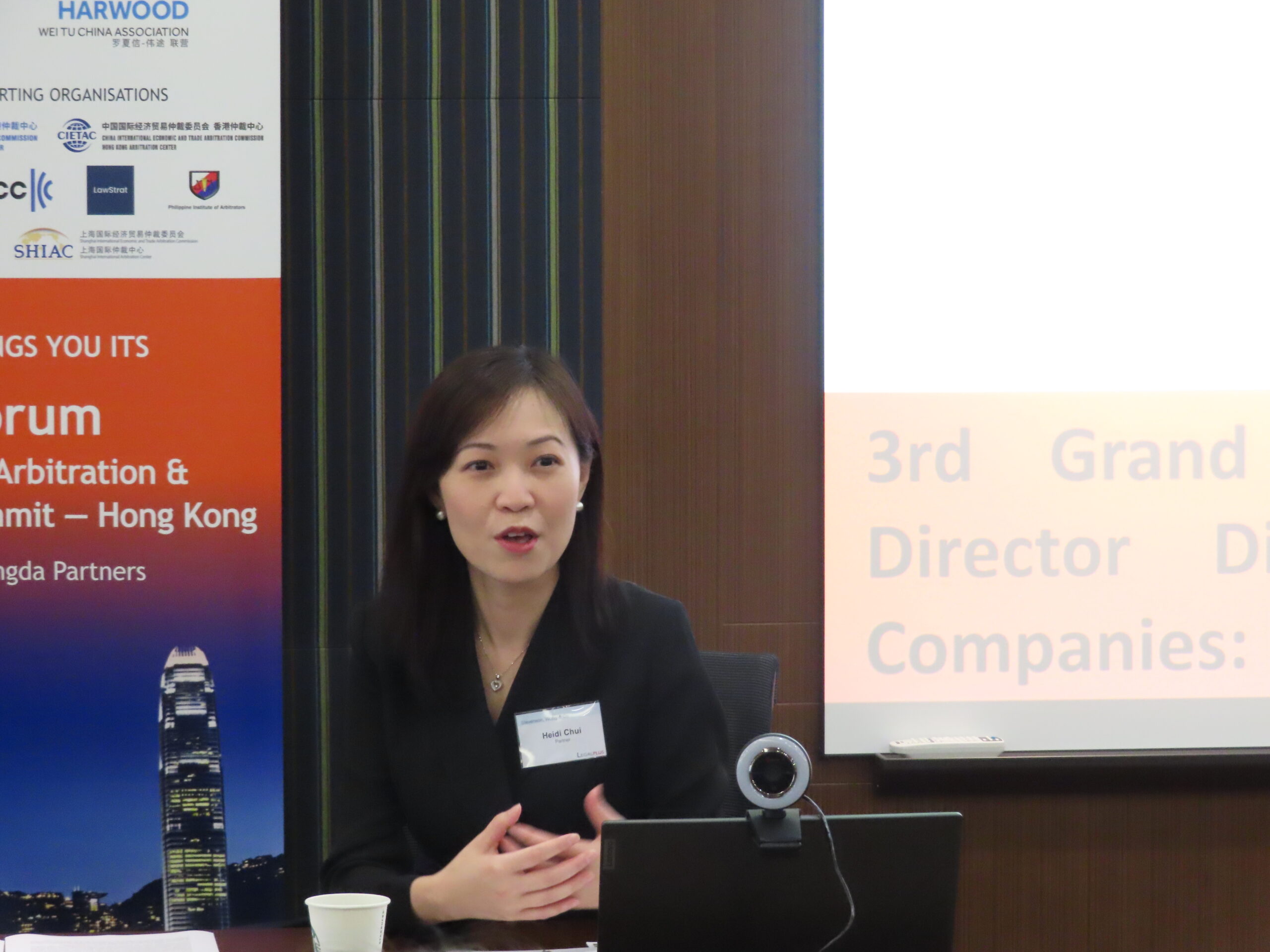
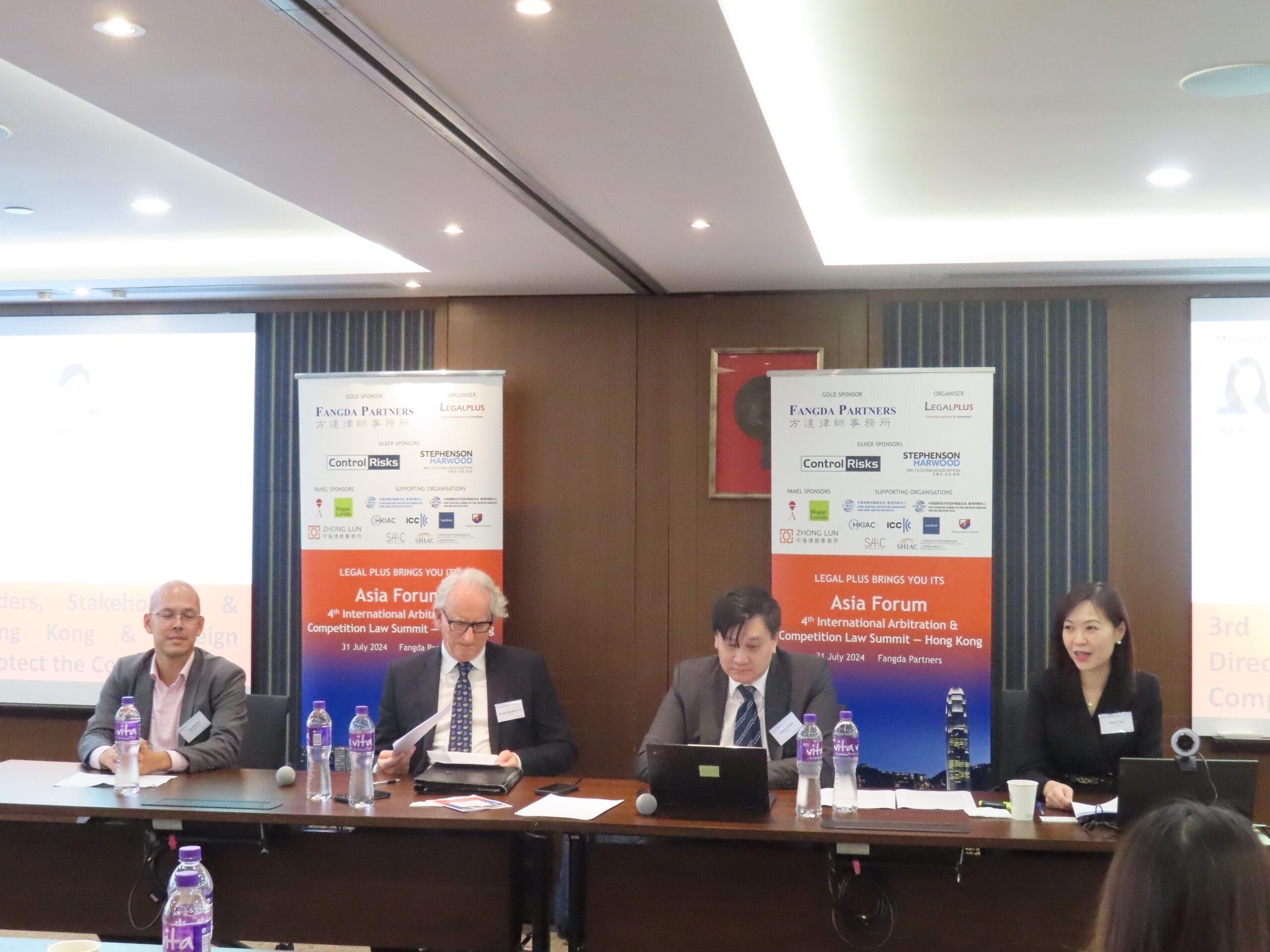
On 31 July 2024, our Partner and Head of the Litigation and Dispute Resolution Department, Heidi Chui, moderated a panel session at the “Asia Forum: 4th International Arbitration & Competition Law Summit – Hong Kong.”
Legal Plus organised the forum, which received significant support from various organisations, including the China Maritime Arbitration Commission, the Hong Kong Arbitration Centre (CMAC), the China International Economic and Trade Arbitration Commission Hong Kong Arbitration Center (CIETAC), and the Hong Kong International Arbitration Center (HKIAC).
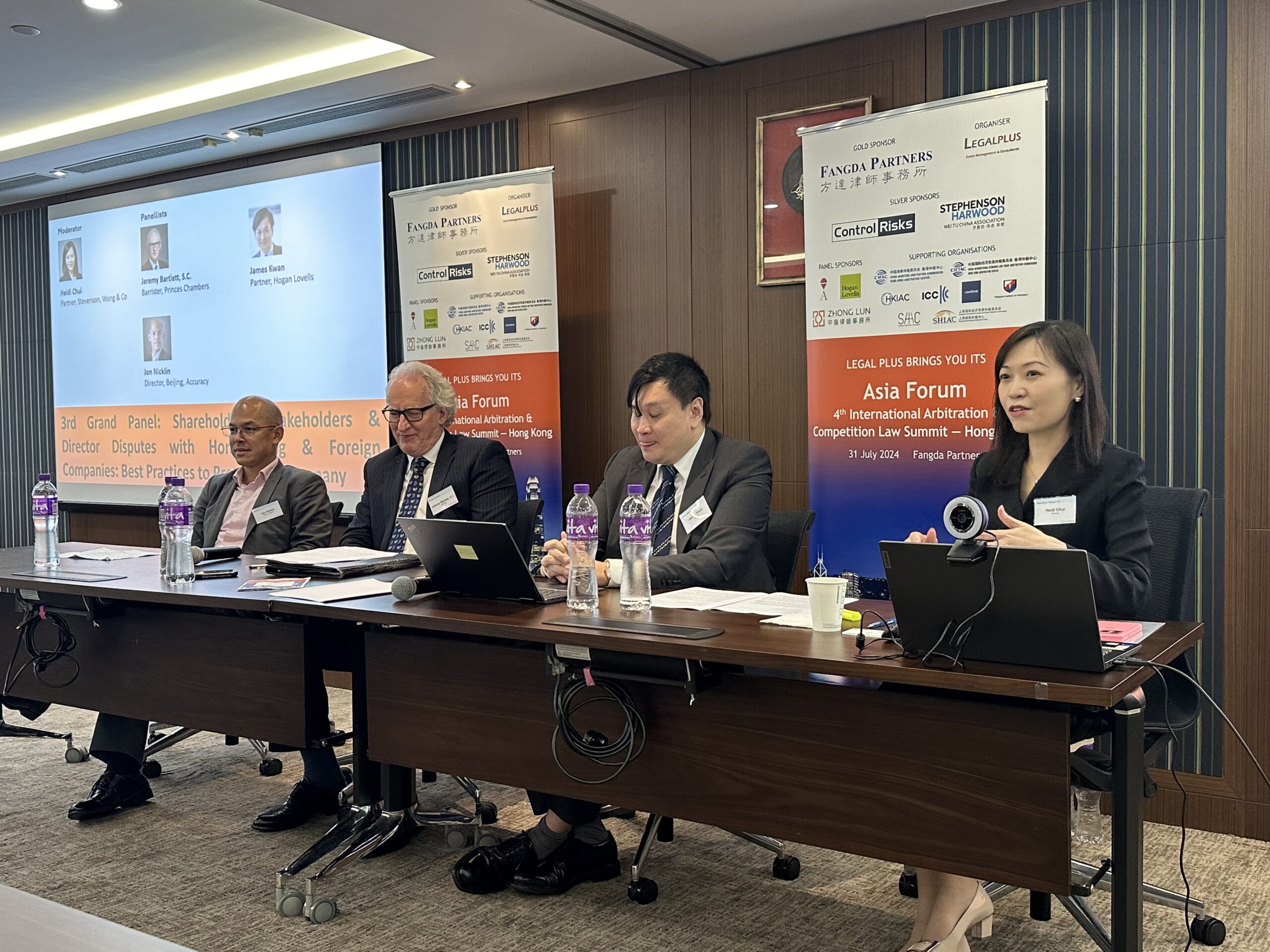
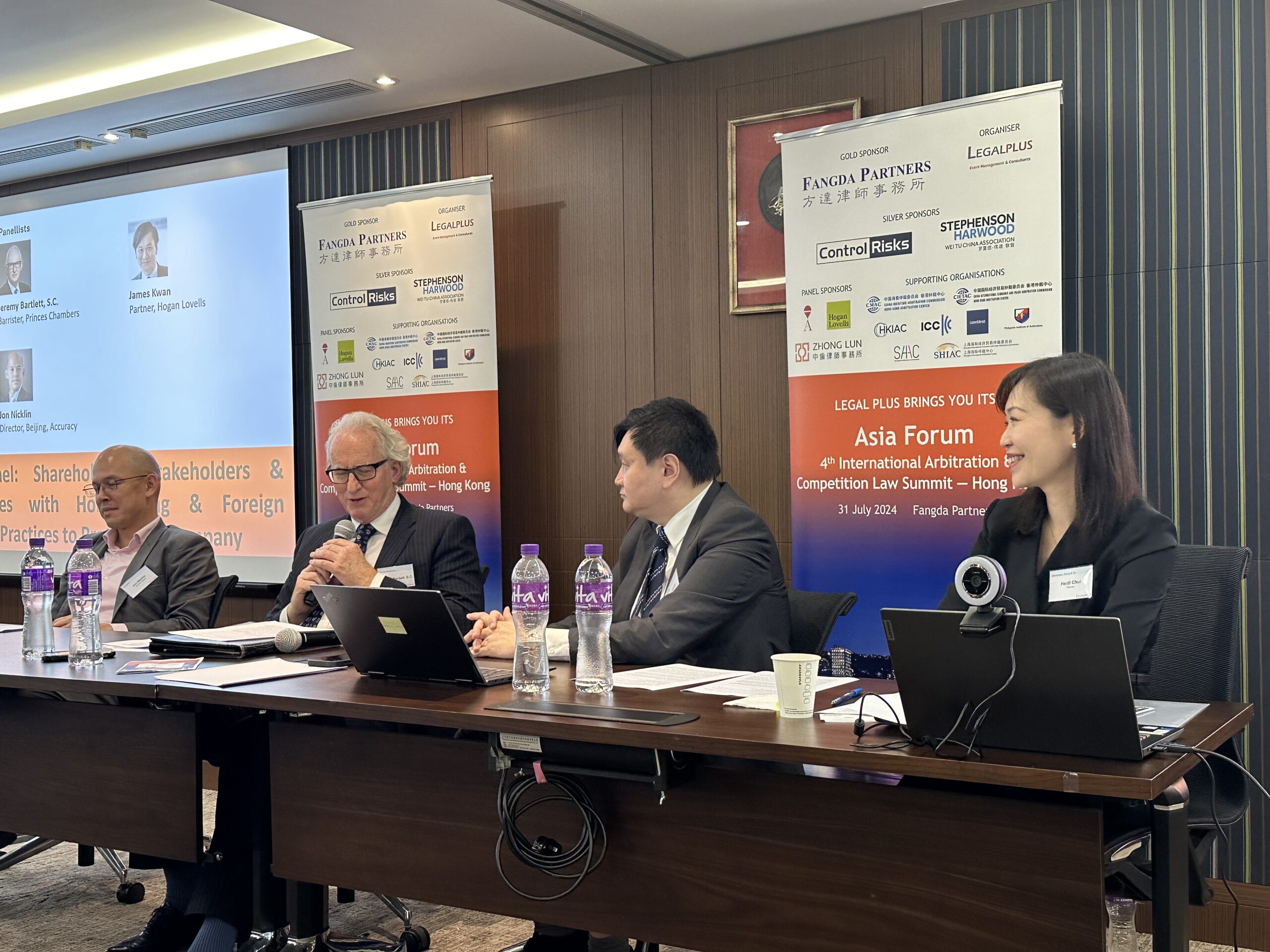
From the left: Jon Nicklin, a Director at Accuracy Beijing; Jeremy Bartlett SC, a Barrister at Princes Chambers; James Kwan and our Partner Heidi Chui
…

Ms Chui moderated the panel titled “Shareholders, Stakeholders & Director Disputes with Hong Kong & Foreign Companies: Best Practices to Protect the Company”. The distinguished panel featured Jeremy Bartlett SC, a Barrister at Princes Chambers; James Kwan and Jon Nicklin, a Director at Accuracy Beijing.

During the session, the panel highlighted industry trends in shareholder and joint venture disputes, especially in renewable energy, new energy vehicles, batteries, and life sciences. The discussions emphasised the complexity of these disputes, often involving multiple layers of holding companies in offshore jurisdictions like the BVI and the Cayman Islands.
The panel also explored the challenges posed by the economic downturn in the People’s Republic of China, which has led to a rise in share redemption disputes as start-ups struggle to go public through IPOs. They stressed the necessity of precise mechanisms in shareholder agreements to address redemption prices and prevent prolonged disputes. Additionally, they highlighted the importance of clauses to manage deadlock situations and unfair prejudice as essential for mitigating potential conflicts.
Another significant topic covered was investor-state dispute settlement (ISDS) complexities in shareholder disputes. The panel discussed the contrasting approaches to reflective loss in national company law versus ISDS, raising concerns about the potential undermining of national legal principles by allowing such claims under many bilateral investment treaties.


For further inquiries, please contact Partner Heidi Chui.
Introduction
On 14 June 2024, the Stock Exchange of Hong Kong Limited (the “Exchange”) of the Hong Kong Exchanges and Clearing Limited published a consultation paper (the “Consultation Paper”) inviting public feedback on the proposed enhancements to the Corporate Governance Code (the “CG Code”) and related amendments to the Listing Rules by 16 August 2024. It is proposed that the amendments will apply to corporate governance reports (“CG Reports”) and annual reports for financial years commencing on or after 1 January 2025, with a 3-year transition period for specified proposals pertaining to independent non-executive directors (“INEDs”).
…
The main areas of focus in the Consultation Paper are: (i) board effectiveness, (ii) independence of INEDs, (iii) board and workforce diversity, (iv) risk management and internal controls, and (v) dividends.
Board Effectiveness
Enhancing board effectiveness is essential for strengthening corporate governance. This involves ensuring that the board composition reflects a well-balanced blend of skills, experience, and diverse perspectives, enabling it to function effectively in an ever-changing market environment.
| Proposals | Details | |
| Designation of a Lead INED | To better facilitate communication between investors and the board; among INEDs; and between INEDs and other directors, the Exchange propose to state that issuers should designate one INED as a Lead INED.
For issuers with an independent board chair (i.e. a board chair who is an independent director) – the board chair will fulfil the role of the Lead INED, unless the issuer designates another INED as the Lead INED. For issuers without an independent board chair (i.e. a board chair who is not an independent director, including board chairs who is also the chief executive) – designate one INED as the Lead INED. Where an issuer does not designate a Lead INED, it may provide reasons to explain, for example, the issuer already has in place alternative shareholder communication channels. Roles and responsibilities of a Lead INED: · is primarily responsible for strengthening communication between INEDs, the board, and shareholders, to enable shareholders to better understand the decisions made by INEDs; |
|
| Mandatory director training and disclosure | For all directors of issuers listed on the Exchange | Mandatory continuous professional training: All such directors must participate in mandatory continuous director training on specific topics. There is no specified minimum training hours or training format requirement.For directors appointed to fill a casual vacancy, the proposed training requirements will apply from the issuer’s full financial year following the appointment.Disclosure requirement: Issuers must confirm that directors have participated in the required training, and disclose the following:· the number of hours; · the topics of the training attended; · the format of the training (e.g. by physical attendance or remotely); and · the names of relevant training providers (if external). |
| For first-time directors (i.e. directors who are appointed as a director of an issuer listed on the Exchange for the first time, or have not served as a director of an issuer listed on the exchange for a period of 3 years or more prior to their appointment)
(with a 3-year transition period) |
Mandatory 24-hour training requirement: First-time directors must undergo a minimum of 24 hours of training, to be completed within the first 18 months of the date of appointment.If a first-time director leaves the issuer before completing the 24-hour training, the requirement resets for the subsequent appointment.Additional Disclosure requirement: Issuers must confirm that first-time directors have completed the minimum of 24 training hours within 18 months following their appointment. |
|
| Board performance review and disclosure | A board performance review must be conducted at least once every 2 years, with specific disclosures in the CG Report, on a “comply and explain” basis.
Format: Issuers has discretion to determine the format of the review, including whether it is conducted internally or through external providers. Content: The review should focus on the board’s performance as a whole, rather than assessing each director individually. |
|
| Board skills matrix and disclosure | Issuers must maintain a board skills matrix in the CG Report, with enhanced disclosures on the following information:
(i) the existing skills mix of their boards; |
|
| Overboarding INED and directors’ time commitment
(with a 3-year transition period) |
A hard cap will be imposed on INEDs such that INEDs can only take up a maximum of six Hong Kong-listed issuer directorships.
The nomination committee must annually assess and disclose each director’s time commitment and contribution to the board, taking into account their listed issuer directorships and other significant external time commitments. |
|
Independence of INEDs
The proposed amendments aim to promote periodic board refreshment and strengthen independent voices on issuers’ board. This is intended to bring in fresh perspectives and maintain the objectivity of INEDs.
| Proposals | Details |
| Cap on Long Serving INED (“INED who has served for more than nine years on the board of a listed issuer”)
|
It is proposed to impose a hard cap of nine years on the tenure of INEDs. |
| Two-year cooling off period | An INED will be allowed to serve as an INED of the same issuer again after a 2-year cooling off period. During this cooling-off period, such individual must not serve as a director of the issuer, its holding company, any of their subsidiaries, or any core connected persons of the issuer. |
| Three-year transition period | The proposed rule will apply from 1 January 2028 onwards. A three-year transition period is proposed for the implementation of this regulation to ensure board continuity and provide sufficient time for affected issuers to conduct proper succession planning and adjust their board composition. |
Board and Workforce Diversity
In order to facilitate unique perspectives, robust discussions and resilient decision-making, the Exchange focuses on improving diversity and inclusion in the boardroom as well as all levels of the company.
| Proposals | Details |
| Nomination Committee Composition
|
The nomination committee must comprise directors of different genders. |
| Diversity Policies | Issuers are required to establish and disclose a diversity policy for their workforce (including senior management).
Issuers are required to make separate disclosure of the gender ratio of senior management and the workforce (excluding senior management). |
| Arrangements during temporary deviations from board gender composition requirements | if an issuer fails at any time to have directors of different genders on the board (e.g. where the only female director resigns), it would be required to immediately publish an announcement containing the relevant details and reasons. |
Risk Management and Internal Controls
The proposed amendments aim to improve market quality and corporate governance through continuous monitoring, periodic reviews and reporting on risk management and internal controls (“RMIC”).
| Proposals | Details |
| Annual review of RMIC systems | The requirement to conduct (at least) an annual review of RMIC systems of the issuer and its subsidiaries will be upgraded to a mandatory requirement. It will be the responsibility of the board to ensure that the necessary reviews are conducted, and for management to confirm to the board the effectiveness of these systems. |
| Detailed disclosures | The board is required to make detailed disclosures on the following:
(a) the RMIC systems in place (including any significant changes made to the RMIC Systems); (b) the process through which the review of the RMIC Systems was conducted; (c) a confirmation from the board on the appropriateness and effectiveness of the RMIC Systems, as well as information supporting the board’s conclusion (including confirmations received (as applicable) from management, the relevant board committee(s) with responsibility for the issuer’s RMIC Systems, any other internal departments, the issuer’s independent auditors and/or other external providers); and (d) details of any significant control failings or weaknesses identified during the review and/or previously reported but unresolved, and any remedial steps taken or proposed. |
Dividends
The Exchange proposes imposing an enhanced disclosure requirement in the CG Report on an issuer’s dividend policy (or an explanation as to the reasons for not having such policy) and its board’s dividend decisions, in order to promote transparency and facilitate shareholders and investors in making informed investment decisions.
| Proposals | Details |
| For issuers with a dividend policy | It is required to (i) disclose the aim/objective of the policy and the key considerations in deciding whether to declare, recommend or pay any dividend; and (ii) confirm board adherence to the dividend policy (or otherwise, explanation for any deviations). |
| For issuers without a dividend policy
|
A statement of the absence of a dividend policy and the reasons. |
| In relation to the board’s dividend decisions | Disclosure is required of (i) an explanation for any material variations in dividend rates during the reporting period as compared to the previous corresponding period; and (ii) the reasons for non-declaration of dividend and the planned measures to enhance investors’ return (if any). |
Analysis and takeaways
The Consultation Paper reflects the Exchange’s dedication to fortifying corporate governance practices across multiple key areas. The focus on board effectiveness, INED independence, and diversity indicates a strong commitment to enhancing governance structures. Furthermore, the proposals on the review of RMIC systems and the enhanced disclosures in relation to RMIC and dividend policies signal a move towards greater transparency in these vital areas, underscoring the importance of investor and shareholder protection and market quality.
Overall, these proposed amendments demonstrate a proactive approach to promoting robust corporate governance practices that prioritize transparency, accountability, diversity, and sustainability in Hong Kong’s listed companies.
Please contact our Partner Mr. Rodney Teoh for any enquiries or further information.
This news update is for information purposes only. Its content does not constitute legal advice and should not be treated as such. Stevenson, Wong & Co. will not be liable to you in respect of any special, indirect or consequential loss or damage arising from or in connection with any decision made, action or inaction taken in reliance on the information set out herein.
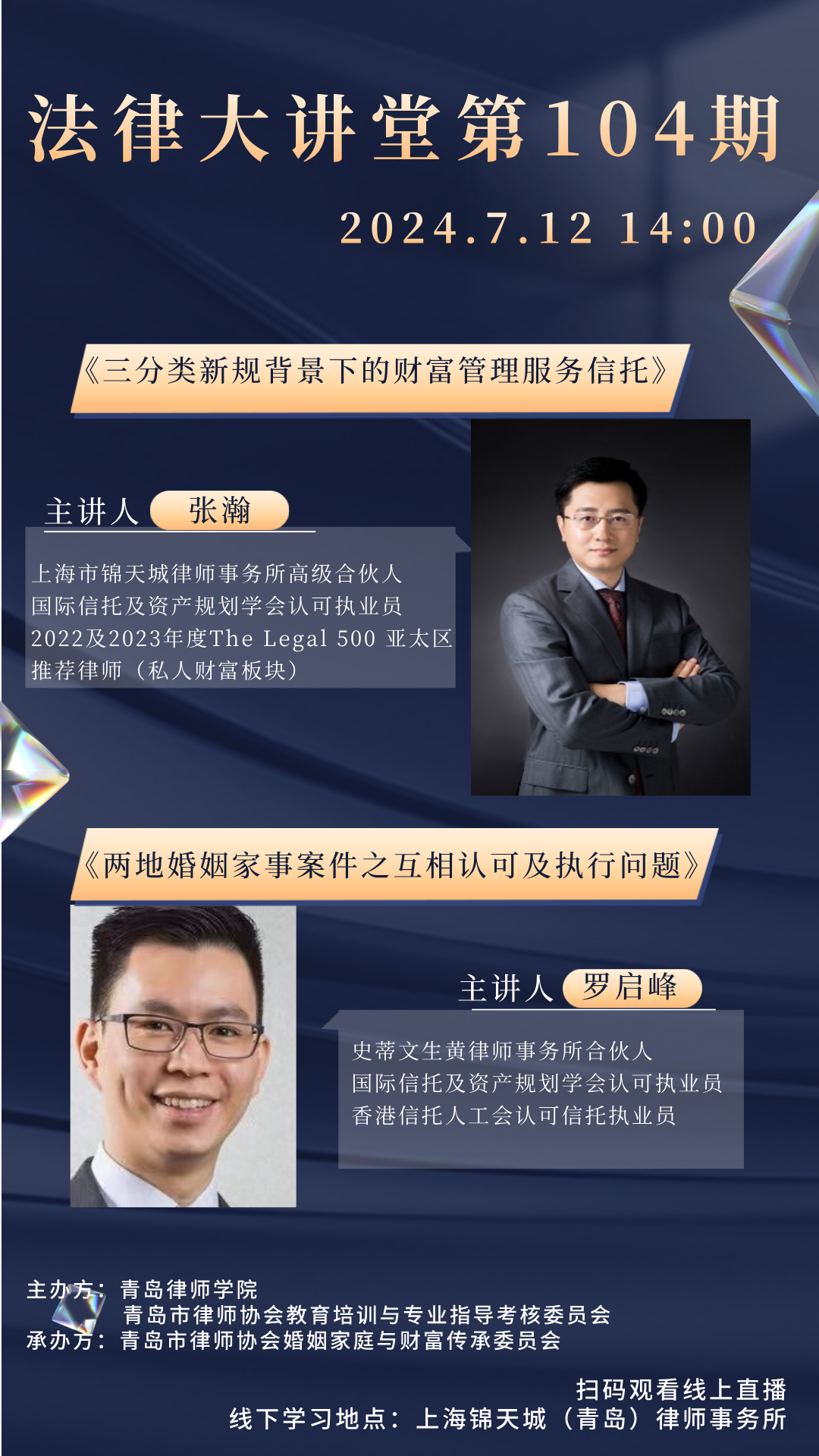
On 12 July 2024, our Partner, Calvin Lo, was a speaker at the Qingdao Lawyers Association’s 104th seminar titled “Marriage and Trusts”. The event, moderated by Xiao Xuejing, Director of the Marriage, Family, and Wealth Inheritance Committee of the Municipal Lawyers Association, attracted over 300 legal professionals
…
Calvin, alongside Zhang Han, Senior Partner at AllBright Law Offices discussed the new regulatory framework for wealth management services’ trusts and the mutual recognition and enforcement of family law cases across jurisdictions.
Calvin’s topic on “Mutual Recognition and Enforcement Issues of Family Law Cases Across Regions” addressed the complexities surrounding the mutual recognition and enforcement of family law cases between different regions. He provided a comprehensive overview of the legal frameworks and fundamental principles governing marriage and family law cases, detailing the factors that determine which court has jurisdiction over a case. Furthermore, he discussed how courts in different jurisdictions can recognize and enforce each other’s judgments, including those related to divorce, custody, and asset division.

For further information about the event, please contact our Partner Calvin Lo.
On 10 July 2024, Heidi Chui moderated the inaugural hybrid event, “WIA Coffee Roulette”. Heidi is our Senior Partner and a Committee Member of the Hong Kong International Arbitration Centre (HKIAC) Women in Arbitration (WIA) initiative. This event, sponsored by Stevenson, Wong & Co. and AllBright Law (Hong Kong) Offices, featured an engaging and insightful interview with the esteemed Queenie Lau SC.
…

Heidi led a dynamic discussion exploring the myriad accomplishments and challenges that have shaped Queenie’s career. A childhood love for Enid Blyton’s Malory Towers series inspired her to go to boarding school in the UK. Queenie shared her remarkable journey from studying at the Cambridge University to becoming a solicitor in Hong Kong and then joining Temple Chambers as a barrister. Beyond her legal career, Queenie also shared her passion for music, including playing in the college orchestra while Eddie Redmayne played a lead role on stage!

Queenie’s candid discussion covered her transition to arbitration, her first experiences as counsel in arbitration, and later as a mediator and arbitrator. She emphasised the importance of being open to new opportunities. She shared how she managed to overcome the challenges of running her own “mini business” as a barrister, compared to working in large teams as a solicitor. Her anecdotes about balancing a demanding career with diverse interests, such as photography and stress relief techniques, were fun and inspiring.

Queenie also discussed arbitration’s innovative nature, highlighting the increasing use of bilingual proceedings (especially Mandarin and English together) and the flexibility arbitration offers. She shared her experiences with virtual and hybrid hearings and gave practical tips for conducting effective online arbitrations.

Following the interview, participants engaged in a vibrant networking session, which facilitated meaningful connections and insightful exchanges within the arbitration community. With over 50 attendees joining both in-person and online, the event successfully fostered a collaborative environment.

For any enquiries, please contact Heidi Chui.
Stevenson, Wong & Co. is pleased to share that Sundy Service Group Co. Ltd (the “Company”) (Stock Code: 9608) has successfully resumed trading of its shares on the Main Board of The Stock Exchange of Hong Kong Limited (the “Stock Exchange”) on 4 July 2024, following a suspension that began on 28 March 2024.
…
Stevenson, Wong & Co. has acted as the Company’s Hong Kong legal advisers as to its successful listing on the Stock Exchange on 18 January 2021, and has continued to serve as its advisers as to Hong Kong laws since then. We are delighted to see that the Company has now resumed trading after a relatively short suspension of only three months.
Our corporate finance team comprised Partners Hank Lo and Rodney Teoh, Associates Angela Lau and Audrey Ng, Trainee Solicitor Austin Kot, and Paralegal Jay Lee. Our regulatory and compliance team comprised Partner Osbert Hui, Senior Associates Rainbow Ip and Alex Tsang, and Associate Karlie Cheung.
Please contact our Partners Hank Lo, Rodney Teoh and Osbert Hui for any enquiries or further information.
Our Partner Gordon Tsang was invited to attend the “ORY APAC-US Conference 2024” from 11 – 12 July 2024 in Singapore. The conference was co-organised by Ortoli Rosenstadt LLP (“OR Law”), Ortoli Rosenstadt Ye Pte. Ltd, and Nasdaq Stock Market (“Nasdaq”). The event was sponsored by our associated firm AllBright Law Offices.
…

On the first day of the conference, Gordon was one of the panel speakers in the session “Competition or Collaboration: Financial Institutions’ view on Singapore and Hong Kong”. He joined other speakers in discussing various legal topics relating to Regulatory Environment and Business Climate, Market Opportunities and Growth Potential, Technological Innovation and FinTech Ecosystems and Geopolitical and Economic Factors.

Stevenson, Wong & Co. has a strong track record of advising companies on their successful listings on the Nasdaq Stock Marketing, including Junee Limited (NASDAQ: JUNE), Garden Stage Limited (NASDAQ: GSIW), Prestige Wealth Inc. (NASDAQ: PWM), Millennium Group International Holdings Limited (NASDAQ: MGIH), CBL International Limited (NASDAQ: BANL), Magic Empire Global Limited (NASDAQ: MEGL), Intelligent Living Application Group Inc. (NASDAQ: ILAG), Zhong Yang Financial Group Limited (NASDAQ: TOP), Hywin Holdings Ltd. (NASDAQ: HYW) and Oriental Culture Holding LTD (NASDAQ: OCG). In addition, Stevenson, Wong & Co. has advised more than 10 companies on their confidential filing and public filing for their Nasdaq listing applications.

As OR Law’s long-term business partner, we would like to take this opportunity to thank OR Law for their invitation and we look forward to assisting enterprises in the APAC region to resolve their legal problems and strengthen ties in Singapore, the United States and Hong Kong.

Gordon and AllBright Law Singapore Offices


For more information, please contact our Partner Gordon Tsang.