News Updates
Find out all about our firm’s latest news updates below. To learn more about any individual item, please contact us here.
 Stevenson, Wong & Co.
News Updates
Find out all about our firm’s latest news updates below. To learn more about any individual item, please contact us here.
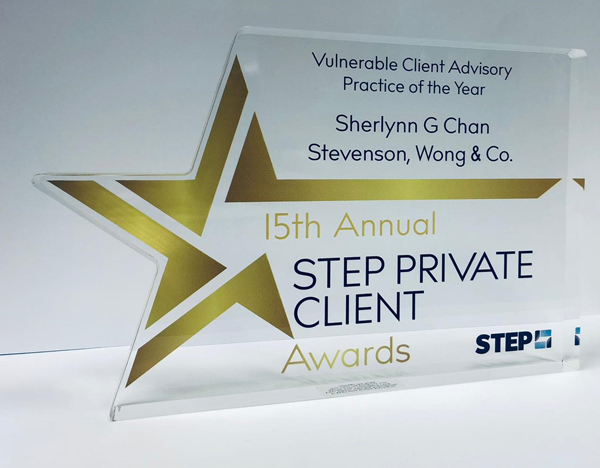
We are proud to announce that our firm’s Partner, Ms. Sherlynn G. Chan, has been named the winner of the Vulnerable Client Advisory Practice of the Year category at the STEP 2020/21 Private Client Awards (STEP Awards). Stevenson, Wong & Co. is the sole Hong Kong domestic law firm recognised by the STEP awards this year.
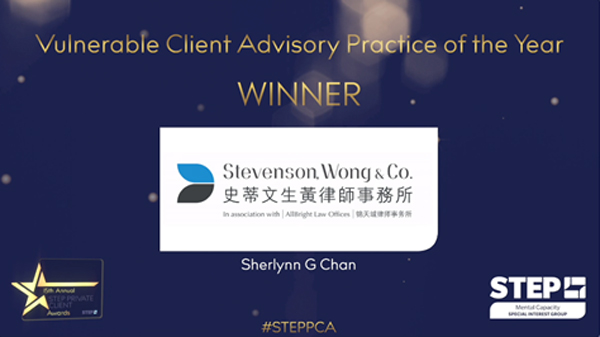
The results were announced at the first-ever virtual award ceremony which took place on 9 Dec 2020. The STEP awards celebrate excellence in private client practice and are widely seen as a hallmark of quality in the industry. The panel of international judges summarized: “In a field of remarkably compelling submissions, this year’s winner (of the Vulnerable Clients Advisory) stood out as a champion and a pioneer in a region where resources for vulnerable clients are still evolving. Their significant devotion to their clients and to the profession, and their technical skills and commitment to professional development are an inspiration to us all.”
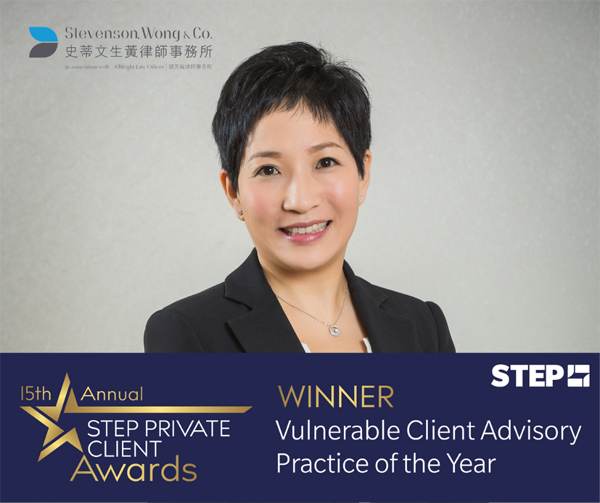
Our partner Sherlynn commented: “I am deeply honoured and grateful to have been chosen as the winner of this international award of “Vulnerable Clients Advisory Practice of the Year” by the STEP Awards. I would like to take this opportunity to thank STEP for recognizing our achievement and my team for their amazing work. This is a very important and growing area of work in Asia, especially with the ageing population and increased number of vulnerable clients in our community including children, elderly and mentally incapacitated persons. We will continue to work hard in promoting awareness and protecting vulnerable clients. “
About Sherlynn G. Chan
Ms. Sherlynn Chan, Partner of our firm and the Chairman and founding member of a charitable organization, MIP Care Resources Connect, specialises in private client work including contentious probate and family matters. She served as a Deputy District Judge in the Family Court in 2014 and is currently the Chairman of the Mental Health Law Committee of the Law Society of Hong Kong and Co-Chair of the Societies of Trusts and Estate Practitioners (STEP) HK’s Mental Health, Elderly and Capacity Law Sub-Committee.
Sherlynn has been appointed by the High Court as Committee of the estate of mentally incapacitated persons and manages substantial assets on behalf of vulnerable clients.
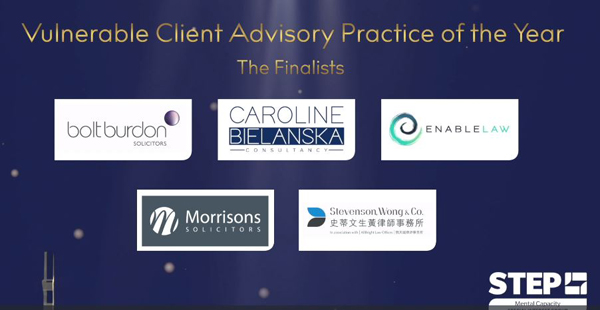
This year’s finalists of the “Vulnerable Client Advisory Practice of the Year” award.

Mark Walley, CEO of STEP and Mary Duke TEP, Chair of the Presiding Judges, delivered the opening speeches.
About STEP
STEP is the global professional association for practitioners who specialise in family inheritance and succession planning. STEP works to improve public understanding of the issues families face in this area and promotes education and high professional standards among its members. STEP members help families plan for their futures, from drafting wills to issues surrounding international families, protection of the vulnerable, family businesses and philanthropic giving. Full STEP members, known as TEPs, are internationally recognised as experts in their field, with proven qualifications and experience.
Please click here to view this year’s winners or click here to watch the ceremony.
Please contact Ms. Sherlynn Chan for more information or further enquiries.
On 27 November 2020, The Stock Exchange of Hong Kong Limited (the “Exchange”) published a consultation paper (the “Consultation Paper”) introducing its proposal to increase the profit requirement for a Main Board listing. Under the proposed changes, the Profit Requirement (defined below) will undergo either a 150% or a 200% increase, as explained further below. The consultation will last for two months, ending on 1 February 2021.
In proposing the change, the Exchange intended to align the current Profit Requirement with the increased Market Capitalisation Requirement (defined below) that was effective from February 2018, and which together with the current Profit Requirement had given rise to an increase in listing applications from small cap issuers with a relatively high historical price-to-earning (P/E) ratios. The Exchange commented that these small cap issuers tend to respond to the increased Market Capitalisation Requirement by justifying their higher valuations by reference to potential growth, supported by profit forecasts that they in certain cases failed to meet post listing. The Exchange has also quoted relevant regulatory concerns, such as the drop or volatility of share prices post listing, as well as potentiality of shell creation and market manipulation post listing, as the relevant mischiefs.
Current Profit Requirement
New applicants may be considered eligible for listing on the Main Board by satisfying, among other things, either one of the three financial requirements under Listing Rule 8.05. These requirements are as follows: the Profit Requirement[1] – that, among other things, a new applicant shall have a minimum amount of profit attributable to shareholders, currently (1) HK$20 million in the most recent financial year and (2) HK$30 million in aggregate in the two preceding financial years (collectively, the “Profit Requirement”); the market capitalisation revenue cashflow requirement[2]; or the market capitalisation revenue requirement[3]. The Exchange has also introduced other eligibility requirements to attract different types of companies to list in Hong Kong, including the well-known Chapter 18A for biotech companies, and Chapter 18 for mineral companies.
An applicant relying on the Profit Requirement is also required to have an expected market capitalisation at the time of listing of at least HK$500 million (the “Market Capitalisation Requirement”)[4]. The current Market Capitalisation Requirement, i.e. HK$500 million, was effective from 15 February 2018, which was increased from HK$200 million previously. With the Profit Requirement being unchanged at the time, this implied an applicant’s historical P/E ratio from 10 times to 25 times.

Proposed Changes
In the Consultation Paper, the Exchange proposed to increase the Profit Requirement by two options:
According to the Exchange, Option 1 is based on the percentage increase in the Market Capitalisation Requirement in February 2018, while Option 2 is based on the approximate percentage increase in the average closing price of the Hang Seng Index from 9,541 in 1994 when the Profit Requirement was introduced to 27,569 in 2019.
To cope with relevant side issues, the Exchange also proposed temporary relief and transitional arrangements in association with the change proposed, as further explained below.

Temporary Relief
The Exchange recognised that, against the backdrop of the COVID-19 pandemic and the uncertainties arising from the economic and political tensions between the US and China, many companies’ businesses have been adversely affected. Therefore, subject to the adoption of the proposal to increase the Profit Requirement, the Exchange has proposed to introduce a temporary conditional relief from the profit spread in the increased Profit Requirement for applicants that are able to meet certain conditions set out in Chapter 2 of the Consultation Paper, summarised as follows:
(i) the likelihood of continuance or recurrence of the circumstances leading to the applicant’s inability to meet the spread of the increased Profit Requirement;
(ii) measures which were taken or will be taken by the applicant to mitigate the impact of those circumstances on future profitability; and
(iii) a profit forecast covering the period up to the forthcoming financial year end date after the date of listing with detailed bases and key assumptions.
An applicant seeking the temporary relief will be required to submit an application to the Exchange for consideration on a case-by-case basis.

Transitional Arrangements
Pursuant to the Consultation Paper, the change will come into force (the “Rule Amendment Effective Date”) not earlier than 1 July 2021. To reduce the impact of the proposal on companies that have commenced plans to apply for a Main Board listing relying on the current Profit Requirement, the Exchange will introduce transitional arrangements.
Main Board listing applications (including GEM Transfer applications) will be assessed under the current Profit Requirement if they are submitted before the Rule Amendment Effective Date and remain active as of the Rule Amendment Effective Date. Such application will be allowed to be renewed once after the Rule Amendment Effective Date for continued assessment under the current Profit Requirement. For any subsequent renewals, the application will be assessed under the increased Profit Requirement.

Analyses and Takeaways
The Exchange’s proposal aims to improve the overall quality of Main Board issuers, which will be conducive to promoting post-listing liquidity, increasing investors’ confidence in the market and strengthening Hong Kong’s position as an international financial centre. However, as noted in the Consultation Paper, on average, the proposal would have barred approximately one-third of the listing applications under the current Profit Requirement which are able to meet the Market Capitalisation Requirement.
With such proposed change in sight, it is advisable that prospective listing applicants which intend to benefit from the current Profit Requirement with a lower threshold should seek early legal advice regarding listing plans, including preliminary preparation such as corporate reorganisation and pre-IPO investments, so that the same can be implemented in an opportune time.
Furthermore, should the change be introduced, it is expected that there may be an influx of applications for listing on the Main Board ahead of the change in the Profit Requirement. As such, as the Rule Amendment Effective Date draws closer, the time required for the Exchange’s vetting of Main Board listing applications may be longer, thus posing uncertainties to and incurring extra costs for listing applicants.
Prospective listing applicants should bear these in mind when planning for listing of their businesses and are advised to take early and effective steps. Meanwhile, companies at an early development stage or small or mid-sized companies may still consider accessing the capital market by utilising a listing on GEM.
Please contact our Partners Mr. Hank Lo or Mr. Rodney Teoh for any enquiries or further information.
This newsletter is for information purposes only. Its content does not constitute legal advice and should not be treated as such. Stevenson, Wong & Co. will not be liable to you in respect of any special, indirect or consequential loss or damage arising from or in connection with any decision made, action or inaction taken in reliance on the information set out herein.
Our Senior Associate Mr. Terence Lau presented a webinar for The Hong Kong Institute of Chartered Secretaries (“HKICS”) entitled “IPO 101: An Overview of a Listing Project” on 18 November 2020. In this course, Terence offered a detailed explanation of listing criteria as well as suitability for listing. The syllabus dissected IPO projects and included topics such as reorganisation, due diligence, prospectus drafting and share offer. The webinar also gave an overview of the IPO process pre-IPO investment.
Terence specialises in advising listing applicants, sponsors and underwriters in a broad range of corporate finance transactions, including initial public offering on The Stock Exchange of Hong Kong Limited, subsequent share issues, shares placement, rights issue, open offer and convertible bonds. Terence also advises listed issuers on regulatory and compliance matters.
Please contact Mr. Terence Lau for any enquiries or further information.
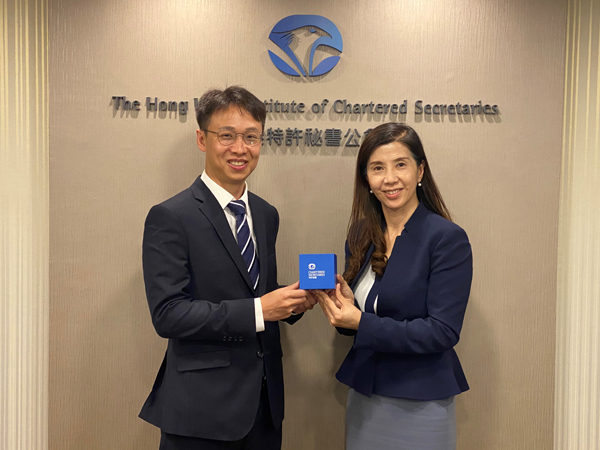
Mr. Terence Lau (left) and Ms. Polly Wong, Fellow of HKICS (right)
Asian Legal Business (ALB) has just released the ranking of the Top 50 largest firms in Asia 2020. Stevenson, Wong & Co. has once again been listed as one of the largest Hong Kong domestic law firms for 5 consecutive years.
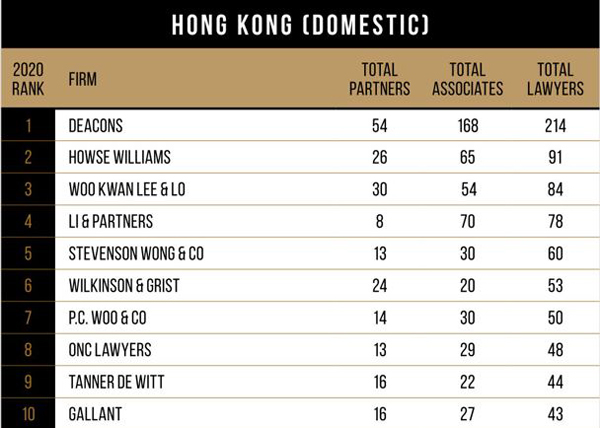
Established in 1978, Stevenson, Wong & Co. has more than 170 experienced lawyers and staff. Our aim is to provide clients with innovative and effective solutions for their personal or commercial problems with our local and international expertise. During these unprecedented times, we strive to ensure that communication with and services to our clients remain unaffected whilst balancing the emotional and physical well-being of our staff. We look ahead to 2021 with both caution and optimism as we continue to provide uninterrupted quality legal services to our clients.
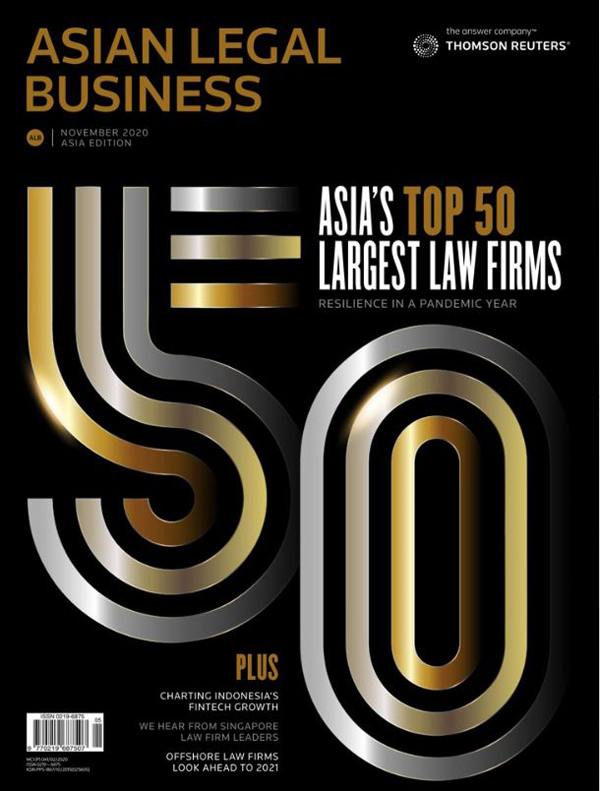
Under these unprecedented times, we strive to ensure that communication and our services to clients remain unaffected whilst the emotional and physical well-being of our staff are just as important. As we look ahead to 2021, we will continue to enhance the quality of our services to our clients and all look forward to a better tomorrow.
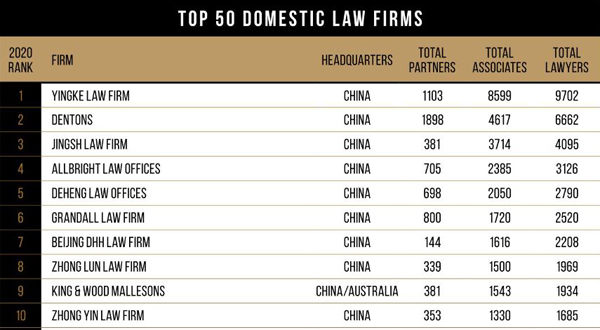
We would also like to take this opportunity to congratulate our association firm, AllBright Law Offices, for being ranked as the top 4th largest domestic law firms across Asia.
About ALB and Asia’s Top 50
ALB is a leading law journal published by Thomson Reuters and is considered as one of the most influential legal media in Asia. Organised by ALB, Asia Top 50 aims to identify and rank the largest law firms across Asia by their size and number of lawyers.
For the full ranking, please click here.
Please contact Mr. Willy Cheng, Mr. Hank Lo or Ms. Catherine Por for any enquiries or further information.
Apart from our Personal Data (Privacy) Ordinance (“PDPO”), the European Union’s GDPR which takes effect from 25 May 2018 is an important breakthrough in our data privacy legislation having considered its wide geographical application and the severe monetary penalty to be imposed, as shown in a recent Germany’s case that €35.3 million fine was imposed against an international retailer which adopted inappropriate measures in monitoring and processing the personal data of several hundred employees at one of its branch in Nuremberg.
What are the basic principles for processing data under GDPR?
The GDPR holds the controllers legally accountable for their compliance with various principles in lawfulness, fairness and transparency, purpose limitation, data minimisation, accuracy, storage limitation, integrity and confidentiality.[1] For example, if a Hong Kong company has to discharge its duties on integrity and confidentiality, it has to implement and set up appropriate cyber and data security measures, thus, to add in more stringent data security contractual provisions in their contracts with the data processors.
To what extent is a Hong Kong company affected?
The GDPR has an extra-territorial effect. A Hong Kong company may need to comply with the GDPR if it:
1. has no establishment[2] in the EU but offers goods or services to, or monitor the behaviour of individuals in the EU territory; or
2. has an establishment in the EU, where personal data is processed in the context of the activities of the establishment, regardless of whether the data is actually processed within the EU. [3]
Both data controllers and data processors are regulated when they process the personal data collected from the relevant activities.

Positive Examples:
However, the processing activity related to offer of goods and services will only be caught when it intentionally targets individuals within the EU territory. If the processing relates to a service that is only offered to individuals outside the EU, but the service is not withdrawn when such individuals enter the EU territory, the related processing will not be subject to the GDPR.[4]
Negative Example:

What are the consequences if a company data practice falls below the GDPR standard?
The administrative fines for contravention of the GDPR consist of two tiers, depending on the types of violations. The lower tier fine can be up to €10 million, or 2% of the total worldwide annual turnover of preceding financial year (in the case of an undertaking), whichever is higher.[5] The upper tier fine can be up to €20 million, or 4% of the total worldwide annual turnover of preceding financial year (in the case of an undertaking), whichever is higher.[6]
Under what circumstances will companies be penalised?
Lower tier fines may be imposed if the company fails to comply with any of the following (non-exhaustive list):
1. obtaining parental consent for processing of children’s personal data;
2. processing personal data anonymously if it is not necessary to identify the data subjects;
3. giving data breach notification;
4. appointing data protection officer; or
5. others.[7]
Upper tier fines may be imposed if the company fails to comply with the following (non-exhaustive list):
1. complying with the basic principles for processing, such as obtaining consent before processing;
2. complying with the data subjects’ rights, such as right to erasure, right to object to processing;
3. transferring personal data to a recipient in a third country through lawful mechanism; or
4. others.[8]

What is the difference between ‘data controllers and data processors’ under GDPR and ‘data users’ under PDPO?
To put it simply, ‘controller’ usually refers to the people or companies which decide on how and for what purpose the personal data will be processed, whereas ‘processor’ refers to the people or companies which process the data on behalf of the controller.[9] A company can act in both capacities.
Meanwhile, ‘data users’ is a general concept used in Hong Kong under the PDPO. It is a collective term which covers both ‘data controllers’ and ‘data processors’ as used in GDPR. While GDPR regulates both controllers and processors, processors are not directly regulated by the PDPO.
Consent is a lawful ground for data processing under GDPR. Is it different from the current practice of obtaining consent in Hong Kong?
In Hong Kong, the practice of customers’ ticking in a consent box is usually relevant to the company’s use of the personal data for direct marketing activities. Consent is not a pre-requisite for the collection of personal data in the first place, but it is required when the data collected will be used for a different purpose.[10]
Under the legal principles briefly mentioned above, several lawful grounds are available for companies to collect and process any personal data. The giving of consent is one of them and is probably the most common ground provided that it must be freely given, specific, informed, and unambiguous.[11]

There are other major corporate measures required under GDPR but not under PDPO
The following (non-exhaustive) measures are necessary in demonstrating compliance with GDPR but are not legally required under the PDPO:-
Data protection officer (“DPO”)
Company, regardless of its size, is required to appoint a DPO if its core activities consist of processing which systematically monitor data subjects on a large scale, such as online tracking, profiling (predictions about individual’s preferences), or processing a large scale of sensitive personal data.
DPO is responsible for monitoring the compliance with GDPR and contacting with the supervisory authority.
Data breach notification and remedial actions
The data controllers are required to give notification to the EU regulators of a data breach without undue delay (and where feasible, no later than 72 hours after having become aware of it), unless the breach is unlikely to result in a risk to the rights and freedoms of individuals.
Other major corporate measures include (but not limited to):
This article is co-authored by Ms. Milly Hung, Partner of Litigation Department, Mr. Michael Lau, the Associate and Mr. Calvin Lo, the Trainee Solicitor of Stevenson, Wong & Co. Due to the impact of the Covid-19 Pandemic, the potential effects of GDPR to the processing of the staff health data do raise concerns. If you have any problem in relation to this matter, please contact Ms. Milly Hung.
This article is for information purposes only. Its content does not constitute legal advice and should not be treated as such. Stevenson, Wong & Co. will not be liable to you in respect of any special, indirect or consequential loss or damage.
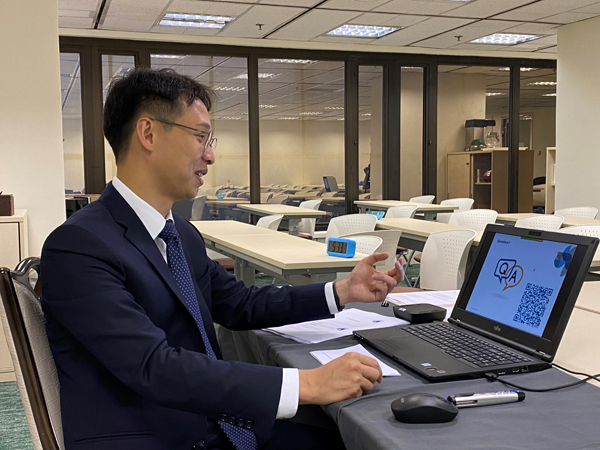
Mr. Terence Lau, Senior Associate of our Corporate Finance Department, hosted a CPD webinar for the topic “IPO101: An Overview of a Listing Offer” on 15 October 2020. In this course, Terence offered a detailed explanation of listing criteria as well as suitability for listing. The syllabus dissected IPO projects and included topics such as reorganisation, due diligence, prospectus drafting and share offer. The webinar also gave an overview of the IPO process pre-IPO investment.
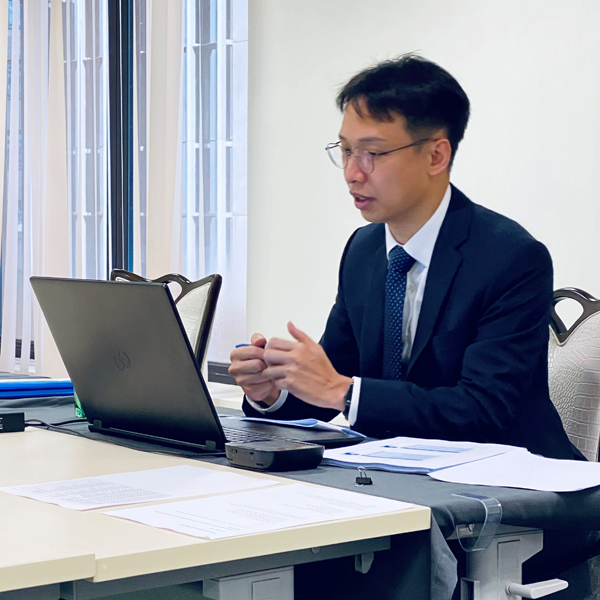
Terence specialises in advising listing applicants, sponsors and underwriters in a broad range of corporate finance transactions, including initial public offering on The Stock Exchange of Hong Kong Limited, subsequent share issues, shares placement, rights issue, open offer and convertible bonds. Terence also advises listed issuers on regulatory and compliance matters.
Please contact Mr. Terence Lau for any enquiries or further information.