News
Find out all about our firm’s latest news and activities below. To learn more about any individual item, please contact us here.
 Stevenson, Wong & Co.
News
Find out all about our firm’s latest news and activities below. To learn more about any individual item, please contact us here.
On 13 April 2018, Stevenson, Wong & Co. Partners Ms. Heidi Chui and Mr. Stephen Wong attended the inauguration of “AllBright Golf Club” and participated in the golf competition at Lake Malaren Golf Club Shanghai. The event attracted more than 30 members and distinguished guests including the president of Shanghai Bar Association Mr. Yu Wei Feng and vice president of Bank of East Asia Mr. Zhang Shao Feng.

AllBright Golf Club is led by the senior partner of AllBright including Mr. Liu Feng, Mr. Xu Jun, Mr. He Nian Sheng and Mr. Michael Wu.


Please contact Ms. Heidi Chui or Mr. Stephen Wong for any enquiries or further information about this event.
On 12 April 2018, Stevenson, Wong & Co. held a career talk at the City University of Hong Kong. Our partners Ms. Lai Lam, Ms. Sherlynn Chan, Mr. Rodney Teoh and trainee solicitor Ms. Mickey Li attended to introduce the firm, traineeship and internship programme to nearly 30 law students.

In the first session, Ms. Lai Lam briefly introduced our firm and traineeship programme to the attendees. She also discussed some key issues about the traineeship programme such as the application, qualifications and process for selecting trainee solicitors.

Ms. Lai Lam and Ms. Sherlynn Chan


During the second session, our partners provided more information about the work and challenges that trainee solicitors may face in different departments including Corporate Finance, Private Client, Dispute Resolution, General Commercial, Intellectual Property and Conveyancing. Mr. Rodney Teoh also introduced our new summer and winter internship programme to the attendees. The final session was experience sharing which was presented by our trainee solicitor, Ms. Mickey Li.

Please contact Ms. Lai Lam, Ms. Sherlynn Chan and Mr. Rodney Teoh for any enquiries or further information about this event.
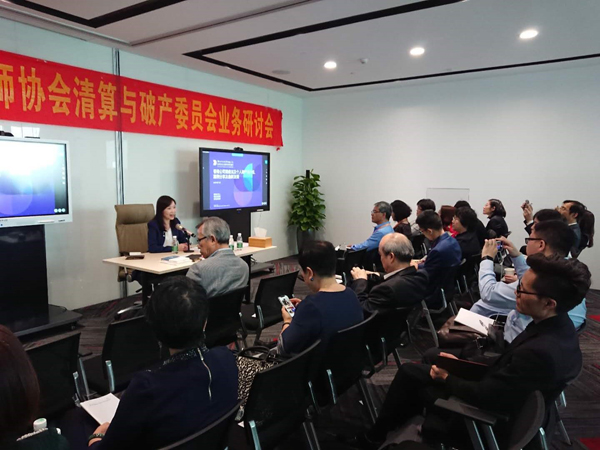
On 12 April 2018, our partners Mr. Willy Cheng and Ms. Heidi Chui and associate, Mr. Kyle Lo attended a seminar organized by the Liquidation and Insolvency Committee of Guangzhou Lawyers Association at Guangzhou AllBright Law Offices. The seminar was well-received and nearly 60 participants including lawyers from Guangzhou, corporate clients and committee members were in attendance.
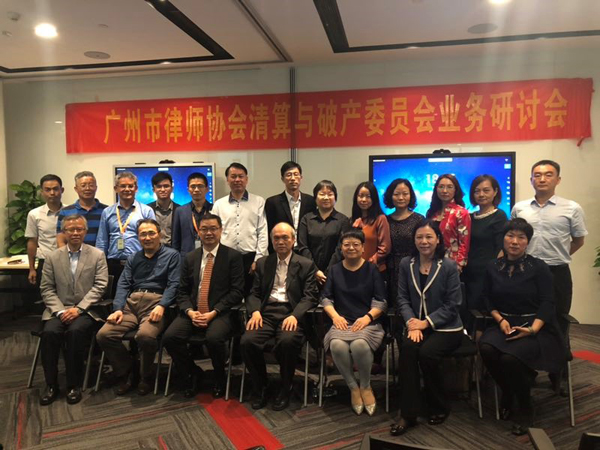
In the first session, Ms. Chui delivered a keynote speech on the topic: “Liquidation and Bankruptcy Proceedings in Hong Kong”. Meanwhile, senior partner Mr. Willy Cheng shared some cases on insolvency in Hong Kong including “The Yung Kee Case”.
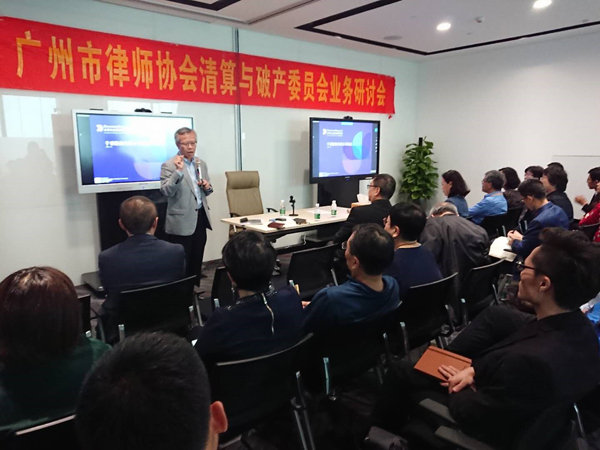
In another session senior partner from AllBright Law Office Mr. Yang Sheng Hua conducted an analysis of the restructuring of Guangdong Holdings Limited.
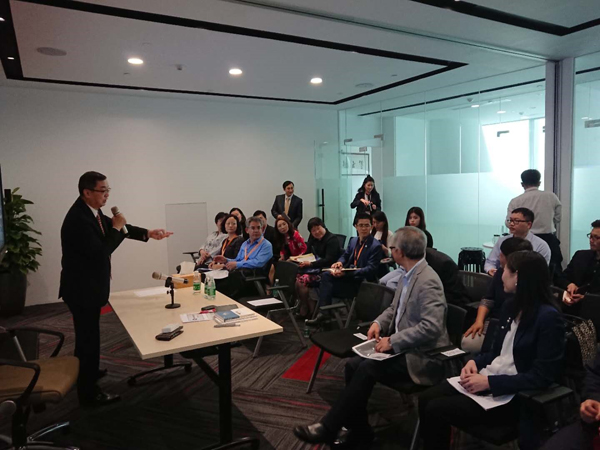
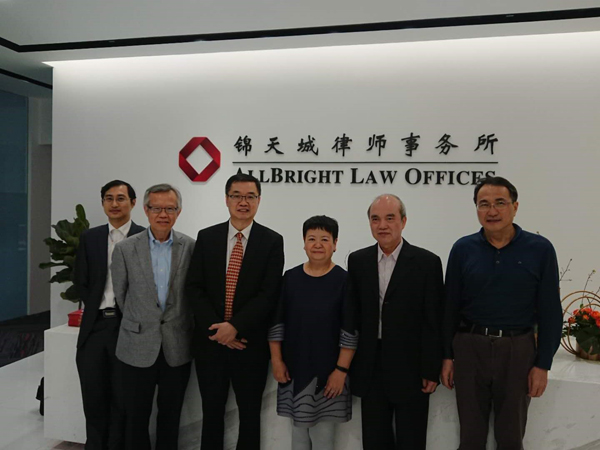
Please contact Mr. Willy Cheng or Ms. Heidi Chui for any enquiries or further information about this event.
Introduction
On 15 December 2017, Hong Kong Exchange and Clearing Limited (“HKEX”) published the Consultation Conclusions on the New Board Concept Paper (the “New Board Consultation Conclusions”), proposing a “way forward” to expand the existing listing regime. Please click here for our previous news update outlining the summary of the proposals. In gist, the Consultation Conclusions proposes: (1) to allow pre-revenue issuers engaging in biotech products, processes or technologies (“Biotech Issuers”) and innovative and high growth issuers that have Weighted Voting Rights Structure (“WVR Structure”) to list on The Stock Exchange of Hong Kong Limited (“SEHK”); and (2) to create a new concessionary secondary listing route for innovative issuers that are primary listed on a qualifying exchange.
Through discussions with the Securities and Futures Commission (“SFC”) and stakeholders, HKEX has published on 23 February 2018 a Consultation Paper on a Listing Regime for Companies from Emerging and Innovative Sectors (the “Consultation Paper”), to follow up its proposals in the Consultation Conclusions. The Consultation Paper contains detailed proposals and introduces two new chapters and certain amendments to the Rules Governing the Listing of Securities on The Stock Exchange of Hong Kong Limited (the “Listing Rules”). The proposals in the Consultation Paper closely follow the “way forward” contained in the Consultation Conclusions.
Among the updates, there are certain key new proposals worth paying attention to:
Listing of Pre-revenue Biotech Issuers
● Biotech Issuers must have developed at least one Core Product (i.e. a regulated product that forms the basis of a Biotech Issuer’s listing application under the Listing Rules) beyond the concept stage.
● Biotech Issuers must be able to show that it has been engaged with research and development of its Core Product(s) for a minimum of 12 months prior to listing.
● SEHK will recognise the US Food and Drug Administration, the China Food and Drug Administration and the European Medicines Agency as competent authorities for the purpose of assessing the Core Products of Biotech Issuers under the Listing Rules.
● Biotech Issuers must have previous meaningful third party investment from at least one sophisticated investor at least six months before the date of listing.
● Biotech Issuers listed under the new Biotech chapter will be restricted from effecting any transaction that will result in a fundamental change to its principal business without its prior consent. Further, any Biotech Issuers who fail to maintain sufficient operations or assets would be given a period of up to 12 months to re-comply with the relevant continuing obligations, failing which SEHK will cancel its listing.
Issuers with WVR Structure
● SEHK will require beneficiaries under a WVR Structure to collectively own a minimum of at least 10% and a maximum of not more 50% of the underlying economic interest in the applicant’s total issued share capital (e.g. dividend rights) at the time of the issuers’ initial listing. However, this will not be an ongoing requirement.
● Only individuals who are directors of the issuer at listing and remain as directors can be beneficiaries of a WVR Structure. The effect is that the WVR Structure would naturally fall away over time.
● The WVR Structure can only be attached to a specific class of shares, which must be unlisted.
● WVRs attached must confer to a beneficiary only enhanced voting power on resolutions tabled at the issuer’s general meetings. Beneficiaries of a WVR Structure would not be able to exercise their enhanced voting powers on matters such as to change the issuer’s constitutional documents, however framed.
Concessionary Route to Secondary Listing
● Applicants that have primary listing in the US or other major international exchanges must demonstrate, to the satisfaction of SEHK, how the combination of domestic laws, rules and regulations to which they are subject and their constitutional documents, are able to satisfy the Key Shareholder Protection Standards under section 1 of The Joint Policy Statement Regarding the Listing of Overseas Companies jointly issued by the SFC and SEHK in September 2013
● A Non-Greater China Issuer with a WVR structure or a Grandfathered Greater China Issuer with a WVR Structure who list in Hong Kong through the new concessionary secondary listing route, may not be required to comply with most new requirements applicable to issuers with a WVR Structure who list directly in Hong Kong.
Moreover, SEHK pointed out that what is considered “innovative” will change over time as technology, markets and industries develop and change. It is therefore important to note that the fact that a previous company has qualified for listing with a WVR structure does not necessarily mean that another applicant with a similar technology, innovation or business model will also qualify for listing with a WVR structure.
Conclusions
The quick publication of detailed proposals and draft amendments to the Listing Rules show HKEX’s commitments to reform the listing regime to offer more choices for emerging and innovative companies to list in Hong Kong. To show HKEX’s receptiveness to suggestions, the Consultation Paper further proposes that if the amendments related to WVR are implemented, HKEX will launch a separate consultation within three months of such implementation to explore on whether to allow corporate entities to become beneficiaries of a WVR Structure. In light of these encouraging developments, we all look forward to seeing Hong Kong continue to be an attractive venue for raising capital.
This newsletter is for information purposes only. Its content does not constitute legal advice, and should not be treated as such. Stevenson, Wong & Co. will not be liable to you in respect of any special, indirect or consequential loss or damage.
Please contact our Hank Lo or Rodney Teoh for any enquiries or further information.
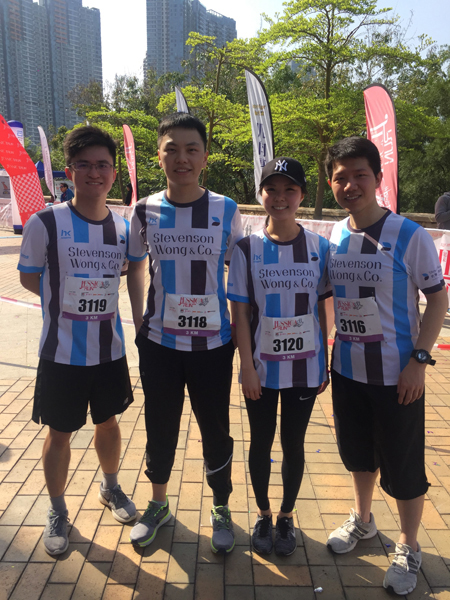
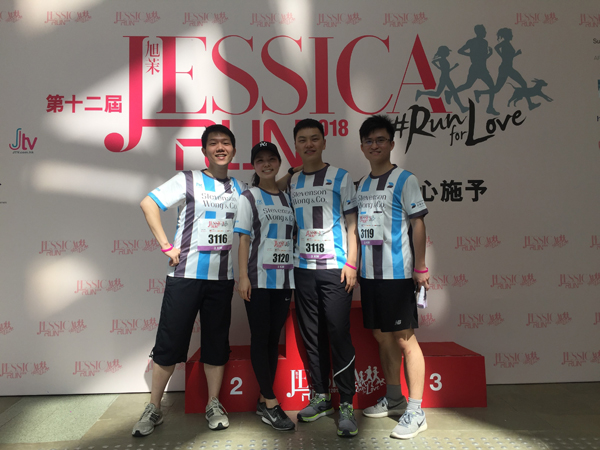
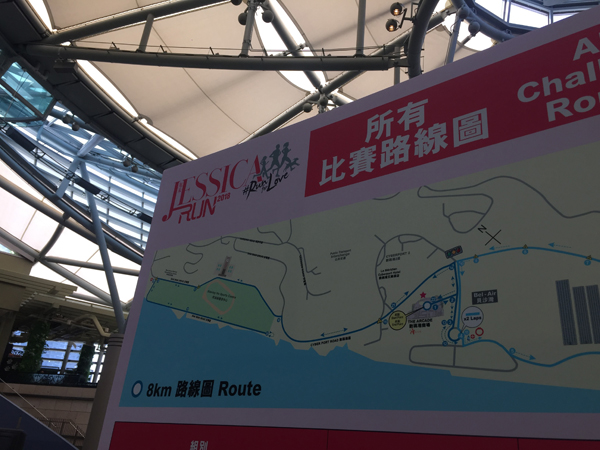
Jessica Run 2018 was successfully held at Cyberport on 8 April 2018, organized by《JESSICA》and “JESSICA Foundation”. Stevenson, Wong & Co. fully supported this meaningful charity run event. We not only made a donation, but our litigation team including associate Kyle Lo, Evania Mok, Jensen Chang and trainee solicitor Calvin Huang also participated in the 3km Corporate Team Challenge.
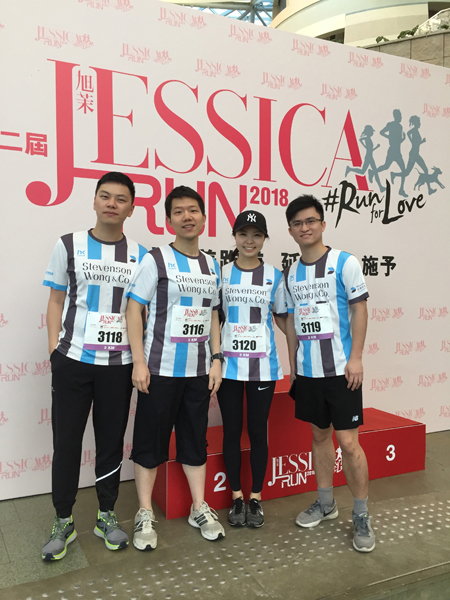
From left to right: Mr. Calvin Huang (trainee solicitor); Mr. Jensen Chang (associate); Ms. Evania Mok (associate); Mr. Kyle Lo (associate).
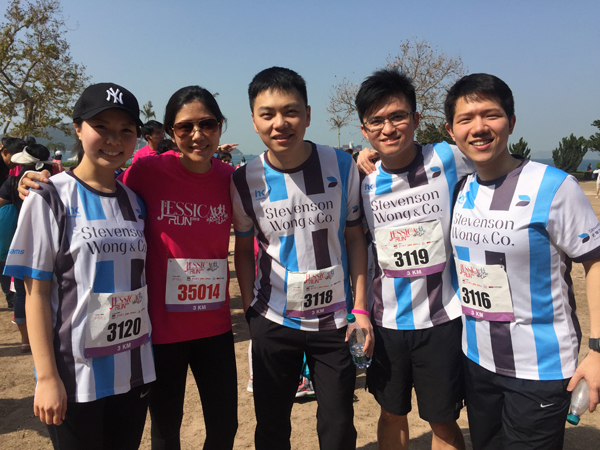
From left to right: Ms. Evania Mok; Executive Vice Chairman of South China Media Ms. Jessica Ng; Mr. Calvin Huang; Mr. Kyle Lo and Mr. Jensen Chang.
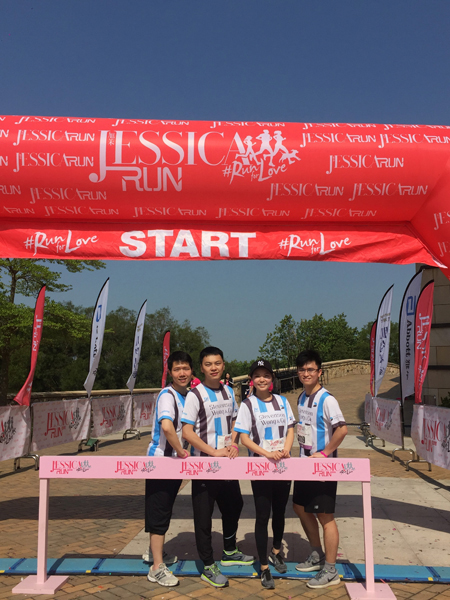
About Jessica Run
“JESSICA Run” is a charity run event organized since 2007 by《JESSICA》and “JESSICA Foundation”. It aims to bring family members together through this charity run, as well as to raise funds for those in need of help. All funds raised were donated to “JESSICA Foundation”, “Women Helping Women Hong Kong” “Society for Abandoned Animals”, “Sowers Action” and “Make-A-Wish® Hong Kong”.
Please contact Ms. Heidi Chui for any inquiry or further information about this event.