Corporate Law Updates
Find out all about our firm’s latest Corporate Law Updates below. To learn more about any individual item, please contact us here.
Corporate Law Updates
Find out all about our firm’s latest Corporate Law Updates below. To learn more about any individual item, please contact us here.
(中文)  …
…
自2022年10月香港政府发布首份《有关香港虚拟资产发展的政策宣言》起,香港在虚拟资产监管方面驶入快车道,先后推出了虚拟资产交易平台牌照、以及稳定币发行牌照制度。2025年6月,港府发布《香港数字资产发展政策宣言2.0》,并就虚拟资产交易服务提供商及虚拟资产托管服务提供商的发牌机制进行公众咨询。2025年9月30日,证监会与金管局联合发布《有关中介人的虚拟资产相关活动的补充联合通函》,正式允许为客户进行虚拟资产交易的中介人可向客户提供虚拟资产质押(Staking)服务。[1] 2025年11月3日,证监会又颁布了新的指引,以便利持牌虚拟资产交易平台连接全球流动性和扩展多元化产品及服务,其中包括取消了在虚拟资产交易平台上向专业投资者发售的虚拟资产(包括稳定币)须先具备12个月往绩纪录的要求。香港持续不断地推出支持虚拟资产生态的政策,目标是打造“值得信赖、可持续且深度融入实体经济的数字资产生态圈”。[2]这些政策的推行,必将吸引越来越多的虚拟资产生态圈的从业者在香港展业。
在香港开展虚拟资产相关业务,必须要了解其监管思路与法律框架。在香港现行的法律下,对包括加密货币在内的虚拟资产的监管框架可以概括为“证券型”与“非证券型”虚拟资产双轨并行模式,证监会与金管局为主要的监管机构。本文将通过梳理现行的监管制度和牌照类别,帮助读者把握香港虚拟资产监管体系全貌。
作为国际金融中心,香港拥有一套完善的证券监管体系,其核心法律为香港法例第571 章《证券及期货条例》(下称“SFO”),主要监管机构为证监会,而金管局则负责银行金融机构的证券活动监管。在SFO的监管体系下,与证券或期货相关的业务需要取得相应的许可或牌照。
当任何虚拟资产的性质符合“证券”的定义,其发行及相关的各种中介活动均会与传统证券一样落入SFO的监管范围,触发相应的发行许可、中介牌照与其它合规要求。例如,包装为虚拟资产的代币化证券的发行,仍然需要受与传统证券发行一样的监管。当前备受关注的RWA(真实世界资产)的代币化,如果其属性与传统证券相同,例如代币赋予持有人分享公司利润或参与管理的权利,则无法避免证券监管的适用。证监会尤其强调“透视(see-through approach)”的监管方式和“相同业务、相同风险、相同规则”的监管原则,即不会单纯依据产品名称或表面“包装”,而是会透过实质来判断虚拟资产的法律属性。同样地,开展证券型虚拟资产的中介业务也需要取得相应的证券牌照,例如证券交易(第1类)、就证券提供意见(第4类)、提供自动化交易服务(第7类)与提供资产管理(第9类)牌照。
若传统证券持牌机构拟涉及虚拟资产,则应向证监会申请将牌照升级以涵盖虚拟资产业务。例如,持9号牌的基金管理人如果计划将其管理投资组合中超过10%的资产投资于虚拟资产,就需要申请9号牌的“升级”(Licence Uplift)。升级后,必须遵循证监会为虚拟资产制定的特定条件,涵盖资产托管、风险管控以及反洗钱。再如,涉及证券型虚拟资产的交易平台,则需要持有升级的1号牌和7号牌。
证监会对不同的提供虚拟资产服务的牌照会施加不同的额外发牌条件,这些条件包括但不限于财务稳健性、负责人员的能力与经验、客户虚拟资产保管、风险控制系统、反洗钱措施等。
适用范围
2022年12月修订的香港法例第615 章《打击洗钱及恐怖分子资金筹集条例》(下称“AMLO”)引入了对虚拟资产服务提供者(VASP)的新发牌制度,自2023年6月1日起,凡在香港运营中心化虚拟资产交易平台(VATP),须按AMLO申请VATP牌照。实践中,VATP主要覆盖非证券型代币,例如比特币。鉴于虚拟资产代币属性常常变化,证监会建议虚拟资产交易平台应同时申请SFO和AMLO制度下的牌照(即双重发牌制度),以避免违反许可制度并确保业务连续性。截至2025年10月30日,市场上同时持有“双重牌照”的虚拟资产交易平台营运者仅11家[3]。
在港从事VATP业务,申请人须满足适当人选与胜任力、本地实体与治理架构、财务稳健、客户资产托管与客户处理、市场操纵防范、反洗钱/记录保存与持续申报等方面的硬性与持续性要求;如同时涉及证券型代币,还需并行遵从SFO中的持牌要求。AMLO及《适用于虚拟资产交易平台营运者的指引》中的基本要求包括但不限于:
就申请成为负责人员(RO)的个人而言,证监会设有三种主要方式以符合胜任能力要求:
选项A: 申请人持有指定范畴(会计、工商管理、经济、金融或法律)学位,或其他学位但在指定范畴至少两科取得合格,或持有国际认可的专业资格(如CFA、CIIA、CFP);同时需于过去六年内具备至少三年相关行业经验、两年管理经验,并通过本地监管框架考试。
选项B: 申请人持有其他学位(无须在指定范畴取得两科合格);同时需于过去六年内具备至少三年相关行业经验、两年管理经验,取得认可行业资格或完成相关额外持续进修,并通过本地监管框架考试。
选项C: 申请人于香港中学文凭考试取得英文或中文及数学第二级成绩或同等学历;同时需于于过去六年内具备至少三年相关行业经验及取得认可行业资格(或过去八年内具备至少五年相关行业经验及完成相关额外持续进修) 、两年管理经验,并通过本地监管框架考试。
此外,若申请人未具备上述学历或专业资格,但于2022年1月1日前已为持牌人,且于过去11年内累积至少八年相关行业经验,并符合管理经验及本地监管框架考试要求,证监会亦可考虑其申请。
针对相关的“行业经验”,由于拟出任的负责人员需要双重牌照申请,而目前市场缺乏兼具虚拟资产及证券相关经验的人才,因此证监会采取务实的做法,现时将会视只具备虚拟资产或证券相关的其中一项经验的负责人员申请人的经验为符合另一套牌照规定的经验,但会在其牌照上施加额外的限制条件。
香港法例第656 章《稳定币条例》已于2025年8月1日生效。根据《稳定币条例》,凡在香港发行“指明稳定币”(specified stablecoin),或在香港以外地区发行以港币为参考的指明稳定币,都属于受规管稳定币活动,必须向金管局申请牌照。“指明稳定币”是指锚定一种或多种官方货币,或其他金管局指明的计算单位或经济价值储存形式以维持稳定价值的数字代币。具体来说,以下情况均需申请稳定币发行牌照:
此外,积极在香港或其他地区向公众宣传稳定币相关业务,也被视为“持牌活动”,同样需要申请牌照。未获得牌照而进行上述稳定币发行活动,属于违法行为,可能被处以罚款和刑事处罚。
稳定币发行与相关服务的牌照门槛采用“牌照先行”的事前监管模式,金管局及证监会在2025年8月14日发布的联合声明中明确强调将以金融稳定+消费者保护为核心目标,采取严格及审慎的态度审批稳定币发行人的牌照申请,门槛甚高。除《稳定币条例》,稳定币监管还需关注金管局在2025年7月29日发布的配套文件:《持牌稳定币发行人监管指引》,《打击洗钱及恐怖分子资金筹集指引(持牌稳定币发行人适用)》,与发牌制度及申请程序相关的《稳定币发行人发牌制度摘要说明》,《原有稳定币发行人过渡条文摘要说明》。纵观上述文件可得稳定币发牌基本要求包括如下要点:
2025年6月,香港财经事务及库务局和证监会联合发布了公众咨询文件,分别就虚拟资产交易服务提供者和虚拟资产托管服务提供者设立新监管制度的立法建议征询意见。
《有关规管虚拟资产交易的立法建议》公众咨询文件中建议,凡是在香港从事涉及虚拟资产与任何金钱之间的转换的现货交易服务,均须向证监会申请牌照或注册。如业务过程牵涉法定货币汇款服务,持牌人除须持有虚拟资产场外交易牌照外,亦须持有金钱服务经营者牌照。这一涵盖范围非常广泛,适用于通过实体店或在线平台提供的各类虚拟资产交易服务,包括:简单的兑换买卖,以及更复杂的服务(例如经纪活动、大宗交易活动和顾问或资产经理从事的其他相关活动)。这意味着过去许多无需牌照的场外交易商、兑换店、自助柜员机运营商等灰色地带都将被纳入监管。
《有关规管虚拟资产托管服务的立法建议》公众咨询文件将虚拟资产托管服务定义为“以业务形式代客户保管 (i) 虚拟资产;或 (ii) 能转移客户虚拟资产的工具,包括但不限於私人密钥”。就监管职责而言,其发牌制度的监管架构与虚拟资产交易服务一致。简言之,证监会管标准和发牌及注册,金管局作为银行及储值支付工具的虚拟资产托管活动的前线监管机构。
拟监管对投资者保障、风险管理与市场发展的关注贯穿始终。申请成为虚拟资产交易服务提供者或虚拟资产托管服务提供者所需满足要求的具体口径还应以后续规则为准,两份咨询文件中的拟议监管要点如下:
| 虚拟资产交易服务发牌要求 | 虚拟资产托管服务发牌要求 | |
| 资格 | 持牌人须为在本地成立并有固定营运地点的公司,或在其他地方成立但在香港根据香港法例第622章《公司条例》注册的公司。 | |
| 代币纳入及风险监测 | 大致遵循适用于虚拟资产交易平台的规定,除遵守其他规定外,持牌人或注册人亦须设立一个代币纳入及检讨委员会,负责订立、实施和执行有关纳入任何虚拟资产以供买卖/撤销虚拟资产买卖的准则;须就其为客户进行的虚拟资产交易实施有效的交易监察程序、风险管理政策和程序;应采取措施确保投资者获得保障,例如为客户进行虚拟资产知识评估、向客户提供足够培训、为客户进行风险评估和厘定风险状况、设定客户风险上限、确保客户适合投资虚拟资产,以及防止、避免和披露实际或潜在的利益冲突。 | 持牌或注册虚拟资产托管服务提供者应制定适当并与其业务规模和复杂程度相称的风险管理政策和程序;须采用适当的科技方案(例如区块链分析工具),以便能够追踪虚拟资产和相关钱包地址,以及识别潜在可疑交易。 |
| 尽职审查及信息储存 | 持牌人或注册人应对所有拟纳入供买卖的虚拟资产进行合理的尽职审查;须遵守AMLO附录2中储存记录的要求。 | 不对可托管的虚拟资产类别施加任何限制,前提是虚拟资产托管服务提供者必须对有关代币进行稳妥的尽职审查,确保能妥善管理洗钱及恐怖分子资金筹集风险。 |
| 持牌人或注册人须提交多方面的资料(例如有关其业务过程中所使用的钱包地址、持牌人所经营或将会经营的业务范围和性质,以及所提供或将会提供的服务类别的详情),并确保所提交的为最新资料;妥善储存所有交易、资金流向、业务经营记录。 | ||
| 交易及资产处理 | 持牌人或注册人如要在其钱包地址存入/提取客户的虚拟资产(包括为结算目的而在第三方存入/提取虚拟资产),则必须确保完全遵从与打击洗钱及恐怖分子资金筹集相关的适用标准及其他规定;获证监会发牌或注册的中介人须确保其虚拟资产交易活动是透过获证监会发牌的虚拟资产交易平台上开立及维持的综合帐户进行,而且只会在该平台为客户执行交易;获证监会发牌的虚拟资产交易平台则须确保其客户的虚拟资产是透过信托方式存放于由其有联系实体开立的钱包地址;持牌人或注册人应妥善保障其客户资产,并采取额外措施,包括妥善分隔客户资产,以及将客户的虚拟资产交予香港的持牌或注册虚拟资产托管人保管。 | |
| 财政资源 | 持牌人或注册人(除银行)应具备足够财政资源,用以经营其虚拟资产业务。财政资源规定包括500万港元的最低缴足股本、高达300万港元的最低规定速动资金(视乎业务模式而定),以及相等于至少12个月实际营运开支的额外规定速动资金。 | 除银行外,持牌或注册虚拟资产托管服务提供者须具备1,000万港元的最低缴足股本和高达300万港元的最低规定速动资金(参考SFO规定,最终需视乎业务模式而定);可能有额外的财务资源要求,例如与经营开支、业务活动规模、赔偿和保险安排、托管基础设施以及内部控制要求等要求。 |
| 应遵守订明的审计及披露要求,并提交经审计的帐目。 | ||
| 适当人选及胜任能力 | 持牌人或注册人须建立良好的企业管治架构,其职员须具备所需的知识、经验和资格,以便有效履行职责。申请人必须符合适当人选标准。适当人选考量标准包括该人曾否在任何地方被裁定犯洗钱及恐怖分子资金筹集、欺诈、舞弊或不诚实作为有关的罪行;该人曾否不遵从或有可能不遵从打击洗钱及恐怖分子资金筹集规定或其他适用于持牌虚拟资产托管服务提供者的规管要求;该人的经验和相关资历;以及该人是否信誉良好和财政稳健(例如该人并非破产或清盘程序的标的)。 | |
| 适当人选规定将适用于提供虚拟资产托管服务的企业实体的所有大股东,以及为该等实体执行虚拟资产托管职能的个人。申请人须委任最少两名获证监会核准的负责人员(或两名获金管局核准的主管人员,视乎情况而定)。持牌的虚拟资产托管服务提供者的所有执行董事必须是证监会核准的负责人员。 | ||
| 业务操守 | 持牌人或注册人须以诚实及公平态度,并以适当技能、审慎及勤勉尽责,以及维护客户利益及市场稳健的方式行事,并遵从适用于其业务活动经营的所有法定及规管要求。 | |
结语
综观香港虚拟资产监管框架,从证券型虚拟资产的监管,到AMLO体系下的交易平台牌照,再到新近推出的稳定币发行人牌照以及正在咨询中的虚拟资产交易及托管服务商牌照制度,香港正在构建一个全方位、多层次的虚拟资产监管体系。
我们在下表对目前已经生效的监管机制进行简要的对比,以便利读者的理解。
| 监管法例 | 覆盖范围 | 监管机构 | 牌照类型 |
| SFO | 证券型虚拟资产、代币化证券 | 证监会 / 金管局(银行部分) | 1/4/7/9 号及其升级 |
| AMLO | 非证券型虚拟资产的交易平台 | 证监会 | VATP 牌照 |
| 稳定币条例 | 指明稳定币的发行及管理 | 金管局 | 稳定币发行人牌照 |
鉴于香港虚拟资产监管体系的专业性和复杂性,我们建议任何计划在香港开展虚拟资产相关业务的机构或个人,都应当在业务规划初期即寻求专业法律顾问的协助。在香港这样一个强调法治和合规的国际金融中心,专业的法律支持是虚拟资产业务成功落地的重要保障。
本文由合伙人劳恒晃律师﹑张源辉律师﹑曾浩贤律师﹑刘砚枫律师﹑谢庆伦顾问律师和黄虹博士共同合著。若阁下想了解更多详情,请联络我们的合伙人劳恒晃律师﹑张源辉律师﹑曾浩贤律师﹑刘砚枫律师或谢庆伦顾问律师。
本新闻简讯更新仅供参考。其内容不构成亦不应视为法律咨询意见。史蒂文生黄律师事务所不会就任何因倚赖本处所载资料而作出的决定丶采取的行动或不采取的行动所引致的或与之有关的任何特别丶间接或相应而生的损失或损害向阁下承担法律责任。
[1] 虚拟资产质押(Staking)服务是指持牌法团或注册机构代其客户进行涉及承诺或锁定客户虚拟资产的过程的任何活动,以便根据权益证明共识机制参与区块链协议的验证程序,并享有因参与该程序而产生及分派的回报。
[2] 参见《香港数字资产发展政策宣言2.0》<https://gia.info.gov.hk/general/202506/26/P2025062500847_500091_1_1750909590100.pdf>。
[3] 参见《虚拟资产交易平台名单》< https://sc.sfc.hk/TuniS/www.sfc.hk/TC/Welcome-to-the-Fintech-Contact-Point/Virtual-assets/Virtual-asset-trading-platforms-operators/Lists-of-virtual-asset-trading-platforms>。
[4] 适用于法团的判断标准包括但不限于其业务、企业管治、内部监控、营运审查、风险管理及合规,以及其高级管理层及其他员工所具备的总体胜任能力;适用于个人的判断标准包括但不限于其具备所需的学历、专业或行业资格,拥有足够的相关行业及管理经验(如适用),对监管架构(包括规管虚拟资产行业的法例、规则及有关守则)有充足的认识,熟悉金融从业人员应具备的职业道德操守。
 …
…
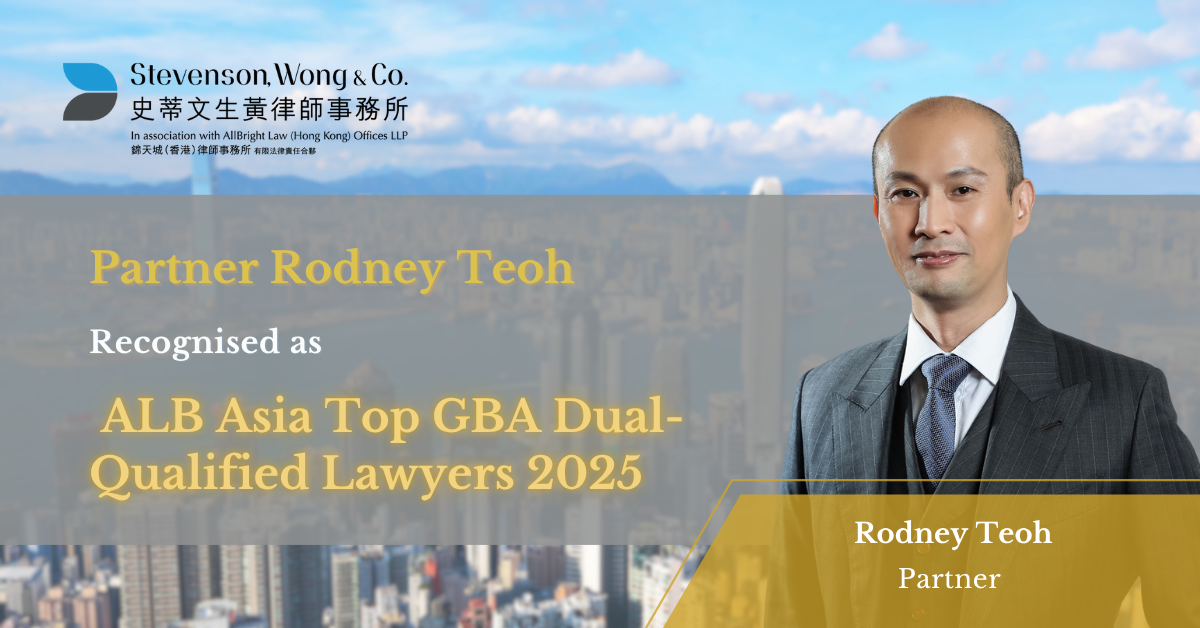
We are thrilled to announce that our Partner, Rodney Teoh, Deputy Head of Corporate Finance and Co-Head of Fintech, has been recognised by Asia Legal Business (ALB) as one of the Top Greater Bay Area (GBA) Dual-Qualified Lawyers for 2025. This esteemed accolade highlights Rodney’s exceptional legal expertise and his pivotal role in shaping the rapidly evolving legal landscape within the Greater Bay Area.
Rodney is among the first cohort of Hong Kong lawyers to successfully pass the GBA legal professional examination (GBA Examination). In addition to his qualifications in Hong Kong and the PRC (GBA), he is also qualified in Australia (NSW) and England & Wales. His impressive quad qualification, combined with extensive experience in equity and debt capital markets and private investments, enables him to adeptly handle cross-border matters involving Hong Kong, the PRC, and Southeast Asia.
The GBA Examination, launched in 2021, aims to accelerate the development of the Greater Bay Area and foster closer collaboration among legal professionals within the GBA legal services market. Following the successful completion of the examination and the acquisition of the relevant practice certificate, Hong Kong legal practitioners with the requisite years of accumulated legal practice experience are now permitted to provide legal services in the nine Mainland municipalities of the GBA for specified civil and commercial matters.
Congratulations to Rodney on this well-deserved accolade!
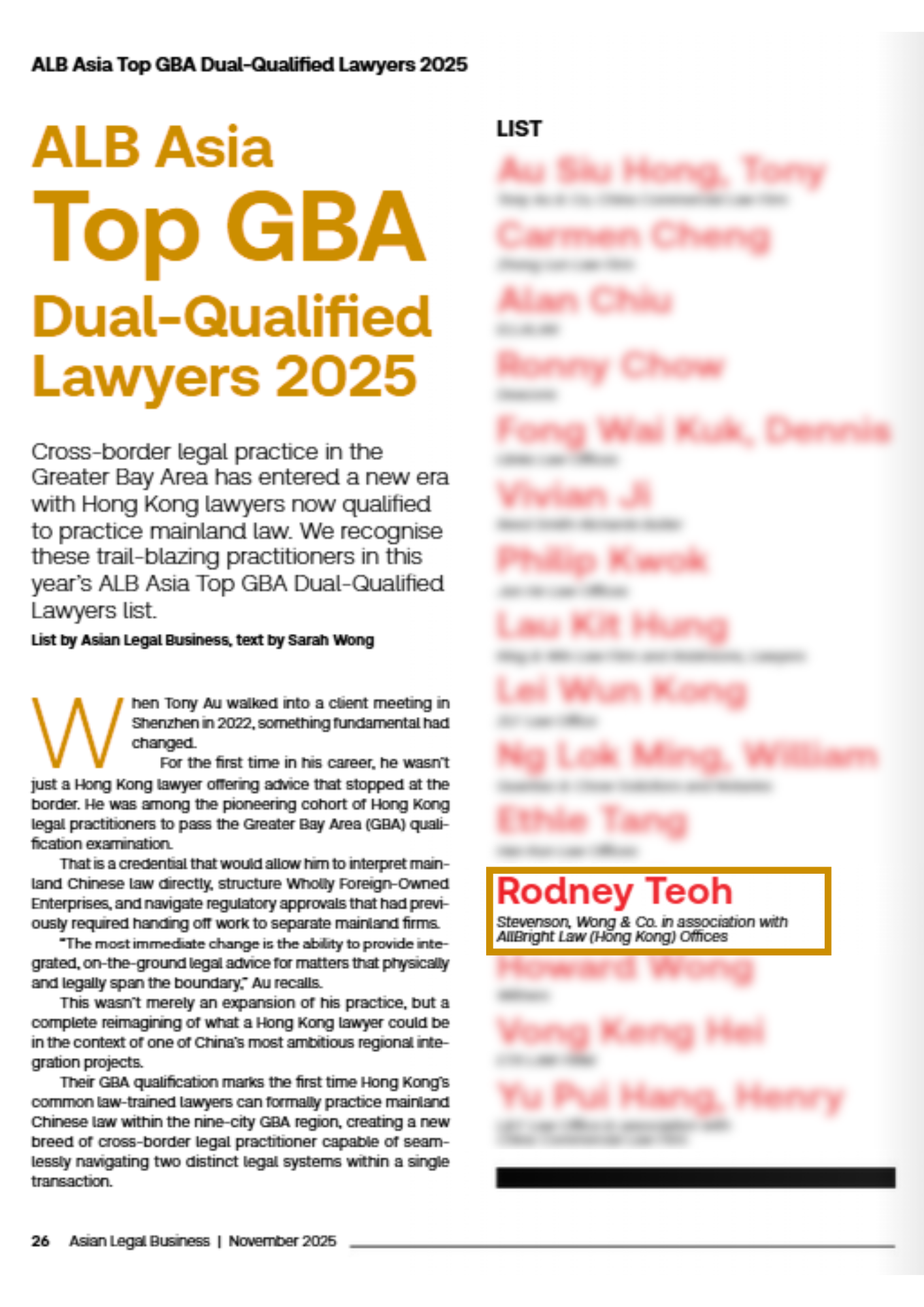
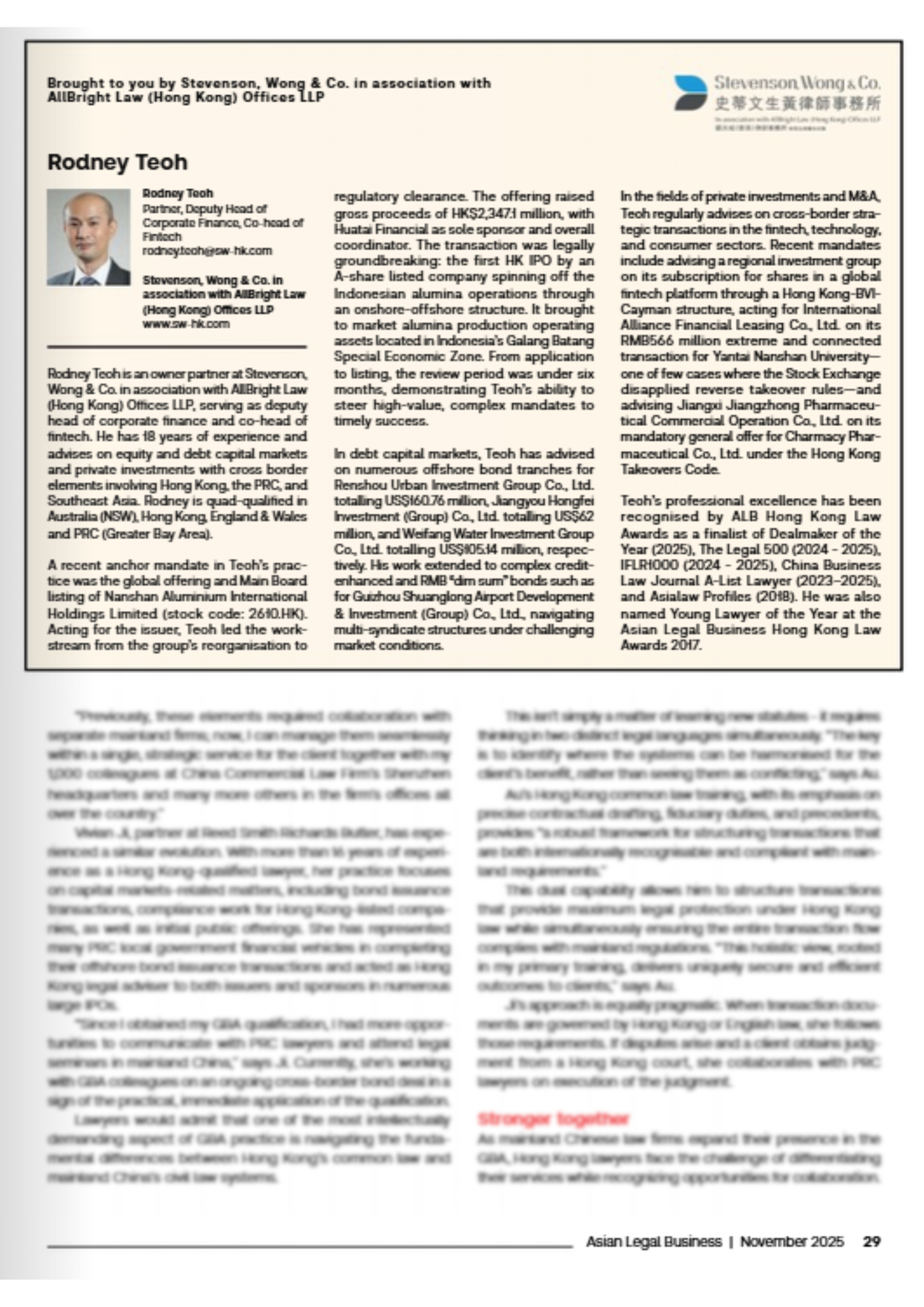
For more information, please see here for ALB’s report on the November issue or contact our Partner Rodney Teoh.
 …
…
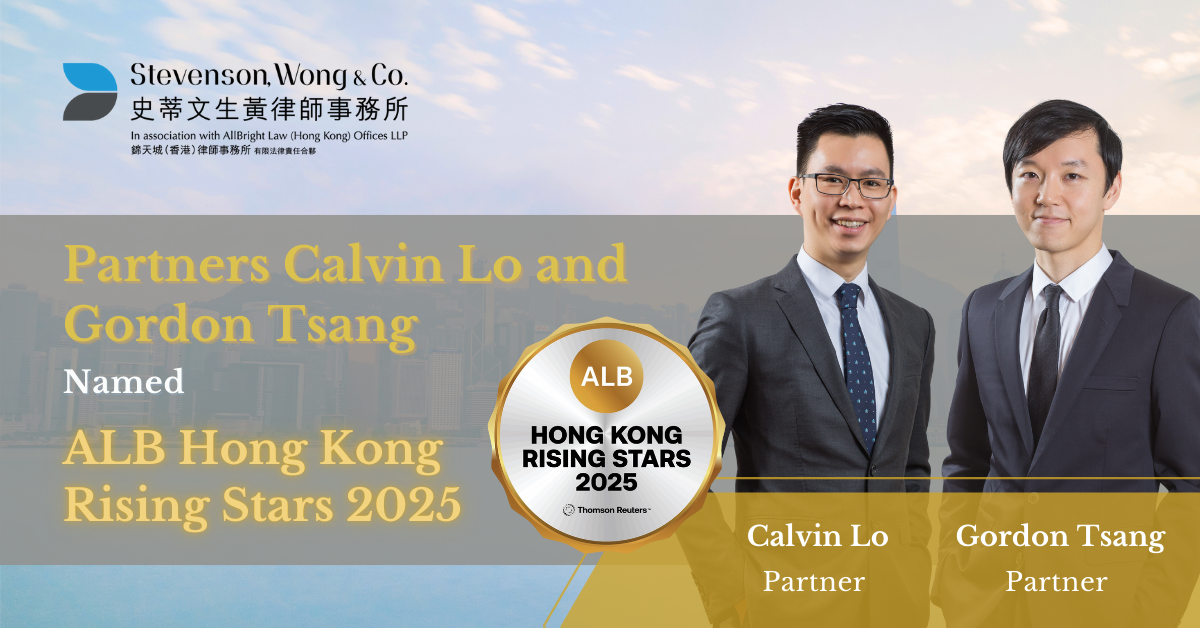
We are delighted to share that our partners, Calvin Lo and Gordon Tsang, have been named ALB Hong Kong Rising Stars for 2025, with Mr Tsang being recognized for the second year running. This accolade showcases their remarkable contribution and achievements in the legal profession.
ALB, a prominent legal publication under Thomson Reuters, is one of the most influential legal media outlets worldwide. The Rising Stars list highlights Hong Kong’s most promising next generation lawyers, showcasing those who have consistently demonstrated exceptional dedication, legal expertise, and innovative approaches to client service. This recognition solidifies Calvin and Gordon’s reputations as future leaders in the legal profession.
Calvin handles a wide range of private client work, including family and matrimonial matters such as divorce, children disputes, wardship, relocation, ancillary relief claims, often with cross-border elements, jurisdiction and forum disputes. He also handles trust advisory work, estate and succession planning, will drafting and probate applications. In the area of mental health law, Calvin advises clients in applications for the appointment of MIP Committee as well as guardianship orders. He has also been appointed by the Court as professional MIP Committee. He is also a Trust and Estate Practitioner of (STEP), a Certified Trust Practitioner of HKTA, and an accredited family mediator.
Gordon has extensive experience in handling a wide range of corporate and commercial matters, including pre-IPO restructuring and financing, Hong Kong and U.S. IPOs, mergers and acquisitions, loan and financing transactions, corporate governance and general compliance for listed companies as well as private enterprises. He has established a remarkable reputation for advising clients on complex capital market transactions and corporate acquisitions.
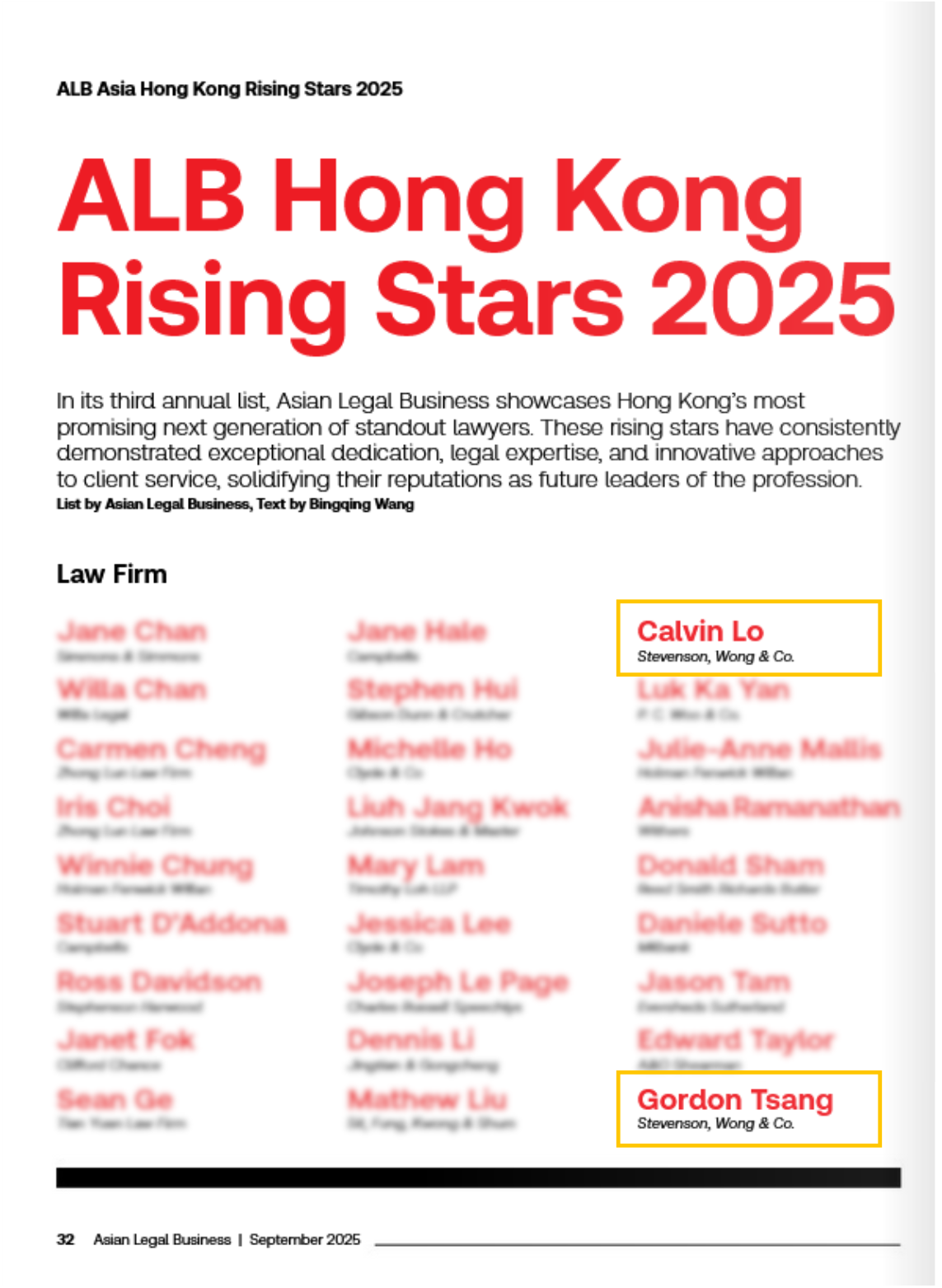
For more information, please contact our Partners Calvin Lo and Gordon Tsang, or click here to view ALB’s report.
(中文)  …
…
前言:
香港IPO市场于2025年上半年强势反弹,跃升为全球IPO集资排行榜之首。而在2025年第二季度,港股迎来了多家募资额庞大的IPO,其中恒瑞医药成为近五年港股医药板块最大IPO,而宁德时代更成为港股近年来发行规模最大的IPO项目。正在等待审批的递表企业超过了两百家。港股IPO市场的强劲表现,离不开联交所近期采取的连串IPO优化措施。联交所一方面努力提升上市申请审批效率,于2024年10月18日与证监会联合优化上市审批流程时间表;另一方面,持续推出新政吸引内地新经济企业来港上市,继2024年9月降低了《上市规则》第18C章规定的“特专科技公司”上市门槛后,又于2025年第二季度与证监会联合推出了“科企专线”,进一步便利特专科技公司和生物科技公司的新上市申请。
基于此,本文分将为两大部分:第一部分系统梳理港股第二季度成功IPO企业的上市表现;第二部分则介绍便利新经济企业付港上市的18C章与科企专线的特色。本文力求为发行人、投资者与中介机构提供深入的市场观察与分析。
2025年第二季度,香港IPO市场呈现显著活跃态势,投资者热情空前高涨,体现在普遍超高的超额认购倍数及首日股价强劲表现上。这一市场热度引来各行业龙头企业争相布局香港上市计划。如此活跃的市场生态既是投资者对优质企业价值的认可,也彰显了香港作为连接全球资本与中国企业的国际金融中心所具备的强大吸引力与独特优势。从数据看,这些新股平均超额认购倍数高达643倍,首日平均涨幅达30.02%,表明投资者对港股新上市企业热情高涨。在27家第二季度登陆港股的企业中,药捷安康的超额认购倍数最高,达3419倍,其首日涨幅也高达78.71%。沪上阿姨同样备受追捧,超额认购倍数达3616倍,首日涨幅为40.03%。新股的市场表现与基石投资者质量呈现明显相关性——拥有知名基石投资者的企业通常获得更高的认购倍数或更好的上市表现,如映恩生物拥有BioNTech等12家知名基石投资者,首日涨幅高达116.7%。而没有基石投资者参与的股份表现则相对逊色。行业方面,生物科技和先进硬件及软件类企业表现尤为突出,显示投资者对新经济行业的持续青睐,这反映了香港作为国际金融中心在全球资本市场中的重要地位和吸引力。
| 序号 | 企业名称 | 行业 | 上市日期 | 港股代码 | 超额认购倍数 | 上市首日股价涨跌幅 | 基石投资者 |
| 1. | 云知声智能科技股份有限公司 | 先进硬件及软件 | 2025-06-30 | 09678 | 约91倍 | +44.59% | SensePower、臻一、润建国际 |
| 2. | 泰德医药(浙江)股份有限公司 | 生物科技-制药 | 2025-06-30 | 03880 | 约301倍 | +0.65% | 石药、Welight Capital |
| 3. | IFBH Limited | 饮品(非酒精类) | 2025-06-30 | 06603 | 约2682倍 | +42.09% | UBS AM Singapore、Black Dragon、南方基金、广发国际、Harvest Oriental SP、工银理财等 |
| 4. | 周六福珠宝股份有限公司 | 钟表珠宝 | 2025-06-26 | 06168 | 约711倍 | +25.00% | 罗湖投资、永诚二号香港、Jump Trading、凯因家族办公室、Seraphim Advantage、君宜永信、灵宝黄金、广发基金 |
| 5. | 圣贝拉有限公司 | 保健护理服务 | 2025-06-26 | 02508 | 约193倍 | +33.74% | GIMM、华夏基金、JKKB、吴启楠、SS Morgan、敏睿、汪牵擎 |
| 6. | 颖通控股有限公司 | 美容护肤产品及服务 | 2025-06-26 | 06883 | 约34倍 | −10.42% | 无 |
| 7. | 湖北香江电器股份有限公司 | 家用电器 | 2025-06-25 | 02619 | 约852倍 | −11.89% | 顺捷投资、興黃控股、云星科技 |
| 8. | 曹操出行有限公司 | 陆运 | 2025-06-25 | 02643 | 约20倍 | −14.16% | Mercedes-Benz、未来资产证券、无极资本、国轩香港、亿纬亚洲、RoboSense HK |
| 9. | 浙江三花智能控制股份有限公司 | 电器部件与设备 | 2025-06-23 | 02050 | 约747倍 | −0.13% | Schroders、GIC、景林资产、Green Better、Verition、钟鼎资本八期、工银理财、泰康人寿等 |
| 10. | 药捷安康(南京)科技股份有限公司 | 生物科技-制药 | 2025-06-23 | 02617 | 约3419倍 | +78.71% | 江北医药、康方生物科技、华盛敦行、药石地平线、科瓴安 |
| 11. | 佰泽医疗集团 | 保健护理服务 | 2025-06-23 | 02609 | 约24倍 | +42.18% | Harvest Oriental |
| 12. | 佛山市海天调味食品股份有限公司 | 食品添加剂 | 2025-06-19 | 03288 | 约918倍 | +0.55% | HHLRA、GIC、RBC、源峰基金、UBS AM Singapore、HSG Growth、佛山发展等 |
| 13. | 新琪安集团股份有限公司 | 半导体产品及设备 | 2025-06-10 | 02573 | 约149倍 | +21.43% | Reynold Lemkins、合赢 |
| 14. | 容大合众(厦门)科技集团股份公司 | 先进硬件及软件 | 2025-06-10 | 09881 | 约275倍 | +42.00% | 香港临泰、曹柯、林小坚、中晟集团、李舒菡、Main Achieve、伍志发 |
| 15. | MetaLight Inc. | 广告 | 2025-06-10 | 02605 | 约274倍 | −30.30% | 无 |
| 16. | 手回集团有限公司 | 多元化保险 | 2025-05-30 | 02621 | 约990倍 | −18.19% | 海泰香港、韬越实业 |
| 17. | 厦门吉宏科技股份有限公司 | 纸制品 | 2025-05-27 | 02603 | 约49倍 | +39.06% | Timber Kangaroo、昱龙国际、沈臻宇 |
| 18. | 派格生物医药(苏州)股份有限公司 | 生物科技-制药 | 2025-05-27 | 02565 | 约743倍 | −25.90% | 益泽康瑞 |
| 19. | 江苏恒瑞医药股份有限公司 | 制药 | 2025-05-23 | 01276 | 约454倍 | +25.20% | GIC、Invesco Advisers、UBS AM Singapore、Cordial Solar、Hillhouse、Millennium ICSA、Oaktree |
| 20. | Mirxes Holding Company Limited | 生物科技-制药 | 2025-05-23 | 02629 | 约25倍 | +28.76 % | 北京浔瑞、Evergreen Gate |
| 21. | 宁德时代新能源科技股份有限公司 | 电池产品 | 2025-05-20 | 03750 | 约151倍 | +16.43% | 中石化(香港)、KIA、HHLRCF, L.P.、上海高毅及CICC FT、Perseverance Asset Management、Zenith Hop等 |
| 22. | 绿茶集团有限公司 | 餐馆食肆 | 2025-05-16 | 06831 | 约317倍 | −12.52% | 无锡紫鲜、安吉两山、Action Chain、正大、华置、无锡合翔、无锡绿聊、无锡琴雨 |
| 23. | 海南钧达新能源科技股份有限公司 | 电池产品 | 2025-05-08 | 02865 | 约3倍 | +20.09% | 珠海高景、现代直投 |
| 24. | 沪上阿姨(上海)实业股份有限公司 | 饮品(非酒精类) | 2025-05-08 | 02589 | 约3616倍 | +40.03% | 盈峰控股、华置 |
| 25. | 博雷顿科技股份公司 | 机动车零配件与设备 | 2025-05-07 | 01333 | 约198倍 | +38.33% | 香港欣威、长风基金 |
| 26. | 映恩生物制药(苏州)有限公司 | 生物科技-制药 | 2025-04-15 | 09606 | 约115倍 | +116.7% | BioNTech、LAV Star、Lake Bleu Prime & Innovation、TruMed、富国基金/香港、易方达基金管理/香港、汇添富基金、盘京基金、MY Asian、EMHCP、WWHCP、苏州苏创 |
| 27. | 江苏正力新能电池技术股份有限公司 | 电池产品 | 2025-04-14 | 03677 | 约2倍 | +1.45% | 江苏国企混改基金、苏州高端装备基金、东南投控 |
| 平均值 | 643倍 | +30.02% | |||||
根据港交所“上市申请进展报告”的最新公开数据(截至2025年7月31日),排队中的主板IPO申请为207家,GEM为9家,合计216家。已通过上市委员会聆讯、但尚未挂牌的主板申请为9家,GEM为0家,合计9家。
自2024年10月18日香港证监会与联交所发布《有关优化新上市申请审批流程时间表的联合声明》后,港股上市审批显著提速。若申请人及其保荐人提交的新上市申请及相关材料符合《证券及期货条例》、《证券及期货(在证券市场上市)规则》及/或《上市规则》下的所有适用规定及指引,则该申请属于“完全符合规定的申请”,证监会与联交所各自最多发出两轮监管意见,并承诺在不多于40个营业日内完成重大监管关注事项的评估。若申请人已于A股上市,预计市值至少达100亿港元,且在具有法律意见支持的基础上,证监会与联交所能够确认申请人在递交新上市申请前的两个完整财政年度已在所有重大方面遵守与A股上市相关的法律及法规,则申请人属于“合资格A股公司”,该评估时限进一步压缩至分别一轮监管意见及不多于30个营业日。如证监会和联交所评估过程中发现重大监管关注事项,则按“需时较长的申请”路径处理,监管部门将与保荐人积极沟通直至问题解决。
措施落地后成效明显——联交所上市审批中位时间由2022年的61个营业日[1]缩短至截至2025年7月31日止12个月的平均28日。审批效率提升不仅体现在统计数据上,也反映在工作节奏上:有投行反映港交所与证监会如今在周末及公众假期亦会致电讨论首轮书面问询,甚至在非工作时间持续跟进,确保申请人充分理解反馈并加速修订材料。[2]
联交所于2023年3月31日正式引入《上市规则》第18C章,为技术成熟度尚处早期、但科研壁垒高且商业化路径清晰的特专科技公司开辟专属上市通道,并且于2024年9月进一步降低了特专科技公司的上市门槛,协助香港巩固国际科创金融枢纽地位。
《新上市申请人指南》第2.5章列明了第18C章聚焦的特专科技行业名单(可能不时更新)及特专科技行业可接纳领域名单(非详尽无遗)。
| 特专科技行业 | 描述 | 可接纳领域 |
| 新一代信息技术 | 由云端运算及大数据分析支援的软件、平台及基础设施解决方案 | 云端服务、人工智能 |
| 先进硬件及软件 | 利用先进技术推行新硬件及软件开发 | 机器人及自动化、半导体、先进通信技术、电动及自动驾驶汽车、先进运输技术、航天科技、先进制造业、量子信息技术及计算、元宇宙技术 |
| 先进材料 | 生产或整合新材料或经大幅改良的材料,以提升传统材料的表现 | 合成生物材料、先进无机材料、先进复合材料、纳米材料 |
| 新能源及节能环保 | 利用天然资源生产能源,及为支援有关生产而发展网络与基础设施,以及其他可提升环境可持续性和资源使用及/或能源效率的程序 | 新能源生产、新能源储存及传输技术、新绿色技术 |
| 新食品及农业技术 | 应用于农业、耕种及食品加工活动的食品及农业技术 | 新食品技术、新农业技术 |
对于不在上述名单的申请人,可以向联交所提交申请查询其是否具备可接纳的特质,可被视为属于特专科技行业可接纳领域名单。
港交所将特专科技公司按其收益和市值又分为已商业化公司(Commercial Company)、未商业化公司(Pre-Commercial Company)两类,适用差异化审核与持续义务,令更多硬科技企业得以借助港股平台加速成长。
| 已商业化公司 | 未商业化公司 | |||
| 最低预期市值[3] | 至少达40亿港元 | 至少达80亿港元 | ||
| 最低收益和营运资金要求[4] | 经审计的最近一个会计年度收益至少达2.5亿港元 | 经审计的最近一个会计年度收益不到2.5亿港元; 未商业化公司必须确保其有充足的营运资金(包括计入新申请人首次上市的所得款项),足以应付集团由上市文件刊发日期起计至少12个月所需开支(包括一般、行政、营运及研发开支)的至少125% |
||
| 管理层及营业连续性 | 上市前已由大致相同的管理层经营现有业务至少3个会计年度(可能接纳较短的营业纪录期,但申请人应尽早咨询港交所);上市申请日期前12个月以及直至紧接发售及/或配售成为无条件之前的拥有权和控制权维持不变(联交所可能按个别情况豁免以特殊目的收购公司并购交易方式上市的特专科技公司遵守有关拥有权维持不变的规定) | |||
| 研发年限最低要求 | 上市前已从事特专科技产品的研发至少3个会计年度 | |||
| 研发开支金额最低要求[5] | 占营运开支至少15% | 占营运开支至少30%(如经审计的最近一个会计年度的收益至少达1.5亿港元但少于2.5亿港元);占营运开支至少50%(如经审计的最近一个会计年度的收益少于1.5亿港元) | ||
| 资深独立投资者的最低投资要求 | 必须已获得资深独立投资者相当数额的投资 | |||
| 上市时预期市值(港元) | 预期上市时所有资深独立投资者的最低投资总额占上市时已发行而超额配售前股本百分比 | 上市时预期市值(港元) | 预期上市时所有资深独立投资者的最低投资总额占上市时已发行而超额配售前股本百分比 | |
| 60亿或以上但少于150亿 | 20% | 100亿或以上但少于150亿 | 25% | |
| 150亿至300亿 | 15% | 150亿至300亿 | 20% | |
| 300亿或以上 | 10% | 300亿或以上 | 15% | |
| 领航资深独立投资者的最低投资要求[6] | 2至5名领航资深独立投资者:在上市申请当日及上市申请前12个月期间,合共持有申请人≥10%的已发行股本;或在上市申请日期的至少12个月前已投资于申请人的金额合计≥15亿港元(不包括于上市申请日期或之前作出的任何后续撤资); 须至少2名领航资深独立投资者符合在上市申请当日及上市申请前12个月期间,各自持有申请人≥3%的已发行股本;或在上市申请日期的至少12个月前已投资于申请人的金额各自≥4.5亿港元(不包括于上市申请日期或之前作出的任何后续撤资) |
|||
| 股份分配要求 | 首次公开招股发售的股份总数至少50%分配予独立机构投资者; 散户投资者最低分配额占首次公开招股发售股份总数百分比:初定分配份额-5%;公开认购部分超额认购倍数为10至50倍-10%;公开认购部分超额认购倍数超过50倍-20% |
|||
| 自由流通量要求 | 上市后的自由流通量至少达6亿港元(须为没有任何发售限制的股份) | |||
| 发售规模要求 | 联交所预期特专科技公司上市时会进行有相当规模的发售(包括配售部分与公开认购部分);若有关发售的规模不足以于上市后维持流通量,或因其他原因引起有关市场秩序的疑惑,联交所保留不批准其上市的权利 | |||
| 禁售期 | 控股股东和关键人士:12个月; 现有投资者:6个月 |
控股股东和关键人士:24个月; 现有投资者:12个月 |
||
| 特殊披露要求 | 未商业化公司必须向港交所证明并在其上市文件中披露其特专科技产品商业化的可信路径(该路径须适用于相关特专科技行业),可令其达到商业化公司收益门槛2.5亿港元 | |||
香港资本市场推出《上市规则》第18C章后,迎来新一波特专科技企业上市热潮,进一步提升了香港市场的吸引力。截至目前,已有三家企业成功通过18C章上市。这些企业虽在超额认购和首日表现上呈现差异,但均体现了市场对前沿科技的热忱。目前还有12家企业已披露通过18C章递表,反映出越来越多新经济企业正考虑借助港股平台加速发展。以下是成功通过18C章上市企业的详细情况:
| 成功通过18C章上市企业 | ||||||
| 序号 | 企业名称 | 上市日期 | 港股代码 | 超额认购倍数 | 上市首日涨跌幅 | 基石投资者 |
| 1. | 晶泰控股有限公司 | 2024-06-13 | 02228 | 约103倍 | +9.85% | Successful Lotus、IntelliMed、Mammoth Medical Solutions、海棠一号、Bradley L. Pentelute、Ginkgo Fund I、百奥赛图、法盛资本等 |
| 2. | 黑芝麻智能国际控股有限公司 | 2024-08-08 | 02533 | 约2倍 | -32.51% | 启城发展、Joyson Electronic USA |
| 3. | 深圳市越疆科技有限公司 | 2024-12-23 | 2432.HK | 约9倍 | +0.74% | 无 |
虽然目前港股IPO并无专门的“科技伦理准则”;但在生物科技临床伦理、董事会ESG职责及中介机构胜任要求中已隐含伦理合规框架。对18C申请人而言,最佳做法是在招股书与ESG报告中主动披露算法治理、数据伦理与用户影响评估,借此满足监管对“高标准商业道德”及“伦理惯例”的原则性要求并降低未来问询压力。
特专科技公司往往依赖大数据与云计算。香港证券监会及中国证监会将核查企业数据来源的合法性、数据跨境传输的合规性及数据存储、传输、处理全流程的隐私保护和数据安全等,特别关注是否触及关键信息基础设施、是否在递表前完成网络安全审查。申请人应尽早建立并严格执行技术可控的网络安全内控体系,确保责任制度落地,有效防范数据合规缺口、网络攻击及由此引发的法律纠纷。
被列入出口管制或实体清单的企业并非自动失去港股上市资格,但港交所将“视乎个案情况评估是否放行”。港交所将按2019年《制裁风险指引》(HKEX-GL101-19)及《新上市申请人指南》第4.4章评估公司受制裁范围、制裁对公司业务的具体影响、公司降风险措施的有效性。视制裁活动的等级,公司可能被要求必须获得额外法律意见、停止相关活动、采取有效的内部监控措施、强化披露甚至可能被拒绝上市。因此,面对潜在制裁风险,18C申请人须先行开展全面的法律与商业影响评估,制定可操作的缓解方案并在招股书中充分披露相关细节,以证明其上市活动既符合适用制裁法规,也不会损害港交所声誉或投资者利益。
联交所与证监会于2025年5月6日联合官宣推出“科企专线”,专为有意通过第18A章赴港上市的生物科技公司及第18C章赴港上市的特专科技公司提供及早、量身定制的“手把手”上市筹备指引服务。有意与联交所通过科企专线沟通的准申请人可在正式递交A1表格上市申请前,通过电子邮件向科企专线旗下上市科提交“科企专线—查询表格”及M119补充材料。
为降低早期发展阶段或尚未商业化推出产品的公司过早和长期披露运营战略、专有技术和上市计划所带来的竞争与市场风险,科企专线允许符合条件的申请人以保密形式递交上市申请。但若申请人计划就新上市进行涉及簿记建档活动的配售,须依《上市规则》第12.01C条要求,在刊发聆讯后资料集的同一天将整体协调人公告登载在香港交易所网站。公司相关资料仅在通过聆讯后公开,期间联交所会要求申请人严格保密,若出现泄密情况,联交所在综合考虑泄密原因及程度、泄密信息的重大性、批准保密条件是否仍适用等情况后,可能行使酌情权撤回申请人的保密资格,并要求申请人重新遵守刊载申请版本及/或整体协调人公告的要求。
联交所已成立具备《上市规则》第18A章及18C章上市申请审批和指引经验的专业团队,提供“前置辅导+个案诊断”双重服务:一是公司查询后,上市部在五个工作日内即可给出初步回复,并与公司面对面剖析上市资格及合适性的具体要求;二是就《上市规则》条文的理解和相关特定个案问题,潜在申请人在早期即可获得与港交所直接讨论的机会并获得初步指引。此类“非正式预沟通”提高了问询效率,降低了沟通成本,亦有助发行人与保荐人及早了解适用的上市规则,完善申请材料。
在治理结构方面,生物科技公司与特专科技公司若分别完全符合《上市规则》第18A章及第18C章的规定且寻求以不同投票权架构(WVR structure)上市,将自动被推定为已符合《上市规则》第8A章创新产业公司规定及外界认可规定。然而,申请人仍须严格遵守《上市规则》第8A章及《新上市申请人指南》第2.2章的其余适用规定。
随着联交所及香港证监会持续优化审批流程,众多潜在发行人预计将充分利用“科企专线”及18C上市规则,把赴港上市纳入优先战略选项。优质科技密集型企业的批量涌入将使香港资本市场的投资标的更为多元,吸引全球资金积极配置,显著提升市场交易活跃度与流动性,并进一步巩固香港国际金融中心的地位。新经济企业应抓住这一风口,在专业顾问团队的指导下及早完成上市前法律架构搭建与合规梳理,并于递表阶段确保申请文件的精准准备和高效沟通。
注:本文由WiseLaw (wiselaw-hk@wiselawai.com) 提供数据研究服务。
本文由本所企业融资部劳恒晃律师、曾浩贤律师、郑钰茵律师、刘砚枫律师、谢庆伦律师、黄汉雄律师及黄虹博士共同合著。如有任何疑问或需要进一步的信息,请联系我们的劳恒晃律师、曾浩贤律师、郑钰茵律师、刘砚枫律师。
本新闻简讯更新仅供参考。其内容不构成亦不应视为法律咨询意见。史蒂文生黄律师事务所不会就任何因倚赖本处所载资料而作出的决定丶采取的行动或不采取的行动所引致的或与之有关的任何特别丶间接或相应而生的损失或损害向阁下承担法律责任。
[1] 见https://finance.sina.com.cn/jjxw/2025-04-07/doc-inesincv4492075.shtml?cre=tianyi&mod=pchp&loc=3&r=0&rfunc=8&tj=cxvertical_pc_hp&tr=12
[2] 见https://finance.sina.com.cn/stock/marketresearch/2025-07-09/doc-infewcvu1399777.shtml
[3] 依据《证监会与联交所就特专科技公司及特殊目的收购公司并购交易规定作短期修改的联合公告》,特专科技公司上市时的最低市值规定于2024年9月1日至2027年8月31日的实施期内短暂下调:如为已商业化公司:由60亿港元减至40亿港元;及如为未商业化公司:由100亿港元减至80亿港元。见https://www.hkex.com.hk/News/Regulatory-Announcements/2024/240823news?sc_lang=zh-HK
[4] 只计算申请人的特专科技业务分部所产生的收益,不包括来自申请人其他业务分部的任何分部间收益,或附带的、偶然产生的、由其他业务产生的收益,或由账面交易所产生的收益。
[5] 在衡量是否达到上述的适用百分比门槛时,上市前3个会计年度中须有至少2个会计年度每一年都达到适用的百分比门槛,而且上市前三个会计年度合并计算也达到适用的百分比门槛。
[6] 见https://www.hkex.com.hk/News/Regulatory-Announcements/2023/230324news?sc_lang=zh-HK
 …
…
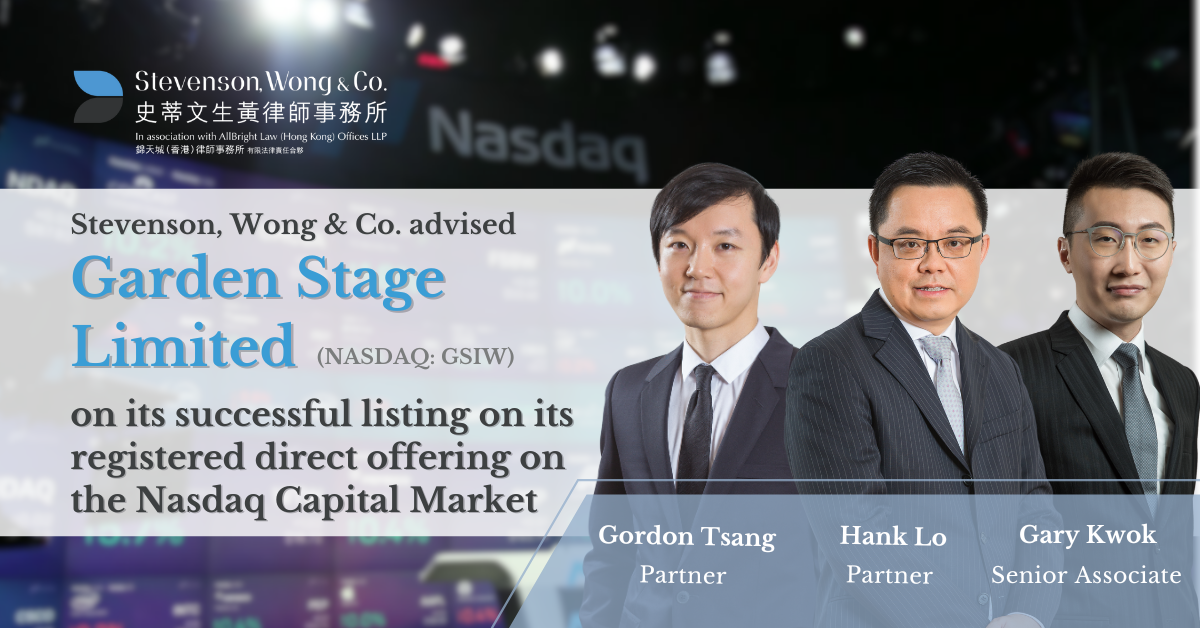
In addition to the successful listing of Garden Stage Limited (NASDAQ: GSIW) (“Garden Stage”) on the Nasdaq Capital Market on 1 December 2023, Stevenson, Wong & Co. acted as the Hong Kong legal advisers to Garden Stage in the closing of a registered direct offering of 35,553,820 Ordinary Shares and 2,862,525 Ordinary Shares issuable upon exercise of pre-funded warrants, priced at US$0.11 per share. The aggregate gross proceeds from the registered direct offering was US$4.26 million.
Garden Stage through its wholly-owned operating subsidiaries, are licensed to conduct Type 1(dealing in securities) regulated activities, Type 4 (Advising on Securities) regulated activities and Type 9 (Asset Management) regulated activities under the Securities and Future Ordinance. Those operating subsidiaries are Hong Kong-based financial services providers principally engaged in the provision of (i) placing and underwriting services; (ii) securities dealing and brokerage services; and (iii) asset management services.
Our Partners, Hank Lo, Gordon Tsang, and Senior Associate Gary Kwok, acted as the Hong Kong legal counsel for Garden Stage in the registered direct offering.
Please contact Hank Lo or Gordon Tsang for any enquiries or further information about this transaction.
 …
…
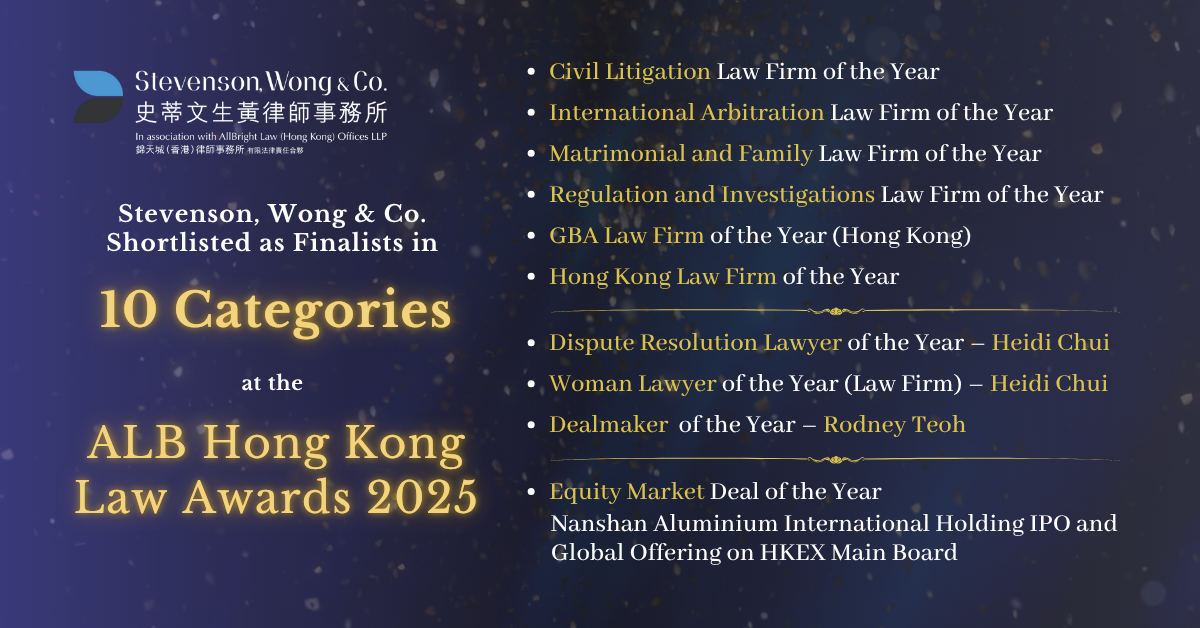
Asian Legal Business (ALB) has recently announced the nominees for the 2025 Hong Kong Law Awards. We are delighted to announce that Stevenson, Wong & Co. and two of our partners have been recognized for their expertise across various practice areas and have been shortlisted as finalists in 10 categories:
LAW FIRM CATEGORIES
INDIVIDUAL CATEGORIES
DEAL CATEGORIES
Nanshan Aluminium International Holding IPO and Global Offering on HKEX Main Board
The ALB Hong Kong Law Awards aim to honor law firms, lawyers, and in-house legal teams that have achieved exceptional success in the Hong Kong market over the past year. The awards ceremony will take place on September 12, 2025, in Hong Kong, where the final winners will be revealed.