Corporate Law Updates
Find out all about our firm’s latest Corporate Law Updates below. To learn more about any individual item, please contact us here.
Corporate Law Updates
Find out all about our firm’s latest Corporate Law Updates below. To learn more about any individual item, please contact us here.
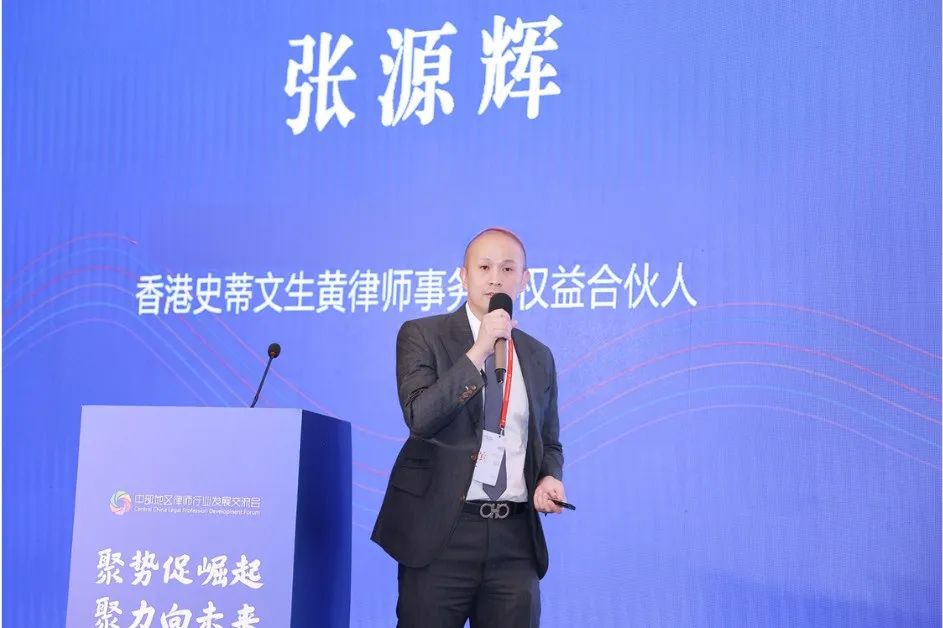
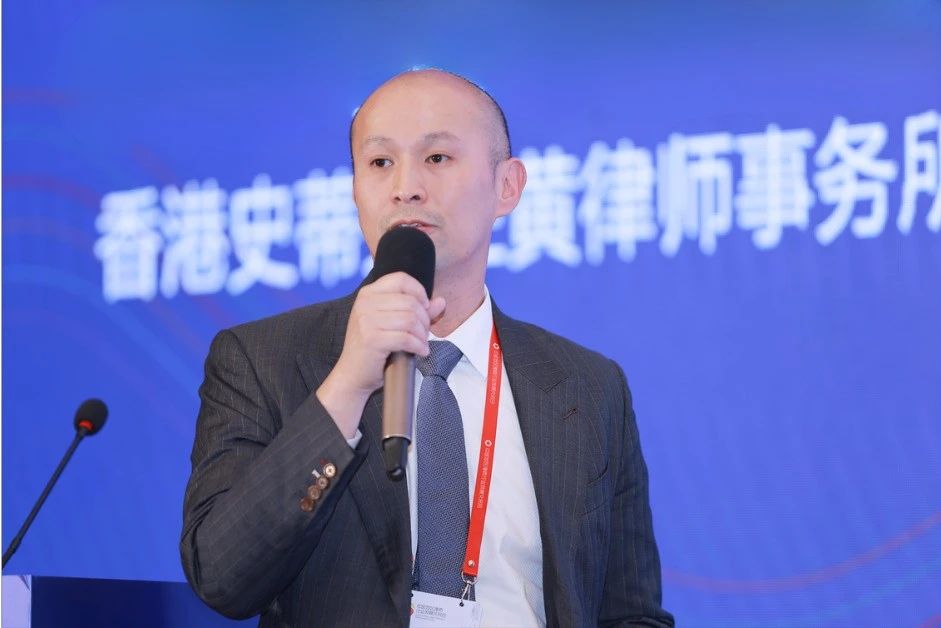
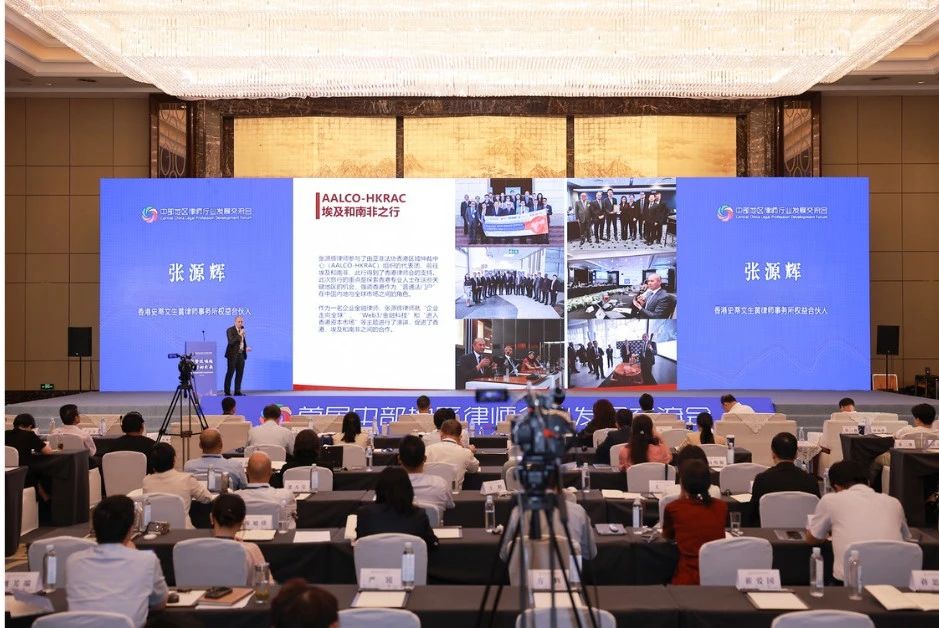
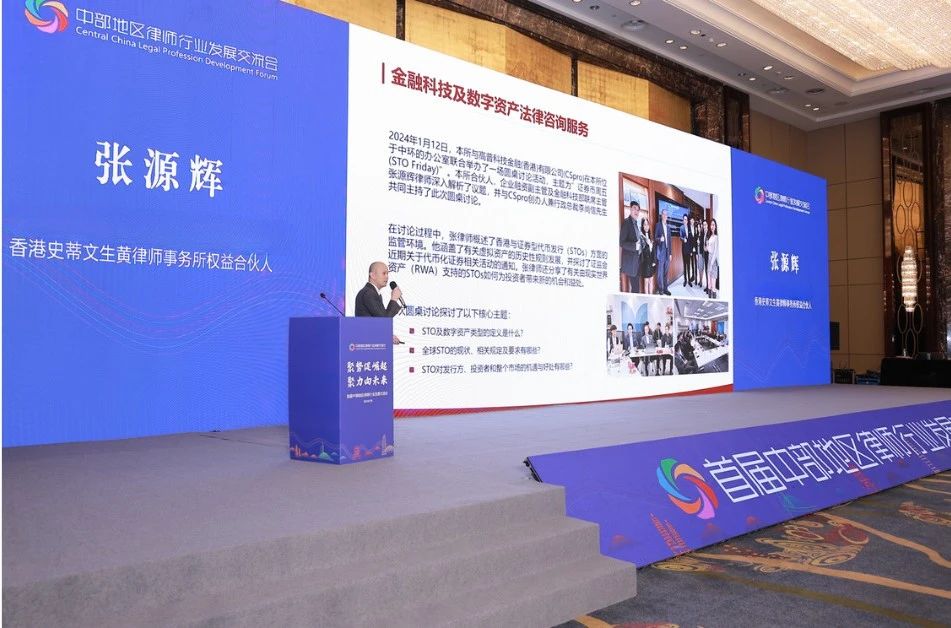
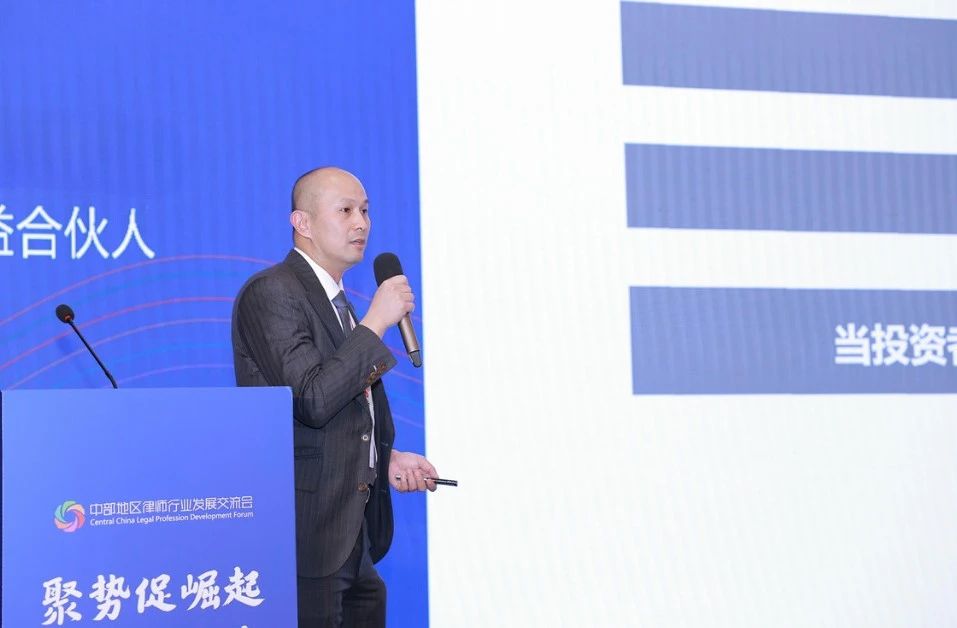
(中文) 2025年7月4日至5日﹐本所合伙人张源辉律师,受邀出席在安徽省合肥市举行的首届中部地区律师行业发展交流会,并作为演讲嘉宾分享专业见解。
 …
…
本次交流会由山西、江西、河南、湖北、湖南、安徽六省律师协会联合主办,安徽省律师协会承办,以“聚势促崛起,聚力向未来”为主题,吸引了中部地区六省律师协会负责人、专业委员会代表及律师同仁等200余人参会。安徽省司法厅党委书记、厅长罗建华,中华全国律师协会副会长蒋敏出席开幕式并致辞,安徽省司法厅党委委员、副厅长、一级巡视员、省律师行业党委书记张国安主持开幕式。
在“涉外法律服务”主题交流环节,张律师发表题为《中国企业赴港上市、出海攻略解读》的主题分享,深入探讨上市IPO、企业出海攻略、涉外律师担任的角色等热点议题,并结合实务经验提出建设性建议。
本次会议是中部六省律师行业首次以区域协同为目标的高规格交流活动,紧扣国家“中部崛起”的重大战略决策,聚力贡献服务中部地区崛起的行业智慧,为构建跨区域法律服务协作机制奠定了重要基础。
 …
…
Conclusions to IPO price discovery and open market reform proposals
Having considered the consultation responses with 1,253 respondents from all sectors, the Exchange will adopt the following key changes to the listing requirements:
Require an issuer to allocate at least 40% of its shares initially on offer in an IPO to its bookbuilding placing tranche.
Allow a new listing applicant to choose either Mechanism A or Mechanism B as its IPO offering mechanism:
| Initial allocation | Demand for shares in the public subscription tranche in number of times (x) the initial allocation | |||
| ≥15x to <50x | ≥50x to <100x | ≥100x | ||
| Percentage of offer shares allocated to the public subscription tranche | 5% | 15% | 25% | 35% |
Require issuers to meet the following minimum public float and free float requirements at the time of listing:
| Initial public float thresholds | Initial free float thresholds | |
| Issuers (not incorporated in Mainland China) with a single class of shares | Tiered percentage thresholds ranging between 10% and 25% depending on the market value of the relevant class of shares at listing | 10%, with a market value of HK$50 million (GEM: HK$15 million); OR HK$600 million in market value |
| H-share issuers with no other listed shares | ||
| A+H issuers | 10%; OR
HK$3 billion in market value |
5% with a market value of HK$50 million (GEM: HK$15 million); OR HK$600 million in market value |
The new requirements will come into effect on 4 August 2025 and apply to all issuers and all new applicants with listing documents published on or after that date.
Further consultation on ongoing public float proposals
In response to market feedback on the appropriate ongoing public float requirements, the Exchange is also launching a further consultation on detailed proposals on those requirements.
| Current requirement |
Proposed requirement | |
| Ongoing public float thresholds | ||
| · Issuers (not incorporated in Mainland China) with a single class of shares | Maintain at all times the percentage of public float prescribed at listing, i.e. 25% or any lower percentage prescribed at listing (the Initial Prescribed Threshold) | Maintain at all times: 1. The Initial Prescribed Threshold; OR 2. the Alternative Threshold of HK$1 billion in value and 10% public float |
| · H-share issuers with no other listed shares | ||
| · A+H issuers | H shares in public hands must have HK$1 billion in value OR 5% public float | |
| Public float shortfall | Breach of Listing Rules if public float falls below the applicable ongoing public float thresholds | |
| Consequence of public float shortfall | ||
| · Obligations upon breach | Obliged to restore public float and publish announcement | Obliged to restore public float and publish announcement; AND Restricted from taking actions that may further lower public float percentage |
| · Trading suspension | Exchange reserves right to direct trading suspension in case of a public float shortfall | No suspension solely due to a public float shortfall |
| · Delisting mechanism | Delisting if trading is suspended for 18 months (GEM: 12 months) | Impose stock marker if issuer has a significant public float shortfall; AND
Delisting if issuer fails to restore public float within 18 months (GEM: 12 months) |
| Public float reporting | Confirm public float sufficiency in annual reports | Confirm public float sufficiency in monthly returns and annual reports, with additional actual public float disclosure requirements |
The public comment period ends on 1 October 2025.
Please contact our Partner Mr. Rodney Teoh for any enquiries or further information.
This news update is for information purposes only. Its content does not constitute legal advice and should not be treated as such. Stevenson, Wong & Co. will not be liable to you in respect of any special, indirect or consequential loss or damage arising from or in connection with any decision made, action or inaction taken in reliance on the information set out herein.
 …
…
The Hong Kong[1] Government has confirmed that the Stablecoins Ordinance will take effect on 1 August 2025,[2] requiring issuers of fiat-referenced stablecoins in Hong Kong or those pegged to the Hong Kong dollar (“HKD”) to be licensed by the Hong Kong Monetary Authority (“HKMA”).
Overview of the Stablecoins Ordinance
The Stablecoins Ordinance aligns Hong Kong’s virtual assets regulatory framework with international standards under the “same activity, same risks, same regulation” principle.
The Stablecoins Ordinance sets out a regulatory framework for activities relating to “specified stablecoins” (“Specified Stablecoins”). Specified Stablecoins, as a type of virtual assets used as a medium of exchange, maintain a stable value with reference to one or more official currencies, such as the HKD, or a digital representation of value.[3] Issuers of Specified Stablecoins in Hong Kong must obtain a licence from the HKMA and continue to comply with the comprehensive requirements.
Key Provisions of the Licensing Regime
The Stablecoins Ordinance introduces a comprehensive regulatory framework for the issuance, offering, and marketing of Specified Stablecoins. Below are the key provisions: –
Licensing Requirement
Any person engaging in the following activities must obtain a license from the HKMA: –
Requirements of Licensed Issuers
To obtain a licence from the HKMA for issuing Specified Stablecoins, applicants must satisfy, including but not limited to, the following minimum criteria: – [4]
Offering Restrictions The Stablecoins Ordinance regulates not only the issuance of Specified Stablecoins, but also who can offer Specified Stablecoins, including but not limited to: –
Under the new regime, Specified Stablecoins issued by HKMA-licensed issuers can be offered to retail investors; others are restricted to professional investors or exempted persons designated by the HKMA or Financial Secretary. Transitional Arrangements Existing stablecoin issuers (“Issuers”) have a three-month period from 1 August 2025 (“Effective Date”) to apply for a licence, during which they may continue regulated stablecoin activities without immediate penalty. Issuers meeting the following conditions may receive a six-month extension: –
Issuers failing to apply within three months will enter a one-month wind-down period starting three months after the Effective Date. Issuers whose applications are rejected or withdrawn will enter a one-month wind-down period from the date of rejection or withdrawal, with the option to apply for an extension.AML/CFT Requirements On 26 May 2025, the HKMA released a consultation paper outlining proposed AML/CFT requirements for regulated stablecoin activities. Key proposals include, but are not limited to: –
Feedback on these proposals is due by 30 June 2025.Implications for the Virtual Asset Industry Enhanced Investor Confidence: The stringent licensing requirements, including reserve asset segregation and AML/CFT compliance, provide greater assurance to investors, reducing the risk of fraud and financial instability.
Conclusion The Stablecoins Ordinance, set to take effect on 1 August 2025, represents a significant step forward in Hong Kong’s digital finance journey. By balancing innovation with robust regulation, the Stablecoins Ordinance enhances market integrity, protects consumers, and positions Hong Kong as a competitive player in the global virtual asset landscape. Collaboration between regulators, issuers, and industry stakeholders will be essential to ensure a smooth transition and sustainable growth in Hong Kong’s stablecoin ecosystem.For issuers, compliance with the Stablecoins Ordinance will require significant investment in legal, operational, and financial systems, especially regarding reserve asset management and AML/CFT controls. While this may raise barriers to entry for smaller or less well-capitalised firms, it is expected to enhance overall market credibility and attract established financial institutions and global fintech companies to the Hong Kong market.For investors and users, the new licensing and supervisory requirements are designed to boost confidence in the safety and reliability of stablecoins available in Hong Kong, particularly for retail users who will have access only to products issued by HKMA-licensed entities.Please contact our Partner Mr. Rodney Teoh for any enquiries or further information.This news update is for information purposes only. Its content does not constitute legal advice and should not be treated as such. Stevenson, Wong & Co. will not be liable to you in respect of any special, indirect or consequential loss or damage arising from or in connection with any decision made, action or inaction taken in reliance on the information set out herein.[1] In this article, “Hong Kong” means the “Hong Kong Special Administrative Region of the People’s Republic of China”.[2] On 21 May 2025, the Legislative Council of Hong Kong passed the Stablecoins Bill; “Stablecoins laws effective Aug 1”.[3] Section 4 of the Stablecoins Ordinance[4] Schedule 2 Part 2 of the Stablecoins Ordinance
| Requirement | Details |
| Corporate Structure | The applicant must be a company, or an authorized institution incorporated outside Hong Kong. |
| Financial Resources | The applicant must have a minimum paid-up share capital of HK$ 25 million or its equivalent, and adequate liquid assets. |
| Reserve Assets
|
The applicant must establish an effective stabilisation mechanism for its Specified Stablecoins, maintaining a pool of reserve assets at least equal to the par value of the stablecoins in circulation, which is segregated from any other pool of reserve assets, ensuring high quality and liquidity, and allowing timely redemptions at par value without excessive fees. |
| Redemption | Process redemption requests of the Specified Stablecoins by holders at par value without undue delay and without having to face burdensome conditions and fees. |
| AML/CFT Compliance | Implement effective anti-money laundering and counter-terrorist financing (“AML/CFT”) systems and controls. |
| Disclosure and Auditing | Provide sufficient and timely disclosures to the public regarding reserve asset management policies, risk assessments, composition, and market value, and undergo regular independent verification and audits. |
| Fitness and Propriety | Ensure key personnel, including controllers, chief executives, directors, and stablecoin managers, meet the HKMA’s fitness and propriety standards. |
| Local Presence | Maintain a physical presence in Hong Kong for regulatory oversight. |
Please contact our Partner Mr. Rodney Teoh for any enquiries or further information.
This news update is for information purposes only. Its content does not constitute legal advice and should not be treated as such. Stevenson, Wong & Co. will not be liable to you in respect of any special, indirect or consequential loss or damage arising from or in connection with any decision made, action or inaction taken in reliance on the information set out herein.
 …
…
On 14 May 2025, the Legislative Council of Hong Kong passed the Companies (Amendment) (No. 2) Bill 2024, introducing the re-domiciliation regime (“Re-domiciliation Regime”), effective from 23 May 2025. Governed by the Companies (Amendment) (No. 2) Ordinance 2025, the Re-domiciliation Regime enables non-Hong Kong incorporated companies to transfer their place of incorporation to Hong Kong while preserving their legal identity and ensuring uninterrupted business operations.
The Re-domiciliation Regime enables eligible non-Hong Kong companies to register as “re-domiciled companies” in Hong Kong under section 820C(1) of the Companies Ordinance (Cap. 622) (“CO”). Re-domiciliation ensures that companies retain their existing property, rights, obligations, and ongoing contractual and legal processes without disruption. Notably, the Re-domiciliation Regime does not impose an economic substance test, making it accessible to businesses of varying sizes and sectors.
Key Eligibility Criteria
The following table summarizes the key eligibility criteria for the applicants of the Re-domiciliation Regime (“Applicants”): –
| Criteria | Details |
| Type of Company
(section 820C(1) of the CO) |
Eligible company types include:
· Private companies limited by shares; · Public companies limited by shares; · Private unlimited companies with share capital; or · Public unlimited companies with share capital. The company type in the original jurisdiction will be the same or substantially similar to the proposed type in Hong Kong. |
| Compliance with Original Jurisdiction Laws
(Section 4(1) (c) of Schedule 6A to the CO) |
The law of the Applicant’s place of incorporation must permit re-domiciliation to another jurisdiction. |
| Solvency
(Sections 2(1)(f)(ix) to (xii) and 2(2)(c) to (g) & (o) of Schedule 6C to the CO) |
The Applicant must provide a certificate signed by a director confirming that the Applicant:
· is not in liquidation; · has no ongoing or pending proceedings for liquidation against the Applicant; · is able to pay its debts due within 12 months beginning on the application date; and · has not resolved to wind itself up or liquidate. |
| Good Faith
(Section 2(2)(n) of Schedule 6C to the CO) |
The Applicant must not intend to defraud its existing creditors or engage in unlawful activities or purposes contrary to public interest. |
| Shareholder Approval
(Sections 4(1)(d) to 4(1)(f) and 4(3) to 4(4) of Schedule 6A and sections 1(3), 1(4) and 2(1)(f)(viii) of Schedule 6C to the CO) |
Consent of the Applicant’s members is required for the re-domiciliation to Hong Kong. |
Application Documents and Fees
Applicants must submit, including but not limited to, the following documents to the Registrar of Companies: –
The application fee will be HK$1,030 for electronic submissions and HK$1,145 for paper submissions, while the fees for registering as a re-domiciled company are HK$5,020 for electronic forms and HK$5,580 for paper forms.
Post-Re-domiciliation Obligations
Once re-domiciled, companies must fulfil, including but not limited to, the following obligations to maintain compliance: –
Tax and Legal Implications
Section 820D(4) of the CO clarifies that re-domiciliation does not constitute a transfer of assets or alter the beneficial ownership of assets, ensuring no impact on tax obligations in the original jurisdiction or Hong Kong. Re-domiciled companies will be subjected to profits tax on Hong Kong-sourced profits from local business activities.
Additionally, the Re-domiciliation Regime addresses the following tax and legal considerations to facilitate a smooth transition: –
Conclusion
The Re-domiciliation Regime, effective 23 May 2025, strengthens Hong Kong’s position as a global business and financial hub. By offering tax credits, seamless business continuity, and robust regulatory support, the regime provides an attractive framework for companies seeking to establish or expand their presence in Asia.
Companies considering re-domiciliation should, however, carefully assess the implications on their tax residency, regulatory licensing, and contractual arrangements. While the new framework ensures legal continuity, practical considerations such as stakeholder communications, regulatory approvals, and exit requirements from the original jurisdiction may require careful planning and execution.
Please contact our Partner Mr. Rodney Teoh for any enquiries or further information.
This news update is for information purposes only. Its content does not constitute legal advice and should not be treated as such. Stevenson, Wong & Co. will not be liable to you in respect of any special, indirect or consequential loss or damage arising from or in connection with any decision made, action or inaction taken in reliance on the information set out herein.
 …
…
On 6 May 2025, the Securities and Futures Commission (“SFC”) and The Stock Exchange of Hong Kong Limited (“the Exchange”), a wholly-owned subsidiary of Hong Kong Exchanges and Clearing Limited (“HKEX”), jointly announced the launch of the Technology Enterprises Channel (“TECH”).[1] TECH facilitates new listing applications from Specialist Technology Companies (as defined under Chapter 18C of the Rules Governing the Listing of Securities on The Stock Exchange of Hong Kong Limited (the “Listing Rules”)) and Biotech Companies (as defined under Chapter 18A of the Listing Rules). The initiative provides enhanced support, a confidential filing option, and streamlined pathways for companies with weighted voting rights (“WVR”) structures.
The Technology Enterprises Channel
TECH is tailored to support Specialist Technology Companies and Biotech Companies, which are often early-stage or pre-revenue entities with unique operational and regulatory challenges. To streamline the listing process, the Exchange has introduced the following support measures: –
These measures enhance efficiency and transparency, particularly for innovative-sector companies navigating complex regulatory hurdles.
Confidential Filing Option
Recognising the heightened risks associated with premature disclosure of sensitive information, such as operational strategies or proprietary technologies, the Exchange has introduced a confidential filing option for Specialist Technology Companies and Biotech Companies.
Under this option, companies listing under Chapters 18C and 18A of the Listing Rules may submit their application proofs confidentially, as outlined in Chapter 6.4 of the Guide. This measure is particularly significant for early-stage companies that have not yet commercially launched their products, as it helps mitigate risks of competitive harm and reduces market speculation during the listing process. The confidential filing option has been available for applications filed since 6 May 2025.
Support for Weighted Voting Rights Structures
The announcement includes updates to the Guide that benefit companies seeking to list with a WVR structure, which allows certain shareholders to hold shares with enhanced voting power.[2]
Specialist Technology Companies and Biotech Companies that fully meet the requirements under Chapters 18C and 18A of the Listing Rules, respectively, are presumed to have satisfied the innovative company requirements and the external validation requirement for listing with a WVR structure under Chapter 8A of the Listing Rules.[3] This presumption, detailed in Chapters 2.2, 2.3, and 2.5 of the Guide, simplifies the listing process for these companies, enabling these companies to maintain control while accessing public capital markets. However, these companies remain subject to all other applicable requirements under Chapter 8A of the Listing Rules.
Conclusion
The launch of TECH on 6 May 2025 marks a pivotal step in Hong Kong’s strategy to solidify its position as a premier hub for technology and biotech listings. By offering tailored guidance, confidential filing options, and simplified requirements for WVR structures, HKEX and the SFC have created a more accessible and supportive environment for innovative companies. This initiative not only facilitates the growth of the technology and biotech sectors but also enhances the diversity, competitiveness, and resilience of Hong Kong’s capital market, benefiting both issuers and investors. As global demand for public listings in these sectors grows, TECH positions Hong Kong as a forward-thinking hub for emerging enterprises.
Please contact our Partner Mr. Rodney Teoh for any enquiries or further information.
This news update is for information purposes only. Its content does not constitute legal advice and should not be treated as such. Stevenson, Wong & Co. will not be liable to you in respect of any special, indirect or consequential loss or damage arising from or in connection with any decision made, action or inaction taken in reliance on the information set out herein.
[1] “Joint Announcement on Launch of Technology Enterprises Channel” by HKEX dated 6 May 2025.
[2] Please refer to Chapter 8A of the Listing Rules for more details on WVR structures.
[3] Please refer to HKEX Guidance Letter HKEX-GL93-18 for more details on the requirements for listing with a WVR structure.
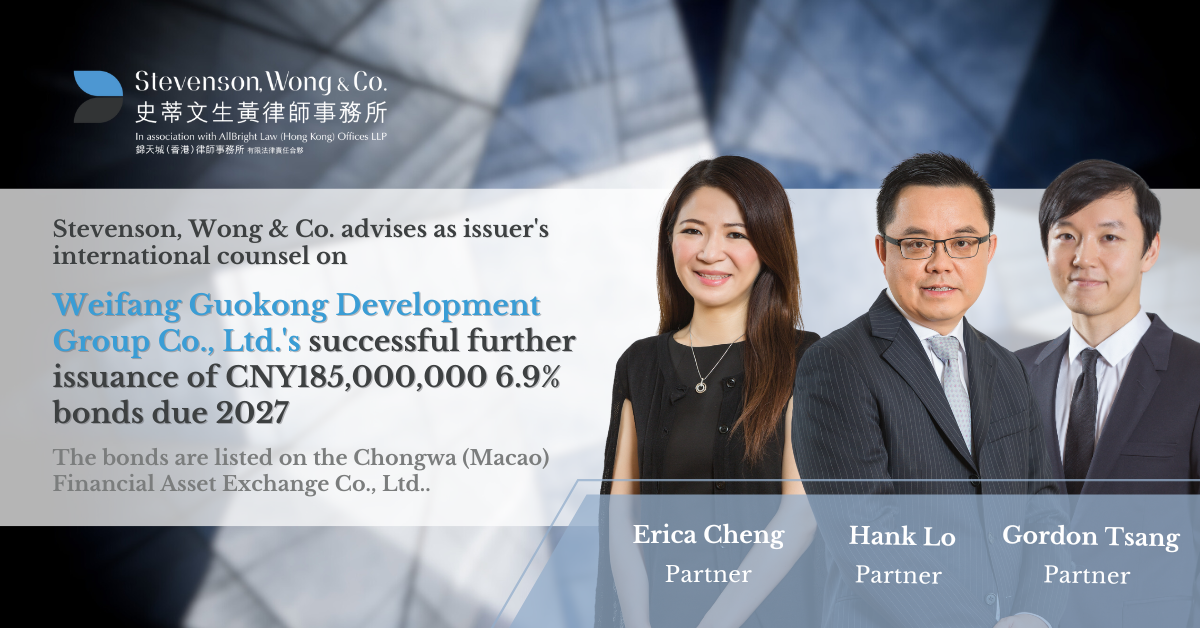
In addition to assisting in the successful issuance of bonds in an aggregate principal amount of approximately CNY629,280,600 by Weifang Guokong Development Group Co., Ltd. (Weifang GuoKong), Stevenson, Wong & Co. acted as international counsel to the issuer in connection with Weifang Guokong’s successful further issue of CNY185,000,000 6.9% bonds due 2027, which were consolidated and formed a single series with the CNY481,000,000 6.9% bonds due 2027 issued by Weifang GuoKong on 7 March 2025.. These bonds are listed on the Chongwa (Macao) Financial Asset Exchange Co., Ltd.
 …
…
The placing agents of the further issue include Harmonia Capital Limited, CNCB Capital, Donghai International, CMBC Capital, Huaan Securities (Hong Kong), ICBC International, Pulun International, Soochow Securities (Hong Kong), Target Securities, TF International and Zhongtai International.
Weifang Guokong is mainly responsible for the construction of infrastructure and promoting the strategic economic and social development in Weifang City. The group is mainly engaged in three principal business segments: infrastructure construction, road maintenance and commodities trading.
Our team comprised our partners Hank Lo, Erica Cheng or Gordon Tsang, senior associate Anthony Wong and trainee solicitor Selina Tsang.
Please contact Hank Lo, Erica Cheng or Gordon Tsang for any enquiries or further information about this transaction.