Transaction
Find out all about our firm’s latest transaction below. To learn more about any individual item, please contact us here.
Transaction
Find out all about our firm’s latest transaction below. To learn more about any individual item, please contact us here.
 …
…
On 20 April 2026, the Hong Kong Government and the Supreme People’s Court signed a new Arrangement on Mutual Service of Judicial Documents in Civil and Commercial Proceedings (the “New Arrangement”), marking an important step towards modernising cross-border judicial cooperation.
The New Arrangement will come into effect upon completion of the relevant legislative procedures in Hong Kong.
Background
Since 1999, cross‑border service between Hong Kong and the Mainland has operated under a court‑to‑court entrustment mechanism, under which Hong Kong courts transmit judicial documents to their Mainland counterparts for onward service, and vice versa.
Over time, requests for mutual service of judicial documents have surged alongside the growth in cross-boundary interactions. Against this backdrop, the following challenges have become apparent:
Expanded and Multi-Route Model of Service
Under the New Arrangement, service is no longer limited to court-to-court entrustment. The following modes of service are also recognised:
These modes may be used in parallel. Service may be regarded as effective based on the earliest successful method, which significantly enhances efficiency.
It should be noted that judicial documents to be served in the Mainland must be in the Chinese language. Where the documents are not in Chinese, a Chinese translation must be provided.
Where these methods prove unsuccessful, service may be effected by public announcement. In such cases:
Proof of Service
Proof that a document has been received may take various forms, including:
Importantly, service may also be deemed effective where the recipient has referred to the served judicial documents before the adjudicating court or has acted in accordance with those contents.
Relevance to Divorce Proceedings in Hong Kong involving parties in the Mainland
The New Arrangement is expected to have practical significance in divorce proceedings involving the Mainland.
Whilst it is not necessary to seek prior leave from the Hong Kong courts to serve divorce petitions and other documents in matrimonial proceedings out of jurisdiction, Order 11 of the Rules of the High Court must be complied with. Proceedings may be delayed if the petition or other documents cannot be properly brought to the attention of the respondent or other interested third parties in the Mainland.
The New Arrangement is therefore expected to facilitate the cross-border service of divorce petitions between Hong Kong and the Mainland, enhancing both efficiency and procedural flexibility, particularly in cases involving non‑cooperation or uncertainty as to the whereabouts of the respondent or other interested third parties.
Please contact our Partners, Wendy Lam and Calvin Lo, for any enquiries or further information.
This article is for information purposes only. Its content does not constitute legal advice and should not be treated as such. Stevenson, Wong & Co. will not be liable to you in respect of any special, indirect or consequential loss or damage arising from or in connection with any decision made, action or inaction taken in reliance on the information set out herein.
 …
…
On 26 May 2026, the Financial Services and the Treasury Bureau (“FSTB”) and the Securities and Futures Commission (“SFC”) published their consultation conclusions on the legislative proposal to regulate virtual asset (VA) advisory and management service providers in Hong Kong.
With the overarching goal of introducing a bill into the Legislative Council in 2026 under the Anti-Money Laundering and Counter-Terrorist Financing Ordinance (Cap. 615) (“AMLO”), these new regimes complete a critical node in Hong Kong’s digital asset ecosystem. However, beneath the surface of broad market support lies a shifting regulatory landscape that demands immediate attention, particularly for traditional asset managers who may have previously considered themselves outside the SFC’s virtual asset crosshairs.
Adhering strictly to the “same activity, same risks, same regulation” principle, the SFC is establishing a framework that mirrors the traditional Type 4 (advising on securities) and Type 9 (asset management) regulated activities under the Securities and Futures Ordinance (“SFO”). For both existing VA-native firms and traditional asset managers, the margin for error has just been drastically reduced.
The “no de minimis” trap for traditional Type 9 asset managers
Perhaps the most commercially significant takeaway from the consultation conclusions is the explicit confirmation that the regulators will not set a de minimis threshold for the VA Management Regime.
Historically, traditional Type 9 asset managers could manage portfolios with limited VA exposure (below the established de minimis threshold) without triggering the full weight of VA-specific licensing conditions. That safe harbour is now gone. Intermediaries licensed by or registered with the SFC to carry on Type 9 regulated activities under the SFO, which currently manage portfolios with VA exposure below the de minimis threshold, will be required to obtain a licence or registration under the new VA Management Regime.
Crucially, they will be subject to the exact same regulatory standards as full-scale VA fund managers. For traditional funds that have dabbled in tokenised assets or hold small crypto allocations, this triggers an immediate need for comprehensive gap analyses to ensure their current AML/CFT frameworks, valuation policies, and risk management systems meet the exacting standards of the AMLO.
The “hard stop” threat: no deeming arrangements
The regulators are playing hardball regarding the transition. The FSTB and SFC have confirmed they do not plan to grant a “deeming arrangement” (grandfathering) to existing VA advisory or VA management service providers. The regimes will take full effect on the commencement date of the relevant statutory provisions.
The consequences of inaction are severe. The regulators have explicitly warned that providers who do not contact the SFC or the Hong Kong Monetary Authority (HKMA) for pre-application may suffer undue business disruptions, as they will have to stop operations on the commencement date. Firms must take appropriate steps as soon as possible to ensure proper transition, or wind down their VA management business in an orderly manner.
The silver lining: expedited fast track and early engagement
To mitigate market disruption, the SFC will introduce an expedited approval process for licensed corporations and registered institutions currently providing VA advisory and VA management services.
The regulators strongly encourage all industry stakeholders to reach out as soon as possible to initiate pre-application processes. Early engagement will allow firms to walk through the licensing process and help ensure their business models align with regulatory expectations.
Thematic inspections: the SFC’s escalating enforcement
This legislative overhaul does not exist in a vacuum; it coincides with an increasingly aggressive posture from the SFC regarding general asset management compliance. In October 2024, the SFC issued a circular flagging various deficiencies and substandard conduct identified during its supervision of licensed corporations managing private funds.
The SFC stated it will commence a thematic on-site inspection of asset managers managing private funds and will not hesitate to take decisive action against asset managers and their management, including Managers-In-Charge and Responsible Officers, for failures to discharge supervisory duties.
Because the new VA regimes operate on the “same activity, same risks, same regulation” principle, prospective VA managers must anticipate this exact level of scrutiny. Furthermore, VA management service providers who take a particular VA into custody on behalf of funds under their management (self-custody) will be subject to robust self-custody requirements.
So, what should asset managers do now?
The transition of VA advisory and management into the AMLO framework means that institutional-grade compliance and rigorous anti-money laundering controls are no longer optional. Instead, they are prerequisites for survival.
Stevenson, Wong & Co.’s Regulatory and Litigation practice is uniquely positioned to help your firm navigate this critical juncture. We routinely advise market-leading financial institutions, family offices, and virtual asset service providers on complex regulatory structuring and SFC enforcement matters.
Our team can assist you with:
The window to secure a seamless transition is narrowing. Proactive engagement is the only viable strategy to protect your operations and capitalize on Hong Kong’s expanding digital asset ecosystem.
If you have any questions or would like to understand how these regulatory changes may impact your business or compliance obligations, please reach out to our Partner Kenneth Leung.
This article is for information purposes only. Its content does not constitute legal advice and should not be treated as such. Stevenson, Wong & Co. will not be liable to you in respect of any special, indirect or consequential loss or damage arising from or in connection with any decision made, action or inaction taken in reliance on the information set out herein.
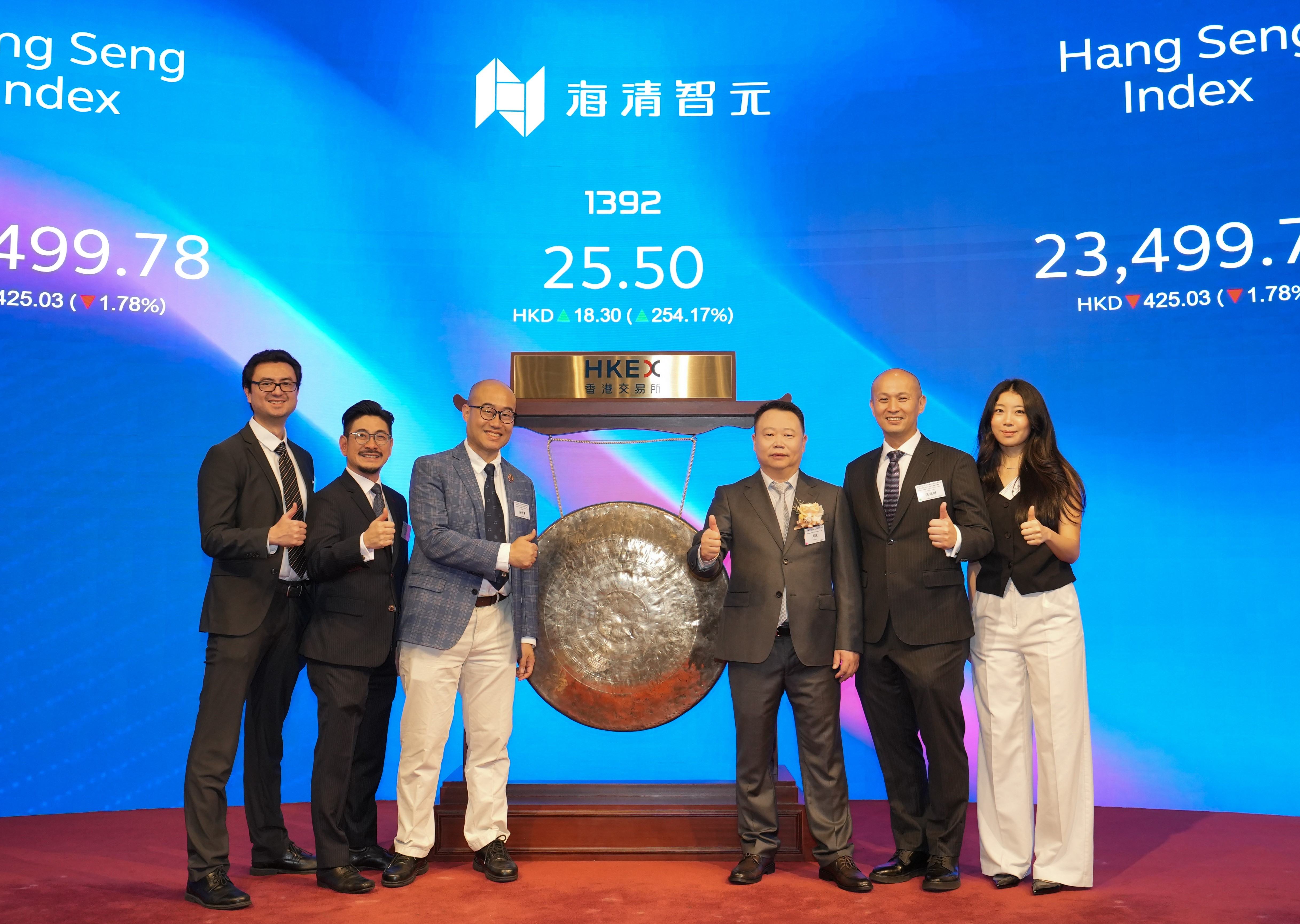
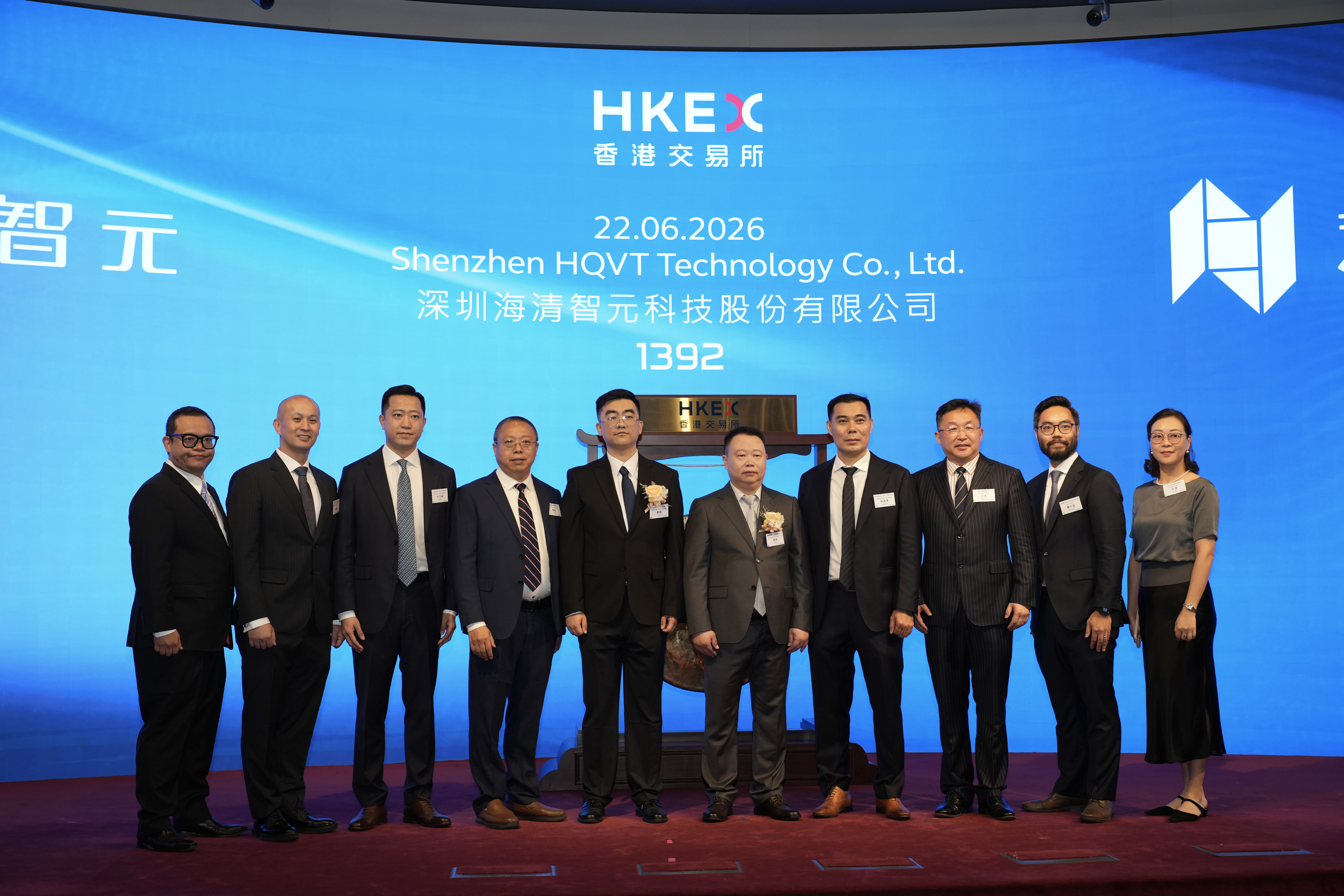
Our partner Rodney Teoh (2nd from the right) , senior associate Alroy Ng (3rd from the left), associates Clement Lai (2nd from the left), Xavier Wong (1st from the left) and trainee solicitor Christie Chan (1st from the right).
…
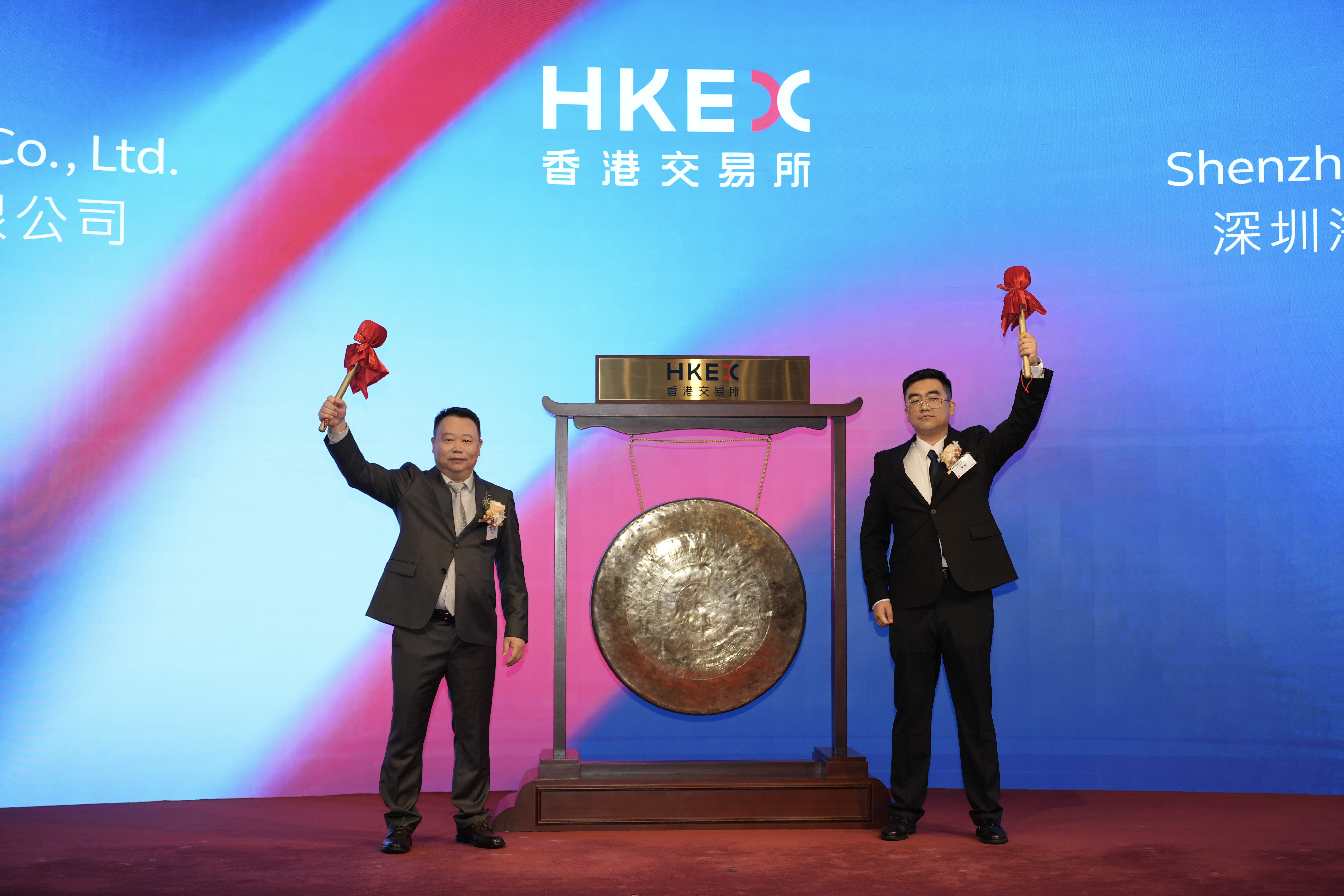
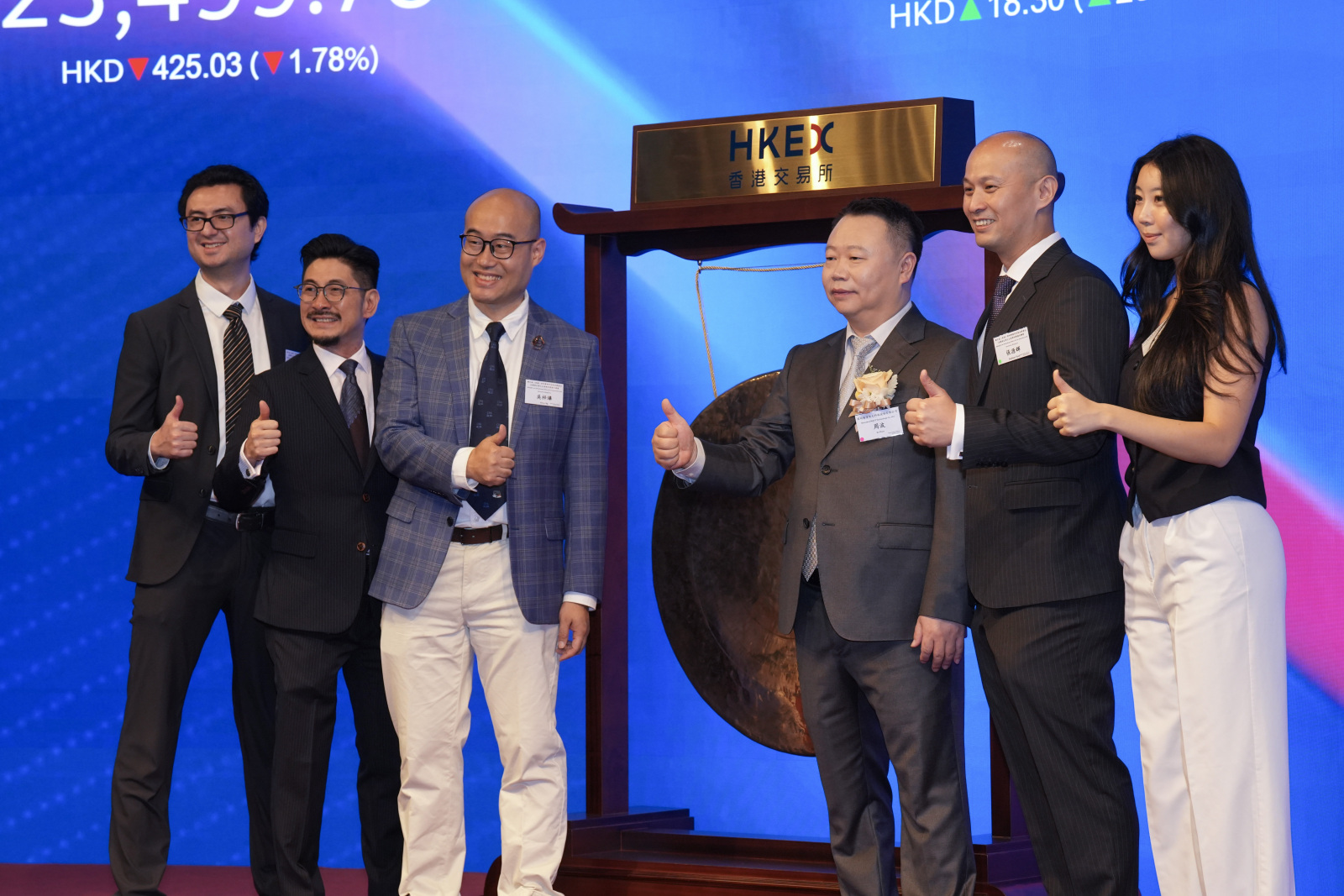
Stevenson, Wong & Co. (in association with AllBright Law (Hong Kong) Offices LLP) acted as the Hong Kong legal advisers to Shenzhen HQVT Technology Co., Ltd. (1392.HK) (“Shenzhen HQVT Technology”) in its successful listing on the Main Board of The Stock Exchange of Hong Kong Limited (the “Stock Exchange”).
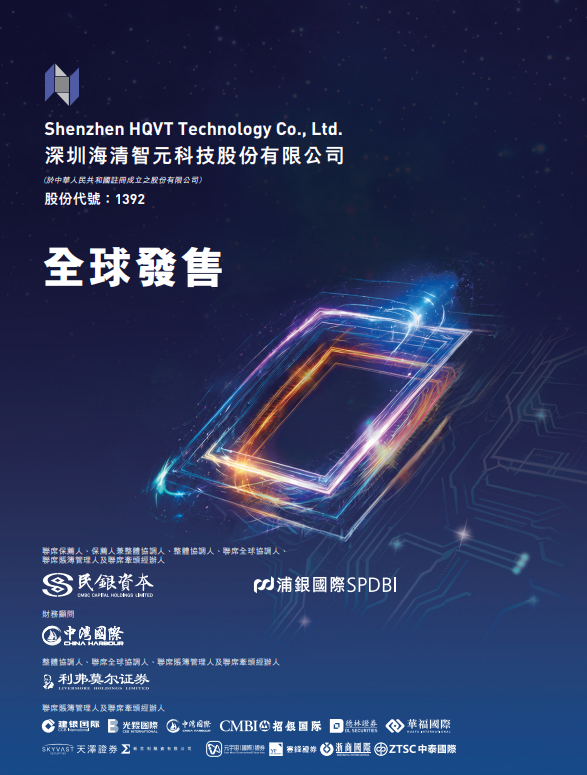
The shares of Shenzhen HQVT Technology were listed on the Stock Exchange on 22 June 2026. Shenzhen HQVT Technology offered a total of 85,162,500 H shares, among which 8,516,500 H shares and 76,646,000 H shares were offered under the Hong Kong public offering and the international placing, respectively. The market capitalisation of the Company based on an offer price was HK$7.20 per share was HK$5,574.3 million. The gross proceeds from the global offering amounted to approximately HK$613.17 million.
Shenzhen HQVT Technology and its subsidiaries (the “Group”) are a leading multispectral AI technology enterprise in China. Since its inception, the Group leverages proprietary technology in multispectral perception and Al algorithms, to offer products and services designed to detect both visible and invisible spectral information to human eyes. The Group’s solutions deliver enhanced perception and safety monitoring, providing additional information decisions for multi-scenario safety and intelligent perception purposes for over 2,500 diverse customers who are mainly engaged in business related to software and information technology services, electronic products, information data centres (IDCs), intelligent driving systems, telecommunication operators, internet-of-things (IoT) system integration, and construction.
The joint sponsors of the listing were CMBC International Capital Limited and SPDB International Capital Limited. The overall coordinators were CMBC Securities Company Limited, SPDB International Capital Limited and Livermore Holdings Limited.
Our team was led by our partner Rodney Teoh, supported by team members including Alroy Ng (senior associate), Clement Lai (associate), Xavier Wong (associate) and Christie Chan (trainee solicitor).
Please contact our Rodney Teoh for any enquiries or further information.
 …
…
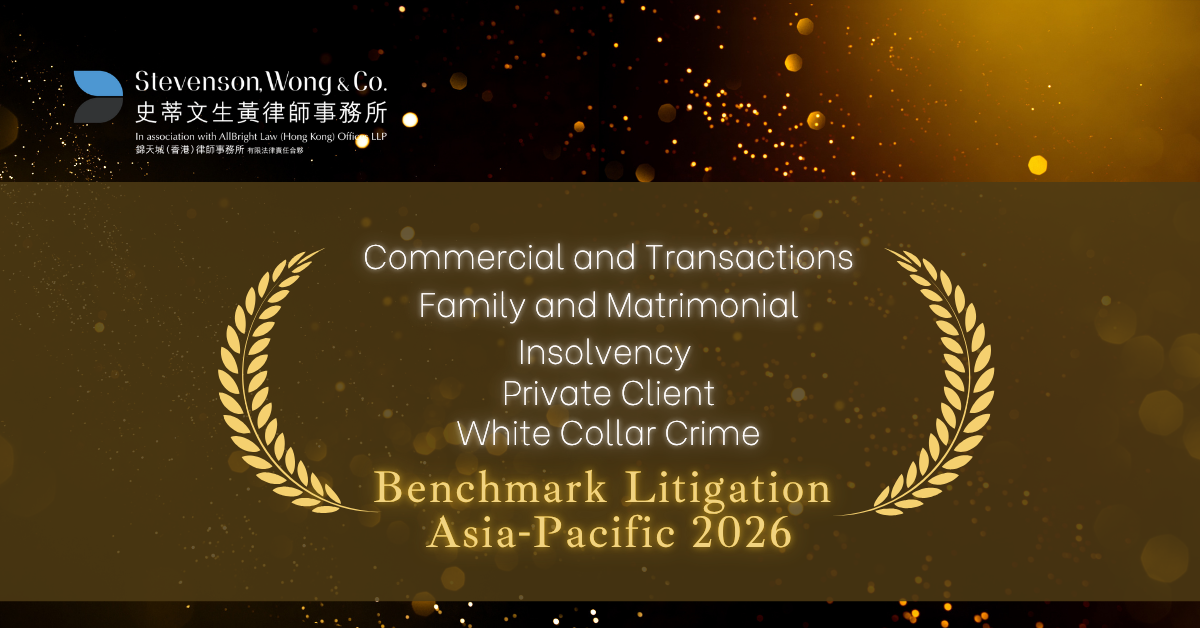
Stevenson, Wong & Co. is pleased to announce that the firm has once again been recognised in the Benchmark Litigation Asia-Pacific 2026 rankings, reflecting our continued strength in litigation and dispute resolution.
In this year’s edition, the firm has been ranked in the following five practice areas:
This recognition highlights the breadth of our disputes practice and the firm’s experience in advising on a wide range of contentious matters, including commercial disputes, insolvency-related proceedings, regulatory and white-collar crime matters, and private client disputes.
As a Hong Kong law firm with substantial local experience and cross-border capabilities, Stevenson, Wong & Co. remains committed to delivering practical, strategic and client-focused legal solutions to corporations, individuals, families and private clients.
About Benchmark Litigation
Benchmark Litigation is an international legal ranking guide dedicated to litigation and dispute resolution. Its Asia-Pacific rankings are based on independent research, including market interviews, client feedback, peer review and analysis of recent casework.
We would like to thank our clients and peers for their continued trust and support.
Please contact our Partners Willy Cheng, Heidi Chui, Dominic Lau, Katy Lai, Rainbow Ip, Michael Lau or Kenneth Leung for any enquiries or further information.
To view the full list of rankings, please click here.
 …
…
Stevenson, Wong & Co. is pleased to announce that the firm has once again been recognised in Benchmark Litigation Asia-Pacific 2025, one of the leading guides to litigation and dispute resolution firms and practitioners across the region.
In the 2025 edition, our firm has been ranked in the following Hong Kong SAR practice areas:
This continued recognition reflects the strength and depth of our dispute resolution practice, as well as our team’s experience in handling a broad range of contentious matters for individuals, families, private clients and corporate clients.
About Benchmark Litigation
Benchmark Litigation is a specialist legal ranking publication focused on litigation and dispute resolution. Its Asia-Pacific rankings are based on independent research, including market analysis, interviews with litigators, arbitrators and dispute resolution specialists, client feedback, peer review, and assessment of recent casework.
We are grateful to our clients and peers for their continued support and recognition.
Please contact our Partners Willy Cheng, Heidi Chui or Dominic Lau for any enquiries or further information.
To view the full list of rankings, please click here.
 …
…
If you have been following the financial news, you might have noticed that the legal walls are closing in on Andrew Left, the founder of Citron Research.
On 1 June 2026, a federal jury in Los Angeles convicted the 55-year-old activist short-seller on 13 of 17 counts of securities fraud. Left faces a theoretical maximum of decades in prison at his upcoming sentencing in August.
Left’s downfall offers a perfect moment to reflect on a grand financial irony. It is a tale of two jurisdictions, a spectacular property collapse, and a downfall that threatens to deepen a pre-existing public hostility and misunderstanding towards the practice of short-selling itself.
To understand the tragedy and comedy of Andrew Left, we have to travel back to 2012, when Left targeted a titan of the Chinese real estate market: China Evergrande Group.
In a research report, Citron Research asserted that Evergrande was fundamentally insolvent and accused it of using fraudulent accounting tricks to mask its massive debts. The result of this early whistleblowing?
The Vindication: A Decade Too Late
Fast forward to the 2020s. Evergrande collapsed under a staggering $300 billion mountain of debt, triggering a systemic crisis in Chinese real estate. In 2024, a Hong Kong court ordered the company’s liquidation.
Adding the ultimate layer of irony, Evergrande’s liquidators are now threatening massive legal claims against PricewaterhouseCoopers (PwC), the company’s former auditor, for failing to sound the alarm on the property giant’s catastrophic books.
So, does Andrew Left deserve vindication?
In the court of public opinion, perhaps. The Hong Kong regulators essentially shot the messenger and sent the opposite signal to the market.
If Left was a prophetic hero in Hong Kong, why is he currently awaiting sentencing in Los Angeles?
The key difference lies in his trading behaviour. In Hong Kong, the issue was whether his analysis of Evergrande was fundamentally honest. In the US, the Department of Justice and the SEC proved that Left was running a sophisticated “bait-and-switch” scheme.
According to prosecutors, Left’s business model wasn’t just about publishing research. It was about using his broad digital reach and television appearances to move stock prices in the short term, and then immediately doing a “U-turn” trade:
Public Posture = Ultra-Bearish (or Bullish)
==> Actual Action = Secretly exit position within minutes
Crucially, several of the trades that sealed Left’s fate did not even involve short-selling. Instead, they were classic, long-side “pump-and-dump” manoeuvres. Left would quietly accumulate long positions, hype them to his followers to drive the price up, and then immediately dump his holdings at a premium.
Left wasn’t convicted because he was a short-seller. He was convicted because he was telling his followers to head for the exits while he was secretly sneaking back inside to buy up the discounted goods, or pumping shares he was already quietly selling.
The Great Misconception: Are Short-Sellers Actually “Evil”?
The public generally despises short-sellers. We are conditioned to favour builders and optimists. When a stock price goes up, everyone wins (or so we assume). When a short-seller arrives, they are viewed as market cynics profiteering from corporate distress.
A few years ago, I was invited to deliver a seminar entitled “How to Tackle Short-Sellers”. The audience, largely comprised of corporate executives, expected a tactical playbook of defensive manoeuvres.
When I commented that the most effective defence was simply to be honest with their financial data and ready to rebuke a short-selling report — pointing out that the SFC can ultimately only prosecute for the dissemination of false or misleading information — the reception was remarkably poor. It was a telling moment. To many in the corporate establishment, the short-seller is the harbinger of doom, an existential threat to be silenced, rather than a mirror reflecting their own structural flaws.
But this emotional bias ignores a fundamental law of economic hygiene: every healthy market needs its sceptics, and price discovery requires friction.
Why Short-Selling is Crucial for Markets
Conclusion: Don’t Throw the Bear Out with the Bathwater
The real tragedy of Left’s fall is that it will almost certainly deepen public and regulatory hostility towards short-selling. By conflating one man’s manipulative, long-side deceit with a vital market mechanism, we risk feeding the popular narrative that short-selling itself is a corrupt enterprise.
As Left prepares for his sentencing on 31 August 2026, regulators and the public must learn the right lesson from his trial. The target of our anger should be market manipulation and deceit, not the practice of short-selling itself.
After all, a market without short-sellers is like a house without a smoke detector: quieter, perhaps, but infinitely more vulnerable to a sudden, catastrophic fire while you sleep.
Dominic Lau