News Updates
Find out all about our firm’s latest news updates below. To learn more about any individual item, please contact us here.
 Stevenson, Wong & Co.
News Updates
Find out all about our firm’s latest news updates below. To learn more about any individual item, please contact us here.
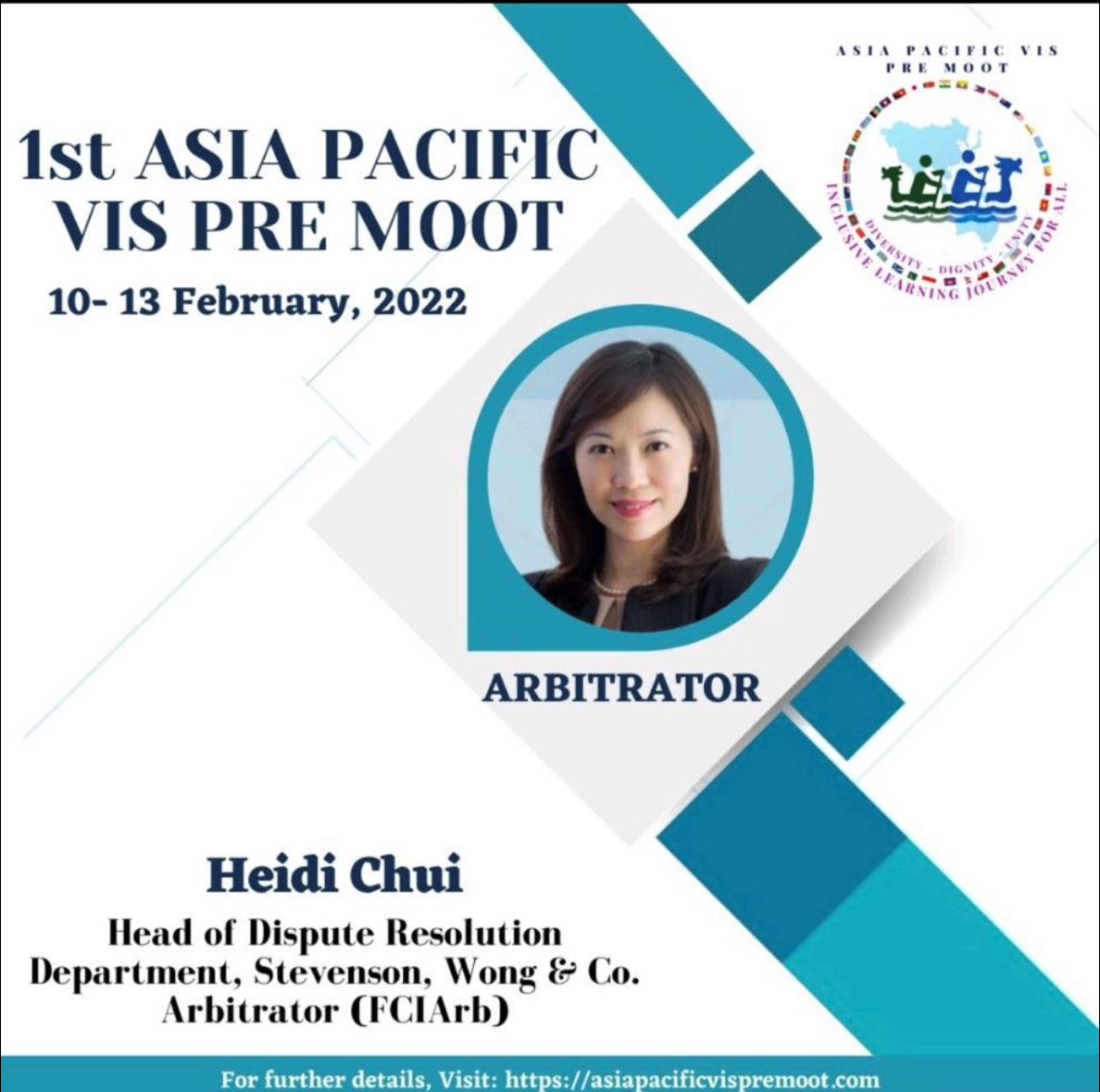
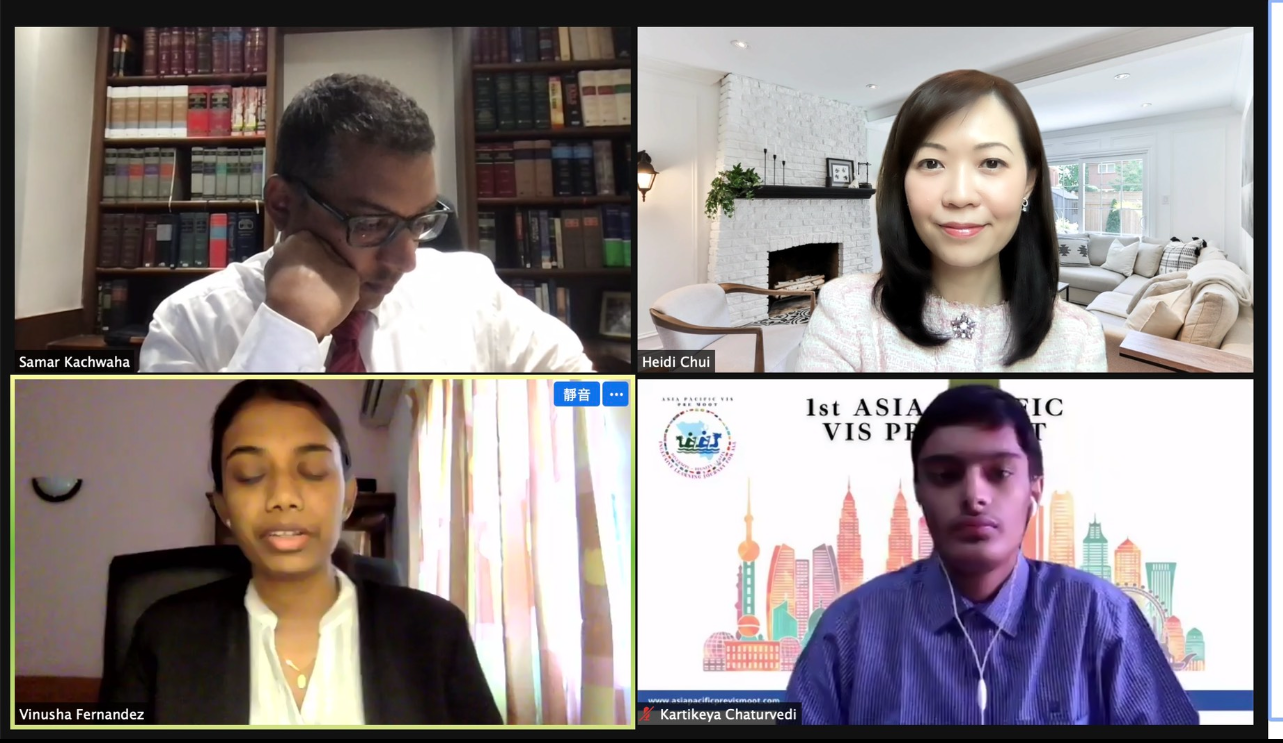
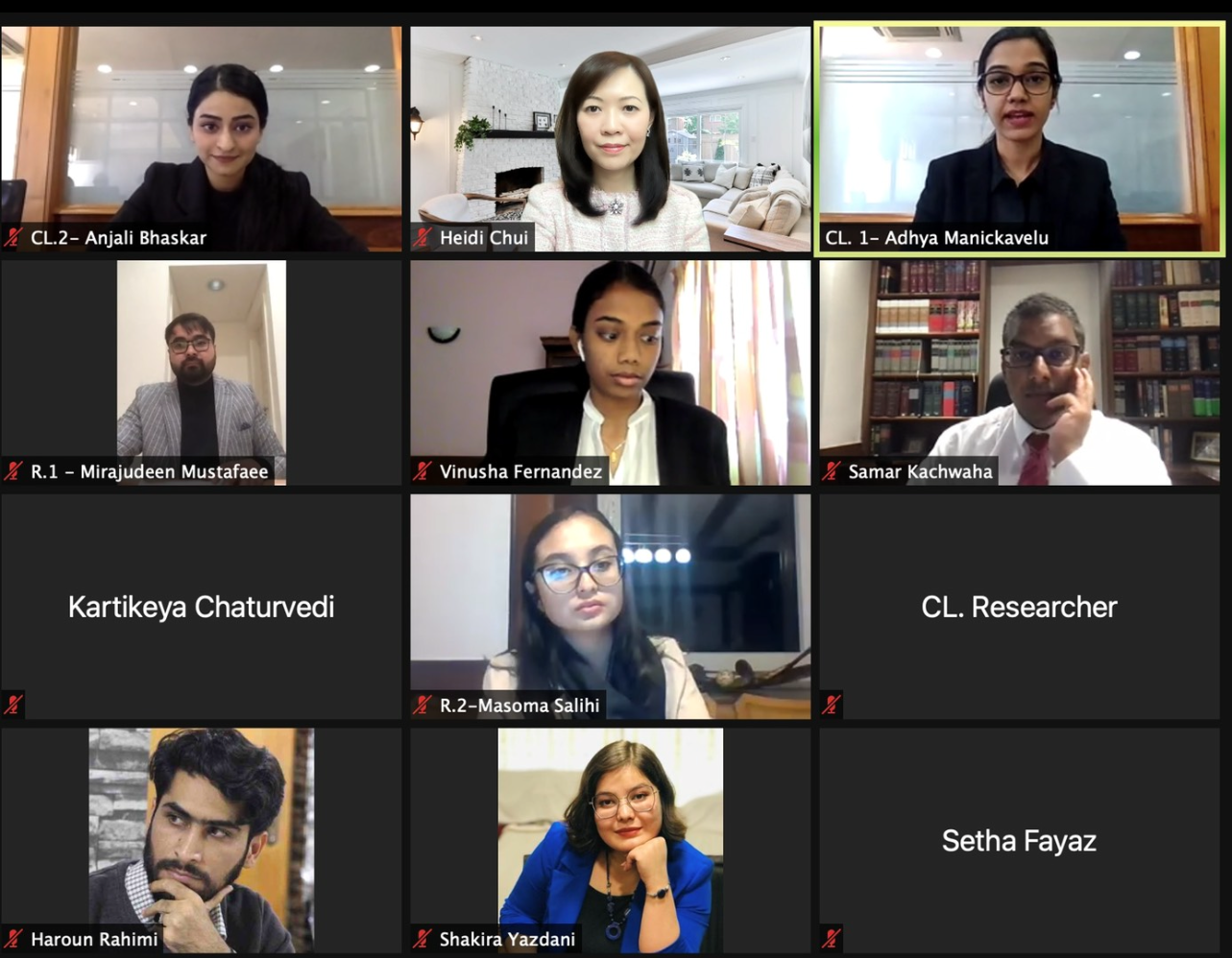
(中文) 2022年2月10日至13日, 本所合伙人、诉讼及争议解决部主管徐凯怡律师受邀为首届亚太地区VIS模拟仲裁担任仲裁员。本次赛事以线上方式举办,吸引了全球超过130支来自土耳其﹑印度和新加坡等队伍报名参赛。
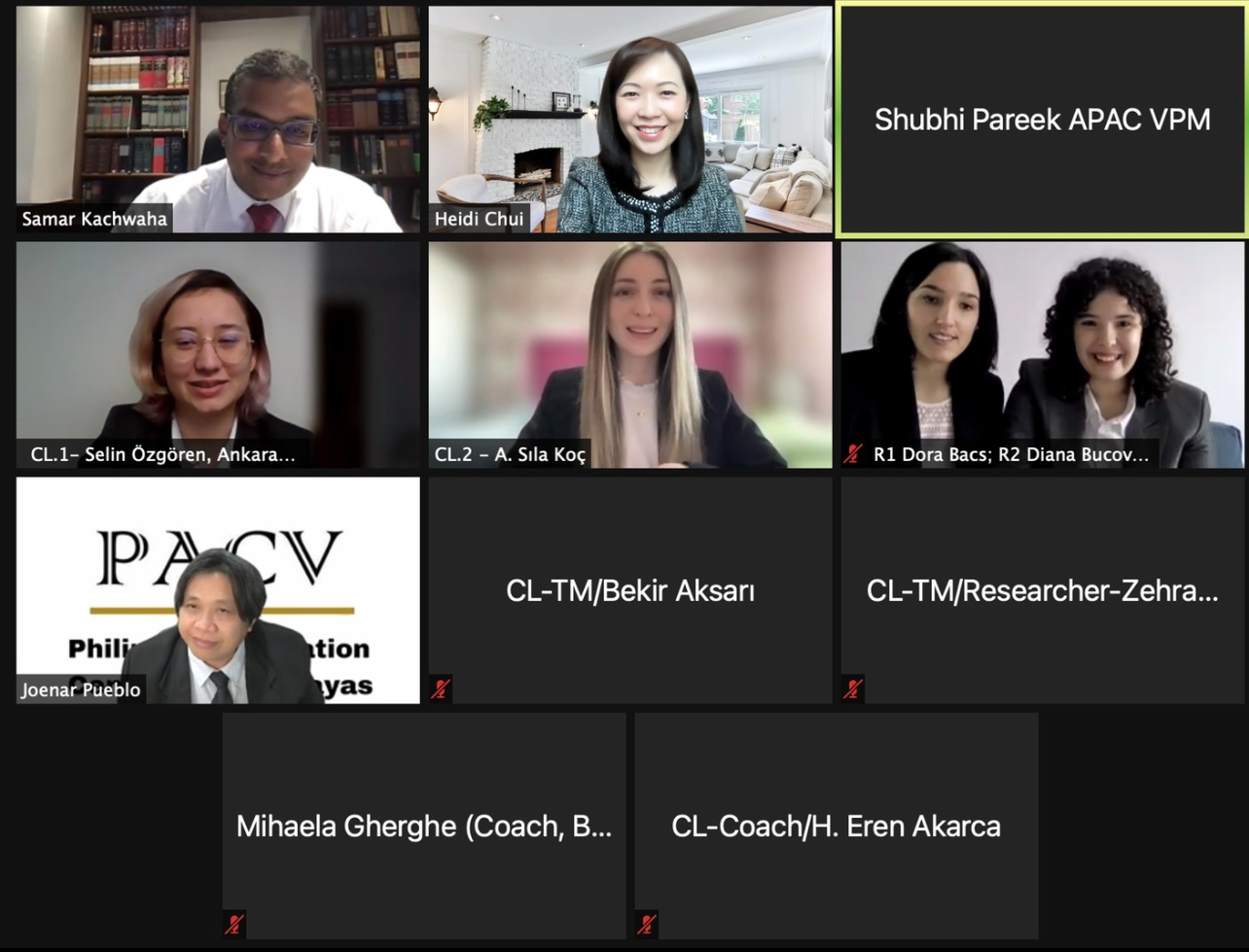
亚太地区VIS模拟仲裁旨在为年轻律师和学生提供国际商事仲裁体验和培训,以提高他们在辩护和仲裁方面的技能,以及进一步推动仲裁作为亚太地区争议解决的方式。徐律师分别为两场赛事担任仲裁员。各位参赛者经过精心的准备,展开了精彩的辩论。赛后,徐律师结合自身多年来的仲裁经验,为他们在模拟仲裁中的表现作出了细致的点评。
如阁下有任何查询或想了解更多详情,请联络本所徐凯怡律师。
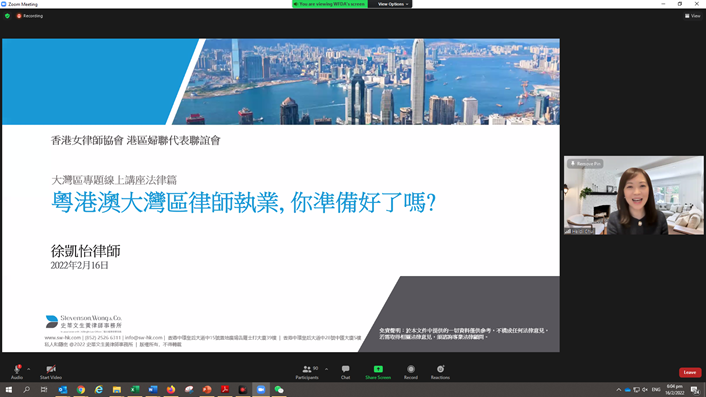
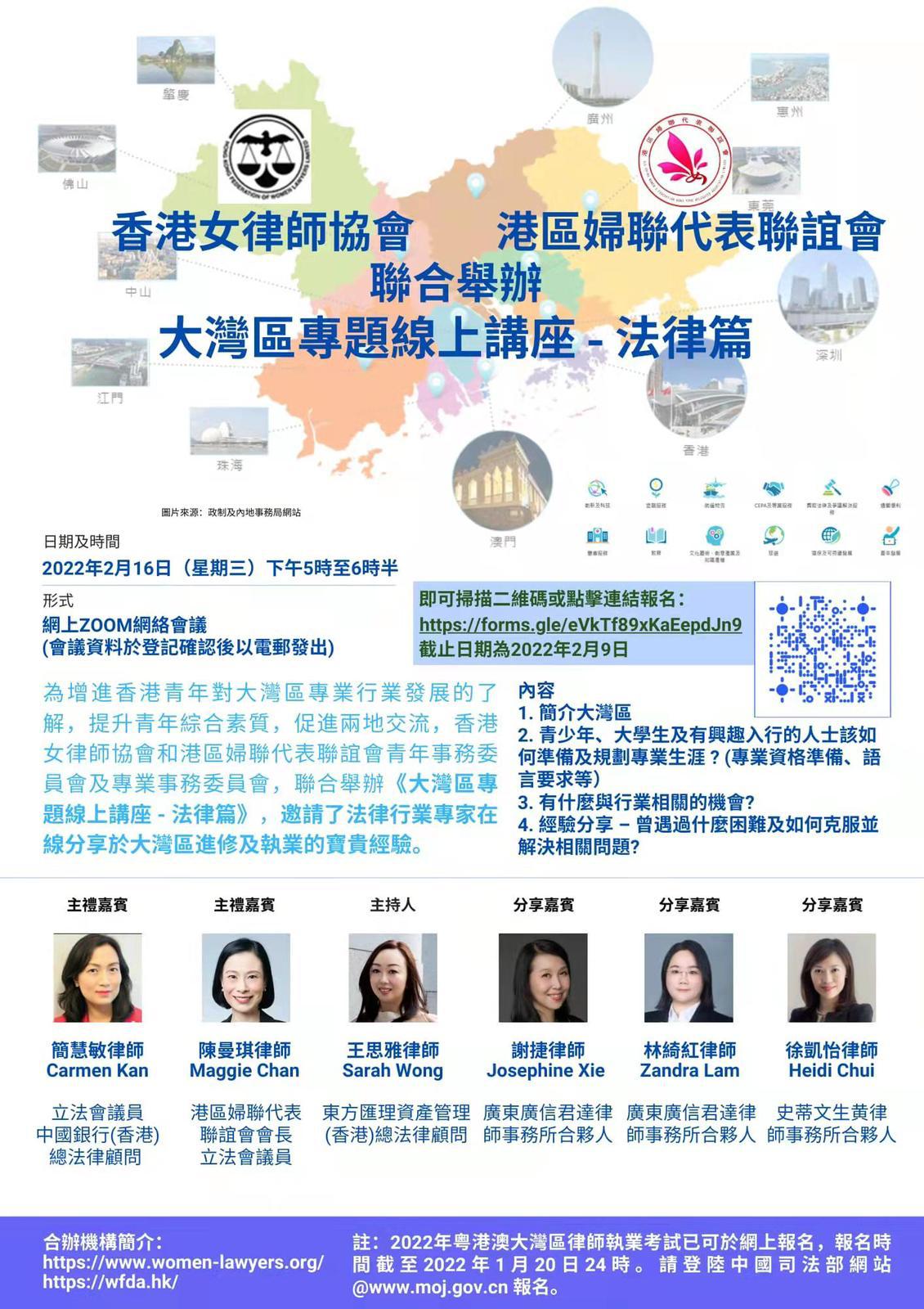
(中文) 2022年2月16日,本所合伙人,诉讼及争议解决部主管徐凯怡律师,作为首批通过粤港澳大湾区律师执业考试(大湾区考试) 的香港律师,获香港女律师协会与港区妇联代表联谊会邀请,为其联合举办之《大湾区专题线上讲座-法律篇》担任演讲嘉宾。
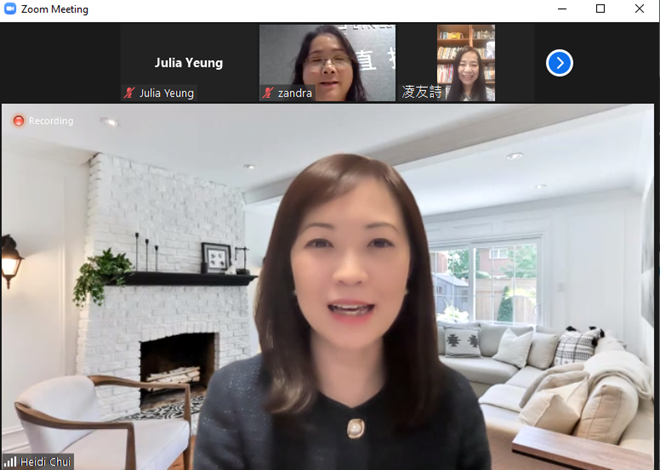
本所合伙人徐凯怡律师
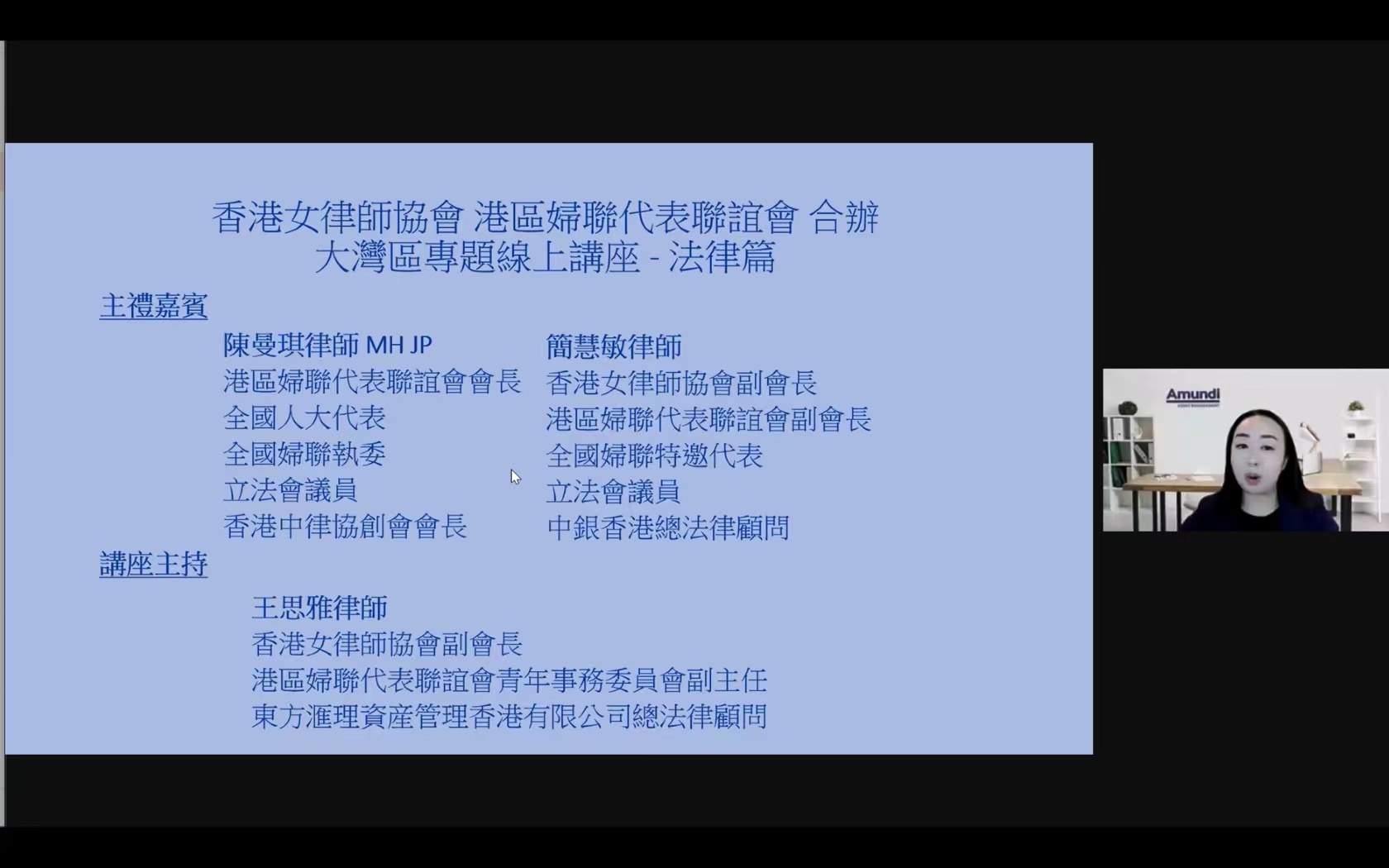
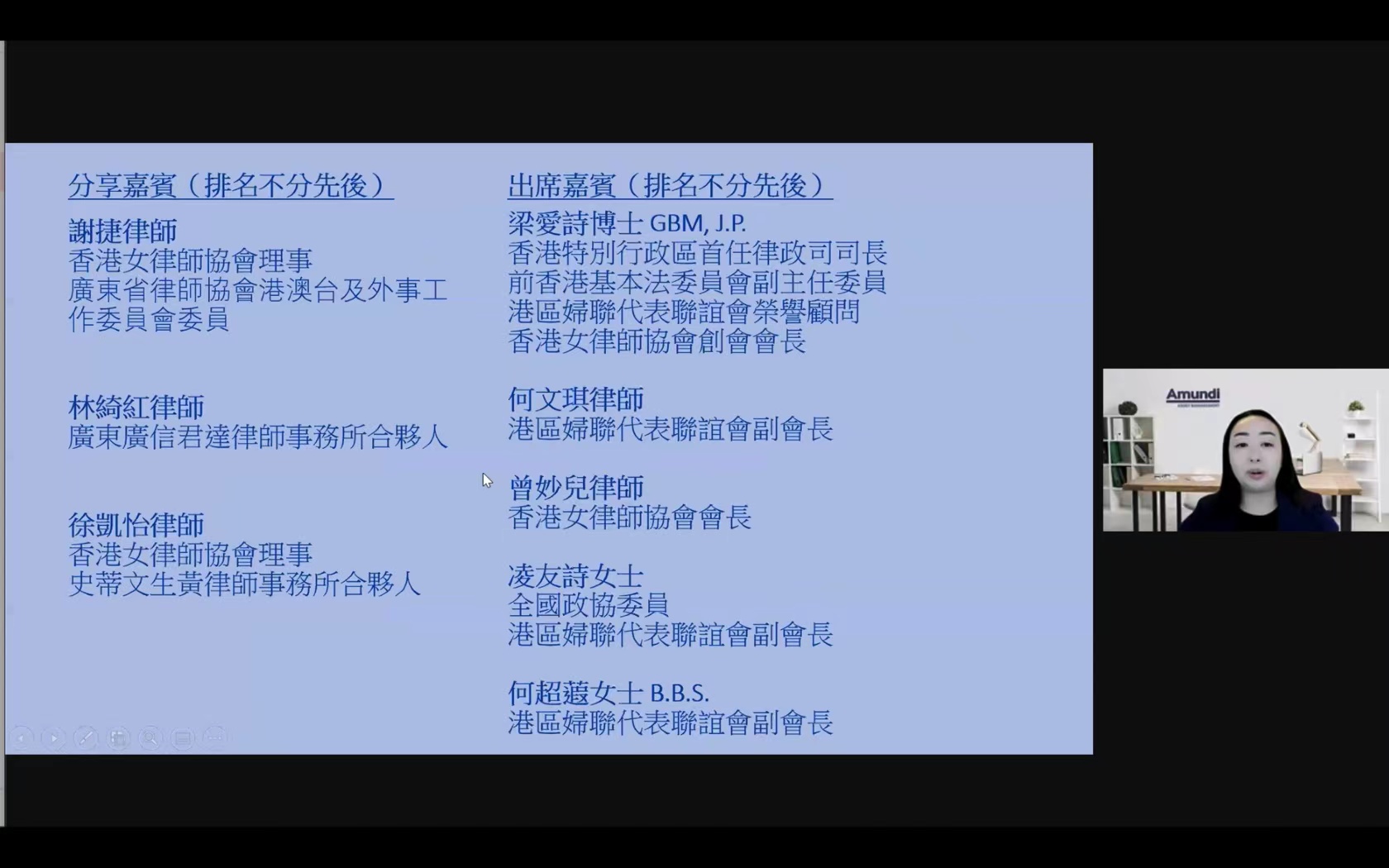
本次网上研讨会由香港女律师协会副会长﹑港区妇联代表联谊会副会长及立法会议员简慧敏律师,和港区妇联代表联谊会会长﹑全国人大代表及立法会议员陈曼琪律师担任主礼嘉宾。此外,出席的嘉宾包括香港特别行政区首任律政司司长梁爱诗博士﹑港区妇联代表联谊会副会长何文琪律师﹑香港女律师协会会长曾妙儿律师﹑全国政协委员凌友诗女士,及港区妇联代表联谊会副会长何超蕸女士。
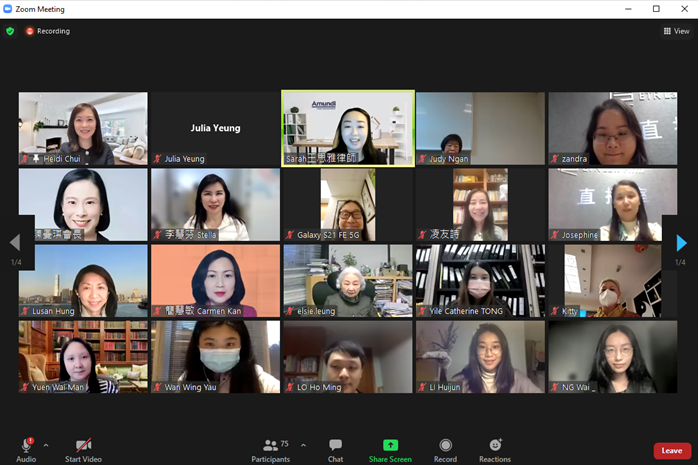
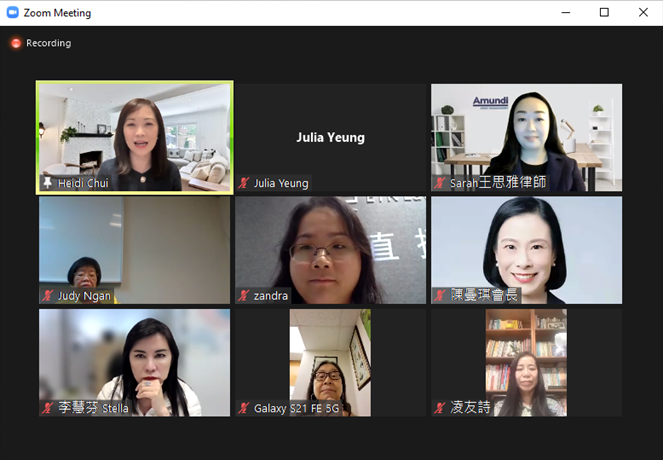
本次研讨会嘉宾: 香港女律师协会副会长﹑港区妇联代表联谊会副会长及立法会议员简慧敏律师 (第三排, 第二位) ﹑港区妇联代表联谊会会长﹑全国人大代表及立法会议员陈曼琪律师 (第二排, 第一位) ﹑香港特别行政区首任律政司司长梁爱诗博士(第三排, 第三位)﹑全国政协委员凌友诗女士 (第二排, 第四位) ,及本所合伙人徐凯怡律师 (第一排, 第一位)
徐律师向与会者分享了中央政府于2019年2月印发的《粤港澳大湾区发展规划纲要》,将香港定位为亚太地区国际法律及争议解决服务中心,以及在“十四五”规划和“双循环”发展模式下,进一步巩固了香港在大湾区中的领先地位。徐律师在会上阐释了符合条件的香港法律执业者通过大湾区考试和培训后,可以在大湾区内地九市办理适用内地法律的部分民商事法律事务。此外,徐律师通过分享个人的实战经验,向与会者分享了大湾区考试的注意事项和心得。
本次网上研讨会受到了与会者的热烈欢迎,并积极向演讲嘉宾提出发问。
如阁下有任何查询或想了解更多详情,请联络本所徐凯怡律师。
(中文) A. 简介
近年愈来愈多商业机构选择以仲裁(Arbitration)作为解决民商事纠纷的方式,除了是考虑到当事人在取得仲裁裁决后,可根据《承认及执行外国仲裁裁决公约》(即《纽约公约》) 于全球多个缔约地执行裁决,另一原因是相较起法庭诉讼 (Litigation) ,仲裁当事人不但可确保争议解决的程序保密,亦能在仲裁庭人选以至仲裁程序上有更大程度的自主性、灵活性和弹性。然而,若仲裁程序中出现有违正当程序或公平原则的情况,当事人可要求法院介入,对仲裁裁决是否可执行作出判定。
在最近的一宗于香港高等法院原讼法庭审理的案件 (Arjowiggins HKK2 LTD 诉 X Co [2022] HKCFI 128,下称“Arjowiggins案”) 中,陈美兰法官在判词中清晰表示,即使仲裁案件可采用较为灵活、具弹性的程序进行处理案件争议,仲裁各方仍必须恪守正当程序(Due Process)和公平(Fairness)的法律原则 。在Arjowiggins案中,陈法官以仲裁庭裁决超越了当事人于仲裁状书所提出的范围为由,下令撤销该仲裁裁决。在香港法院近年积极提倡以仲裁方式解决纠纷的背景下,陈法官的判决显示了若基本法律原则受到挑战,香港法院仍会作出撤销仲裁裁决的决定。
B. 案件背景
Arjowiggins案中的涉案双方为一项合资协议的签订方。双方根据合资协议在内地成立了一家合资公司(下称「合资公司」), 由双方担任股东。及后双方就该合资协议发生了争议,Arjowiggins案中的被申请人X Co. (下称「被申请人」)遂于2010年6月向内地人民法院申请对合资公司进行强制清盘。
其后于2018年,被申请人根据合资协议,向香港国际仲裁中心提交及展开仲裁程序 (下称「2018年仲裁」),向仲裁庭提出申请人Arjowiggins HKK2 LTD(下称「申请人」)持有、保管或控制合资公司的若干文件,要求申请人立即归还。
于2020年8月5日,被申请人在2018年仲裁中取得胜诉,最终裁决中包括「申请人须将该等合资公司文件交付至强制清盘委员会(而非被申请人)」的命令。该清盘委员会仅于仲裁庭正式聆讯的约两个月前按内地法院的命令成立,处理合资公司的清盘事宜。
申请人不服,遂向香港法院原讼法庭提出申请,要求撤销该最终裁决。

C. 案件焦点
在Arjowiggins案的判词中,陈法官表示明白仲裁庭欲透过2018年仲裁,协助仲裁双方解决当前纠纷的意图,而因此采用较为弹性的程序,允许仲裁双方在仲裁庭作出部份裁决后,提交进一步的陈词,以厘清当时尚待解决的争议,再颁下最终裁决。陈法官亦表示明白仲裁庭希望确保仲裁双方在仲裁审理过程中得到公平对待,并获得合理机会,对各自案情进行陈述。然而,这并不代表仲裁庭能作出超越仲裁程序范围的裁决。
陈法官在判词中指出,最终裁决是仲裁庭在基于「申请人有责任根据合资协议,促进并完成合资公司的清盘事宜,包括将该等合资文件提供强制清盘委员会」的事实裁定而作出的。然而,仲裁双方并没有在其提交予仲裁庭的状书中,就有关双方在合资协议下促进并完成合资公司妥善清盘的责任进行任何主张或申辩,而仲裁庭对此事项亦未有掌握完整证据。陈法官认为,虽然清盘事项可能包括在合资协议中的仲裁范围内,但却并不在双方于2018年仲裁中提交予仲裁庭所需解决争议事项的范围以内。即使仲裁双方已获得公平和合理的机会就其案情进行陈词并提供证据,这亦并不代表仲裁庭对双方未提交仲裁的争议事项有管辖权。基于上述因素,陈法官颁令撤销该最终判决。

D. 结语及启示
Arjowiggins案值得各方深思细味的其中一点,是陈法官在判词中多番指出,双方透过提交状书以清晰厘定争议事项和范围之重要性。在近代的争议解决(包括仲裁)的过程中,在正审前才提出状书以外的新法律观点,企图对另一方进行「突袭」的做法,有违正当程序 (Due Process)以及公平 (Fairness)的法律原则,是不应被允许的。正确的做法是仲裁各方事先尽可能全面地列出其所有申索和申请的救济,给予对方充足机会作全盘考虑,提出抗辩,以及全面收集需提交的证据。
本案意在提醒仲裁各方,在仲裁的初始阶段,应透过状书清晰、全面、明确地对所有待决争议作出主张或申辩。双方亦可于适当阶段,起草一份经双方同意的问题清单 (Agreed List of Issues) 或争议范围的条目 (Agreed Terms of Reference),以便记录双方就仲裁范围的共识,以降低日后因超出仲裁范围而导致撤裁的风险。
本文由本所合伙人,诉讼及争议解决部主管徐凯怡律师、卢家俊高级律师、梁杰維律师和陆卓楠
实习律师共同撰写。若阁下想了解更多详情,请联络本所徐凯怡律师。
于本文中提供的一切资料仅供参考,不构成任何法律意见,资料亦受制于适用规定及法例不时的更新与修改。若需取得相关法律意见,须咨询法律顾问。
Today is a Big Day! After waiting for almost 4 years 8 months since the “Arrangement on Reciprocal Recognition and Enforcement of Civil Judgments in Matrimonial and Family Cases by the Courts of the Mainland and of the Hong Kong Special Administrative Region” was signed between the Supreme People’s Court and the Hong Kong Government on 20 June 2017, the Mainland Judgments in Matrimonial and Family Cases (Reciprocal Recognition and Enforcement) Ordinance (Cap.639) (“the Ordinance”) and the Mainland Judgments in Matrimonial and Family Cases (Reciprocal Recognition and Enforcement) Rules (Cap.639A) are to come into effect today – 15 February 2022.
The Ordinance is split into 3 parts dealing with (i) Registration in Hong Kong of Mainland Judgments Given in Matrimonial or Family Cases, (ii) Recognition in Hong Kong of Mainland Divorce Certificates and (iii) Facilitation of Recognition and Enforcement in Mainland of Hong Kong Judgments Given in Matrimonial or Family Cases.
I. Registration in Hong Kong of Mainland Judgments Given in Matrimonial or Family Cases
Care-related orders, Status-related orders and Maintenance-related orders in matrimonial or family cases made in a Mainland Judgment on or after 15 February 2022 can be registered in Hong Kong, after which they can be enforced/recognised as valid in Hong Kong as if they were originally made by the Hong Kong Court on the date of registration, subject to an application to set aside the registration. An application for registration may be made to the Family Court by way of Originating Summons with an affidavit in support. Once a registration order is made, the applicant shall draw up the registration order, and serve a notice of registration on all other parties to the Mainland Judgment.
II. Recognition in Hong Kong of Mainland Divorce Certificates
Mainland divorce certificates issued on or after 15 February 2022 can also be recognised as valid in Hong Kong with a recognition order, subject to such recognition being set aside. An application for recognition may be made to the Family Court by way of Originating Summons with an affidavit in support. Once a recognition order is made, the applicant shall draw up the recognition order, and serve a notice of the recognition order on the other party to the divorce.
III. Facilitation of Recognition and Enforcement in Mainland of Hong Kong Judgments Given in Matrimonial or Family Cases
The last part of the Ordinance provides for certification of Hong Kong Judgments for purposes of recognition and enforcement in the Mainland. A party in a matrimonial or family case (meaning a case where specified orders are made, such as maintenance orders, transfer or sale of property orders, custody/access orders, decree absolute of divorce/nullity, or injunction granted under the Domestic and Cohabitation Relationships Violence Ordinance, etc.) in which a Hong Kong Judgment is given on or after 15 February 2022 and effective in Hong Kong, may apply to the appropriate Hong Kong Court which gave the Hong Kong Judgment for a certified copy of the Judgment, such certified copy Judgment will be issued together with a Certificate. The certified copy Judgment and the Certificate can then be produced in the Mainland court for recognition and enforcement.
The Ordinance aims to solve the historical difficulty faced by cross-border families by offering a more costs-and-time-effective mechanism for enforcing and recognizing matrimonial and family judgments between the two jurisdictions. It should be particularly noted that the orders in relation to custody under a Hong Kong Judgment can cover an order for the return or delivery of a child who has been wrongfully removed (or abducted) from Hong Kong to the Mainland. This is a welcomed development, as previously there was no direct and immediate relief available to order the return of a child wrongfully removed to the Mainland, since Mainland China is not a contracting state under the Convention on the Civil Aspects of International Child Abduction.
We will keep a close eye on developments in this area and will share such developments with you in the near future.
This article is co-authored by our experienced SW Private Team –Partners Catherine Por, Wendy Lam, and Calvin Lo. Please contact Catherine Por, Wendy Lam or Calvin Lo for any further enquiries or information.
This newsletter is for information purposes only. Its content does not constitute legal advice and should not be treated as such. Stevenson, Wong & Co. will not be liable to you in respect of any special, indirect or consequential loss or damage.
Introduction
On 28 January 2022, the Securities and Futures Commission (the “SFC”) and the Hong Kong Monetary Authority (the “HKMA”) issued a joint circular (the “Joint Circular”) providing guidance to banks and SFC-licenced intermediaries intending to engage in virtual asset (“VA”)-related activities (the “VA-related activities”).
Indeed, we are seeing enormous development in the Hong Kong regulatory landscape. In late 2019, the SFC introduced its new opt-in regulatory framework of virtual asset trading platforms (see our news update). In May 2021, the Financial Services and the Treasury Bureau (the “FSTB”) issued consultation conclusions on implementing a licensing regime for virtual asset service providers (“VASP licensing regime”) (see our news update). More recently, in mid-January 2022, the HKMA issued a discussion paper on crypto-assets and stablecoins (see our news update).
The Joint Circular has three main focuses: (a) the distribution of VA-related products; (b) the provision of VA dealing services (the “VA dealing services”); and (c) the offering of VA advisory services (the “VA advisory services”).
A. Distribution of VA-Related Products
VA-related products (the “VA-related products”) are likely to be considered complex products, due to their inherent risks which may not be easily understood by a retail investor. Thus, intermediaries distributing VA-related products should comply with the following additional requirements as appropriate.
Complex products requirements
Intermediaries should comply with the SFC’s requirements which govern the sale of complex products, including ensuring the suitability of VA-related products, minimum information and warning statements.[1]
“Professional investors only” selling restriction
VA-related products which are considered complex products should only be offered to “professional investors”[2] only. For example, an overseas VA non-derivative ETF would very likely be considered a complex product and it should only be offered to professional investors.
However, it is noted that there is a limited suite of VA-related derivative products traded on regulated exchanges as specified by the SFC and, in the case of exchange-traded VA derivative funds, authorised or approved for offering to retail investors in designated jurisdictions (including Australia, United Kingdom and United States of America). The “professional investors only” restriction is not imposed on the distribution of these products. Nevertheless, given such products are considered complex exchange-traded derivatives, they are still subject to derivative product requirement and VA knowledge test requirement.
It should be noted that the provisions under Part IV of the Securities and Futures Ordinance (Cap. 571) (the “SFO”) continue to apply, which prohibit the offering of investment products which have not been authorised by the SFC to the Hong Kong public. Where the VA-related products are distributed on an online platform, it must be properly designed and have appropriate access rights and controls to ensure compliance with the selling restrictions in Hong Kong and other jurisdictions and exchange, as appropriate.
VA knowledge test
Other than institutional professional investors and qualified corporate professional investors[3], intermediaries should assess whether their clients have knowledge of investing in VAs or VA-related products prior to effecting a transaction in VA-related products on their behalf. If not, intermediaries may only proceed if it acts in the client’s best interests and shall provide requisite training and sufficient information to ensure that the clients understand the VA-related products and are able to assume the related risks before making an investment decision.

Suitability obligation requirements
Intermediaries should ensure the suitability of VA-related products, including ensuring that any recommendations or solicitations made are suitable for clients in all circumstances and in their best interests, taking into account, among others, the clients’ risk tolerance and financial situation. Intermediaries should ensure that the aggregate amount to be invested in VA-related products is reasonable considering the clients’ net worth.
In addition, intermediaries should conduct proper due diligence on the products to understand their risks and features, the targeted investors and the products’ regulatory status. For an unauthorised VA fund, this means to conduct due diligence on the fund’s constitution, fund managers, operation, trading and custodian services providers and others.
Disclosure
Intermediaries should provide information to clients in relation to VA-related products and the underlying VA investments in a clear and easily comprehensible manner, together with warning statements specific to VAs.
Derivative products
Where the VA-related product is a derivative product, intermediaries are required to conduct additional know-your-client procedures pursuant to paragraphs 5.1A and 5.3 of the Code of Conduct, including to assess the clients’ knowledge of derivatives and characterize the clients based on their knowledge of derivatives and to ensure that the clients understand the nature and risks of the products and have sufficient net worth to be able to assume the risks and bear the potential losses.
Provision of financial accommodation
Intermediaries should be cautious in providing any financial accommodation. They should assure that the clients have the financial capacity to meet the obligations arising from leveraged or margin trading in VA-related products, including in a worst-case scenario.

B. Provision of VA Dealing Services
Currently, the SFC and the HKMA are only prepared to allow intermediaries licensed or registered for Type 1 (dealing in securities) regulated activity to provide VA dealing services. Accordingly, intermediaries are expected to comply with all the regulatory requirements imposed by the SFC and the HKMA when providing VA dealing services, irrespective of whether or not the virtual assets involved are securities. To ensure adequate investor protection, intermediaries wishing to provide VA dealing services are also subject to the following conditions/requirements:
SFC-licensed VA trading platforms only
Intermediaries are required to partner only with SFC-licensed VA trading platforms[4] (the “SFC-licensed platforms”) for provision of VA dealing services, either by way of acting as introducing agent (introducing clients to the platforms for direct trading) or establishing an omnibus account with the platform (acting as agent on behalf of the clients to execute instructions). These services should only be provided to professional investors.
Introducing agent
Where intermediaries are acting as introducing agents, they should only introduce professional investor clients to SFC-licensed platforms. They should not relay any orders on behalf of their clients to the platforms or hold any client assets for the introducing services.
Omnibus account
Intermediaries providing VA dealing services through operating an omnibus account established and maintained with an SFC-licensed platform shall comply with expected conduct requirements imposed by the SFC as licensing or registration conditions. One of the conditions is to adhere to the prescribed terms and conditions, which include the following:
1. Maintain in Hong Kong at all times excess liquid capital equivalent to at least 12 months of its actual operating expenses calculated on a rolling basis, in addition to the requirements under the Securities and Futures (Financial Resources) Rules (Cap. 571N).
2. Only permit clients to deposit or withdraw fiat currencies, instead of VAs, from their accounts.
3. Fully disclose the nature and risks that the clients may be exposed to when dealing in VAs in a clear and fair manner which is not misleading.
4. Not engage in VA market making activities on an SFC-licensed platform through which it provides to its clients the VA dealing services.
5. Establish and implement policies for preventing market manipulation or abusive trading activities.
6. Ensure that its anti-money laundering and counter-financing of terrorism systems can adequately manage the money laundering and terrorist financing risks.

C. Provision of VA Advisory Services
Intermediaries should comply with all the regulatory requirements imposed by the SFC and the HKMA when providing advisory services, irrespective of the nature of the VAs. Furthermore, such services should only be provided to intermediaries’ existing clients who are “professional investors” to which they provide services in Type 1 (dealing in securities) or Type 4 (advising on securities) regulated activities.
Where an intermediary provides advisory services in VA-related products, it should observe the same requirements as highlighted in section “Distribution of Virtual Asset-Related Products” above, which includes the professional investors selling restriction, VA knowledge test and suitability obligation requirements, and at the same time, it must ensure the suitability of its recommendations.
Transitional arrangements
The new regulatory regime is immediately applicable to new market entrants upon their engagement in VA-related activities. For market participants providing existing VA-related activities to clients, there is a 6-month transition period before this regime is implemented in full.

Analysis and Takeaways
Virtual assets are gaining popularity around the world. Nevertheless, the global regulatory landscape largely remains uneven. In light of the market’s growing interest in VA-related products, we see the Joint Circular as a big step in providing clarity and certainty for intermediaries involved or interested in distributing VA-related products or providing VA dealing services. Indeed, the Joint Circular does contextualise the principal requirements for intermediaries for the distribution of VA-related products, such as complex products, “professional investor only”, VA knowledge test and derivative product requirements, and their interaction and application thereon. Furthermore, the SFC and the HKMA have expressed their general stance that only Type 1 regulated activity licensed or registered intermediaries can provide VA dealing service.
We believe Hong Kong should leverage its position and expertise as the leading international finance hub in developing its emerging Fintech ecosystem. The Joint Circular issued by the SFC and HKMA, together with the FSTB’s proposal for a VASP licensing regime, as well as the HKMA discussion paper on crypto-assets and stablecoins, are proactive initiatives thereby enabling a regulatory framework with sufficient protection and safeguard in place, where investors, VA operators, intermediaries and other stakeholders can venture into and utilise VAs and the blockchain technology as a whole.
Please contact our Partner Mr. Rodney Teoh and associate Ms. Angela Lau for any enquiries or further information.
This news update is for information purposes only. Its content does not constitute legal advice and should not be treated as such. Stevenson, Wong & Co. will not be liable to you in respect of any special, indirect or consequential loss or damage arising from or in connection with any decision made, action or inaction taken in reliance on the information set out herein.
[1] See more discussion in the subsections headed “Suitability obligation requirements” and “Disclosure” below.
[2] The term “professional investor” is as defined in section 1 of Part 1 of Schedule 1 to the SFO (as defined below).
[3] “Institutional professional investors” is defined under paragraph 15.2 of the Code of Conduct for Persons Licensed by or Registered with the SFC (the “Code of Conduct”) as persons falling under paragraphs (a) to (i) of the definition of “professional investor” in section 1 of Part 1 of Schedule 1 to the SFO. “Qualified corporate professional investors” refers to corporate professional investors which have passed the assessment requirements under paragraph 15.3A and gone through the procedures under paragraph 15.3B of the Code of Conduct.
[4] VA trading platforms which are licensed pursuant to section 116 of the SFO under the 2019 regulatory framework for VA trading platforms.
As one of the founding members of INTERLAW in 1982 and the only Hong Kong representative, we are delighted to announce that INTERLAW has again been awarded the highest ranking, Band One in the Leading Law Firm Networks category by Chambers Asia Pacific 2022.
Chambers and Partners recognises INTERLAW as “an extensive network of practitioners who offer cross-border support to clients with business interests throughout the Asia-Pacific region. This strong alliance aims to cultivate networking and the sharing of knowledge through regional and annual meetings. Additionally, it encourages members to form practice-specific groupings, thereby offering specific expertise across jurisdictions. The quality of its membership is ensured through peer reviews, and mentors are assigned to new members, while existing member firms build relationships, share insights and host workshops and webinars with and for each other.”
About INTERLAW
INTERLAW is an elite global law firm network of top-tier independent corporate and commercial law firms in 150 cities worldwide. The network distinguishes itself by its longevity, quality of client service, and the strong professional and personal relationships of its lawyers. For over 38 years, Interlaw has been refining its provision of global legal services and continues to grow worldwide, offering clients unrivalled high quality legal advice, wherever in the world they want to do business.
Members of INTERLAW are selected after a comprehensive due diligence process that identities full-service law firms with a solid reputation for impeccable professional and ethical standards.
For more information, please contact our Partner Mr. Willy Cheng .