News
Find out all about our firm’s latest news and activities below. To learn more about any individual item, please contact us here.
 Stevenson, Wong & Co.
News
Find out all about our firm’s latest news and activities below. To learn more about any individual item, please contact us here.
Our Partner, Head of Litigation and Dispute Resolution Department, Ms. Heidi Chui, has been appointed by Shanghai Arbitration Commission (the “SHAC”) as new Panel (the 7th Cohort) of Arbitrator, with effect from 1 January 2022.
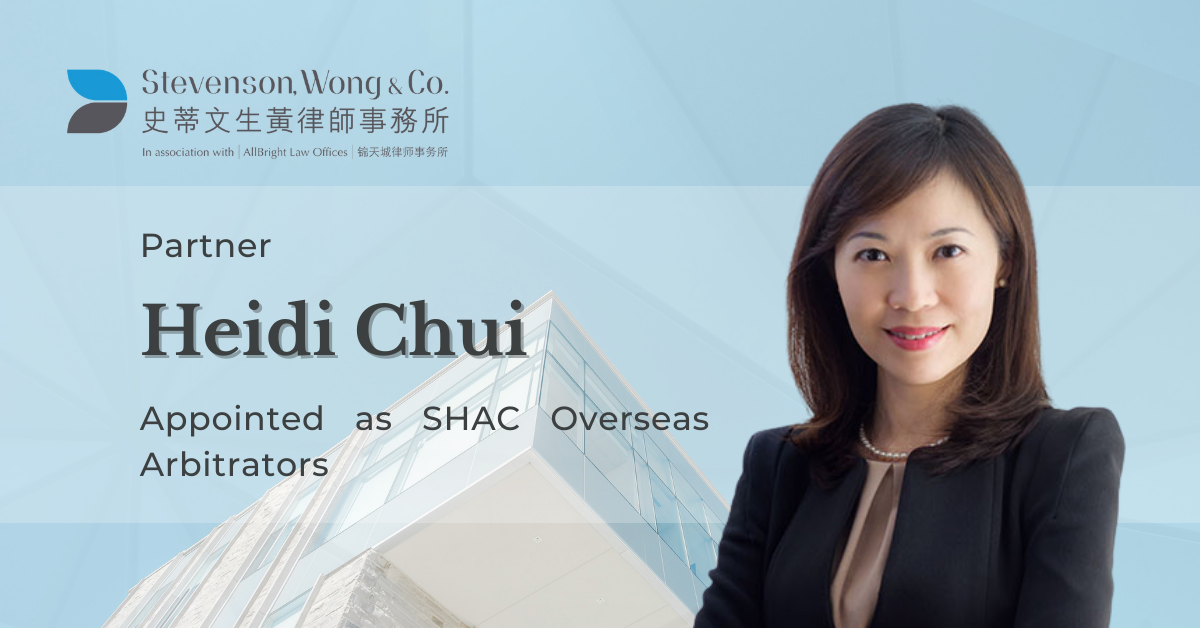
Established in 1995, SHAC has arbitrated over 40,000 cases involving dispute amount over RMB 200 billion. SHAC received over 3000 registration forms from all over the world. After rounds of reviews, 386 overseas arbitrators were selected, with 68 arbitrators from Hong Kong. The appointed arbitrators are reputable professors, senior accountants, senior lawyers with extensive experience in arbitration, trial, and financial management nationally and globally.
Ms. Chui is one of the few solicitors accredited and listed on the panel of arbitrators for The Law Society of Hong Kong. She is also an arbitrator of Hong Kong International Arbitration Centre, China International Economic and Trade Arbitration Commission, Shanghai International Arbitration Centre, Shenzhen Court of International Arbitration, Hainan International Arbitration Court (Hainan Arbitration Commission), Nanjing Arbitration Commission, Guangzhou Arbitration Commission, Ningbo Arbitration Commission, Hefei Arbitration Commission and Langfang Arbitration Commission.
She is also an accredited mediator of HKAIC, The Law Society of Hong Kong and a Panel Mediator for Buildings Management Cases of the Lands Tribunal, and a fellow of the Chartered Institute of Arbitrators (U.K.). She is also a China Appointed Attesting Officer as appointed by the Ministry of Justice PRC.
For more information, please contact our Partner Ms. Heidi Chui (heidichui.office@sw-hk.com), or click here to visit SHAC’s website.
Introduction
On 17 December 2021, The Stock Exchange of Hong Kong Limited (the “Exchange”) published its consultation conclusions (the “Consultation Conclusions”) to create a new listing regime for special purpose acquisition companies (“SPACs”) in Hong Kong. The Exchange also published a guidance letter on SPACs (the “Guidance Letter”). In addition, the Securities and Futures Commission (the “SFC”) published a Practice Note 23 to provide guidance on waivers of the mandatory general offer obligation under Rule 26.1 of the Takeovers Code for De-SPAC Transactions.
Majority of the responses from the public has generally supported the Exchange’s proposals outlined in its consultation paper on SPAC dated 17 September 2021 (the “Consultation Paper”). This article follows up with our news update in September 2021 on the Exchange’s Consultation Paper. The capitalised terms used herein shall have the same meanings as defined in the Consultation Conclusions and Consultation Paper.
The Exchange shall broadly implement its proposals on SPAC set out in the Consultation Paper, with some amendments to reflect the public’s responses. The amended Listing Rules as set out in the Consultation Conclusions and the Guidance Letter came into effect on 1 January 2022.
Key features of SPACs
The table below lays out the key differences between the original proposals and the final SPAC framework to be implemented:
|
|
Original Proposal |
Final Model Adopted |
|
|
Open Market Requirement at Initial Listing |
|||
|
1. |
A SPAC’s securities must be distributed to a minimum of 30 Institutional Professional Investors. |
Proposal relaxed, the minimum number of Institutional Professional Investors is reduced to 20. |
|
|
SPAC Directors |
|||
|
2. |
The majority of SPAC’s board must be composed of representatives of the SPAC Promoters who nominate them. |
Proposal replaced by a requirement for a SPAC’s board to have at least two Type 6 or Type 9 SFC-licensed individuals (including one director representing the licensed SPAC Promoter). |
|
|
Alignment of Voting with Redemption |
||||||||||||||
|
3. |
SPAC shareholders can only redeem their shares if they vote against any one of the following matters:
(a) A material change in a SPAC Promoter or the eligibility and/or suitability of SPAC Promoter;
(b) A De-SPAC Transaction; or
(c) A proposal to extend the De-SPAC Announcement or De-SPAC Transaction Deadline. |
Proposal replaced with strengthened Independent PIPE Investment requirements (see item 4 below) to provide a stronger regulatory check on the terms and valuation of the De-SPAC Transaction. SPAC shareholders will be able to redeem their shares regardless of how they cast their vote. |
||||||||||||
|
Mandatory Independent PIPE Investment |
||||||||||||||
|
4. |
Size of Independent PIPE Investment Outside independent PIPE investment constitute at least 25% of the expected market capitalisation of the Successor company, or 15% to 25% in the case of Successor Companies with an expected market capitalisation of over HK$1.5 billion.
Significant Sophisticated Investment At least one independent PIPE Investor must be an asset management firm or fund with assets under management (the “AUM”) of at least HK$1 billion, and the PIPE investment must result in this investor beneficially owning at least 5% of the issued shares of the listed issuer following the completion of a De-SPAC Transaction. |
Size of Independent PIPE Investment Proposal requirements strengthened, staggering Independent PIPE Investment size thresholds relative to the negotiated value of a De-SPAC Target adopted:
Significant Sophisticated Investment Proposal requirements tightened, at least 50% of Independent PIPE Investment must come from at least three institutional investors with AUM of at least HK$8 billion. |
||||||||||||
|
Dilution Cap on Warrants |
||||||||||||||
|
5. |
Overall Warrant Cap is 30%. |
Proposal relaxed:
(a) Overall Warrant Cap increased to 50%.
(b) More prominent disclosure on the dilutive effect of all warrants required.
(c) No separate cap on the warrant to share ratio and on Promoter Warrants. |
||||||||||||
|
SPAC Promoters Licensing Requirement |
||||||||||||||
|
6. |
At least one of the SPAC Promoters must be a firm holding:
(a) a Type 6 (advising on corporate finance) and/or Type 9 (asset management) licence issued by the SFC; and
(b) at least 10% of the Promoter Shares. |
Proposal maintained, the Exchange will also consider granting waiver on a case-by-case basis (for example, to accept a SPAC Promoter if they have overseas accreditation that is equivalent to an SFC Type 6 and/or Type 9 license).
|
||||||||||||
|
Funds Held in Escrow |
||||||||||||||
|
7. |
100% of the gross proceeds raised from the SPAC’s initial offering are held in a ring-fenced trust account in Hong Kong until a De-SPAC transaction takes place or the SPAC is liquidated. |
Proposal adopted, with a minor modification that accrued interests or other income earned on monies held in the escrow account may be released.
|
||||||||||||
|
Rights to additional Successor Company Shares (earn-out rights) |
||||||||||||||
|
8. |
The Exchange proposed to accept requests from a SPAC to issue additional Promoter Shares, as an earn out portion, subject to the following:
(a) the total number of Promoter Shares (including the earn-out portion) should not be more than 30% of the total number of shares in issue at the time of the SPAC listing;
(b) the earn-out portion is linked to objective performance targets;
(c) SPAC shareholders having granted approval, at the general meeting; and
(d) such earn-out portion shall be included in the resolution approving the De-SPAC Transaction.
|
The Exchange will permit a SPAC to issue earn-out rights to SPAC Promoters that are convertible into ordinary shares of the Successor Company, if the Successor Company meets pre-defined performance targets.
The Exchange will allow share price to be used as a performance target for the earn-out rights as long as those share price performance targets are:
(a) at least 20% higher than the issue price of the SPAC Shares at listing of the SPAC;
(b) satisfied by exceeding a pre-defined volume weighted average price of the Successor Company’s shares over a period of not less than 20 trading days within a 30 consecutive trading day period, with such period commencing at least six months after the listing of the Successor Company. |
||||||||||||
|
Brokerage Fee |
||
|
9. |
Nil. |
The 1% brokerage free requirement for the placing of securities by SPAC at its initial listing will be exempted. |
|
Trading Arrangements |
||
|
10. |
Separate trading of SPAC shares and SPAC warrants from the date of initial listing to a De-SPAC Transaction. The Exchange proposed two options to mitigate the risks of volatility, namely:
(a) Option 1: allow only manual trades on SPAC Warrants; and
(b) Option 2: allow both automatching of orders with Volatility Control Mechanism and manual trades on SPAC securities. |
Proposal with Option 2 is adopted.
|
|
Warrants |
||
|
11. |
The Promoter Warrants and SPAC Warrants are only exercisable after the completion of a De-SPAC transaction. The Exchange also prohibits SPACs from issuing Promoter Warrants at less than fair value or that contain more favourable terms than that of SPAC Warrants.
|
Proposal modified, the Exchange will prohibit:
(a) with the issue of Promoter warrants at less than 10% of SPAC Shares per Promoter Warrant issue price; and
(b) Promoter Warrants that entitle the holder, upon exercise, to receive more than one share in the Successor Company. The Exchange will also impose an additional requirement that the minimum exercise price of the SPAC Warrants and Promoter Warrants must be at a price which represents at least 15% premium to the issue price of the SPAC Shares. |

Analysis and Takeaways
We can see that the Hong Kong regulators have kept in mind its commitment to investor protection in the Consultation Conclusions. The new Hong Kong SPAC listing regime seeks to strike a balance between upholding Hong Kong as a leading financial centre by allowing SPAC listings while ensuring high quality SPAC listing applicants and De-SPAC targets to enter into the Hong Kong capital markets and maintaining robust regulatory framework.
Please contact our Partner Mr. Rodney Teoh and associate Ms. Angela Lau for any enquiries or further information.
Reuters Beijing recently interviewed our Partner Mr. Gordon Tsang regarding his views on China concept stocks turning to Hong Kong for listing. Mr. Tsang pointed out that the strengthening control of the US stock market and the proactive reform of the Hong Kong Stock Exchange (HKEX), including the new listing regime for special purpose acquisition companies (SPAC), will reinforce the return of China concept stocks.
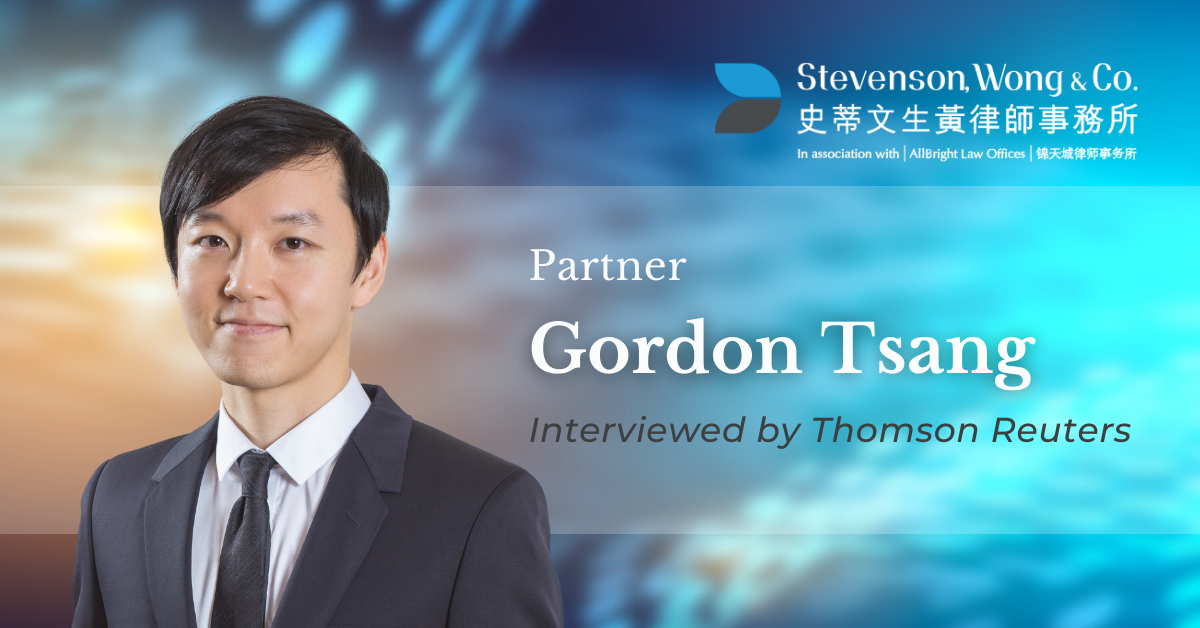
Mr. Tsang said that technology companies and start-ups such as blockchain and electric vehicles might find it difficult to be listed through traditional IPO methods. However, the new SPAC listing regime to be launched by the HKEX next year will allow more flexibility and therefore, set an easier path for those companies to be listed in Hong Kong. Mr. Tsang added that, “The returning China concept stocks have greater development opportunities. Not only have they gained high attention and recognition, but also a positive impact on their valuation, stock liquidity, stock trading volume and financing capacity.”
For more information, please contact our Partner Mr. Gordon Tsang, or click here to view the complete interview (only available in Chinese).
Background
On 10 December 2021, The Stock Exchange of Hong Kong Limited (the “Exchange”) published its consultation conclusions (the “Consultation Conclusions”) as to its review of the Corporate Governance Code (the “CG Code”) and the related Rules Governing the Listing of Securities on the Exchange (the “Listing Rules”). The Exchange has received positive feedbacks from the public on its proposals outlined in its “Consultation Paper on Review of Corporate Governance Code and Related Listing Rules” (the “Consultation Paper”) on 16 April 2021.
The requirements under the new CG Code will be applicable to CG reports for financial year commencing on or after 1 January 2022 with certain exceptions as explained below. The Exchange will also publish a new set of guidance (the “CG Guidance”) to facilitate issuers’ compliance with the corporate governance requirements. The capitalised terms used herein shall have the same meaning as defined in the Consultation Conclusions and Consultation Paper.
The new CG Code and amended Listing Rules will become effective from 1 January 2022.
Summary of the key revised Listing Rules and new CG Code
The below table sets out a comparison between the original proposals and the conclusions:
|
Original Proposals |
Conclusions |
Implementation |
| 1. Culture | ||
| 1.1 Require the board to align the company’s culture with its purpose, values and strategy |
|
Financial year commencing on or after 1 January 2022 |
| 1.2 Establish anti-corruption and whistleblowing policies |
|
Financial year commencing on or after 1 January 2022
|
| 2. Board independence, refreshment and succession planning | ||
| 2.1 Require disclosure of a policy to ensure independent views and inputs are available to the board, and annual review of the implementation and effectiveness of such policy
|
Adopt, with revised wordings to clarify on the focus on “mechanisms” in place to allow strong independent element on the board, which may cover the following:
i. INED’s recruitment process. ii. Number of INEDs and their time contribution.
|
Financial year commencing on or after 1 January 2022 |
| 2.2 NEDs serving more than nine years (the “Long Serving INED”): | ||
|
Not adopt
Adopt
Adopt |
Financial year commencing on or after 1 January 2022
Financial year commencing on or after 1 January 2023 for New INED Proposal
Financial year commencing on or after 1 January 2022 for Tenure Disclosure
|
| 2.3 No equity-based remuneration (e.g. share options or grants) with performance-related elements to INEDs | Adopt | Financial year commencing on or after 1 January 2022 |
| 3. Diversity | ||
| 3.1 No single gender board (with a 3-year transition period for existing issuers) | Adopt, with revised wordings and modification to transition period | For issuers: Rule effective from 1 January 2022
Single gender board issuers: 3- year transition (i.e. appoint a director of a different gender no later than 31 December 2024) Issuers with commitment in listing document: Appoint a director of a different gender in accordance with such commitments IPO applicants: Effective for A1 submission filed on or after 1 July 2022 (i.e. a 6-month transition period) |
| 3.2 Set and disclose numerical targets and timelines for achieving gender diversity at board level and across workforce
|
i. gender ratios in the workforce (including senior management); ii. plans or measureable objectives the issuer has set for achieving gender diversity; and
iii. mitigating factors or circumstances which make achieving gender diversity across the workforce (including senior management) more challenging or less relevant. |
Financial year commencing on or after 1 January 2022
|
| 3.3 Annual review of board diversity policy | Adopt | Financial year commencing on or after 1 January 2022 |
| 3.4 Include directors’ gender information in forms upon appointment | Adopt | Rule effective from 1 January 2022
|
| 4. Nomination Committee (the “NC”) | ||
| Chaired by an INED and comprising a majority of INEDs | Adopt, with modification to also allow board chairman to chair the NC | Rule effective from 1 January 2022 |
| 5. Communications with shareholders | ||
| Disclosure and annual review of shareholders communication policy | Adopt | Financial year commencing on or after 1 January 2022 |
| 6. Other enhancements | ||
| 6.1 Disclose directors’ attendance at general meetings in the poll results announcements | Adopt | Rule effective from 1 January 2022 |
| 6.2 NEDs no longer need to be appointed for specific term | Adopt | Rule effective from 1 January 2022 |
| 7. Linkage between CG and ESG | ||
| Elaborate the linkage between CG and ESG in the Code | Adopt | Code effective from 1 January 2022 |
| 8. Timely disclosure of ESG reports | ||
| Publish ESG reports at the same time as publication of annual reports | Adopt | Financial year commencing on or after 1 January 2022 |
| 9. Re-arrange the Code | ||
| 9.1 Rename Appendix 14 to “Corporate Governance Code” | Adopt | Code effective from 1 January 2022 |
| 9.2 Mandatory disclosure requirements set out upfront in Appendix 14 (instead of being in the last part of Appendix 14) | Adopt | Code effective from 1 January 2022 |
| 9.3 Re-organise the structure of Appendix 14 to enhance flow and readability | Adopt | Code effective from 1 January 2022 |
Analysis and Takeaways
The importance of good corporate governance cannot be overlooked as it is the cornerstone of any good business, long-term success and business sustainability of a corporation. The main focuses of the consultation are to promote good corporate governance standards among listed issuers in Hong Kong, to instill changes in the board’s mindset, to enhance communication between issuers and their shareholders and to encourage further environmental, social and governance (ESG) disclosures and standards. The consultation shows the Exchange’s commitment to continue to formulate a robust corporate governance framework in ensuring market quality, aligning the interest of all its stakeholders and adopting international best practices.
Please contact our Partner Mr. Rodney Teoh for any enquiries or further information.
This article has been prepared for clients and professional associates of Stevenson, Wong & Co. While every effort has been made to ensure accuracy as at the date of issue, this document is a general outline for reference only, and is not an exhaustive treatment of the areas discussed. Accordingly, this document cannot be relied upon as legal advice in any individual case and we bear no responsibility for any loss occasioned to any person acting or refraining from action as a result of the contents in this document.
(中文) 跨境破产法最新动态:香港法院拒绝搁置香港诉讼程序
上周五,即2021年12月17日,香港高等法院夏利士法官颁下了一项重要的跨境清盘案件判决,认可了内地破产管理人身份,但拒绝搁置香港诉讼程序。在Nuoxi Capital Limited (諾熙資本有限公司)(In Liquidation In The British Virgin Islands) v Peking University Founder Group Defendant Company Limited (北大方正集團有限公司) HCA778/2021及一系列共同审理的案件 (统称「本案」) 中,夏利士法官认可了北京大学旗下子公司北大方正集团有限公司 (下称「北大方正」,其集团统称「方正集团」) 的破产管理人身份,但驳回了北大方正搁置债权人在香港发起的有关维好协议 (keepwell deeds) 争议的诉讼程序申请。
案件背景
本案各方的争议主要源于被告北大方正就其多家子公司在相关的债券及担保协议下负有的17亿美元债务做出的维好协议。该维好协议要求北大方正促成其子公司 (1) 在任何时候至少合计保持1美金的资产净值,及 (2) 有足够的现金流确保子公司可偿付相关债务。除此之外,该维好协议亦要求北大方正尽最大努力 (best efforts) 取得所有必要的监管批准,以及在子公司资金不足偿付债务的情况下向该些子公司注入充足的资金。该维好协议约定管辖法律为英国法,且由香港法院专属司法管辖。
由于方正集团日益恶化的财务状况,北大方正的子公司未能根据相关债券及担保协议偿付债务。在2020年2月19日,北京市第一中级人民法院 (下称「北京法院」) 颁下了北大方正进行破产重组 (reorganization) 的命令,并随后指令债权人提交债权申报。
该维好协议下的债权人向北大方正的破产管理提交了有关维好协议下的债券申报,但被北大方正的破产管理人拒绝。因此,该等债权人在香港法庭对北大方正提起诉讼。
北大方正的破产管理人向香港法庭寻求承认和协助在北京的重组程序,并申请搁置香港的诉讼程序,以便各方可以在正在进行的重组程序中解决相关争议。

北大方正申请搁置香港诉讼程序的理由
本案中,北大方正的破产管理人主要基于以下理由向香港法院提交搁置香港诉讼程序的申请:
法庭判决
针对北大方正提出的理由,夏利士法官做出了以下的回应及分析:

基于上述理由,香港法院驳回了北大方正提出的搁置香港诉讼程序的申请。
总结
本案中,虽然香港法庭认可了内地破产管理人的身份,但仍然在本案适当的情况下坚持香港法院具备管辖权。夏利士法官指出《最高人民法院关于开展认可和协助香港特别行政区破产程序试点工作的意见》显示香港高等法院和内地行使破产管辖权的法院在适当情况下合作协调程序,以促进破产程序的公平和有效率地进行。夏利士法官认为,内地和香港的法律制度和经济模式存在很大差异,有意识和敏锐的合作和沟通对减少误解和提供有效协助是必要的 (Conscious and sensitive cooperation and communication is necessary in order to minimise misunderstandings and facilitate effective assistance)。本案中,北大方正的破产管理人提交的证据并没有指出北京法院已向其解释了有关申请会在香港引起的问题。请求信中也没有指出香港法院将需要解决中国企业破产法和该维好协议的管辖条款之间的冲突。
夏利士法官希望通过本案判决可以协助北京法院理解,如果最高法院要求内地和香港法院之间尽可能地沟通和合作,那么破产管理人及内地律师有必要确保内地法院获得完整和平衡的信息 (complete and balanced information)。夏利士法官强调,跨境破产和协助外地法律程序不涉及法院之间的竞争,法院的目标是共同努力以在尊重彼此司法管辖的实体法和程序的同时,实施公平和高效的破产程序 (The courts aim to work together to implement fair and efficient insolvency processes whilst respecting the substantive law and procedure of each other’s jurisdiction)。夏利士法官亦希望能够通过本案协助北京法院理解,在香港法律下提出搁置程序的申请并不简单,从而进一步促进最高人民法院意见所鼓励的沟通与合作。
本文由本所合伙人,诉讼及争议解决部主管徐凯怡律师、黄晊晄律师和甘子豪律师助理共同撰写。若阁下想了解更多详情,请联络本所徐凯怡律师。
于本文中提供的一切资料仅供参考,不构成任何法律意见,资料亦受制于适用规定及法例不时的更新与修改。若需取得相关法律意见,须咨询法律顾问。
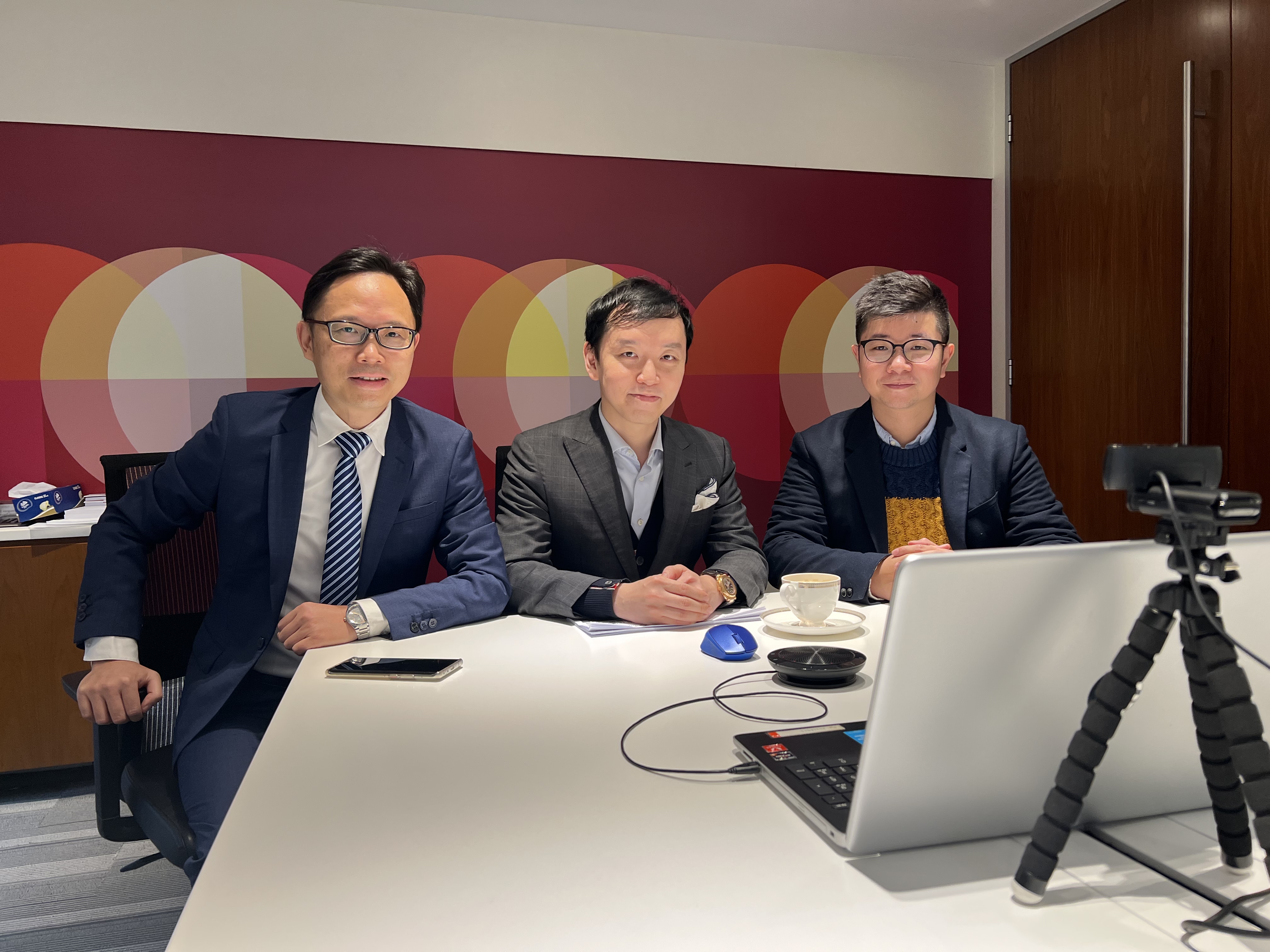
On 16 Dec 2021, our Partner, Mr. Gordon Tsang, was invited by Roma Group Limited to provide Environmental Social Governance (ESG) and Anti-corruption Training, together with AllBright Law Offices, to the directors and staff of listed companies. The webinar covered the latest disclosure requirements of ESG Reporting Guide and successfully attracted representatives from more than 60 listed companies.

From the left: Mr. Billy Yong, Senior Partner of AllBright Law Offices, Mr. Kingsley Cheng, Consultant of Roma Group, and our Partner, Mr. Gordon Tsang
Mr. Billy Yong, Senior Partner of AllBright Law Offices, and Mr. Kingsley Cheng, Consultant of Roma Group share their insights on ESG Reporting Guide’s latest updates and Mr. Tsang illustrated the key points of the anti-corruption guidelines and the duties of directors and non-executive directors through cases studies.

For more information, please contact our Partner Mr. Gordon Tsang.