Corporate Law Updates
Find out all about our firm’s latest Corporate Law Updates below. To learn more about any individual item, please contact us here.
 Stevenson, Wong & Co.
Corporate Law Updates
Find out all about our firm’s latest Corporate Law Updates below. To learn more about any individual item, please contact us here.
Background
On 2 August 2022, The Securities and Futures Commission (the “SFC”) published an Agenda for Green and Sustainable Finance (the “Agenda”) outlining its further steps to support Hong Kong’s role as a regional green finance centre. The SFC will continue supporting the development of green and sustainable finance in Hong Kong and the transition to a greener economy through enhancing the quality of information available, increasing transparency and building trust for investors. The three main areas of focus are:
(1) Enhancing corporate disclosures;
(2) Monitoring the implementation of and enhancing existing measures relating to environmental, social and governance (ESG) funds and expectations for fund managers; and
(3) Identifying an appropriate regulatory framework for any proposed carbon markets.
Corporate disclosures
In relation to disclosures, the SFC is strongly aligned with the approach adopted by the International Organization of Securities Commissions (“IOSCO”) and acknowledges how the International Sustainability Standards Board (“ISSB”) could set out a path, with its proposed climate standard, which is built on the Task Force on Climate-related Financial Disclosures (“TCFD”) framework, forming a comprehensive global baseline for climate-related disclosures. The SFC shall continue to support the work of the new ISSB and sustainability disclosures more generally, including:
In particular, a SFC-SEHK joint working group will continue to examine the readiness of listed companies to report under the proposed ISSB climate standard and the challenges faced by them, and to consider a framework aligned with the ISSB climate standard for Hong Kong. Other longer-term considerations include the digitalisation of climate reporting information, capacity building needs, and the development of an assurance framework in Hong Kong.
Internationally, the SFC will continue to participate in IOSCO’s work on reviewing the ISSB Exposure Drafts and considering assurance issues, as well as monitoring the work being done by the Network of Central Banks and Supervisors for Greening the Financial System (NGFS) Workstream on bridging the data gaps.
Monitoring the implementation of and enhancing existing measures
Asset management
The SFC has implemented measures to require fund managers to take climate-related risks into consideration in their investment and risk management processes as well as to make appropriate disclosures to meet investors’ demand for climate risk information and to combat greenwashing. Going forward, the SFC will continue to monitor the implementation of the measures and seek to enhance regulatory supervision in order to align with international regulatory development trends, including (i) continuing to consider the issues concerning the data underpinning asset manager disclosures, and (ii) maintaining regular dialogues with the industry to monitor the progress of licensed fund managers’ incorporation of new climate-related risks conduct and disclosure requirements, and provide the necessary clarification and guidance to the fund managers.
ESG funds
The SFC will continue to monitor ESG funds’ compliance with the requirements set out in its June 2021 circular. It will also continue its engagement with stakeholders, including hosting industry workshops to provide guidance, as well as working with the Investor and Financial Education Council (“IFEC”) to enhance investors’ awareness of ESG funds.
Taxonomy
One of the CASG’s action points is to aim for the adoption of the Common Ground Taxonomy (“CGT”) in Hong Kong. As a member of both the International Platform on Sustainable Finance (“IPSF”) and its Working Group on Taxonomies, the SFC will continue to monitor developments in this area, with a view to considering how the adoption of the CGT could complement the SFC’s existing regulatory and supervisory measures.
Education and training
Effective investor protection must include measures to educate investors. The SFC will continue to work with the IFEC to support investor education in this field, through regular updates via online and social media platforms, publicity campaigns, press events, public talks and stakeholder collaborations. The SFC will also continue to support the CASG’s efforts in relation to the GSF Centre and to contribute to IOSCO’s capacity building work, both through the IOSCO’s Sustainable Finance Task Force (“STF”) workstream on promoting good practices and the IOSCO Asia-Pacific Regional Committee (APRC).
Technology and innovation
The SFC will continue to work with other CASG members and stakeholders to facilitate the development of technologies to support green and sustainable finance initiatives locally, regionally and internationally. In particular, there is a plan to create a free and publicly accessible greenhouse gas (GHG) emissions estimation tool, with clearly-disclosed methodologies, that companies can use as an alternative source of information.
Regulatory framework for carbon markets
Hong Kong has a strategic role in adding value to carbon market development. There are two key types of carbon markets – voluntary carbon markets (“VCM”) and compliance markets or emissions trading schemes (“ETS”). At present, ETS only cover a small part (around 16%) of total global emissions. For corporates that do not fall under ETS, VCM may enable them to neutralise their emissions as they work on emissions reduction, and help channel capital to underlying projects to generate carbon credits. The SFC will focus on identifying the appropriate regulatory framework for the proposed business models. In addition, the SFC will continue to participate in the IOSCO STF’s carbon market workstream, with a view to supporting international developments in the transition to a greener global economy and considering the relevance of such developments to Hong Kong.

Analysis and takeaways
Jurisdictions worldwide have sought to respond to the urgent need to address the impact of climate change. Environmental issues have become a key focus for governments in different countries and it is recognised that private sector investment is vital to help fund the move towards a greener global economy. The SFC has been at the forefront of efforts to develop an effective regulatory framework for green finance in Hong Kong. The Agenda aims to enhance the quality of information available, increase transparency and build trust for investors, thereby supporting investment flows into sustainable projects that will drive forward net zero targets.
Please contact our Partner Mr. Rodney Teoh and Associate Ms. Angela Lau for any enquiries or further information.
This news update is for information purposes only. Its content does not constitute legal advice and should not be treated as such. Stevenson, Wong & Co. will not be liable to you in respect of any special, indirect or consequential loss or damage arising from or in connection with any decision made, action or inaction taken in reliance on the information set out herein.
1. Introduction
With increasing overseas operational activities coupled with more accommodating and flexible regulations regarding disclosure and registration procedures for issuing overseas bonds, there has been a rapid increase in offshore bond issuances from China in the past decade. These offshore bonds from PRC enterprises can be denominated in renminbi or other currencies (such as US dollars and euros), though US dollar bonds account for the largest portion. Furthermore, as shall further discussed below, they can be issued directly by Chinese domestic enterprises as well as their offshore subsidiaries or branches.
2. Hong Kong’s offshore bond market
Hong Kong’s debt capital market has experienced steady growth over the years. Mainland entities’ offshore offerings by Mainland authorities and private Mainland issuers have been one of the key drivers, with new issues amounting to almost RMB60 billion of bonds in the offshore renminbi market in 2021. In particular, Shenzhen Municipal Government was the first Mainland municipal government to issue RMB5 billion offshore multi-tranche bonds on The Stock Exchange of Hong Kong Limited (the “Exchange”) in 2021 1. In the past decade, China’s offshore bond issuance has grown exponentially with China responsible for almost 38% (or USD711 billion) of the Asia-Pacific international USD corporate bond market oustandings in 2020. The issuance showcases that Hong Kong keeps on striving to be a leading bond hub in Asia.
3. PRC regulations on offshore bond offering
We summarise the major PRC regulations governing offshore bond offerings as follows:
3.1. National Development and Reform Commission (“NDRC”) Regulations
Pursuant to “Notice of the National Development and Reform Commission on Promoting the Administrative Reform of the Recordation and Registration System for Enterprises’ Issuance of Foreign Debts” (《国家发展改革委关于推进企业发行外债备案登记制管理改革的通知》) issued in September 2015 by the NDRC, PRC enterprises and/or its respective offshore subsidiaries are required to register with the NDRC and obtain the registration certificate prior to the offshore bond offering, setting out the currency, volume, interest rate and planned usage of proceeds, among other details. Also, there are subsequent reporting requirements for filing information on the bond issuance with the NDRC within 10 working days after each offering, where issuers must demonstrate a good credit record, sound corporate governance and risk control systems, along with sufficient debt repayment ability without defaulting on existing obligations.
3.2. Regulations of the State Administration of Foreign Exchange (“SAFE”)
SAFE rules were amended in 2014 to allow for greater flexibility in encouraging PRC entities to seek offerings offshore. Prior restrictions on onshore entities guaranteeing offshore bond offerings were lifted and prior approval from SAFE was no longer required. Instead, the PRC parent company is only subject to the registration requirement that they shall file and register the offshore financing agreements and/or the guaranteed agreement with the local SAFE branch within 15 days from the execution of such agreements, pursuant to “the Measures for Foreign Debts Registration and Administration” (《外债登记管理办法》).
In addition, pursuant to Article 10 of the “Notice of the People’s Bank of China on Matters concerning the Macro-Prudential Management of Full-Covered Cross-Border Financing” (《中国人民银行关于全口径跨境融资宏观审慎管理有关事宜的通知》), the PRC company shall report the information on the execution of cross-border financing agreements to SAFE for filing after the date of execution of such agreements but no later than three working days before the withdrawal date.

4. Typical transaction structure of an offshore bond issuance
The following are the four typical transaction structures typically utilised by PRC entities for issuing offshore bonds:
4.1. Direct issuance by onshore companies
Onshore PRC entities, such as state enterprises or large financial institutions, may choose to issue the bonds offshore directly. A trustee is usually appointed to hold the bonds on behalf of the investors to exercise their rights. This method contains the simplest form without seeking a cross-border guarantee.
4.2. Guarantee by onshore parent companies
Some Mainland incorporated companies choose to issue offshore bonds through its overseas subsidiaries or a special purpose vehicle (“SPV”). The onshore parent company would provide a guarantee for the performance of the bond by the offshore entity. Credit ratings of the offshore bond would usually be tied to the parent company’s rating.
4.3. Standby letter of credit issued by banks
PRC entity could also offer bonds backed by a standby letter of credit (the “SBLC”) issued by a commercial bank (the “LC bank”) to serve as a cross-border guarantee in favour of the trustee acting on behalf of the bondholders. If the issuer cannot repay the bonds, the repayment obligation is on the LC bank, who is jointly and severally liable for the principals and interests. The bond’s credit rating would link to the LC bank’s credit which generally boasts better ratings than the issuer.
Although this method is more complicated than a direct issuance, or an onshore entity’s guarantee, the SBLC allows Chinese issuers to strengthen investors’ recognition without employing additional international credit rating agencies, which allows a significant lowering of the cost and interest rate of the bond.
4.4. Keepwell deeds and equity purchase undertakings deeds
Keepwell deeds is another credit enhancement mechanism frequently employed by Chinese entities when offering offshore bonds. In a keepwell deed, the onshore parent company provides a written undertaking that the offshore subsidiary or SPV would remain solvent with sufficient credit reserves during the tenor of the bonds. Unlike serving as a regular guarantee for paying off the debt in default, it only permits creditors to demand the credit enhancement to supplement the issuer’s liquidity for bond repayment. Equity purchase undertakings (“EIPU”) may be supplemented such that, in the event of default risk, the parent company would purchase the equity interest or assets in their offshore subsidiary to cover the debt repayment.
However, in the landmark Peking University Founder Group (“PUFG”) case, the legality and enforceability of the keepwell agreements were challenged. We note that the PRC administrators in that case refused to recognise the keepwell deeds in Mainland insolvency proceedings. However, the Hong Kong Courts allowed judgment against PUFG on a declaratory basis. It is yet to be decided how the Mainland and Hong Kong Courts shall cooperate with regards to such jurisdictional challenges. For more details, please see our litigation law update on this topic here.

5. Listing of Offshore Bonds on the Exchange
There are two main types of debt offering which can be listed on the Exchange: (i) debt securities which can only be offered to professional investors under Chapter 37 of the Rules Governing the Listing of Securities on Main Board of The Stock Exchange of Hong Kong Limited (the “Listing Rules/LR”); and (ii) debt securities which can be offered to public investors in a retail offering under Chapter 22 to Chapter 36 of the Listing Rules.
In Hong Kong, Chapter 37 is typically utilised in recent years for PRC issuers, given its shorter timeframe for obtaining listing approval and the simplified disclosure requirements. Some of the key requirements under Chapter 37 and the relevant guidance letter published by the Exchange are as follows:
Please contact our Partner Mr. Rodney Teoh for any enquiries or further information.
This news update is for information purposes only. Its content does not constitute legal advice and should not be treated as such. Stevenson, Wong & Co. will not be liable to you in respect of any special, indirect or consequential loss or damage arising from or in connection with any decision made, action or inaction taken in reliance on the information set out herein.
1 “The Hong Kong Bond market in 2021”, March 2022, Hong Kong Monetary Authority, https://www.hkma.gov.hk/media/eng/publication-and-research/quarterly-bulletin/qb202203/fa1.pdf
Background
We note that the Stock Exchange of Hong Kong (the “Exchange”) published an information paper (the “Information Paper”) back in April 2022 outlining the amendments to the Rules Governing the Listing of Securities on the Exchange (the “Rule Amendments”) to complement the Securities and Futures Commission’s (the “SFC”) new Code of Conduct1 provisions on the conduct of issuers and intermediaries involved in book building and placing activities. As such, this article serves as an apt refresher of the rule amendments involved. The capitalised terms used herein shall have the same meaning as defined in the Information Paper.
The Rule Amendments apply to:
(a) a placing of Equity Interests2 to be listed on the Exchange, including:
(b) a placing of listed Equity Interests by an existing holder of Equity Interests if it is accompanied by a top-up subscription by the existing holder of Equity Interests for new Equity Interests in the issuer.
Key Rule Amendments
| Requirements to enter into a written agreement for the appointment of any capital market intermediary (“CMI”)4 , including an overall coordinator | Rule Amendments |
|---|---|
Appointment by written agreement
|
Rules 3A.33, 3A.34, 3A.35 and 3A.36 (GEM Rules 6A.40, 6A.41, 6A.42 and 6A.43) |
| Appointment of overall coordinator(s) in a placing that involves bookbuilding activities | Rule Amendments |
|---|---|
For IPO
For other types of placing involving bookbuilding activities
|
Rule 3A.37 (GEM Rule 6A.44) |
Overall coordinator’s declaration
|
Rules 3A.40, 9.11(36) and Appendix 5E to the Listing Rules (GEM Rule 12.26(8) and Appendix 7I) |
| Appointment of at least one sponsor-overall coordinator in Main Board IPOs | Rule Amendments |
|---|---|
Sponsor-coupling
|
Rules 3A.02 (Note) and 3A.43 (Not applicable to GEM new applicants) |
|
Rule 3A.45 (Not applicable to GEM new applicants). |
| Associated obligations of issuers and their directors | Rule Amendments |
|---|---|
Investor assessment
|
Rule 3A.46 (GEM Rule 6A.48) |
Placing and allocation
|
Paragraph 19 of Appendix 6 (GEM Rule 10.16B) |
Bar on investor rebate
|
Note 2 to Rule 12.08 (Note 3 to GEM Rule 16.13) |
|
Form D in Appendix 5 to the Listing Rules (Form D in Appendix 5 to the GEM Listing Rules) |
Transitional arrangements and effective date
The Rule Amendments will apply to listed issuers and new applicants which submit (or re-file) their listing applications on or after 5 August 2022 in respect of their proposed offerings. Main Board new applicants are reminded to observe the transitional arrangements to avoid any delay in their listing timetable.
New applicants who have submitted a listing application prior to 5 August 2022 will not be required to comply with the new requirements in the Rule Amendments before such application lapses, is withdrawn or is otherwise terminated, even if their bookbuilding, placing or allocation activities conducted in connection with their proposed offerings take place on or after 5 August 2022.
Analysis and Takeaways
As hinted in our previous news update on the relevant SFC’s new Code of Conduct proposal, the implementation of the proposal for bookbuilding code and sponsor coupling may possibly lead to a change in the executory structure of IPO deals and bring the interest of the sponsor and overall coordinator into better alignment.
The complementary and consequential Rule Amendments proposed by the Stock Exchange will allow advisers to comply with this change in structure in a more holistic manner and a clearer fashion by providing the Listing Rules based instructions to all parties involved.
Please contact our Partner Mr. Rodney Teoh and Associate Ms. Angela Lau for any enquiries or further information.
This news update is for information purposes only. Its content does not constitute legal advice and should not be treated as such. Stevenson, Wong & Co. will not be liable to you in respect of any special, indirect or consequential loss or damage arising from or in connection with any decision made, action or inaction taken in reliance on the information set out herein.
1 The Code of Conduct for Persons Licensed by or Registered with the Securities and Futures Commission.
2 equity securities, interests in a REIT, stapled securities and securities of an investment company (as defined in Rule 21.01)
3 has the meaning in Rule 1.01 (GEM Rule 1.01) in the Rule Amendments, that is, a new listing of Equity Interests issued by a new applicant, irrespective of whether there is an offering of Equity Interests. For the avoidance of doubt, “New Listing” includes a reverse takeover of a listed issuer which is a deemed new listing under Rule 14.54 (GEM Rule 19.54) and a transfer of listing of Equity Interests from GEM to Main Board under Chapter 9A of the Listing Rules, but does not include any other new listing of Equity Interests issued by an issuer whose Equity Interests are already listed on a stock market operated by the Exchange.
4 has the meaning in Rule 1.01 (GEM Rule 1.01) in the Rule Amendments, that is, any corporation or authorised financial institution, licensed or registered under the SFO that engages in specified activities under paragraph 21.1.1 of the Code of Conduct, including, without limitation, a capital market intermediary appointed pursuant to Rule 3A.33 (GEM Rule 6A.40) in the Rule Amendments. An overall coordinator is also a capital market intermediary.
5 Appendix 6 to the Listing Rules (GEM Rules 10.12 to 10.16B).
Introduction
On 24 June 2022, the Hong Kong government gazetted the Anti-Money Laundering and Counter-Terrorist Financing (Amendment) Bill 2022 (the “Bill”)1, proposing changes to the Anti-Money Laundering and Counter-Terrorist Financing Ordinance (Cap. 615) (the “AMLO”)2. Following the Consultation Conclusions 3 on the same subject published by the Financial Services and Treasury Bureau on 21 May 2021 (please see our news update), the Bill introduces a licensing regime for virtual asset service providers (“VASPs”) and a registration regime for dealers in previous metals and stones (“DPMS”) to impose statutory anti-money laundering and counter-terrorist financing (“AML/CTF”) obligations on the two sectors. The Bill has been introduced into the Legislative Council (“LegCo”) for first reading on 6 July 2022. This news update focuses primarily on the regime for VASPs.
Scope of the proposed VASP licensing regime
The licensing regime for VASPs will come into effect on 1 March 2023 pursuant to the Bill. Under this regime, a licence issued by the Securities and Futures Commission (the “SFC”) will be required for the carrying on of a business of operating a virtual asset (“VA”) exchange.
The operation of a VA exchange is defined in the Bill as providing services through means of electronic facilities:-
(ii) persons are regularly introduced, or identified to the other persons in order that they may negotiate or conclude, or with the reasonable expectation that they will negotiate or conclude sales or purchases of VAs in a way that forms or results in a binding transaction; and
Any person who carries or holds themselves out as carrying on a business of providing VA service; and any person, whether in or outside Hong Kong, who actively markets to the public in Hong Kong any VA services he provides or purports to provide will have to submit a licensing application to the SFC. Licensees will be required to meet fit and proper requirements and comply with the AML/CTF and other regulatory requirements.
Definition of virtual assets
Following the proposed amendments, VAs will be defined under the AMLO as a cryptographically secured digital representation of value that:
or alternatively:
Echoing the clarifications made in the Consultation Conclusions, the definition of VA currently excludes any digital representation of value that4:

Licensing requirements
To be eligible for a VASP licence, applicants must be a locally incorporated company with a permanent place of business in Hong Kong or a company incorporated elsewhere but registered in Hong Kong under the Companies Ordinance (Cap. 622). This is to ensure that the SFC can effectively monitor the operation of the licensed VASPs.
In addition, the SFC must be satisfied that:
ROs are held to be personally accountable in case of non-compliance. Only individuals licensed by the SFC to be licensed representatives and whose accreditation to a VASP are approved by the SFC may carry out regulated functions on behalf of the VASP. Licensed representatives are expected to meet the qualification requirements and should be competent to carry out VA trading services.
Investor protection
At the initial stage of the regime, VASPs can only provide services to professional investors5. This requirement will likely be imposed by the SFC as a licensing condition, allowing SFC room and flexibility to expand the scope of VASP services and to allow VA exchanges to operate and provide services to retail investors in the future.
Furthermore, the VASP regime will consider licensing applicants’ company and management structure, and soundness of their business models. In addition, there will be requirements for detailed risk management policies as well as listing and counter-market manipulation measures. The Bill provides a list of possible licensing conditions the SFC may impose, apart from the abovementioned conditions, it may also require AML/CTF policies and procedures, financial reporting and disclosure, virtual asset listing and trading policies, cybersecurity and more6.

Supervisory powers of the SFC
The Bill grants the SFC broad supervisory powers over licensed VASPs. These include the power to enter the premises of the licensed VASP and its associated entities for routine inspections7, request the production of documents and records8, investigate non-compliances, impose disciplinary sanctions against non-compliant licensees9 and appoint an auditor to look into the affairs of a licensed VASP and its associated entities10.
The SFC is also empowered to impose prohibitions and requirements on the operation of a licensed VASP where the circumstances so warrant11. Intervention powers of the SFC may include prohibiting the licensed VASP from entering into further transactions12 and restricting the licensed VASP from dealing with or disposing of any relevant property13.
Offences under the proposed VASP regime
Enhancing and amending AML/CTF regulations entail creating a new enforcement regime to monitor regulated VA exchange activities in Hong Kong.
Providing a VA service without the relevant licence, or actively marketing (in Hong Kong or elsewhere) to the public of Hong Kong the services of an overseas VA exchange without a licence by the SFC, will be an offence punishable, on conviction on indictment, to a fine of HK$5 million and to imprisonment for seven years, and in the case of a continuing offence, to a further fine of HK$100,000 for every day during which the offence continues; or, on summary conviction, to a fine of $500,000 and to imprisonment for 2 years and a further fine of $10,000 for each day during which the offence continues14.
Time frame and transitional period
The Bill provides for transitional arrangements for existing VA exchange business operators. The transitional period will last for 12 months beginning on 1 March 2023 for any corporation carrying on a business of providing a VA service15.
If an existing operator files an application with the SFC within the first 9 months (by 1 December 2023) and confirms that it will comply with the regulatory requirements applicable to a licensed provider of the VA service and that it has arrangements in place to ensure it complies with such requirements, the operator will be deemed to be licensed until the SFC has made a decision on its application.
The SFC will be empowered by the Bill to issue a notice to unsuitable applicants informing them that they will not have a deemed licensed status. These applicants will be required to close down their business by the end of the 12-month transitional period.
Therefore, prospective applicants for the VASP licence and VA exchanges considering entering the Hong Kong market should ensure they are operating in Hong Kong as soon as possible prior to the enactment of the Bill so they can benefit from the transitional arrangements.

Analysis and Takeaways
Despite not being named directly in the Legislative Council Brief on the Bill or the Bill itself, the definition of VA appears to apply equally to “stablecoins” in consonance with the Consultation Conclusions. It is also worth mentioning that the definition in the Consultation Conclusions did not include elements such as “the provision of rights, eligibility, or access to vote”, which are now included in the Bill. This seems to broaden the scope of VAs covered by the licensing regime.
In particular, we note that whether an NFT is a VA depends on the circumstances, and it is important to consider not merely its form but also its substance. We understand that an NFT project could sometimes involve a Decentralised Autonomous Organisation (“DAO”), a community-led organisation which allows members to vote on the direction of their entity. DAOs related tokens granting members voting rights seem to fit part of the definition of a VA under the Bill for its nature as a “governance token”. As such, it is therefore important for service providers to think about the true nature of a NFT in ascertaining whether they need to apply for a VASP licence.
It is also noteworthy that the regulatory ambit seems to align with that of the SFC as stated in its first substantive statement on NFTs released on 6 June 2022 – if an NFT is a genuine digital representation of a collectible, activities related to it do not fall within the SFC’s regulatory remit.
While it is arguable that certain NFTs may not be captured by the definition of VA at the moment, the Bill provides that the Secretary for Financial Services and the Treasury will be empowered to prescribe particular digital representation of value as a VA by publishing a notice in the Gazette, thereby expanding the scope of VAs in the future.
Please contact our Partner Mr. Rodney Teoh for any enquiries or further information. Rodney would like to thank Mr. Calvin Lo (Trainee Solicitor) and Ms. Gladys Wong (Intern) for their contributions to this news update.
This news update is for information purposes only. Its content does not constitute legal advice and should not be treated as such. Stevenson, Wong & Co. will not be liable to you in respect of any special, indirect or consequential loss or damage arising from or in connection with any decision made, action or inaction taken in reliance on the information set out herein.
1 Anti-Money Laundering and Counter-Terrorist Financing (Amendment) Bill 2022 (the “Bill”)
2 Anti-Money Laundering and Counter-Terrorist Financing Ordinance (Cap. 615)
3 Consultation Conclusions on Public Consultation on Legislative Proposal to Enhance Anti-Money Laundering and Counter-Terrorist Financing Regulation in Hong Kong published by the Financial Services and the Treasury Bureau dated May 2021
4 Section 53ZRA(2), the Bill
5 Para 6, Legislative Council Brief Anti-Money Laundering and Counter-Terrorist Financing (Amendment) Bill 2022
6 Section 53ZRK(5), the Bill
7 Part 2, Division 2, Clause 11(1B)(a), the Bill
8 Part 2, Division 2, Clause 11(1B)(b), the Bill
9 Section 53ZSO, the Bill
10 Section 53ZSG, the Bill
11 Section 53ZSX, the Bill
12 Section 53ZSY, the Bill
13 Section 53ZSZ, the Bill
14 Section 53ZRD, the Bill
15 Schedule 3G, Part 2, the Bill
16 SFC reminds investors of risks associated with non-fungible tokens” announcement published by the Securities and Futures Commission, dated 6 June 2022
Introduction
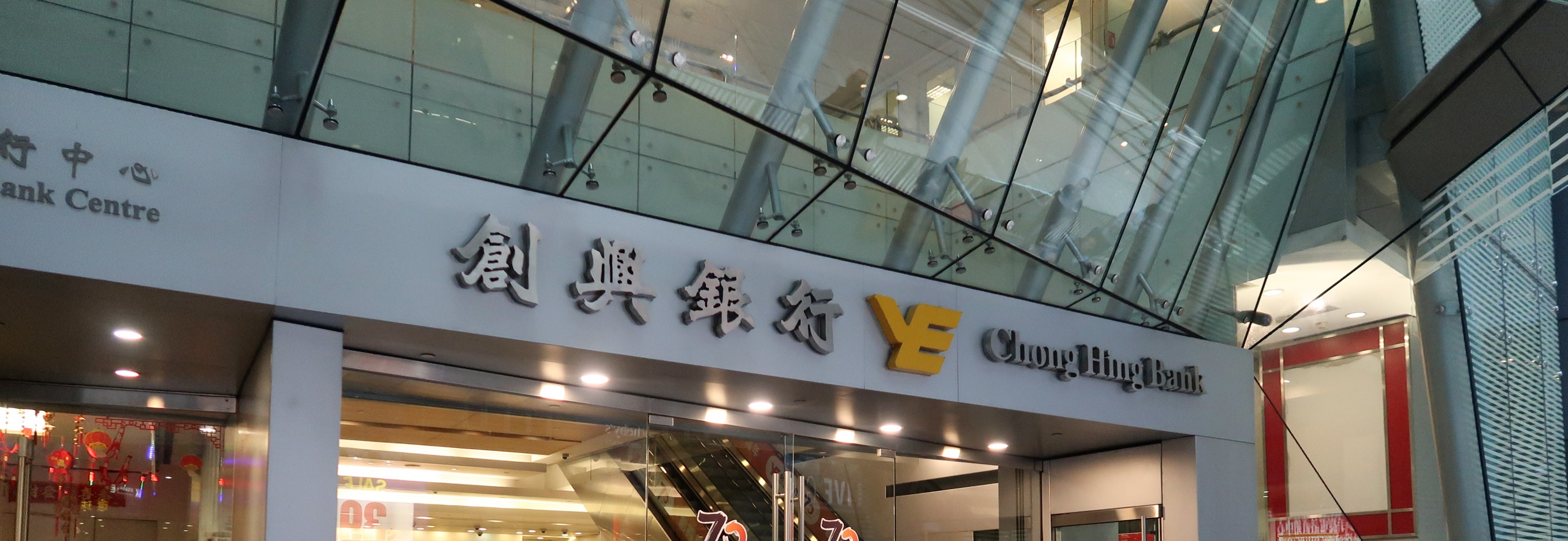
In the past few years, Hong Kong has seen a series of privatisations of listed companies, and a considerable amount of which have been carried out by way of scheme of arrangement. In this article, we will discuss the recent Hong Kong High Court judgement in Chong Hing Bank Limited (HCMP 968/2021, [2021] HKCFI 3091) (“Chong Hing”), which could draw potential implications for parties using court sanctioned schemes of arrangement to privatise Hong Kong listed companies or reductions of capital. Indeed, the way of dealing with concert parties’ votes on a privatisation scheme at a court-convened shareholder meeting may affect its validity. Furthermore, this High Court decision could affect the drafting of the scheme documents and notice of court meeting going forward.
Background
The case concerned a petition hearing presented by Chong Hing Bank Limited (the “Company”) regarding the court’s sanctioning of the scheme of arrangement dated 30 July 2021 (the “Scheme”) between the Company and all the scheme shareholders (i.e. the Concert Parties (as defined below) and independent shareholders) (the “Scheme Shareholders”) pursuant to sections 673 and 674 of the Companies Ordinance (Cap. 622) (the “Ordinance”) and the reduction of capital pursuant to section 229 of the Ordinance.
The Company was a listed company on the Main Board of The Stock Exchange of Hong Kong Limited (the “Hong Kong Stock Exchange”). In May 2021, the offeror, the single largest shareholder of the Company, requested the board of directors of the Company (the “Board”) to put forward a proposal for the privatisation of the Company by way of the Scheme and withdrawal of the listing of the shares on Hong Kong Stock Exchange (the “Proposal”). There were also a few concert parties (the “Concert Parties”) that were presumed to be acting in concert[1] with the offeror under the Code on Takeovers and Mergers (the “Takeovers Code”) for the purpose of the Proposal. [1]
It was stipulated in the scheme document that the Scheme would be subject to approval by the independent shareholders, and that the Concert Parties would not attend or vote at the meeting of the Scheme Shareholders convened at the direction of the Court (the “Court Meeting”). The Court Meeting was then convened for the purpose of approving the Scheme and the Concert Parties did not attend nor vote at the Court Meeting.
In sanctioning the Scheme, the Honourable Madam Justice Linda Chan considered, among other things, the Company’s compliance with Rule 2.10 of the Takeovers Code.
Rule 2.10: Disinterested Shareholders’ Approval Requirement in relation to the Scheme
Rule 2.10 of the Takeovers Code provides that:
“Except with the consent of the Executive, where any person seeks to use a scheme of arrangement or capital reorganisation to acquire or privatise a company, the scheme or capital reorganisation may only be implemented if, in addition to satisfying any voting requirements imposed by law:-
(a) the scheme or the capital reorganisation is approved by at least 75% of the votes attaching to the disinterested shares that are cast either in person or by proxy at a duly convened meeting of the holders of the disinterested shares[2]; and
(b) the number of votes cast against the resolution to approve the scheme or the capital reorganisation at such meeting is not more than 10% of the votes attaching to all disinterested shares.”
The Court’s interpretation of Rule 2.10 of the Takeovers Code was relevant to the case in determining: (i) the validity of the notice convening the Court Meeting; and (ii) if the Court Meeting was validly constituted. In particular, the question whether the Court Meeting was duly convened and constituted by excluding the Concert Parties from attending and voting at such Court Meeting depended partly on the true meaning of Rule 2.10.
Interpretation of Rule 2.10
Previous High Court Decision
Prior to Chong Hing, in Re Cosmos Machinery Enterprises Limited (HCMP 601/2021, [2021] HKCFI 2088) (19 July 2021), the Honourable Mr Justice Jonathan Harris suggested two schools of thought regarding the meaning of Rule 2.10:
i. the offeror and his concert parties are prohibited from voting on the relevant resolution (the “Prohibition View”); and
ii. the offeror and his concert parties are not prohibited from voting, but their votes cannot be counted for the purposes of complying with the Takeovers Code (the “Non-Prohibition View”).
The learned Judge concluded that the Non-Prohibition View is the correct position as it is more consistent with the natural and ordinary meaning of Rule 2.10 and section 674(2) of the Ordinance. An offeror’s concert parties who are part of a scheme must be allowed to vote as a matter of scheme law.
Position adopted in Chong Hing
Chan J considered Mr Justice Harris’ views in Re Cosmos Machinery, which she considered to be obiter dicta as the scheme in the case was not approved by the requisite majority of shareholders. She then concluded that the Prohibition View is the correct interpretation of Rule 2.10 based on the following reasons:

Chan J further concluded that in view of the undertaking provided by the Concert Parties and that they did not attend the Court Meeting of the Scheme, the requirements under Rule 2.10 were fulfilled and the Scheme was sanctioned accordingly.
Her Ladyship additionally set out three types of meetings that could be ordered by the Court for approval of privatisation or takeover schemes involving parties acting in concert with the offeror:

Analysis and Takeaways
In light of the ruling in Chong Hing, offerors should be mindful when seeking to use a scheme of arrangement to privatise a company listed on the Hong Kong Stock Exchange. To avoid complications in future privatisation schemes and to avoid two court meetings for a privatisation scheme (one for concert parties only), offerors should ensure that concert parties subject to the scheme irrevocably undertake that they will (i) neither attend nor vote on the proposed court meeting and (ii) be bound by the terms of the scheme. Wordings relevant to the attendance, voting and irrevocable undertaking on the scheme documents, as well as notice of meeting should also be carefully constructed to ensure compliance with the court’s ruling.
Please contact our Partner Mr. Rodney Teoh and associate Ms. Angela Lau for any enquiries or further information.
This news update is for information purposes only. Its content does not constitute legal advice and should not be treated as such. Stevenson, Wong & Co. will not be liable to you in respect of any special, indirect or consequential loss or damage arising from or in connection with any decision made, action or inaction taken in reliance on the information set out herein.
[1] Acting in concert is defined as persons who pursuant to an agreement or understanding, actively cooperate to obtain or consolidate “control” of the company by acquisition through voting rights.
[2] Disinterested shares are shares in the company other than those which are owned by the offeror or persons acting in concert with it.
Introduction
On 3 March 2022, the Financial Services Development Council (the “FSDC”) released a research report, recommending the Securities and Futures Commission (the “SFC”) and the Hong Kong Exchanges and Clearing Limited (the “HKEX”) to reform Hong Kong’s listing framework, with an objective to boost the competitiveness of Hong Kong as the leading Asian bourse and maximise the capital markets in Hong Kong.

In essence, the FSDC’s recommendations included the following:
• Consider whether the distinguishing features of the listing framework for pre-revenue biotech companies (Chapter 18A of the Rules Governing the Listing of Securities on The Stock Exchange of Hong Kong Limited (the “Listing Rules”) and special purpose acquisition companies (Chapter 18B of the Listing Rules) (“SPACs”) can be applicable to new economy companies;
• Review and clarify the subjective eligibility requirements of “innovativeness” for issuers with weighted voting rights (the “WVR”) structure to list in Hong Kong (Chapter 8A of the Listing Rules), with the policy aim of not making companies with WVR structure “commonplace” and retain investor protection;
• Continuously and holistically review the listing regime to cope with the evolving environment and market needs; and
• Provide more support to small and medium enterprises’ (“SMEs”) fundraising needs and access to the capital market, such as exploring a new listing framework and reviewing the existing GEM board regime.
Creating a friendly listing framework for innovative pre-revenue companies
New economy companies (e.g. hard technology, new energy, Software-as-a-Service, big data and artificial intelligence) are new, high-growth industries with cutting edge technology. Given their new and innovative nature, these companies often require heavy investment and funding in research and development (“R&D”) prior to being fully profitable. They also see a longer product development cycle. As traditional financers focus on a company’s financial track record, new economy companies would find it difficult to have access to capital and investments. Therefore, the FSDC suggested that it is crucial to remain flexible in the listing regime to cater for these new economy pre-revenue companies in order to capture these opportunities alongside appropriate investor safeguarding. The FSDC suggested that the HKEX could introduce a new chapter to the Listing Rules like Chapter 18A, to capture these fast-growing R&D intensive sectors, which could be the way forward to allow more pre-revenue new economy companies with great prospect and market potential to be listed on HKEX.
Riding on the successful emergence of the new economy in China and the Guangdong-Hong Kong-Macao Greater Bay Area (GBA), the Chapter 18A and the recent introduction of Chapter 18B, the FSDC drew attention to the listing frameworks of pre-revenue biotech companies and SPACs and viewed that that the HKEX and SFC should consider the distinguishing and the successful features of their listing frameworks which could be applicable to a new specific framework for these new economy companies.
In particular, akin to these biotech companies, many non-biotech new economy companies also have long business development cycles before demonstrating revenue or profits. Thus, the FSDC considered if some of the features in Chapter 18A could be incorporated into those of the new economy companies, such as the enhanced disclosure requirement, the involvement of sophisticated investors, rounds of fundings and competent authorities.
Furthermore, in the up-and-coming new economy sectors, investors would be expected to be equipped with technological and financial sophistication as well as a higher level or risk tolerance. This is the reason why the FSDC also considered the SPAC to serve a useful reference for a potential regime for pre-revenue innovative companies. Therefore, the FSDC recommended that some of the features in Chapter 18B could be also applicable to these new economy companies, such as the involvement of professional investors only at the initial stage and the requirement of additional private investment in public equity (PIPE) funding, where investors are expected to be more sophisticated in finance and tolerant to risk.

Review and clarify the “innovativeness” requirement for issuers with WVR structure
At present, according to Chapter 8A and 19C of the Listing Rules and the Guidance Letter HKEX-GL94-18, issuers seeking to list with a WVR structure must be an “innovative company”. The FSDC has recognised that some bankers and legal professionals considered that the “innovativeness” requirement is subjective and brings uncertainty to the Listing Rules, ultimately causing discouragement to companies seeking to list in Hong Kong. For instance, a first mover issuer from a new economy industry may be sufficiently “innovative” to obtain listing approval. However, subsequent companies of a similar nature or industry with higher market capitalisation and business scale may then not fulfil the “innovativeness” requirement as they then fail to differentiate themselves from the precedent case. These potential issuers are thereby less likely to list in Hong Kong in view of the lesser certainty.
In comparison, the FSDC examined both the Science and Technology Innovation Board, also known as STAR Market, of Shanghai Stock Exchange (the “SSE”) and the ChiNext of Shenzhen Stock Exchange. Despite both exchanges targeting growing innovative or sci-tech innovation companies, they do not provide potential issuers with any subjective definition or guidance of “innovativeness”. On the other hand, these exchanges adopt a set of objective listing standards that take account quantifiable factors such as business integrity, profits and revenue. The FSDC also highlighted that the SSE’s STAR opens doors for companies which are “yet to be profitable or have accumulated deficits” to be listed. Therefore, the FSDC suggested that the subjective eligibility of “innovativeness” for issuers with WVR structure should be reviewed and clarified while recognising the policy direction of WVR to not to be ‘common place’ and retain investor protection.
Furthermore, with the policy of not making companies with WVR structures “commonplace”, the FSDC also observed that the Hong Kong listing regime for WVR companies is more prescriptive in comparison with other markets. For instance, the US regime adopts a “disclosure-based regime with few restrictions on the WVR structure” for companies with dual-class shares structures, while Hong Kong requires enhanced disclosure and corporate governance structure. The strict investor safeguards imposed in Hong Kong have prevented WVR structures from being widespread and commonplace. Nevertheless, the FSDC advised that the definition and interpretation of “innovativeness” should be clarified to accommodate companies with varying degrees of innovativeness.
Continuously and holistically review the listing system to cope with the evolving environment and market needs
Currently, continued geopolitical uncertainties linger the business operations of Chinese stocks listed in the US, which may in turn affect the global IPO market. Companies already listed or considering listing on other exchanges may be looking for alternatives. There has been a surge in issuer interest in Hong Kong as a potential second listing option.
Notwithstanding such interest, companies including those whose business is centered in Greater China still face several hurdles when seeking to list in Hong Kong. The FSDC identified the relatively time-consuming IPO process, and the exemption system for issuers with primary listings on eligible exchanges as existing hurdles. To maximise the potential of listing market and the broader capital market, the FSDC suggested that further optimization should be explored to streamline and maximize the effectiveness of the listing process of oversea issuers.

Provide more support to SMEs
International and Mainland support
There are increasing emphasis being placed on supporting SME financing globally. Observing the reformative establishment of the Beijing Stock Exchange (“BSE”), the FSDC highlighted the BSE’s success since it started trading on 15 November 2021. 11 new companies have debuted through IPOs, alongside the 71 listed companies that transferred from the premium board of the National Equities Exchange and Quotations (NEEQ). As at 12 November 2022, over 2.1 million investors applied for access as qualified investor for the BSE, with over 4 million investors estimated to be eligible. Furthermore, 112 securities firms have been granted official membership of the BSE. The FSDC suggested that Hong Kong may consider to approach its own SME initiatives by taking reference to the BSE’s adoption of R&D spending as an eligibility criterion, to support the technology and research driven growth companies.
A comprehensive and open review of GEM
GEM was established in 1999 with the aim of providing funding support to SMEs. However, since the reform of GEM into a standalone market and the removal of the streamlined process for GEM transfers to the Main Board, GEM listing activities have greatly declined. In 2020, the market only saw 8 listings and HK$3.6 billion of total funds raised through GEM. Notwithstanding the development of the GEM Board, many SMEs which are in the growth and development stage may find themselves ineligible for GEM Board listing. This is because while GEM Listing Rules do not impose profitability requirements for potential issuers, the operating cash flow and market capitalisation requirements, together with the strict and time-consuming IPO vetting process may limit those smaller potential issuers to gain access to capital markets, ultimately causing the relative inactivity of GEM. For instance, the minimum aggregate operating cashflow of HK$30 million deters growth companies with high valuations but are yet to incur revenue or profit.
As the growth potential of SMEs is tremendous, the HKEX should re-evaluate whether the existing market structure is still conducive for SMEs to seize opportunities. To do so, the FSDC is of the view that HKEX should conduct a comprehensive and open review of GEM Board, including to revamp GEM Board as an incubator of early-stage fast-growing companies in order to allow SME access.
According to the FSDC, the financial industry and market participants generally hold a view that Hong Kong can take a more aggressive approach to support SMEs. Some comment that a new market mechanism supporting SME financing should be explored, and that such a mechanism could be incorporated into a market where only professional investors can participate. There is a pressing need for Hong Kong to respond to such opinions and readjust its market segmentation strategy.

Analysis and Takeaways
In light of the accelerated advancement of the new economy sectors and Hong Kong long praised attractiveness as a strong international fund-raising financial centre, the FSDC has encouraged HKEX and SFC to take active steps in refining its listing regime to cope with the evolving environment and the market needs. It is worth-taking to expand the pre-revenue requirement to cater for new economy companies and review and clarify the subjective requirement of “innovativeness” for issuers with WVR listed through Chapter 8A of the Listing Rules. The cultivation of biotech and new economy ecosystem may create demands for new homecoming listings. Also, considering the globally increasing emphasis on the financial support to the SMEs, Hong Kong should explore a new listing framework to assist their capital needs. These recommendations encourage Hong Kong listing regime’s opportunities arising from the latest IPO landscape and stay ahead in the race and to continue vitalising the capital market.
Please contact our Partner Mr. Rodney Teoh and associate Ms. Angela Lau for any enquiries or further information.
This news update is for information purposes only. Its content does not constitute legal advice and should not be treated as such. Stevenson, Wong & Co. will not be liable to you in respect of any special, indirect or consequential loss or damage arising from or in connection with any decision made, action or inaction taken in reliance on the information set out herein.