新闻快讯

有关本所的新闻快讯,请浏览以下内容。如有兴趣个别了解,请点击此处与我们联系。
2022年3月7日

内地法院首次认可和协助香港破产程序

简介

2021年5月,香港与内地就认可和协助跨境破产程序所建立的合作机制(「合作机制」) 正式落实。 同月,最高人民法院制定《关于开展认可和协助香港特别行政区破产程序试点工作的意见》(「最高人民法院意见」),促进合作机制的实施。

近日于2022年1月25日,深圳市中级人民法院 (「深圳法院」) 在 「(2021) 粤03认港破1号 」一案中批准了全国首个认可和协助香港破产程序的申请 ,是个标志性的判决。

简要事实

森信洋纸有限公司 (「公司」) 在香港注册成立,并于2021年8月进入债权人自动清盘程序。 公司于内地拥有大量资产,包括深圳在内。

为处理公司在内地的资产,清盘人根据最高人民法院意见向香港高等法院 (「高等法院」) 提出申请,请求高等法院向深圳法院发出请求函,请求其认可和协助清盘人。高等法院在Re Samson Paper Co Ltd [2021] HKCFI 2151一案中批准清盘人的申请,并向深圳法院发出请求函。

深圳法院的判决

深圳法院首先考虑管辖权的问题,查明深圳是公司在内地的主要资产所在地,因此裁定其对该申请具有管辖权。 深圳法院及后批准了该申请,认可公司在香港的破产程序及清盘人的身份。

要点

随着内地法院认可和协助高等法院委任的清盘人有了首例,加上香港与内地之间紧密的商业联系,我们可预期未来会有越来越多香港清盘人根据合作机制向内地法院请求认可以及协助的申请。

本所洪律师的诉讼团队能协助客户向高等法院提出有关申请,并透过本所跟锦天城律师事务所的联盟,获得内地法院对香港破产程序作出认可和协助。

如有任何查询或想了解更多详情,请联络本所诉讼部合伙人洪玉晖律师或高级律师刘嘉熙律师
本文仅供参考之用。本文之内容不构成亦不应被视为法律意见。对于任何因根据或倚赖本文件所载资料所作决定,行动或不行动而引致的损失或损害,史蒂文生黄律师事务所概不负责。

2022年3月4日

史蒂文生黄律师事务所出席Interlaw 2022 亚洲区域会议

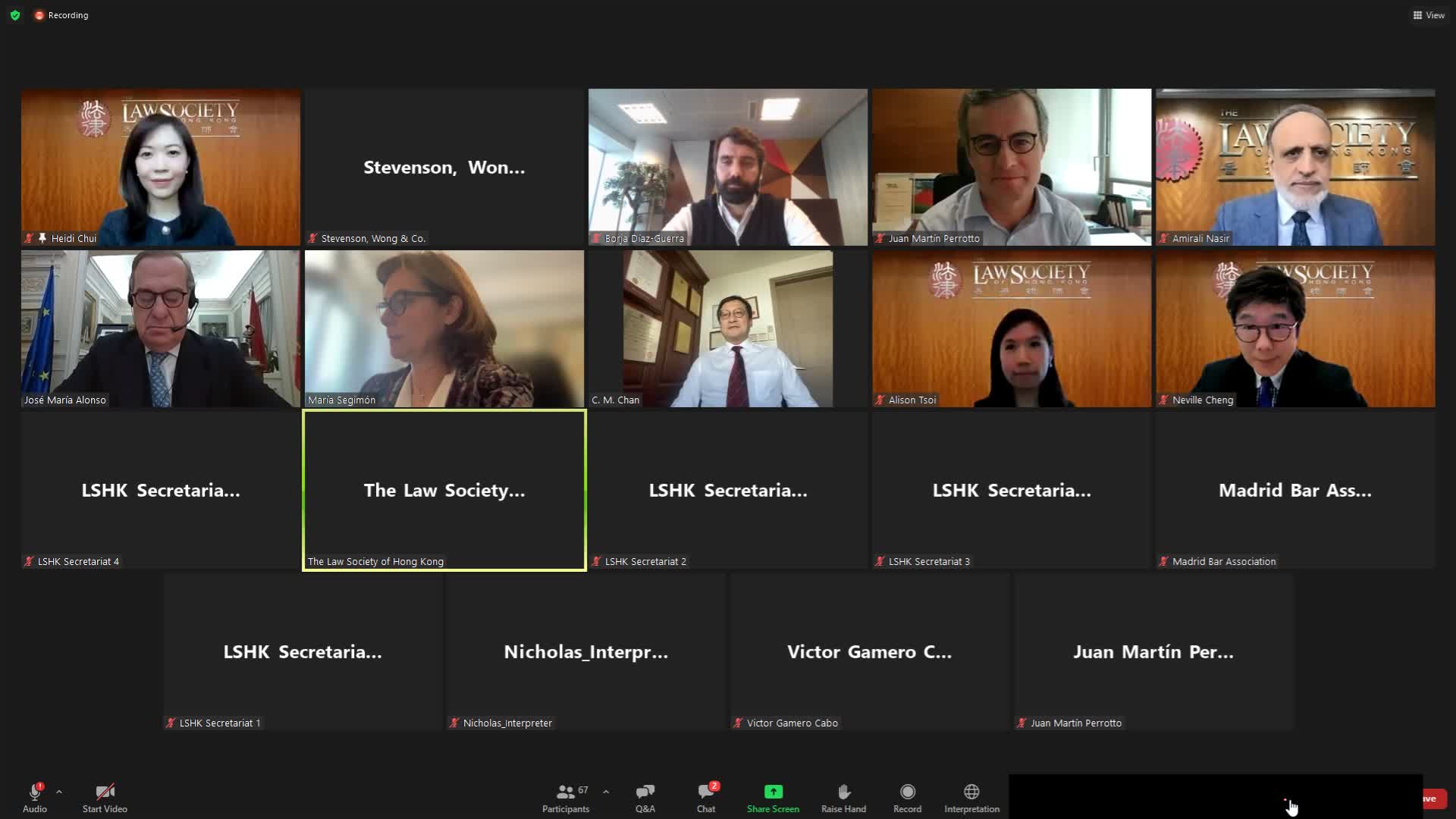
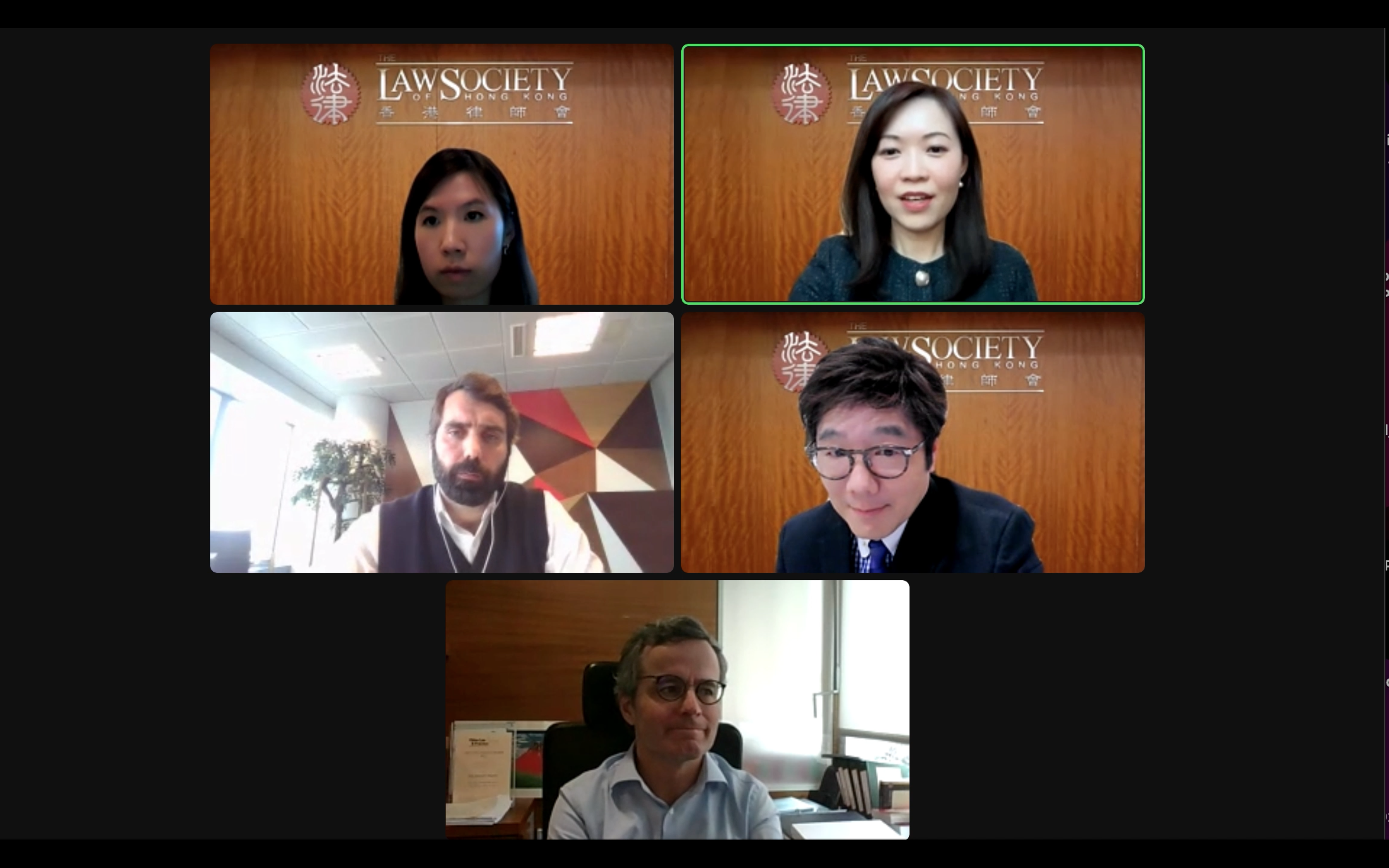
2022年2月22日至25日,本所合伙人郑炎潘律师﹑林丽嫦律师﹑徐凯怡律师﹑洪玉晖律师及刘嘉熙高级律师作为演讲者和专家小组成员参加了国际律师事务所协会 (Interlaw) 2022 亚洲区域线上会议。今年的主题为 ‘’携手共创成功”,吸引了全球超过500 多名代表参加。

  • 合伙人郑炎潘律师 – 归途?税收政策的新方向 (Homeward Bound? A News Direction for Tax Policy)
  • 合伙人徐凯怡律师 – 仲裁优势:争议的新视角 (Arbitration on the Ascendancy: A New Perspective on Disputes)
  • 合伙人洪玉晖律师及刘嘉熙高级律师 – 数字化和争议 (Digitalization and Disputes)
  • 合伙人林丽嫦律师 – 遥距创建包容性的工作场所 (Creating an Inclusive Workplace at a Distance)

222 | 合伙人郑炎潘律师归途?税收政策的新方向

郑律师在税务小组讨论中深入探讨了新冠疫情的影响以及从全球化到国内前沿生产的转变。他讨论了鉴于当前和未来的税收政策,企业重组的需求日益增长,并提到了香港在疫情期间的免税政策。特别是,企业和个人如何在全球和国家层面上需要适应此紧迫的时代。

本所合伙人郑炎潘律师(右上)

222 | 合伙人徐凯怡律师仲裁优势:争议的新视角

随着新的仲裁机构在亚洲开设,仲裁在该地区的受欢迎程度继续上升。徐律师和专家小组一同讨论了这趋势背后的驱动因素以及其如何重塑商业纠纷的文化。

本所合伙人徐凯怡律师(右下)

223 | 合伙人洪玉晖律师及刘嘉熙高级律师数字化和争议

该专家小组透过分享和交流不同法律管辖区的技术解决方案,以保持其领先地位,为客户在新时代的争议解决下提供最大的支援。洪律师和刘律师就网络安全、网络风险管理等议题进行了阐述,并分享了他们在网络欺诈中挽回损失的经验。他们还分享了香港针对网络犯罪和洗钱的“不同意书制度” (Letter of No Consent Regime) 的最新发展。

本所合伙人洪玉晖律师(左上)及刘嘉熙高级律师(上排中间)

224 | 合伙人林丽嫦律师遥距创建包容性的工作场所

作为 Interlaw 多元化、包容性和社区委员会(亚太区)副主席,林律师参与了有关工作模式转变的讨论。该小组还探讨了领导者如何建立有效的工作模式,以通过学习和发展、认可和晋升来提高新时代线上线下相结合工作场所的包容性。

本所合伙人林丽嫦律师(中间第二排)

如阁下有任何查询或想了解更多详情,请联络本所郑炎潘律师林丽嫦律师徐凯怡律师洪玉晖律师

2022年3月1日

(English) The Talent List Expands Under the Quality Migrant Admission Scheme

(English) The Quality Migrant Admission Scheme (“QMAS”) is a points based admission scheme for global talents to apply to settle in Hong Kong without first securing a job offer as normally required in work visa application. The scheme was first introduced in February 2006 with an initial quota of 1,000 applicants.

Following the announcement of the Chief Executive’s 2021 Policy Address, the Hong Kong Government has decided to double the annual quota of the QMAS in 2020 to 4,000 entrants. The objective is to attract more talents to come to Hong Kong and to increase Hong Kong’s economic competitiveness. With the introduction of more professional categories, it is expected that Hong Kong will welcome an influx of applications from different sectors. The Talents List was first drawn up in 2018 and now the list covers 13 professions. The latest addition includes professionals in asset management, and environmental, social and governance. Further, individuals from medical and healthcare sciences, microelectronics, integrated circuit design and arts technology, and the disputes resolution/transaction law industries are also now eligible to apply under the QMAS. Potential entrants from other industries and sectors not covered by the Talent List are still welcome to apply as long as they meet the respective eligibility criteria.

The Immigration Department will prioritise the applications of applicants undertaking research and development work under the Technology Talent Admission Scheme (TechTAS). With the expansion of professional categories under the QMAS, it is expected that the Immigration Department may also provide a fast-track arrangement for eligible individuals to work in Hong Kong.

Certain countries have introduced schemes to attract immigrants from Hong Kong. This no doubt posts a threat to Hong Kong on outflow of talents. The significant increase in the Talents quota to a large extent reveals the Hong Kong Government’s effort to counter that threat. Hong Kong has experienced different challenges in recent years. With the strong resilience of Hong Kong people, Hong Kong usually recovers fast from difficult times. Interested candidates with relevant skills and talents should seize this good opportunity to seriously consider coming to Hong Kong to pursue their career dreams.

Our Immigration Team are on standby to help interested applicants understand the requirements and walk through the application process. Please contact our Partner Willy Cheng or Paralegal Arial Ng (arial.ng@sw-hk.com) for any further enquiries or information.

This newsletter is for information purposes only. Its content does not constitute legal advice and should not be treated as such. Stevenson, Wong & Co. will not be liable to you in respect of any special, indirect or consequential loss or damage arising from or in connection with any decision made, action or inaction taken in reliance on the information set out herein.

2022年2月24日

合伙人徐凯怡律师受邀为香港税务学会担任专业进修课程讲师

2022年2月21日, 本所合伙人、诉讼及争议解决部主管徐凯怡律师受香港税务学会 (TIHK) 邀请,为其专业进修课程「税务顾问应知的仲裁知识——流程、优势和最新进展」担任讲师。

本次网络研讨会旨在让 TIHK 的会员了解仲裁在税务或其他商业纠纷中的好处,并介紹香港仲裁法和最新发展。徐律师先详细向与会者介绍了什么是仲裁以及仲裁的优势, 并特别提到起草有效仲裁协议的注意事项及拥有有效的仲裁条款之重要性。徐律师在会上阐释了仲裁的程序,并通过案例分析分享了商业交易中税务纠纷的可仲裁性,以及仲裁在涉及稅务范畴的收购合并争议中的应用。此外,徐律师亦分享了跨境仲裁的最新进展,和内地与香港对仲裁的支持和司法合作。

徐律师以回答现场提问的方式圆满地结束了是次充满互动性的网上课程,获得了与会者的正面回馈。

如阁下有任何查询或想了解更多详情,请联络本所徐凯怡律师

2022年2月21日

(English) The Long Arm of the Law – How the Securities and Futures Ordinance may reach overseas offenders?

(English) In July 2021, the Court of First Instance (“CFI”) handed down its decision in Securities and Futures Commission v Isidor Subotic and Others[1] (“Subotic”).

The Subotic decision contains useful discussions on whether the Hong Kong Court has jurisdiction and may exercise it over overseas defendants of statutory claims commenced by the Securities and Futures Commission (“SFC”) in respect of breaches of the Securities and Futures Ordinance (“SFO”).

Without making a general observation that the SFC can enforce the SFO against overseas offenders, the Subotic decision was, on its specific factual matrix and in respect of the jurisdiction issue, in favour of the SFC.

Given that market participants (and offenders) often operate from out of Hong Kong, the Subotic decision is important to the SFC’s effectiveness as a Hong Kong regulator.

An appeal against the Subotic decision (the jurisdiction issue in particular) is pending the determination of the Court of Appeal.

Meanwhile, however, the Subotic decision remains an integral part of the SFC’s arsenal. On 14 February 2022, the reasonings in Subotic were adopted in SFC v Yik Fong Fong and Others[2], which decision was in favour of the SFC.

Background

In February 2016, an extensive network of traders orchestrated by 6 of the Defendants, including Eastmore Global, Ltd. (“the Eastmore Defendants”), executed manipulative trading orders to pump up the share price of Ching Lee Holdings Limited (stock code: 3728.hk) to 700% above its placing price.

The inflated price was maintained for 7 months, whereupon the shares were dumped onto the market abruptly, causing the share price to plummet by 90%.

The pump-and-dump scheme generated illicit profits of around HK$124.88 million for the Eastmore Defendants and the proceeds of sale was remitted overseas.

An estimate of some 896 market participants suffered an aggregate loss of over HK$101.28 million.

The SFC’s Action against the Eastmore Defendants

The SFC commenced an action in the CFI against, amongst others, the Eastmore Defendants for breach of various sections of the SFO, including conspiracy to do “false trading” (i.e. by creating a false or misleading appearance of “active trading”, and creating and maintaining an artificially inflated price).

Pursuant to section 213 of the SFO, the SFC sought various reliefs against the Eastmore Defendants, including a restoration order (i.e. to restore the market participants to the status quo ante), injunctive reliefs, and damages.

The SFC successfully obtained leave to serve the originating processes out of jurisdiction on the Eastmore Defendants.

Subsequently, the Eastmore Defendants sought to set aside the leave for service out in order to nullify the action against them.

Under Order 11 rule 1(1) of the Rules of High Court, for leave for service out to be granted, the Court must be satisfied that the following requirements are met:-

(1)   There is a good arguable case that the plaintiff’s case falls within one of the “gateways”;

(2)   There is a serious issue to be tried on the merits of the plaintiff’s case;

(3)   Hong Kong is the appropriate forum for the trial.

The 2nd and 3rd requirements were not in serious dispute in this case. The main argument for the Eastmore Defendants was that the SFC’s case did not fall within any of the gateways.

The Gateways

The SFC sought reliance on the following three gateways: –

(i)     Tort – “the claim is founded on a tort and the damage was sustained, or resulted from an act committed, within the jurisdiction”

(ii)    Injunction – “an injunction is sought ordering the defendant to do or refrain from doing anything within the jurisdiction”

(iii)   Necessary or proper party – “the claim is brought against a person duly served within or out of the jurisdiction and a person out of the jurisdiction is a necessary or proper party thereto”

(i)      Tort

Having considered authorities from different jurisdictions, the Court distilled the following principles for deciding whether a claim is a tort:-

(1)   There is no universal definition of tort;

(2)   A claim in tort can be created by common law or statute. For those created by statute, it is not necessary for the statutory cause of action to be analogous to a pre-existing common law cause of action in tort;

(3)   Within the same statute, some claims may be in the nature of tort whilst others may not;

(4)   The presence of a “duty” towards person generally or a class of persons is an element of tort;

(5)   If the statute prohibits certain conduct, a breach may result in liability in tort;

(6)   If the statute merely provides that damages are recoverable without regard to the defendant’s intention, negligence or default, it may not be a tort, as the statute does not impose a duty on anyone to act in a particular way;

(7)   A claim in tort is redressible by unliquidated damages but not every statute which creates a liability to pay damages creates a tort; and

(8)   The mere fact that other discretionary remedies (e.g. injunction or declaration) may be available should not alter the characterization of a cause of action as a tort.

The Court considered that the above principles should apply notwithstanding the caveat that the authorities from which they were distilled concerned private plaintiffs who have suffered personal loss (contra. the SFC, which had not personally suffered any loss).

In finding that there was a good arguable case that the SFC’s statutory claim falls within the tort gateway, the Court considered the following factors:-

(1)   Proof of intent on the part of the wrongdoer is required to establish the statutory claim of “false trading”;

(2)   Those who had suffered loss plainly belong to a class of the public that the SFO intends to protect;

(3)   Although civil remedies are available to individual investors, there are circumstances when it would be eminently reasonable for proceedings to be taken by the SFC for the investors’ benefit. The fact that the SFC might bring the action in its own name as the protector of individual market participants (many of whom with relatively small losses) did not undermine the tortious nature of such a claim;

(4)   The fact that section 213 of the SFO also fulfilled public purposes and conferred upon the SFC rights that went further than the purpose of tort and ordinary enforceable civil law rights did not undermine the fact that the conduct sued upon was tortious in nature;

(5)   While the remedies under section 213 were restorative in nature, where the Court has power to make a restorative order, it may, in addition or in substitution, make an order for damages against the defendants; and there was a good arguable case that the measure of damages for tort would apply;

(6)   The fact that the SFO afforded more reliefs than damages was immaterial as a statutory tort did not require a parallel tort with parallel reliefs at common law;

(7)   There were sound policy reasons that a claim under section 213 of the SFO should be regarded as a tort for the purpose of this gateway. A pragmatic and realistic approach should be adopted; and

(8)   The “double actionability rule” required the plaintiff to satisfy the Court that its claim was actionable in tort both in Hong Kong and the place abroad, but if the Court found that the tort had in substance been committed in Hong Kong, the fact that some of the relevant events have happened abroad and the law of the foreign country where such events may have happened were irrelevant, and the Court could wholly disregard the double actionability rule. In this connection, the Court found that although the Eastmore Defendants were resident outside Hong Kong, there was a good arguable case that the conspiracy was in substance committed in Hong Kong. Therefore, the double actionability rule did not apply.

(ii)           Injunction

The SFC sought injunctions against the Eastmore Defendants to (1) freeze their assets; and (2) restrain them from contravening the provisions against false trading. The injunctions sought are wide in scope to restrain the Eastmore Defendants from contravening section 213 of the SFO in any way, anywhere and anytime.

An injunction may be granted if there is an appreciable risk that the defendant would in the future interfere with the plaintiff’s rights. On the other hand, the court would not grant injunctions that are hopelessly wide and ill-defined, and it has no power to restrain conduct outside the jurisdiction.

The Court found that there was a good arguable case that an injunction would be granted against the Eastmore Defendants restraining them from committing further false trading activities in Hong Kong given that the Eastmore Defendant had maintained sufficient connections in Hong Kong and remained capable of conducting further acts in Hong Kong.

The injunction as sought by the SFC may be too wide in geographical scope, as the Hong Kong courts may not grant an injunction to restrain acts not only in Hong Kong but also unspecified “elsewhere”, and the injunction gateway specified that the writ should be one that seeks an injunction to restrain the defendant from doing anything “within the jurisdiction”.

That said, the Court commented further that the SFC did not need to rely on the injunction gateway if the tort gateway was passed. The scope of the injunction can be debated at the trial, and should the SFC need to rely solely on the injunction gateway, leave to serve the Eastmore Defendants out of jurisdiction should still be granted as if the injunction to restrain would be limited to acts within Hong Kong.

(iii)           Necessary or proper parties

The SFC had not relied on this gateway initially when it applied for leave for service out.

Upon the Eastmore Defendants applying to set aside the leave for service, and in case they were successful vis-à-vis the tort and injunction gateways, the SFC additionally referred to the “necessary or proper parties” gateway and asked the Court to grant leave for service out afresh.

The Court noted that the validity of the Writ of Summons had already expired at the time of the decision, and it would be futile to regrant leave for service out without also extending the validity of the writ.

In any event, the Court found that the tort gateway was passed, the original leave for service out was valid, and it was unnecessary to grant leave for service out afresh.

Appeal

In November 2021, the Court granted the Defendants leave to appeal regarding these questions: (1) whether the SFC’s claim is in the nature of torts, and (2) the applicability of authorities on private tort claims to regulatory enforcement actions.

Leave was granted on the basis that the grounds of appeal involved points of general public importance:

(1)   There was an apparent lacuna in the rules regarding service of a writ out of jurisdiction in regulatory enforcement action under section 213 of the SFO; and

(2)   The SFO has extra-territorial effect, such that a decision on appeal will have impact beyond the present case as the SFC may have to serve writs for similar claims out of jurisdiction in future.

Conclusion

Hong Kong is an international financial centre. In this age of globalization and electronic communications, there are policy reasons to facilitate enforcement of the SFO against overseas offenders. The Subotic decision may indicate the Court’s readiness to support this.

On the other hand, the Court traditionally exercises its long-arm jurisdiction with caution. It is noteworthy that English decisions maintain the view that any doubt as to the correct construction of the gateways should be resolved in favour of the foreign defendant. There may also be cases where the policy reasons are less compelling, e.g. the public investors suffered no apparent loss.

Further, it is noted that the Court was not required to apply the “double enforceability rule” in the Subotic case upon finding that the tort had in substance been committed in Hong Kong. It remains theoretically possible for overseas offenders to devise a scheme such that no tort is committed in Hong Kong.

We await the determination of the Court of Appeal and hopefully a comprehensive guideline on when and how SFC may enforce the SFO against overseas offenders.

Please contact our Partners Mr. Osbert Hui or Mr. Dominic Lau for any enquiries or further information.

This newsletter is for information purposes only. Its content does not constitute legal advice and should not be treated as such. Stevenson, Wong & Co. will not be liable to you in respect of any special, indirect or consequential loss or damage arising from or in connection with any decision made, action or inaction taken in reliance on the information set out herein.


[1] [2021] HKCFI 2172.

[2] [2022] HKCFI 450.

2022年2月21日

合伙人徐凯怡律师再度获委任为深圳国际仲裁院仲裁员

本所合伙人、诉讼及争议解决部主管徐凯怡律师再度获深圳国际仲裁院委任为新一届仲裁员,任期由2022年2月21日起,为期三年。

新一届《深圳国际仲裁院仲裁员名册》经深圳国际仲裁院(又称“华南国际经济贸易仲裁委员会”“粤港澳大湾区国际仲裁中心”“深圳仲裁委员会”)第二届理事会审议,共有1549名仲裁员,来自全球114个国家和地区,其中149名來自中国香港特别行政区。深圳国际仲裁院的仲裁员均经过层层严格筛选和审核,集合了国内外在法律、投资、金融、建设工程、房地产、知识产权、高新科技等不同领域的顶尖专家和精英,并在业界均享有公道正派的良好口碑。

徐律师是仲裁员,为少数获取认可进入香港律师会仲裁员名册的仲裁员。另外,徐律师是香港国际仲裁中心、中国国际经济贸易仲裁委员会、上海国际仲裁中心、深圳国际仲裁院、海南国际仲裁院(海南仲裁委员会)、上海仲裁委员会、南京仲裁委员会、广州仲裁委员会、宁波仲裁委员会、合肥仲裁委员会及廊坊仲裁委员会的仲裁员。她亦是香港国际仲裁中心,香港律师会及土地审裁处(建筑物管理案件)的认可调解员,英国特许仲裁司学会院士,同时也是婚姻监礼人。徐律师亦是中国司法部委任的中国委托公证人。

如阁下有任何查询或想了解更多详情,请联络本所徐凯怡律师按此查看深圳国际仲裁院仲裁员名册。

NEWER OLDER 1 2 45 46 47 78 79